The review
Sam Cooper: a man who lost his wife and his desire to start again
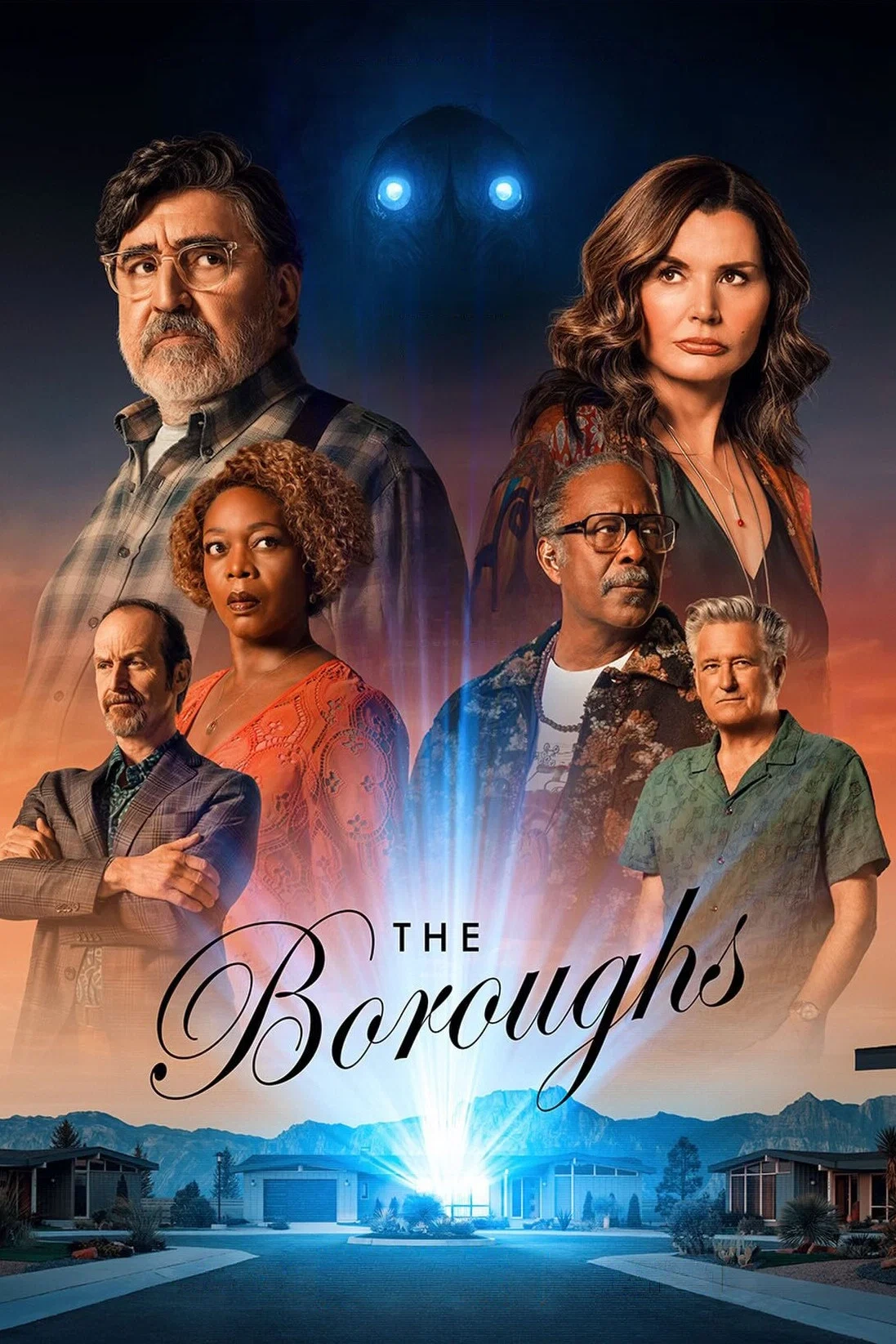
Sam Cooper, played by Alfred Molina, arrives at an upscale retirement community in the New Mexico desert after losing his wife Lily, who had wanted to move there.
The problem is that Sam was never enthusiastic about the idea, and being there after her death becomes a constant reminder of the life he was supposed to share with her.
He therefore treats the new home as an obligation imposed by circumstances rather than an opportunity for a different beginning.
He appears angry and impatient, rejecting attempts to approach him even when his neighbors try to welcome him.
What distinguishes the character is that the series does not present this behavior simply as the disposition of a difficult older man. It connects it to grief that Sam has not found a way to process.
When someone loses a partner with whom they have spent many years, they lose more than a person they love; they also lose part of the future they had imagined.
This makes Sam's move to the new home especially harsh. He faces a life he should have shared with his wife, but must now accept alone.
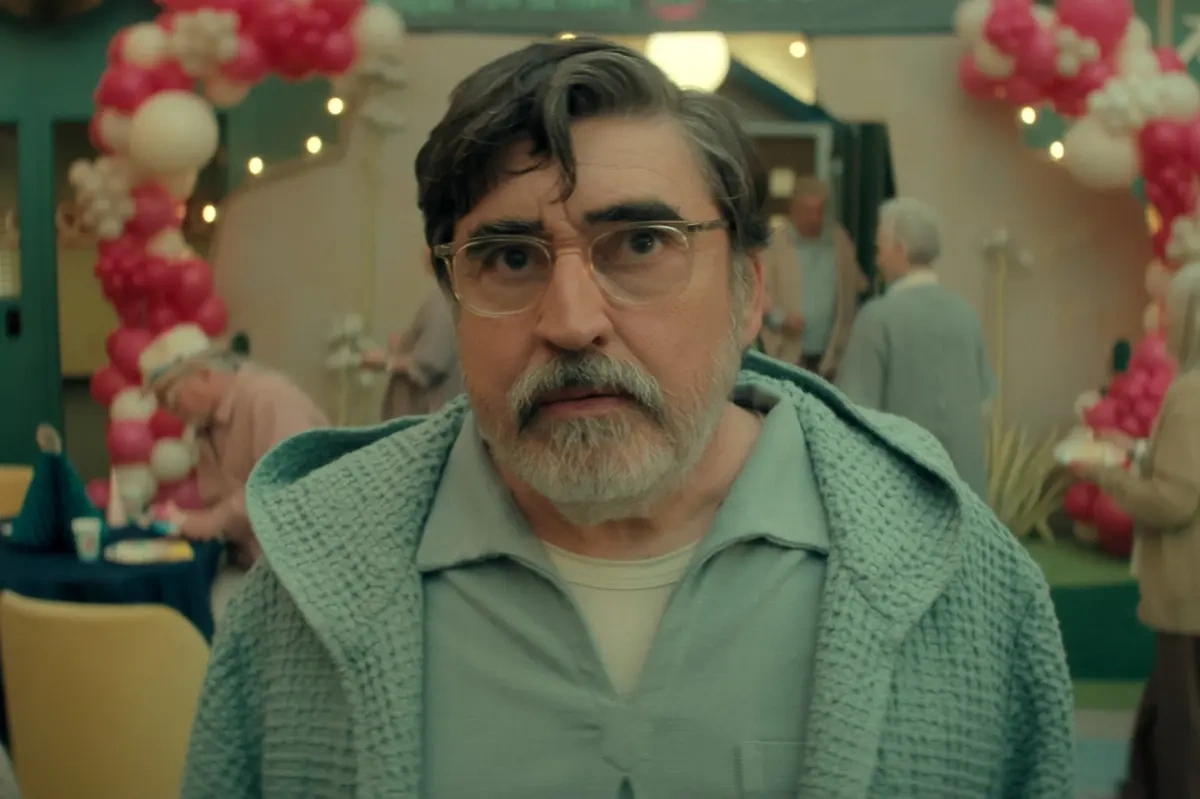
Alfred Molina gives the character a convincing presence, particularly through the contrast between his sharp outbursts and moments of vulnerability.
He can make Sam unpleasant toward others without taking away our ability to understand the reasons for his behavior.
His relationship with his daughter Claire also reveals an important part of the problem. She tries to help him while continuing with her own life and responsibilities, whereas he resists admitting that he needs other people.
Here one of the series' first strengths emerges: the horror does not begin with strange creatures appearing, but with a character facing a new stage of life he does not know how to navigate.
A barbecue reveals the series at its best
One of the first episode's most successful moments is the neighbors' gathering at the barbecue Jack, played by Bill Pullman, organizes to welcome Sam.
On the surface, nothing extraordinary happens. Older people eat, exchange jokes, discuss their health and romantic experiences, and tease one another in a way that reveals years of familiarity.
This simplicity is precisely what makes the scene important.
The series lets us meet the characters as people with long histories, rather than merely retirees waiting for monsters to appear.
We meet Wally, the former doctor played by Denis O'Hare, who is fighting a severe battle with cancer. We get to know Judy and Art, the couple played by Alfre Woodard and Clarke Peters, and Renee, portrayed by Geena Davis, a woman who retains her vitality and desire to enjoy life.
These characters are not alike simply because they are close in age.
Each has a different way of looking at the remaining years, at love, friendship and illness, and at what makes life worth continuing.
The cast's strength emerges through their natural interaction.
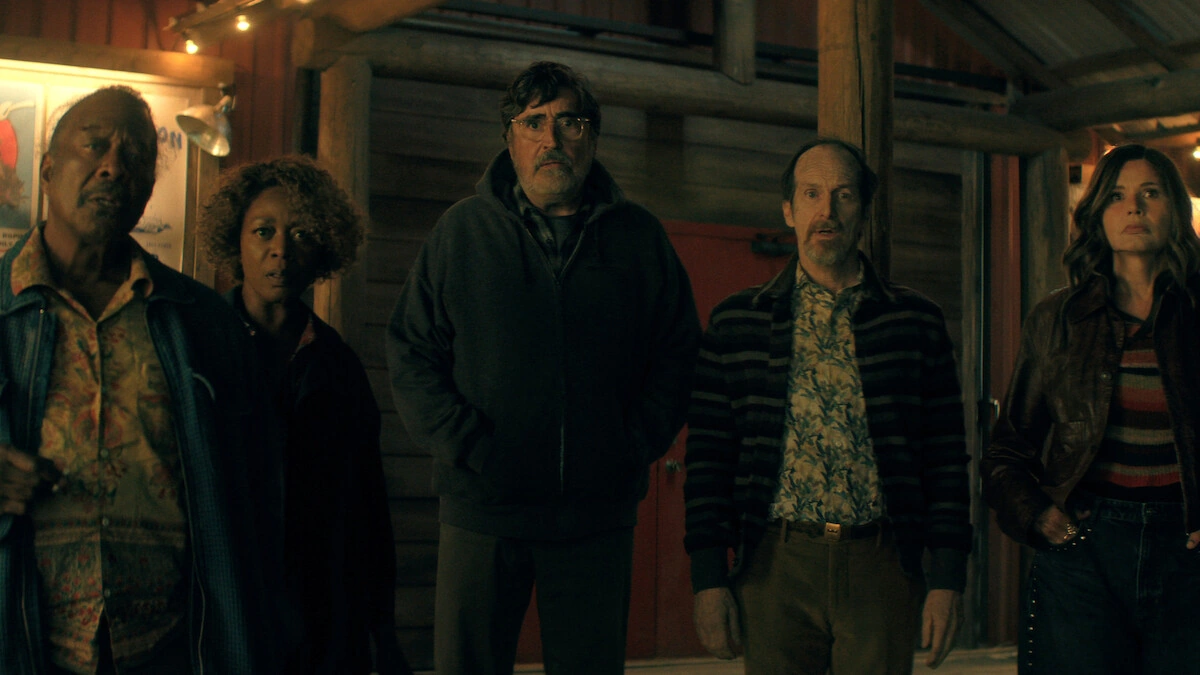
The jokes do not feel detached from the characters, and everyday conversations give the group a warmth that makes us want to spend more time with them.
Crucially, these moments avoid treating older people as sources of ready made wisdom or comedy based on physical frailty.
They disagree, become jealous, joke and desire love, just like younger characters.
This success later becomes the source of one of our strongest reservations: when the series allows its heroes to sit together and interact freely, it is sometimes more enjoyable than when it pursues monsters and reveals secrets.
Monsters nobody fears because the witnesses have grown old
After moving into the neighborhood, Sam begins noticing abnormal things before seeing a strange creature with limbs resembling a spider's legs, apparently feeding on human bodily fluids.
The paradox is that seeing the monster does not mean anyone will believe it exists.
When Sam tries to explain what he saw, his health and age become sufficient reasons to doubt him.
Here a familiar horror idea becomes more closely connected to the series' subject.
Young characters in these stories usually fear that adults will not believe them. Here, the fear concerns the possibility that others will interpret what is happening as a sign of dementia or cognitive decline.
That possibility carries consequences beyond mockery or disbelief. It could lead to losing one's independence or having decisions made about one's life without consent.
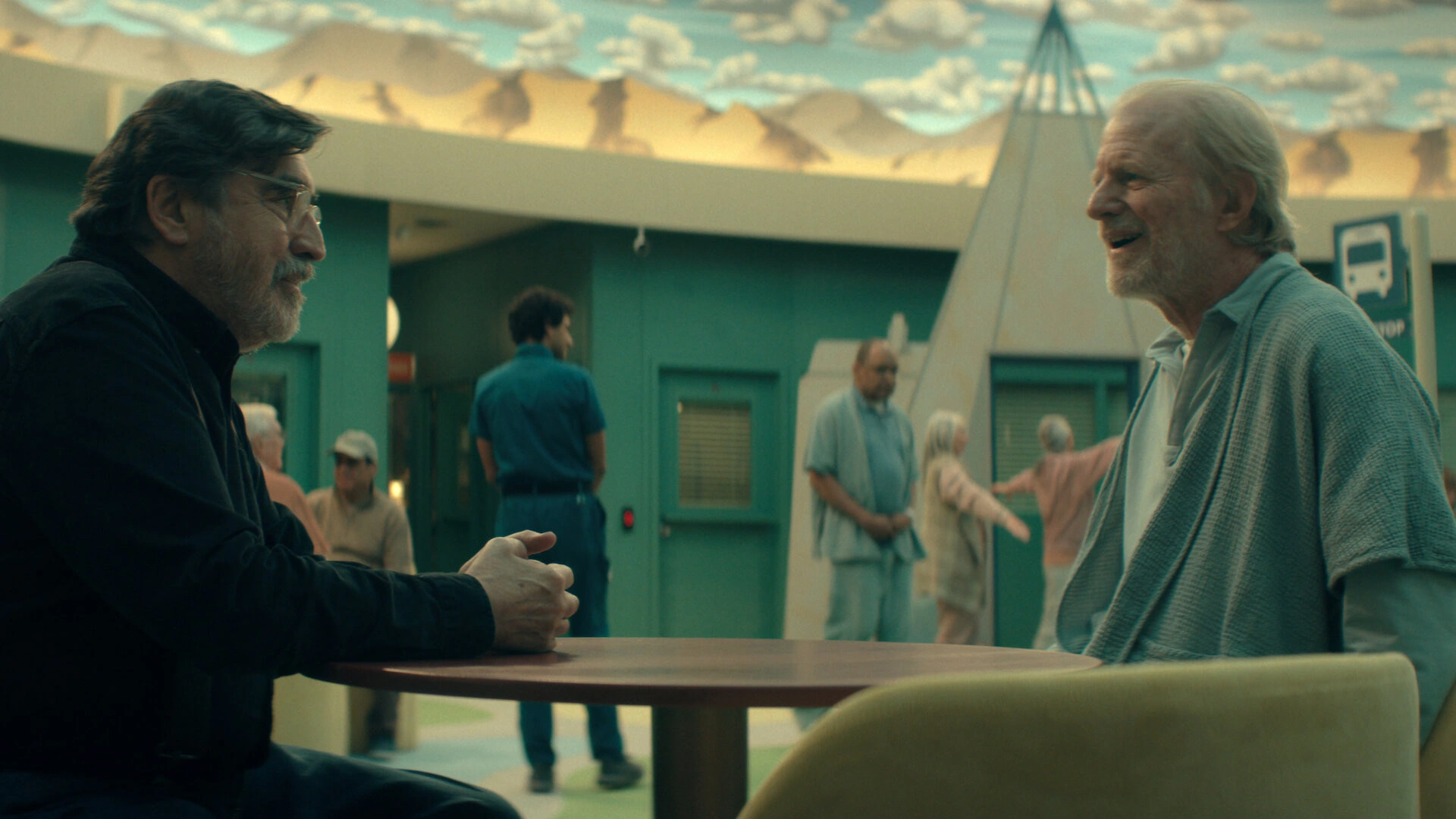
The series benefits from the presence of the long term care facility known as The Manor, where Edward, one of the people connected to the surrounding mysteries, lives.
The facility does more than provide a setting; it makes the distinction between needing care and losing freedom of choice part of the dramatic tension.
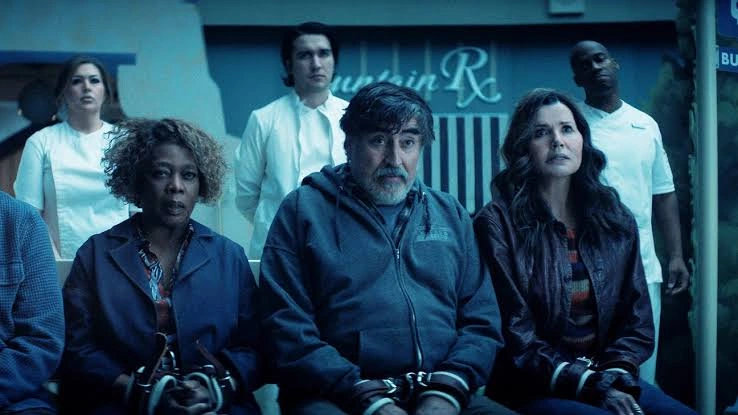
Edward's warnings become more significant when Sam realizes that others noticed the place's strangeness before him.
This is an effective choice because Sam is not an exceptional hero who has discovered a secret that nobody else can understand. He is someone who enters a conflict that predates his arrival and needs other people's experience to begin making sense of it.
Better still, the series makes the characters face a danger involving more than monsters: society's perception of their ability to understand reality.
When age becomes grounds for doubting your testimony, even trying to seek help can become a risk.
Time and death: when horror becomes an extension of everyday life
The series gives its idea of stolen time a particular meaning because its characters already live with a growing awareness that their remaining years are limited.
This is clear in Wally, who has stage four prostate cancer and knows his treatment options have become limited.
Through him, death becomes a present reality shaping daily decisions rather than a distant possibility.
His search for a way to survive or extend his life therefore does not seem merely a hunger for power or an irrational rejection of fate, but an understandable human desire for another chance.
Judy reveals another aspect of loss when she faces the death of someone she loved in the past. The shock seems capable of disrupting her life despite the experience she has acquired.
Here the series offers one of its most honest observations: growing older does not make someone immune to grief, nor does a lifetime of experience prepare them for every new loss.
Pain is not connected to death alone.
People can grieve declining health, lost mobility or a life they can no longer recover, even when their loved ones remain beside them.
This psychological layer makes creatures threatening the time left to live especially appropriate to the characters the series has chosen.
The danger does not mean losing a future that appears boundless, but losing what might be the final chance to fulfill a deferred wish or repair an old relationship.
From this perspective, The Boroughs successfully gives horror an emotional substance connected to its heroes' experience, instead of using aging merely as a superficial difference from similar works.
Wonderful characters whom the screenplay separates too often
Although the group is one of the series' greatest strengths, the writing does not make equally effective use of their interaction throughout all eight episodes.
After an opening that brings the neighbors together and reveals their relationships, the characters begin pursuing individual storylines of varying importance and impact.
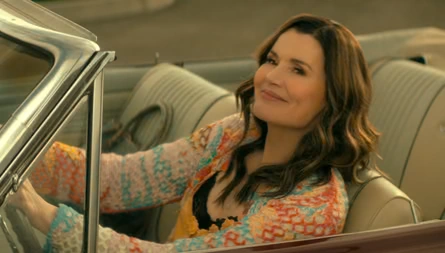
Renee enters a sweet romantic relationship with a younger security guard. The storyline gives her room to express her continuing desire for love and closeness, beyond the conventional image that confines older people to their memories.
Geena Davis presents this relationship with lightness and warmth, without making the age difference a perpetual joke.
Art, meanwhile, undertakes a personal journey into the desert, seeking space to address his feelings and his relationship with Judy.
These storylines have value, but not all receive enough development to become equally affecting.
Some offer appealing glimpses of a character, then quickly move to another development before giving us a chance to understand its consequences.
The effect of this choice can be felt in the overall pace.
The series has a cast capable of making a simple everyday conversation enjoyable, yet sometimes distributes them across separate paths before bringing them together when the plot needs another confrontation.
The season could have benefited from more room for friendship to develop between the neighbors, especially since mutual trust becomes one of their most important weapons.
The best thing about this group is not that each person can face danger alone, but that their different experiences let them compensate for one another's weaknesses.
This sometimes makes us feel the series could have offered a more distinctive experience if it had given its human relationships the time it devoted to certain mysteries.
Science fiction: a mysterious world that does not make the most of every secret
The Boroughs mixes several elements of science fiction and horror, from strange creatures and unfamiliar fluids to mysteries involving minerals and phenomena that are initially difficult to explain.
It also uses ravens, old television sets and details of the residential environment to add a layer of mystery to a place that appears orderly and safe.
The series does not hide certain similarities to Stranger Things, particularly its combination of a team of friends, a supernatural danger and comedy that softens the horror.
The most important difference, however, lies not just in the heroes' ages, but in the nature of their experience.
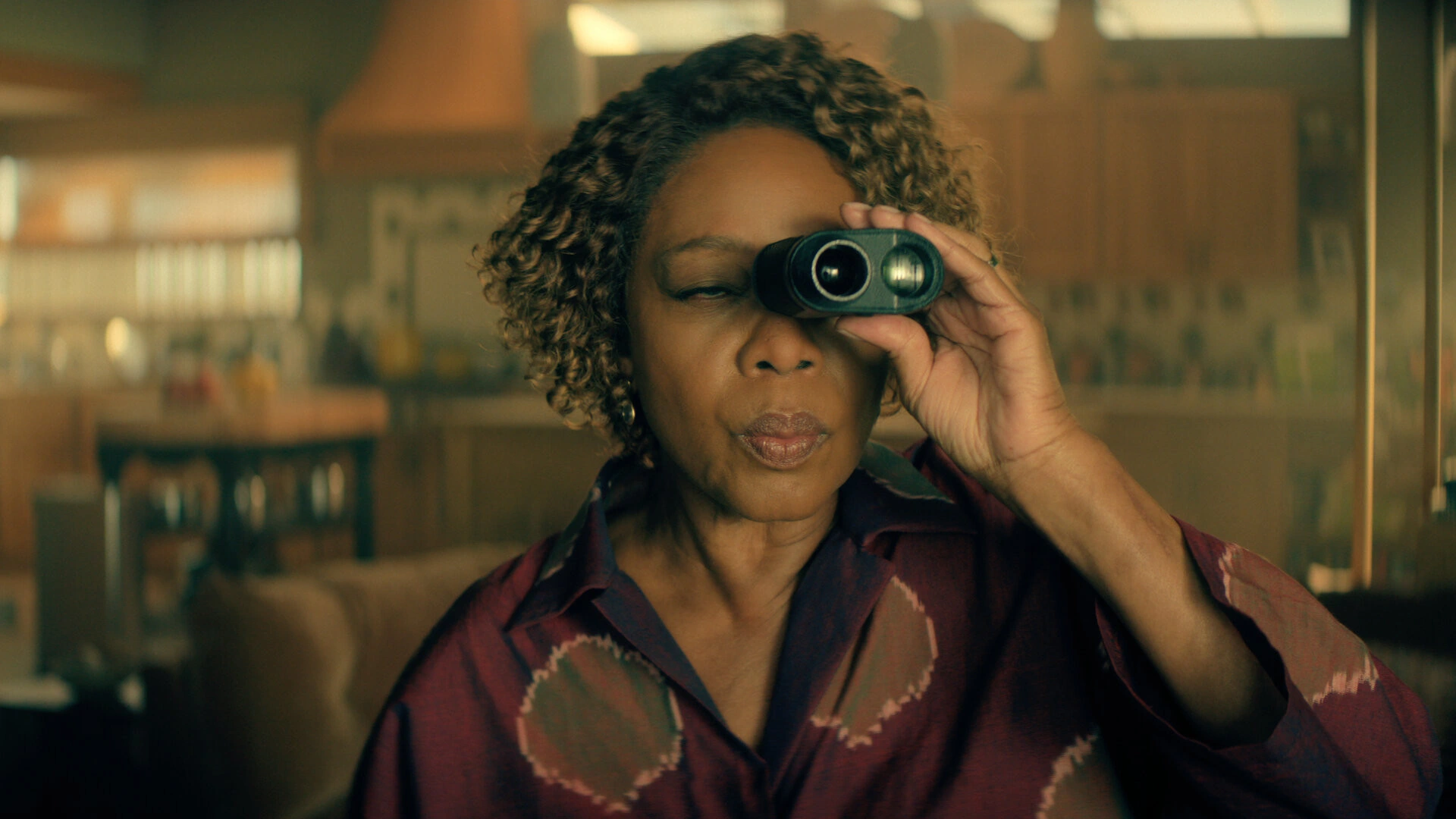
These people have lived long lives, and some have held professions that depend on knowledge and analysis, including medicine, engineering and journalism.
They therefore do not always need to act impulsively for the adventure to advance. They can use what they have learned, apply their experience and search for explanations.
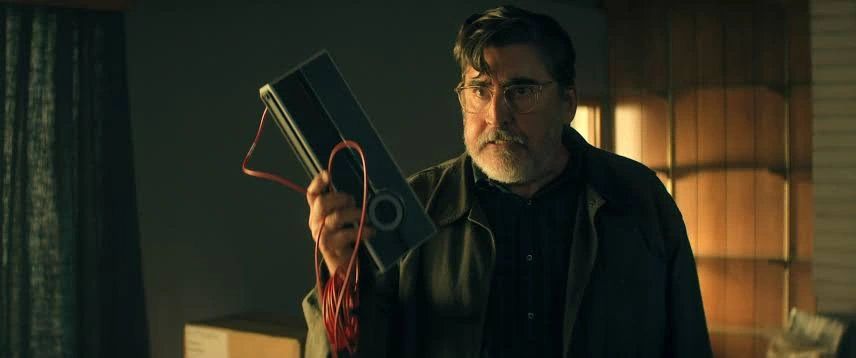
This gives the team a distinctive character when its members work together.
The central mystery, however, does not retain its strength throughout the season.
Some clues seem intriguing when introduced but do not develop into dramatic results matching the attention the episodes devote to them. The gradual revelation of secrets also sometimes takes so long that the viewer's curiosity begins to diminish.
The creatures themselves do not provide many frightening moments capable of surprising us once we understand the nature of the threat.
Here a problem emerges in how the episodes allocate their time.
The series has enough characters and ideas for an enjoyable season, but sometimes extends the mystery instead of developing its impact on the heroes.
Nevertheless, the adventure remains appealing thanks to the group's interaction and the comedy arising from their attempts to deal with situations unlike anything they have known.
A retirement community with a visual identity between nostalgia and strangeness
The New Mexico desert plays an important role in shaping the series' world.
We encounter a luxurious residential community with gardens, golf courses and organized facilities, as though it had been designed to separate its residents from the outside world's disorder.
This calm becomes more unsettling when we realize the danger is already inside.
The series benefits from the contrast between the place's idealized appearance and the secrets hidden by its institutions.
Older details give it a particular character, especially traditional television sets that keep appearing despite the presence of modern phones and surveillance cameras.
These elements reflect the residents' relationship with the past, but also serve functions within the mysterious world instead of merely evoking nostalgia for an earlier time.
Nevertheless, the cinematography does not give every scene the visual identity it deserves.
Some shots appear flatly lit, with colors lacking the contrast that could emphasize the desert landscape's beauty or make supernatural phenomena more intimidating.
Even scenes featuring strange luminous points in the sky have greater visual potential than the results we sometimes see.
The issue is not a lack of imagination in designing the world, but an uneven realization of its elements.
The setting can create a powerful contrast between apparent safety and real fear, but the visual execution does not give that contrast equal prominence throughout the season.
The series' style consequently suits a light adventure more consistently than it creates distinctive visual horror.
Villains and the ending: is survival worth any price?
As the season approaches its conclusion, the conflict becomes clearer between the characters trying to uncover the community's secrets and the forces seeking to preserve the existing order.
Intriguingly, the antagonists' motives are not all confined to an abstract desire for evil.
There are suggestions of a fear of extinction and a willingness to commit cruel acts to survive or protect loved ones.
This gives some actions a more complex dimension without making them acceptable.
The problem is that these motivations do not always receive enough development before the decisive confrontations.
Characters such as Blaine and Hank offer opportunities for compelling moral conflict, but some of their decisions seem driven more by the plot's need to escalate danger than by clear psychological development.
The ending tries to give several characters different degrees of complexity, allowing us to understand some of their motivations without overlooking the consequences they have caused.
Sam's group, meanwhile, achieves a victory whose value goes beyond confronting monsters.
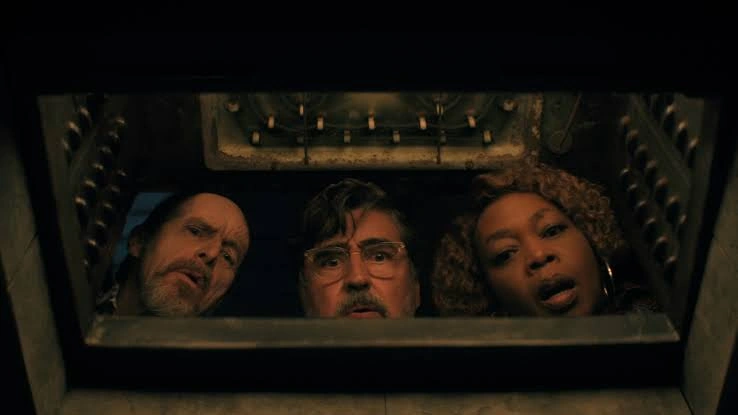
People whose abilities others habitually underestimate prove that they can still make consequential decisions, work together and face a danger that the institutions around them could not address.
Victory does not mean that the dangers of aging and death are now behind them.
The final scene involving the wound on Sam's forehead leaves open the possibility of unresolved consequences without defining their nature.
It is an ending that gives the central adventure a measure of closure while retaining some of the anxiety that has accompanied the characters from the beginning.
Final verdict
Final verdict
The Boroughs offers an enjoyable first season distinguished by an unconventional premise and a strong cast, giving older characters space they rarely receive in this kind of science fiction and horror. Its greatest successes are its human relationships, natural comedy and ability to connect the adventure with questions of loss, illness and the time left to live. The season also suffers from occasional slowness in revealing secrets, personal storylines that could have been developed more fully, and visual direction that does not realize all the potential of its setting and supernatural phenomena. These reservations do not erase the pleasure the series provides or the impact of its characters as we watch them confront fear and death with a determination to keep living. Most importantly, we are not watching older people trying to behave like young heroes. We are watching people use their histories, experience and relationships to create an adventure that belongs to them alone. Our rating for the first season of The Boroughs is therefore 8 out of 10. This series combines heart, humor and mystery, and is worth watching, particularly for viewers seeking a science fiction adventure that depends as much on endearing characters as on monsters and secrets. Perhaps its most beautiful idea is that life does not lose its value when someone recognizes that their time is limited; the question of what they will do with that time becomes more important.
Your turn
The question for you: did the adventure involving monsters and mysteries add to the strength of The Boroughs, or would you have preferred more time devoted to Sam's relationships with his neighbors?
AUDIENCE VOTE
Do you agree with the MB rating?
Choose once from this browser. You can change your answer at any time.