The review
Screenplay and dialogue: renaming the crime
Iwazono abducts Kuniko while she is out running and holds her in his apartment. He then explains that he is not looking for a fleeting physical relationship, but for a perfect union of heart and body.
The idea he keeps repeating is more than an eccentric detail in his personality. It is the means by which he tries to rename his crime.
He imagines that the problem with his previous relationships was a lack of complete understanding, and that the solution is to find someone who will give him that understanding without reservation. He overlooks a simple truth: no one can impose the circumstances and then demand that the other person make a free choice within them.
What makes Iwazono interesting is not that he is a different or gentler kidnapper, but that he cannot see the contradiction he inhabits. He apologizes, sometimes behaves awkwardly and submissively, and seems concerned about Kuniko's feelings. Yet he alone decides where she will live, when she may leave, and what form her response to him is allowed to take.
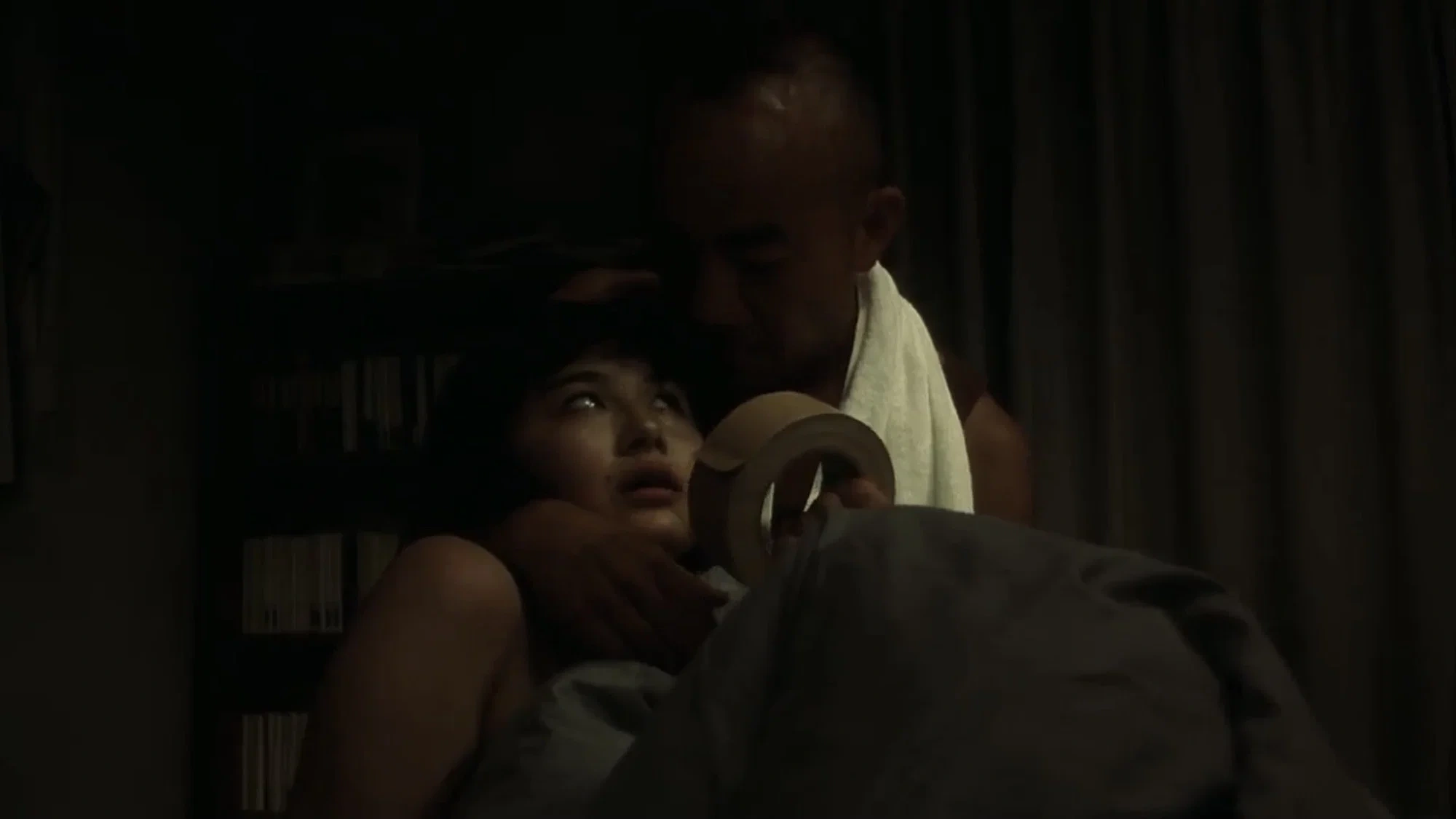
Even when she hints that she would accept a physical relationship as a way to secure her release, he refuses because he wants what he considers genuine desire. On the surface, this looks like a moment of restraint. It reveals something more disturbing, however: he does not want only her body; he also wants to control the meaning she gives to what is happening.
Here the film finds its strongest idea. It does not present control as an explicit threat at every moment, but allows it to take on the appearance of concern and care.
This idea does not automatically become a profound psychological analysis. Its value depends on whether the story can later convince us of the relationship's changes, rather than on the strangeness of its premise alone.
Kuniko: the ability to negotiate is not freedom
Kuniko could easily have become a character who waits for her captor to act and then responds. Her presence, however, gives the relationship another direction.
She confronts him, mocks him, tests the limits of his authority, and gradually learns to use his emotional need to obtain things he never intended to give her. We see her make demands and pressure him over the details of daily life, until the man who began with every instrument of power sometimes becomes unable to control their relationship's rhythm.
This movement gives her a degree of agency and explains why their confrontations are more engaging than the film's abstract premise.
But the ability to maneuver should not be confused with freedom. Kuniko can influence Iwazono's decisions, yet that does not mean the imbalance of power has disappeared or that occasional reversals of their roles have made the relationship equal.
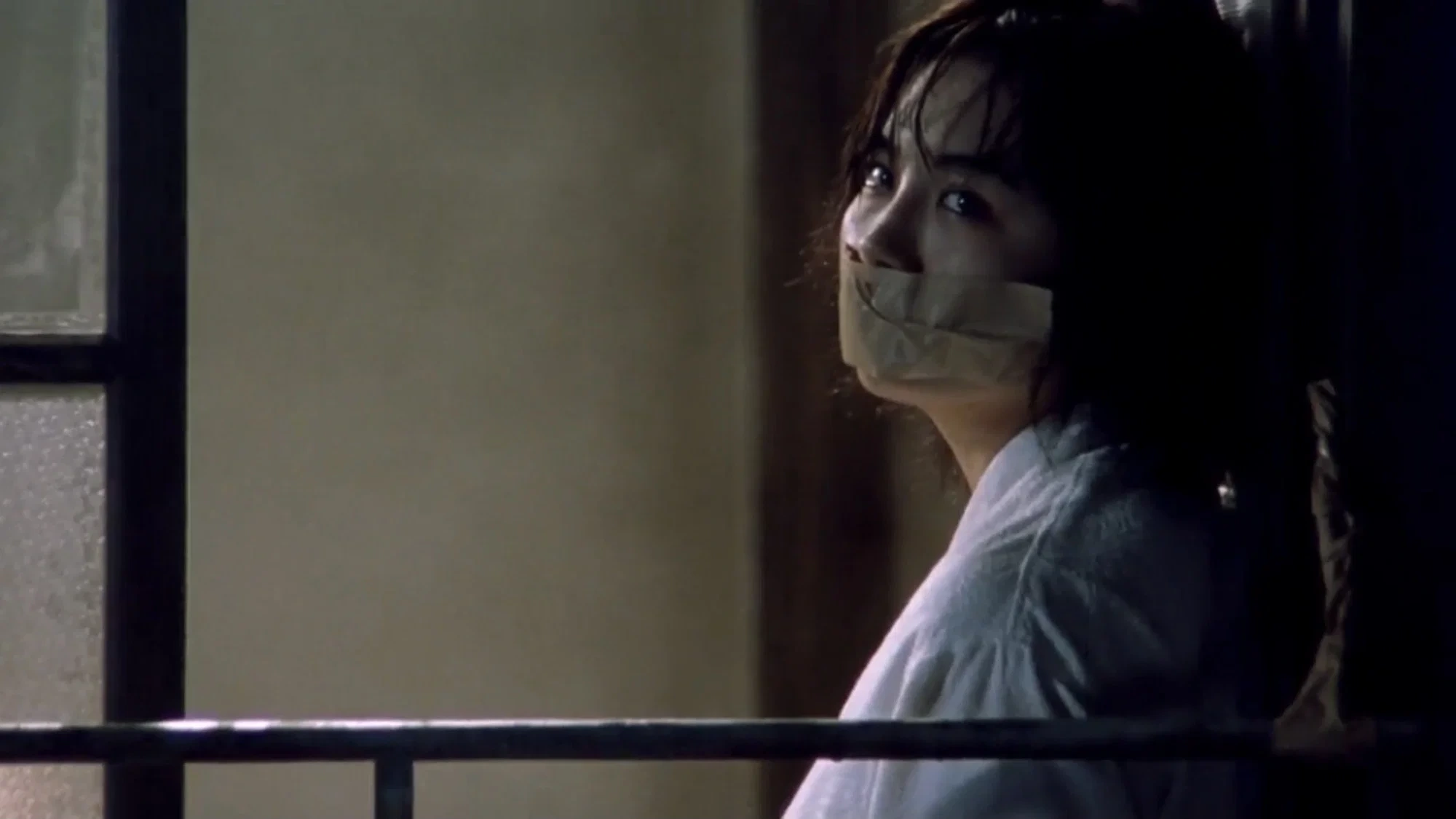
A person who is trapped may negotiate with the one holding the key, not because they have accepted imprisonment, but because they are looking for a way to survive or leave.
These confrontations also change our position as viewers. We begin by fearing for Kuniko, then may find ourselves enjoying her ability to embarrass the man holding her, as though winning a small argument reassured us that the danger was under control.
This is one of the film's most intriguing psychological games. It changes our feelings about the limits of her freedom more than it changes the freedom she actually has. That makes it necessary to distinguish between a temporary victory in a confrontation and possessing the right to end it.
The hot springs trip and the reversal of the handcuffs
The story's most striking shift comes during the trip to a hot springs resort.
There, the handcuffs that began as a symbol of Kuniko's subjugation are reversed: she manages to restrain Iwazono, leaves, then decides to return and release him.
The scene deserves attention not simply because it is a surprising turn of events, but because it concentrates the dilemma the film is trying to resolve.
If she has become able to leave, does returning mean she has truly chosen him? Or does the kidnapping story now have to persuade us of an emotional leap it has not sufficiently prepared?
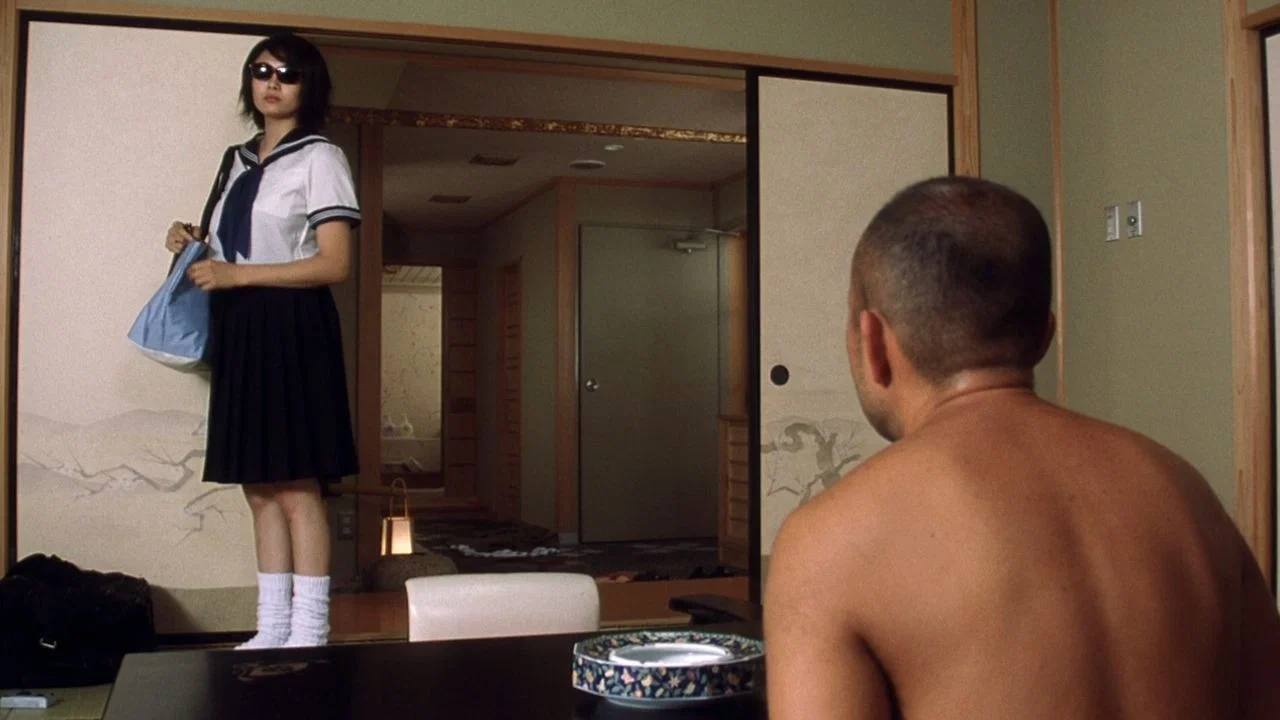
Her return can be read in several ways: compassion for someone who has revealed his vulnerability, confusion produced by familiarity, or an attempt by Kuniko to regain control of her relationship with him.
The film does not establish one explanation or develop every possibility equally. The problem is not that it leaves her motives uncertain; psychological ambiguity can enrich a film. The problem is that some changes happen so quickly that ambiguity begins to resemble insufficient preparation.
Here the difference becomes clear between a scene that carries a strong idea and one that convinces us of everything that follows from it.
The reversed handcuffs are a clever image of a shifting balance of power, but her voluntary return does not automatically erase what preceded it. The film needed a more precise account of the period between Kuniko's resistance and her possible attachment, so that the change would grow from what we knew of her rather than simply being required for the story to continue its strange romantic course.
The neighbors and the comedy behind an ordinary wall
The film treats Iwazono's surroundings in an unexpected way.
The building's residents are more than a backdrop to Kuniko's captivity. They supply amusing situations and eccentric supporting characters, from the landlady to the neighbor played by Shinya Tsukamoto.
At many points, the narrative moves from a relationship founded on fear and control into a world apparently occupied with its small concerns and comic incongruities.
This choice has a successful side. The comedy makes the film's world unstable and raises a disturbing question: how can this story unfold behind an ordinary wall while life next door carries on as though nothing has happened?
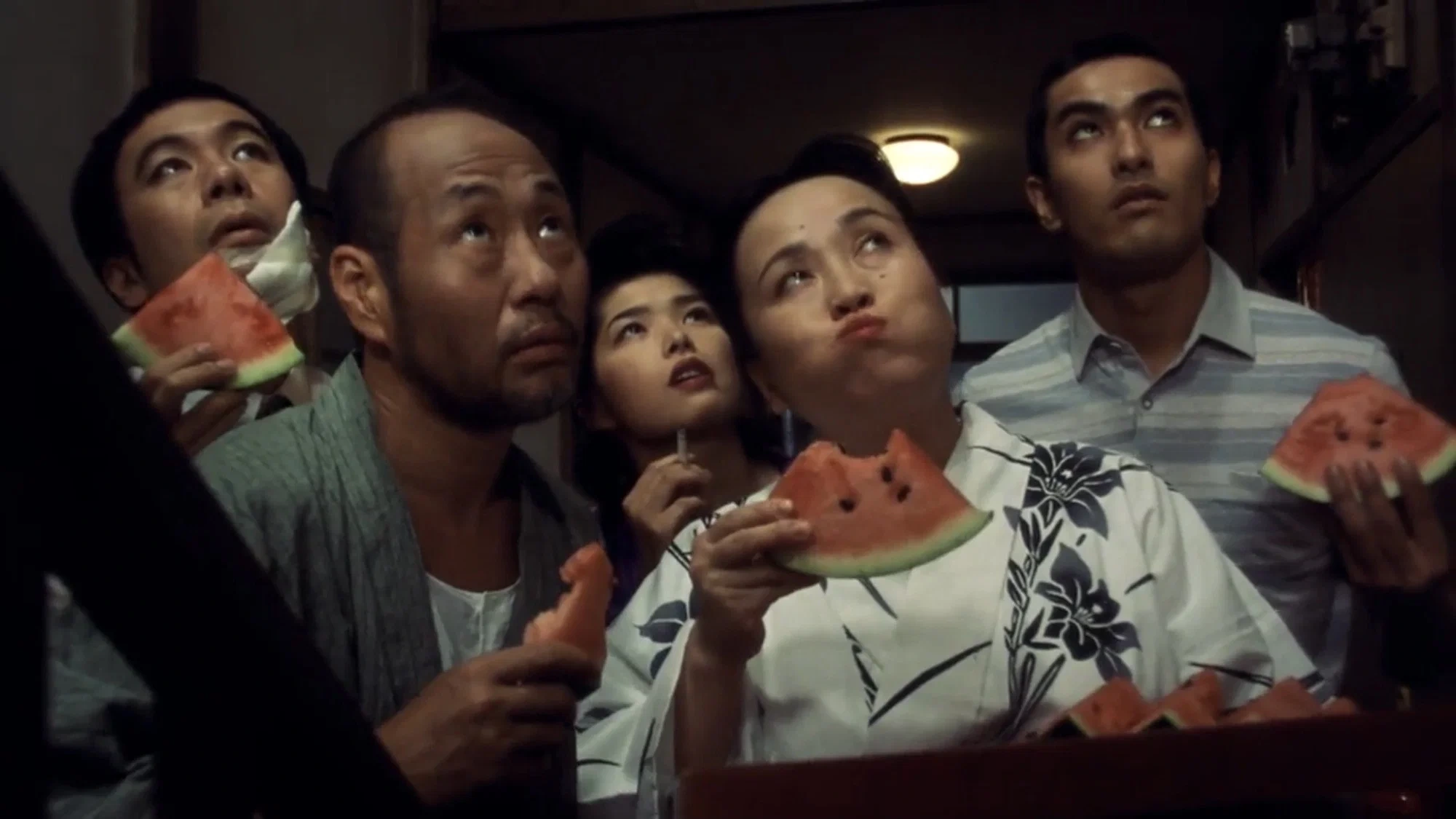
The neighbors' presence can deepen the feeling of isolation rather than relieve it. Physical proximity does not guarantee that anyone will see what is happening or intervene to stop it.
The other side of the choice is less convincing.
Some supporting incidents function as breaks that add little to the central conflict and reduce the tension just when the film needs to deepen it. The absence of a meaningful response from the surrounding community to what is happening in the apartment also raises questions about the world's own logic.
A work does not have to be entirely realistic for us to accept it, but it needs to make clear the rules under which it operates.
When those rules change according to whether a scene needs laughter or anxiety, the shifting tone sometimes becomes an obstacle rather than a strength.
Performances: vulnerability within an unequal relationship
One of the main reasons we remain interested in the film is the presence of Hijiri Kojima and Naoto Takenaka at its center.
Kojima plays Kuniko as more than a passive victim. She is quick to answer, capable of provoking, and has a presence that makes the transfer of initiative between her and Iwazono tangible.
The performance matters because it gives the character a desire to influence and confront, even when the writing does not adequately explain every step she takes.

Takenaka, meanwhile, does not present Iwazono as an unshakable villain who always knows what he is doing.
We see a confused man who is easily embarrassed, constantly needs reassurance that he is loved, and sometimes seems smaller than the authority he exercises.
This contradiction in the performance prevents him from becoming an abstract symbol of domination and makes him more understandable. It does not make his actions any less violent.
This is precisely where the actor's value emerges: he can expose the character's vulnerability without requiring us to sympathize with him as a moral judgment.
The chemistry between the two actors does not mean their characters' relationship is healthy or convincing at every stage. It means that their confrontational dialogue and testing of boundaries have a tension worth watching.
When Iwazono cannot impose his authority despite his actual power, or Kuniko refuses to behave according to the image he has drawn of her, a comedy arises from the characters themselves. It is livelier than some of the supporting incidents manufactured for laughs.
This is the aspect that gives the film its clearest human pulse.
Direction, image and music: an unsettled tone
There are visual choices worth noticing, even if they do not all develop into a coherent directorial language.
At first, the apartment is associated with heavy shadows and cramped space. Later, we move into brighter surroundings, particularly during the trip outside it.
This change does more than alter the appearance of the image. It also changes how the viewer may feel about the relationship: the immediate sense of captivity recedes, and the two characters begin to resemble an ordinary couple on a trip.
That is exactly what makes the visual choice ambiguous. It may explain a change in Kuniko's perception, or it may encourage us to forget the circumstances in which the relationship began.


The music sometimes moves in the same direction more overtly.
Classical or sentimental passages accompany moments still fundamentally marked by threat and inequality. Some musical buildups that stop abruptly also leave the impression that the film is changing its position on the event before our eyes.
This discrepancy between what we hear and what we know can make the experience more unsettling and more thought provoking.
It does not always work equally well, however.
In some scenes, it is difficult to tell whether the music is mocking the romantic image or actually encouraging us to embrace it.
Ben Wada's direction has moments that use light and sound to serve this ambiguity, but it does not always develop a consistent method for distinguishing irony from sympathy.
The problem is not that image and sound mix two conflicting feelings. It arises when we cannot tell whether the conflict is intentional or the result of weak control over the film's tone.
Adaptation and pacing: compelling situations without enough connections
Adapted from a novel, the film knows how to create a situation that is hard to ignore and then finds various ways to prolong the confrontation between the characters.
The story's rhythm does not progress with the same consistency.
The film begins with the promise of a crime charged with danger, devotes a long stretch to daily bargaining and comic situations, then brings the intimate aspects of the relationship forward at a later stage.
Changing genre is not a flaw in itself. The difficulty is that some stages seem placed beside each other rather than connected through cause and effect.
There is also a striking imbalance in the distribution of information about the two characters.
From Iwazono's past, we learn that he emerged from a marriage that ended with the loss of his family. This helps us understand some of the roots of his obsession with finding a relationship he cannot lose.
That background explains his distorted view of love without justifying the kidnapping.
Kuniko's inner world, by contrast, remains less clear when the narrative reaches her most consequential decisions. We know how she argues and bargains with him, but we do not sufficiently understand how she processes and reconsiders what she has lived through.
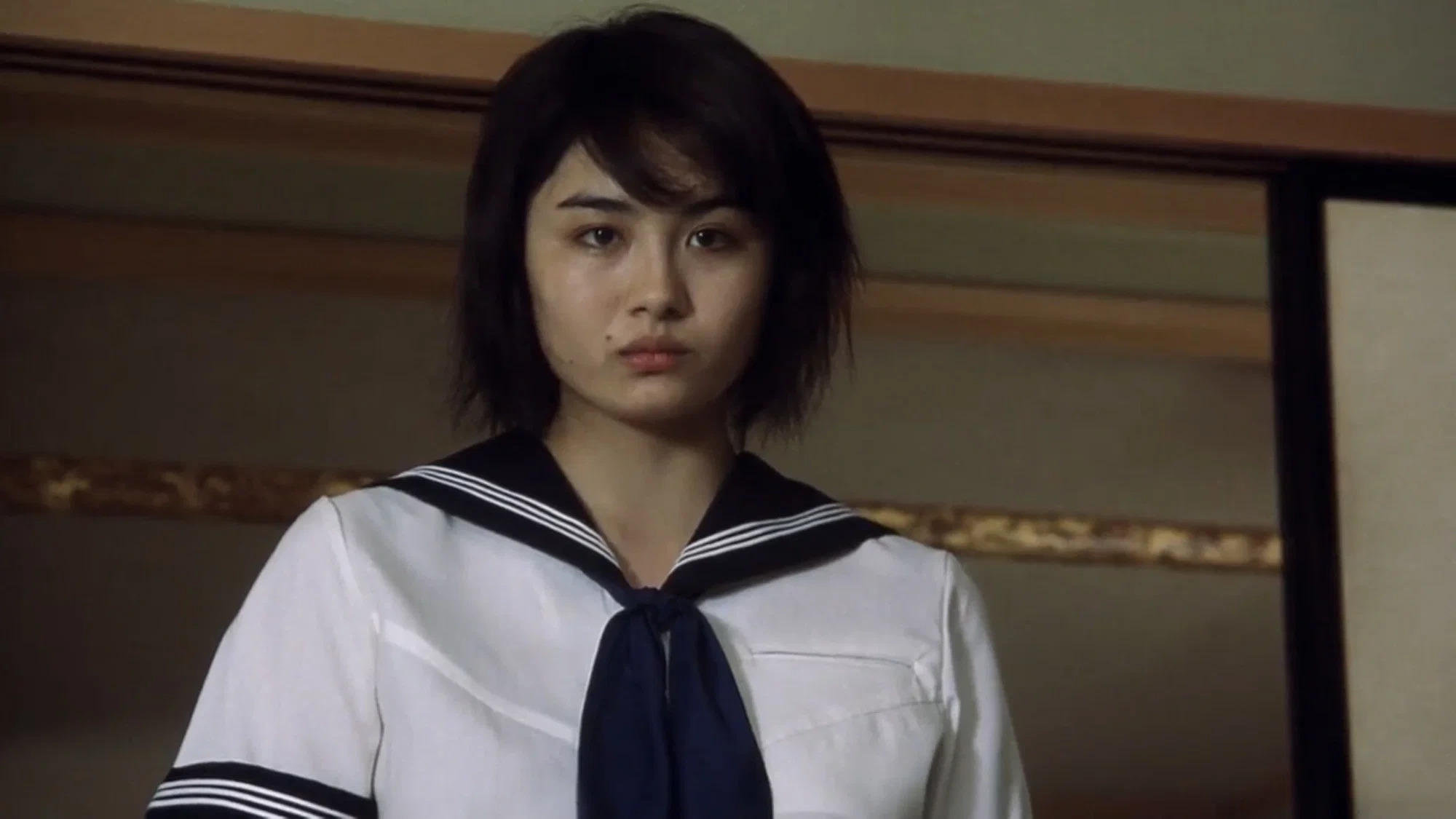
Perhaps this is why the film remains more engaging in its individual situations than in its overall construction.
It knows how to surprise us through changing balances of power and conversations unlike those we expect from a captivity story. At times, it leaves an impression that invites reconsideration after the viewing.
It does not, however, give all these moments the connections they need to become a complete psychological journey.
The experience draws some of its strength from its strangeness and sometimes falters for the same reason.
Final verdict
Final verdict
The film succeeds as an uncomfortable experience that invites debate, thanks to its contradictory premise, the presence of its actors, and choices that pull our feelings in different directions through image and music. It falters when it tries to turn adaptation to captivity into an apparently free emotion without sufficient psychological development to support that transformation. It is neither a tightly controlled film nor an experience that can be reduced to gratuitous provocation. The boldness of its question remains stronger than some of its answers. It is worth watching for those interested in ambiguous psychological drama, not because it convinces us of everything that happens, but because it makes us question how we have received what happens.
Your turn
Now the question is yours: did the film succeed in portraying a genuine change within Kuniko, or did it make her choices appear free while the relationship remained founded on taking her freedom away?
AUDIENCE VOTE
Do you agree with the MB rating?
Choose once from this browser. You can change your answer at any time.