The review
A second chance carrying the hero’s old anger
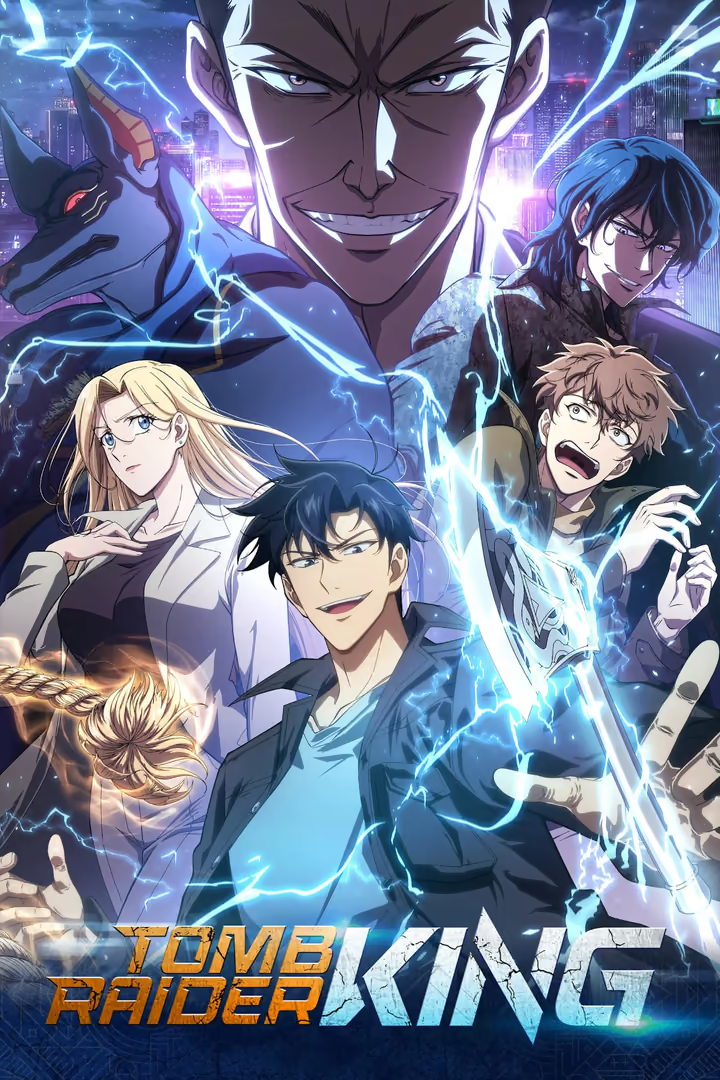
The story begins in a world where tombs appear containing relics that give their owners supernatural abilities, turning them into a field of competition, exploitation and struggles for influence.
Seo Joo-heon enters this world with experience acquired at a harsh price. He works for an organisation that profits from him, suffers betrayal, and is then given a chance by a mysterious crow to return fifteen years into the past, retaining his memories and knowledge.
This foundation gives him a clear motive. He wants to secure his position early, acquire power and wealth before anyone else, and take revenge on those who controlled his previous life.
We think having a hero with this disposition gives the series vitality. Joo-heon takes the initiative, plans and deceives, and his decisions remain engaging even when you disagree with them. His prior knowledge also makes raiding tombs part of a personal project with aims beyond gaining another upgrade.

But returning to the past brings a deeper test: how will someone who suffered exploitation behave when he becomes the person able to dictate the terms?
The season raises this question, then hesitates to address some of its consequences. Its enjoyment of the hero’s audacity sometimes leads it to overlook the effects of his actions on others. Even so, this contradiction remains useful material for the character, becoming more interesting when the people around him begin to resist him and hold him accountable.
Relics give the world its best ideas
What most distinguishes the world of Tomb Raider King is the connection between its relics and stories, myths and historical figures. This allows variety in its puzzles and abilities and gives tomb raiding a particular character.
Reworking the tale of the golden and silver axes is a good example. Knowing the story helps bring the solution closer, but changing the conditions of the test prevents complete reliance on a memorised answer. Cultural background becomes part of the thinking required by the encounter.
The Code of Hammurabi likewise works as a visually distinctive relic with a defensive ability that reflects attacks. Connecting origin and function gives the power a memorable meaning rather than leaving it as a numerical increase in its owner’s abilities.
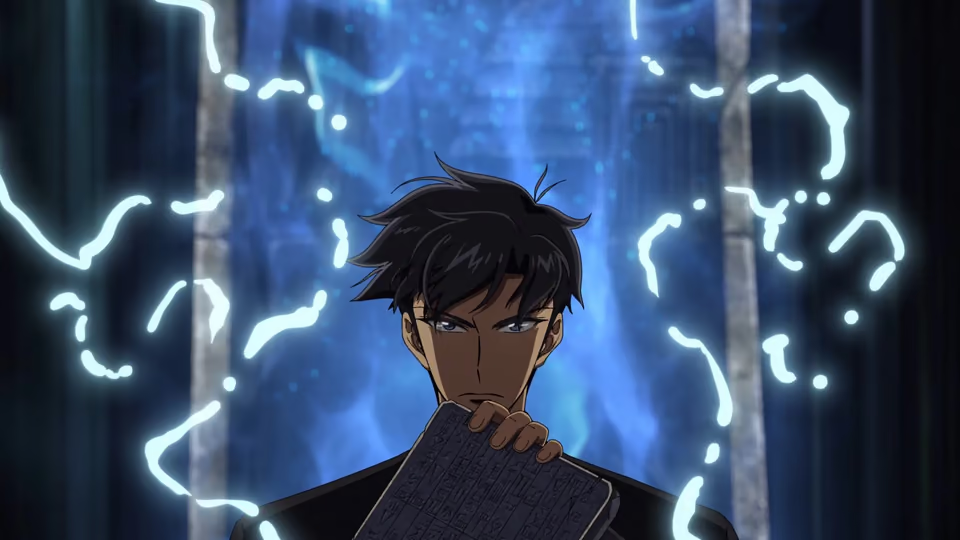
The rules of compatibility and dominance add another layer. Owning a relic does not guarantee that it will be easy to handle, and the user’s psychological state can affect their ability to subdue it. Relic poisoning also helps explain part of Joo-heon’s dependence in his former life.
For us, these details are the best foundation on which the series builds its identity. The overall framework is familiar, from returning through time to skills and quests, but the nature of the relics gives it considerable room for invention.
The problem appears when collecting them advances faster than developing their use. An abundance of tools can become a display of possessions, while the greater pleasure comes when the rules interact and the hero must make an appropriate choice within a particular situation.
Knowing the future requires a world that can change
The main dramatic problem through much of the season is the enormous gap between Joo-heon and the other characters.
He knows the relics’ locations and functions, understands his opponents, and has experience that allows him to move through situations quickly. This advantage supplies enjoyable moments of planning and surprise, but it loses impact when the same result keeps recurring.
We need a possibility that can change the direction of a scene. When the hero can explain everything and keep everyone under control, anticipation becomes a matter of watching how he will confirm his superiority.

The crow’s presence suggests that the second chance comes with conditions or dangers, but this concern remains less prominent than the advantages Joo-heon actually receives.
The show improves when his prior knowledge becomes partial. Puzzles that differ from what he remembers and situations containing new details give him reasons to think and reconsider. His changes to events also logically open possibilities that his memory cannot settle entirely.
This is the direction we find most appropriate to the premise of returning through time. His experience gives him a strong starting point, after which his new life imposes tests of its own.
In the later stages, this improvement becomes clearer. Joo-heon remains intelligent and capable, but he begins to assess risks for which he has no guaranteed answer, restoring an important measure of suspense to the adventure.
Irene reveals the value of sharing roles
The season improves considerably when someone else’s actions can change the outcome.
Irene is the clearest example. Giving her room to save the situation, then placing her at the centre of the final confrontation, broadens the story and makes her relationship with Joo-heon more beneficial to both of them.
His concern for helping her parents also adds a motive beyond his immediate self-interest, connected to the suffering he knew in his previous life. He does not suddenly become a different person, but his motives begin to expand, and we see a capacity for cooperation that holds better possibilities for the future.

George’s attitude towards him matters for the same reason. Joo-heon’s deception affects trust, and those he has tricked gain a legitimate claim within the conflict. Consequences of this kind make the world more believable.
Jae-ha exposes the opposite problem. His specialism in restoring relics gives him a promising function, but the ease with which he is subdued, followed by the hero’s ability to do some of his work better, weakens the need for his expertise.
The contract imposed on him sharpens the contradiction within Joo-heon. A hero who rejects his former subservience can impose a similar situation on someone else, while the writing does not give this resemblance the friction it deserves.
We think supporting characters need an area the hero cannot immediately replace. Irene proves the value of this choice and becomes one of the main reasons the ending is strong.

Comedy works when it makes a plan costly
The series has a sardonic sense of humour suited to its hero’s personality, but its effectiveness varies with the situation.
Constantly mocking helpless opponents loses force through repetition. When Joo-heon needs to negotiate or adjust his plan, however, the humour comes from an actual problem and becomes more closely connected to the adventure.
The relic that appears as a worm and demands money provides a successful example. The hero has an idea for a solution, but carrying it out requires payment, and he then has to add his watch to complete the deal.
The detail is funny because it gives him a success that comes at a cost. We watch someone calculate carefully, then discover that the calculation did not include everything. The image of the worm among the money gives the situation a visual strangeness suited to the world.
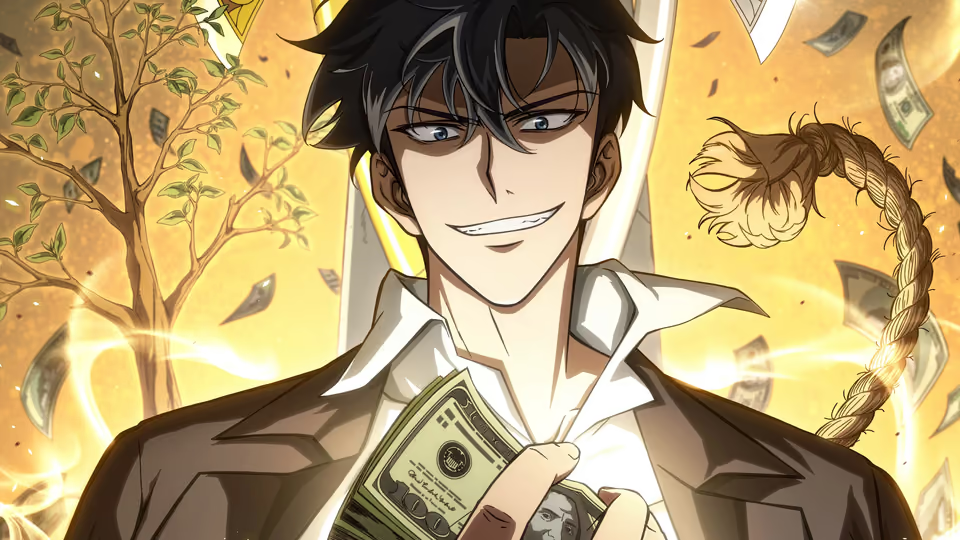
The tree relic and its need for daily care add a light touch as well. Acquiring a supernatural tool can create practical obligations, broadening the treatment of relics beyond the moment of using them in combat.
For us, this is among the season’s most successful forms of comedy. It preserves the hero’s wit and intelligence while allowing the situation to surprise him or demand a concession, adding to both character and world.
Action gives the season tangible strength
The visual presentation is one of Tomb Raider King’s chief attractions. Colour, lighting and backgrounds give many locations a strong presence, particularly inside the tombs, where shadows and the distribution of light help emphasise the environment and the abilities.
The action stands out when movement connects to the idea behind the relic being used. The Code of Hammurabi’s defence, switching between weapons, and changes in the shape of a confrontation according to the tool all give combat a variety worth following.
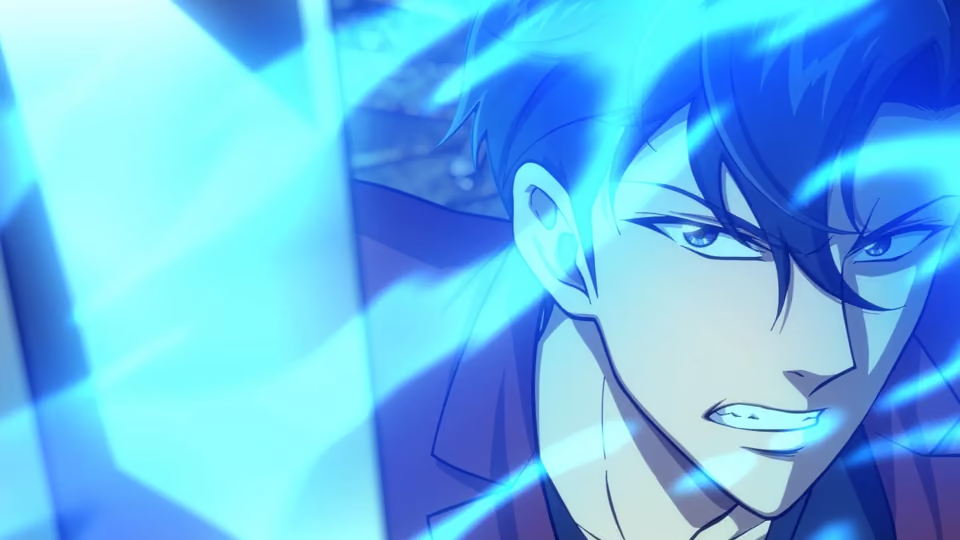
Some battles maintain a good sense of movement, with Joo-heon’s transitions and attacks feeling fluid and convincing within the show’s visual style.
Variety in the opponents is less consistent. Groups of similar monsters make some encounters depend more on the hero’s movement than on their ability to impose different styles of combat.
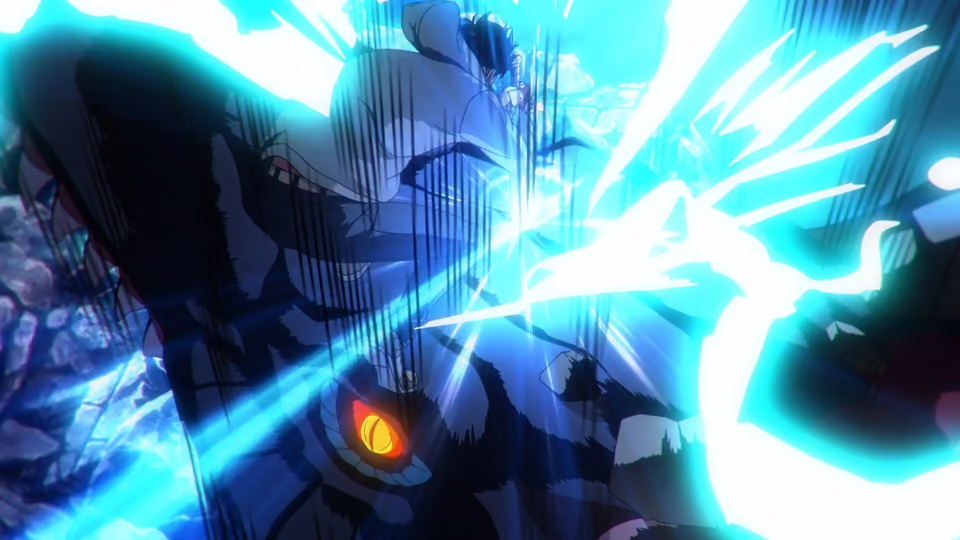
The disparity between the two-dimensional characters and some computer-generated creatures also stands out. The models do not integrate equally well, so their construction becomes conspicuous in places that could have maintained greater harmony.
The final confrontation between Irene and General Clark offers one of the season’s best visual examples. The contrast between red projectiles and golden energy blades helps us follow the movement, while the battle amid the wreckage provides room for escalation and changes of direction.
Here, the image becomes exciting and clear at the same time, and the viewer feels that the show is giving another character’s abilities the weight they deserve.
The ending reveals the direction the show needs
The season ends in a stronger position than many of its earlier stages because several elements improve together: the hero faces limits, others contribute to the solution, and the aims widen to include people who need help.
The presence of exploited children within the conflict gives Joo-heon’s actions a more specific purpose and creates opportunities for solutions requiring restraint in the use of power, rather than simply removing an obstacle as quickly as possible.
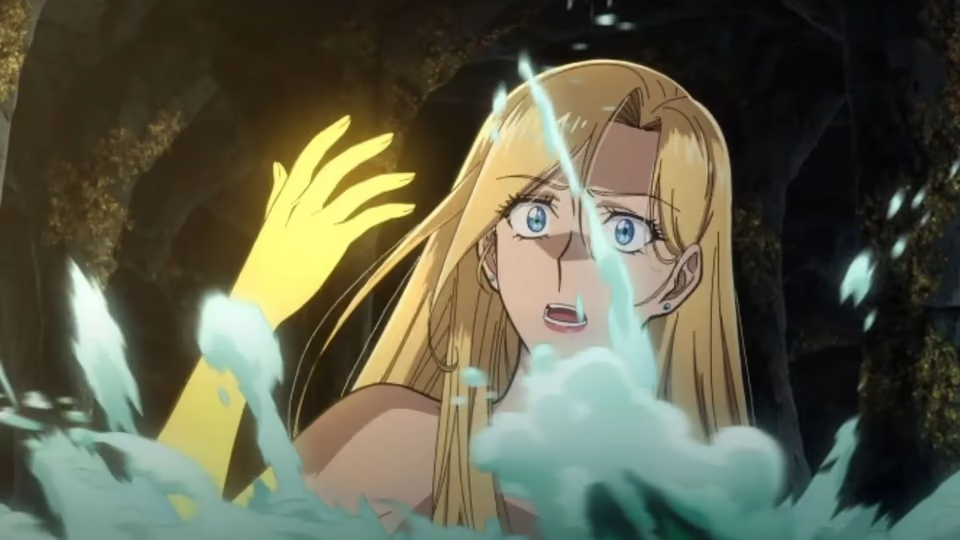
The final confrontation gives him a role within a group while Irene moves to the forefront of the fighting. This distribution makes the outcome depend on what each participant can contribute.

We think the ending succeeds in creating a real desire to continue. The world has become more capable of resisting the hero, and the hero more able to build a relationship with it.
This late improvement must still be considered within our judgement of the season as a whole. Easy moments of superiority, the low cost of some decisions, and the marginalisation of others’ specialisms occupy too much space to be overlooked in an assessment.
We therefore see the ending as evidence of the show’s potential and of the elements it could have developed earlier. Continuing this balance between ingenuity, risk and cooperation will give the story a chance to develop the best of what it has offered.
Final verdict
Final verdict
We think the first season of Tomb Raider King offers an enjoyable adventure, with a relic system rich in ideas, a hero with clear aims, and a visual presentation that gives the action force and vitality. Its chief successes come from reworking stories within its tests, comedy linked to the cost of plans, and Irene’s progress towards an independent and influential role. On the other hand, Joo-heon’s exaggerated superiority limits suspense for a long stretch, and some characters are weakened when he can easily replace their abilities. The creatures’ computer animation and the variety of battles do not always maintain the same standard either. The result is a good season that gains value as it develops and receives a deserved boost from its ending. We recommend it to fans of adventures involving a return through time and varied abilities, while expecting a journey that needs time to find a better balance between its hero’s strength and the strength of the world around him.
Your turn
Was Joo-heon’s constant superiority an essential part of the fun, or did the season become stronger when he needed Irene and the other characters?
AUDIENCE VOTE
Do you agree with the MB rating?
Choose once from this browser. You can change your answer at any time.