The review
A child's rescue shakes the community's rules
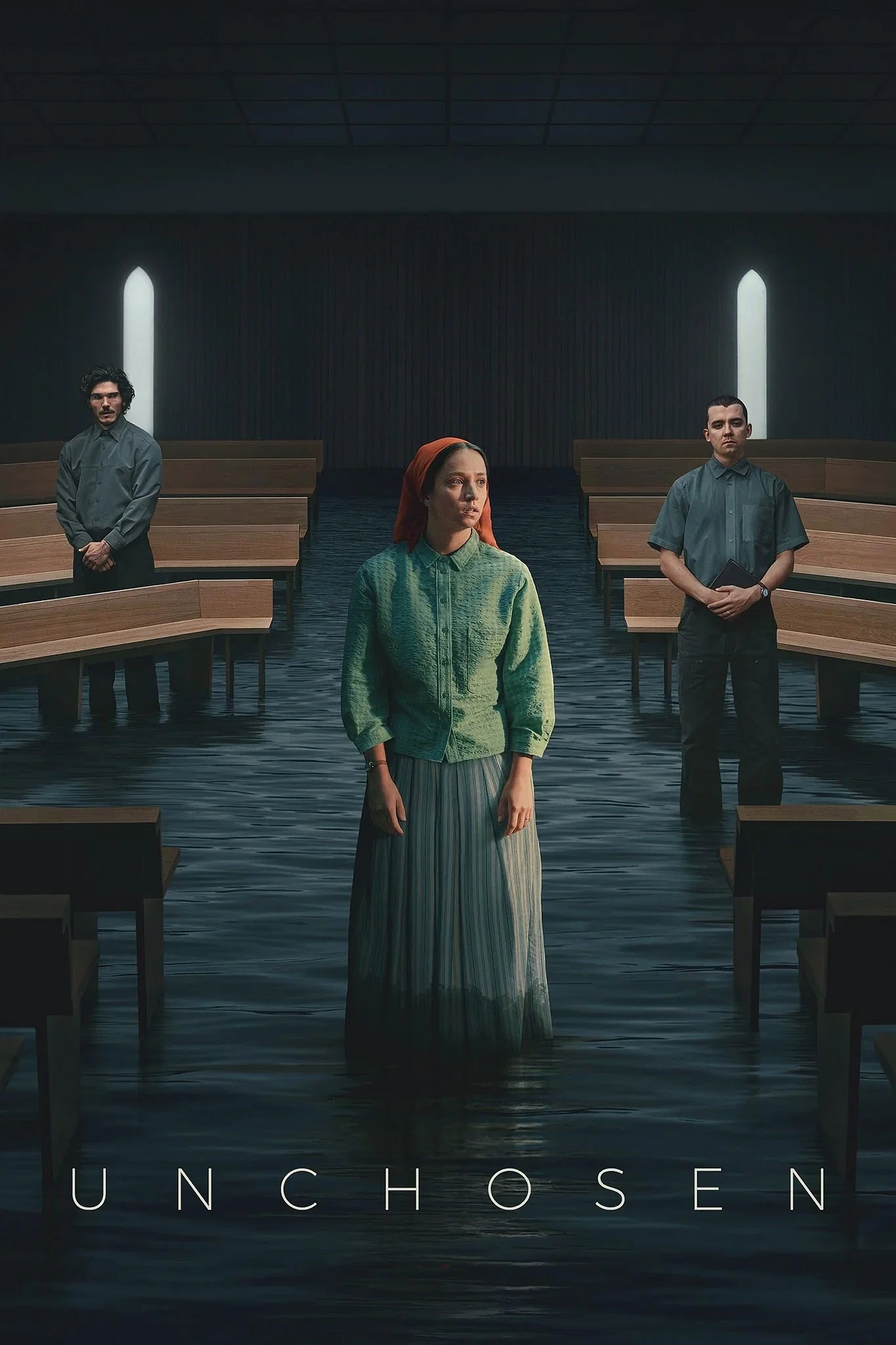
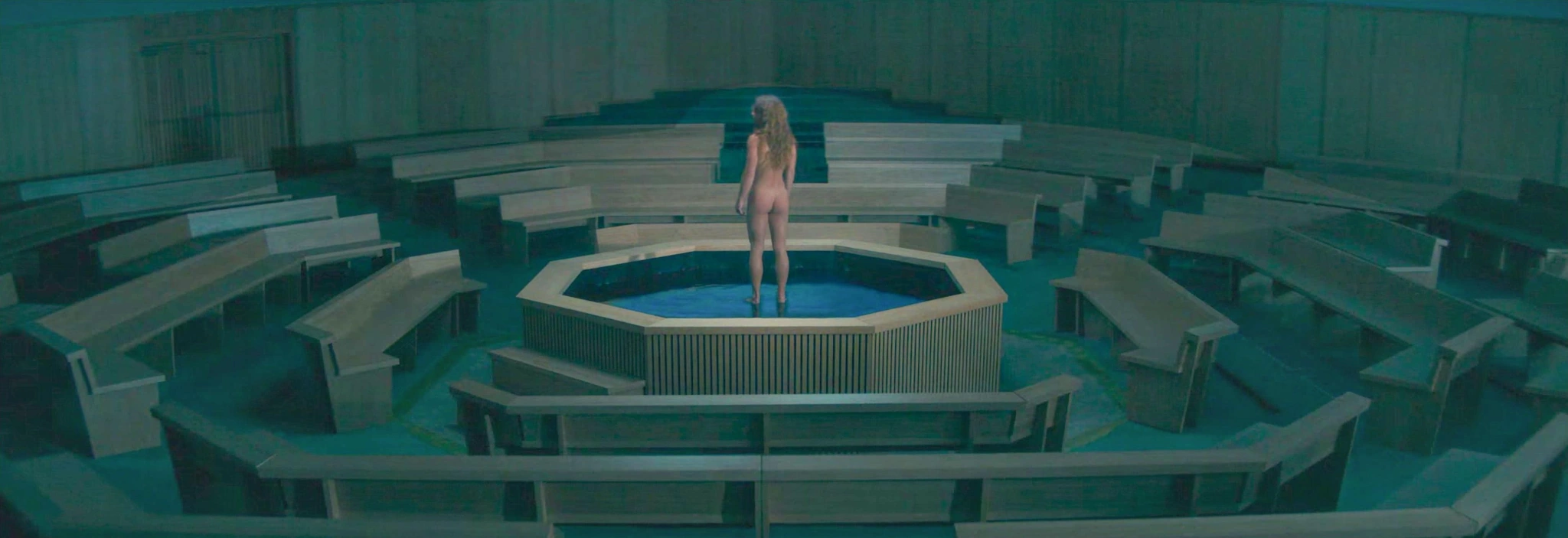
Rosie, played by Molly Windsor, lives with her husband Adam and their daughter Grace within a community known as the Fellowship of the Divine. Its strict system isolates members from many aspects of outside life and defines family roles and the limits of contact with others. Men have greater freedom of movement because of their work, while women are expected to obey, remain close to home and care for children. This system does more than regulate behavior; it asks individuals to treat personal decisions as matters belonging to the entire community.
The first real confrontation with these rules occurs during an outing interrupted by a sudden storm. Grace disappears, and Mr. Phillips orders the women to stay where they are while the men search. Rosie nevertheless goes after her daughter and finds her in danger of drowning before a stranger intervenes to save her. The incident matters not simply because it introduces another character, but because it exposes an immediate contradiction: when saving a child depends on disobeying an order, the dramatic question of what authority means becomes stronger than the question of the rescuer's identity.
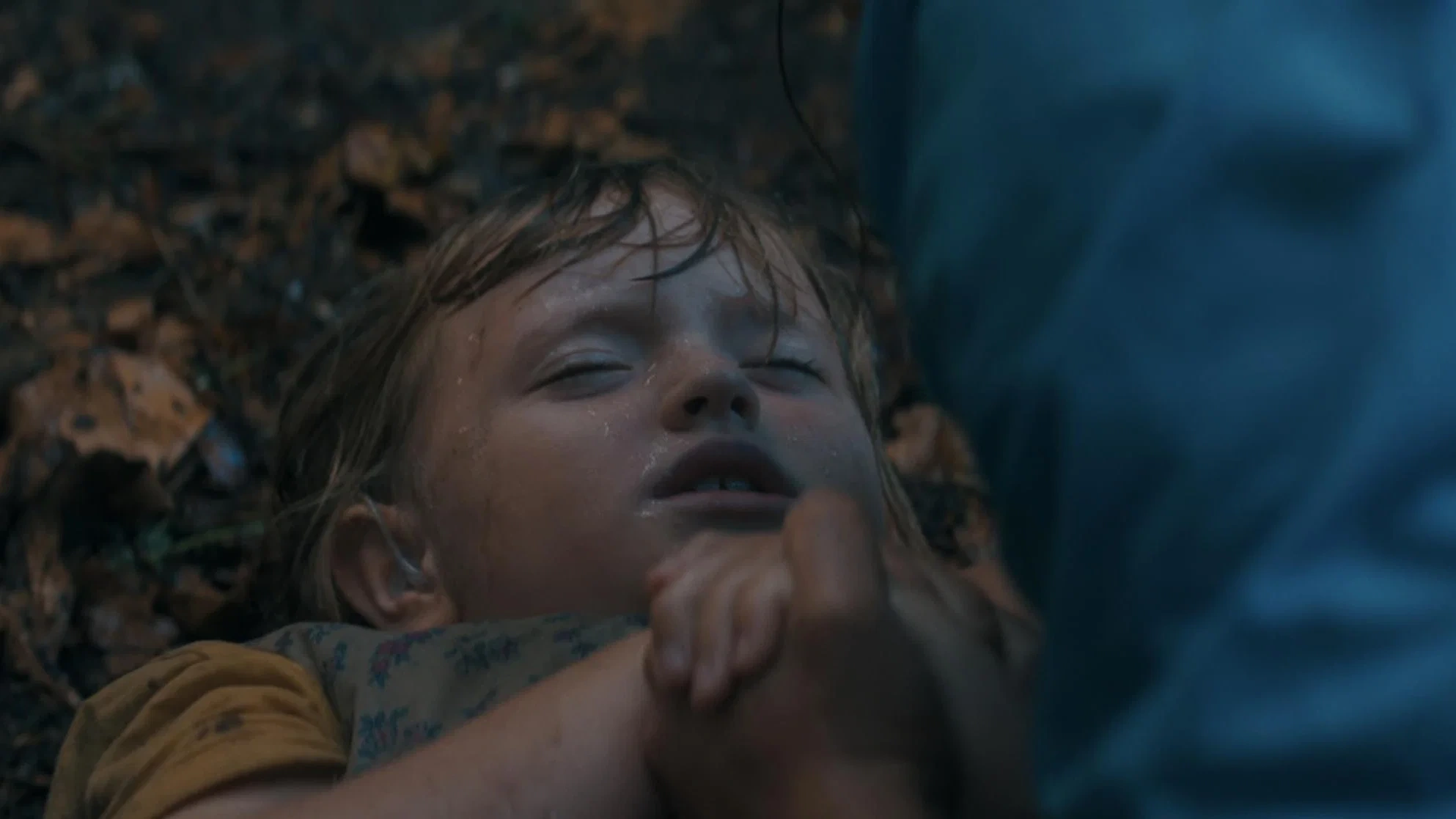
This is an effective beginning because Rosie's first break with the system arises from a decision she makes herself. She did not meet the stranger in order to discover freedom; she chose her daughter's safety against what had been imposed on her. The series thus gains a psychological foundation capable of sustaining a powerful story even without the crime and pursuit elements introduced later.
Rosie: between a mother's voice and a woman's need for a life of her own
Molly Windsor successfully presents Rosie as someone more accustomed to containing fear than expressing it. She is neither a rebellious heroine from the outset nor an entirely naive woman, but a person raised within narrow boundaries for whom discovering alternatives is as bewildering as it is tempting. Her performance gives hesitation significance: noticing a stranger, fearing a departure from the familiar and sensing that the world is larger than she has been told coexist within the character instead of canceling one another out.
The screenplay falters slightly when it ties Rosie's emotional awakening too rapidly to Sam's arrival. It makes sense for her to become attached to the man who saved her daughter and to see him as evidence that the picture she was given of outsiders is incomplete. It is more persuasive still for this experience to awaken a desire to understand her life anew. Yet the relationship's movement toward intense attraction and risky decisions sometimes happens so quickly that the plot seems to push Rosie toward Sam, rather than her inner development leading us convincingly to that step.
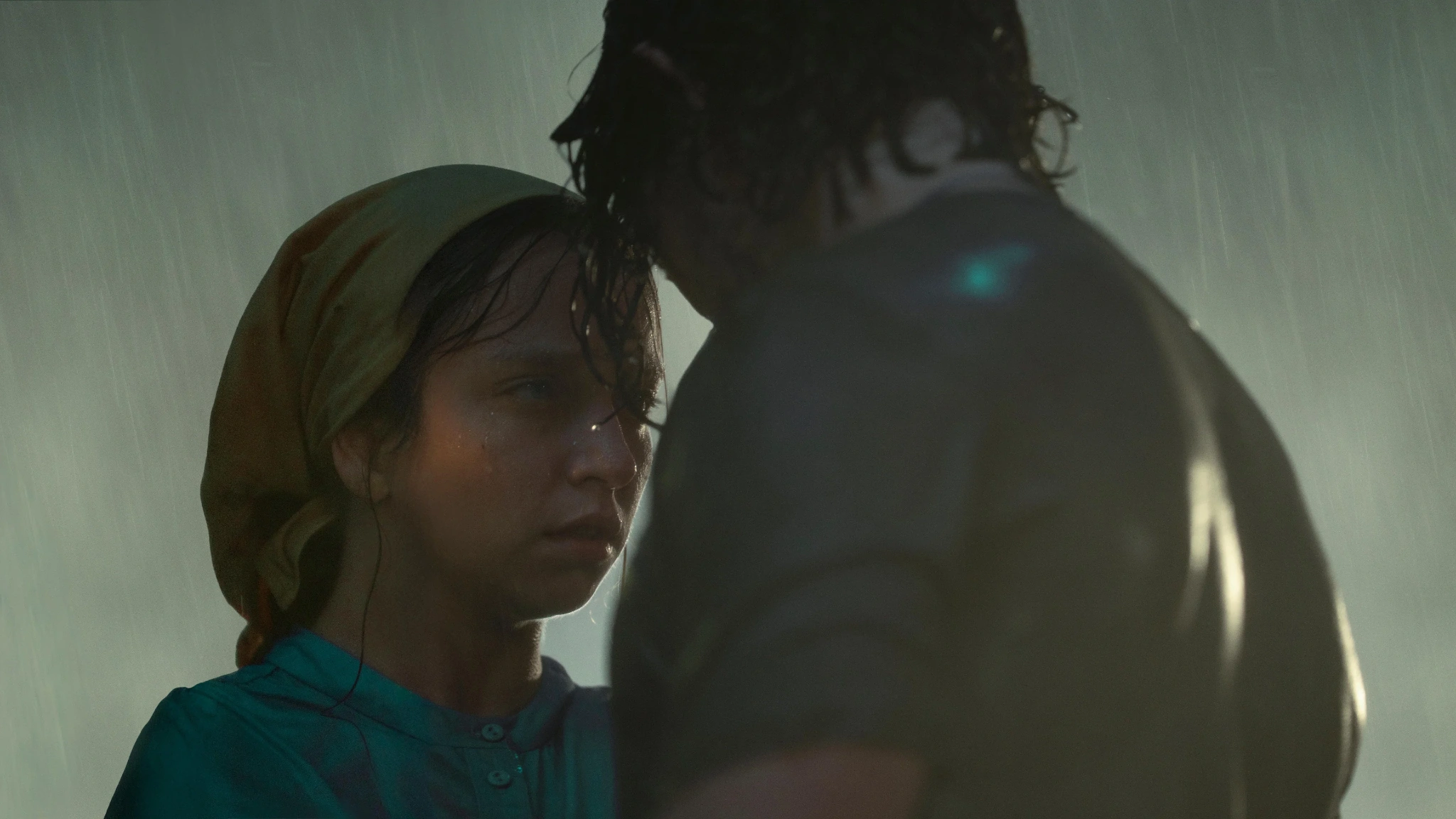
Her impulsiveness can be interpreted through emotional deprivation and limited experience of the outside world, a reading her circumstances already suggest. That does not excuse the writing from making the transitions more convincing. Rosie therefore remains the most interesting character, while her romantic storyline becomes less coherent than the one involving motherhood and independence.
Sam: a rescuer who opens the door to another danger
Sam, played by Fra Fee, enters with a strong narrative advantage: we first know him through an act of rescue rather than his past. He then returns seeking help, and glimpses of his memories and connection to prison begin to change our initial impression. The man who seemed to offer Rosie a new perspective on the world becomes another source of doubt. The question is not simply whether he is good or evil, but how someone deprived of information can distinguish trust from the desire to believe what they need to be true.
Fra Fee is good at maintaining this unease. His appeal makes Rosie's approach understandable in principle, while a persistent sense remains that part of his story has not been revealed. The series benefits from distributing his past through flashbacks, which add another layer to what we know each time and reshape our relationship with him.

The problem is that Sam's complexity gradually shifts toward direct thriller mechanics at the expense of his original role within the psychological conflict. Instead of remaining a particularly sensitive test of Rosie's ability to choose, some developments involving him become devices for producing shocks and advancing events. We lose some of the original idea's precision: escaping one person's authority does not automatically give someone the ability to read another. This idea could have been explored more deeply without an excess of surprises.
Adam and Isaac: punishment does not apply equally
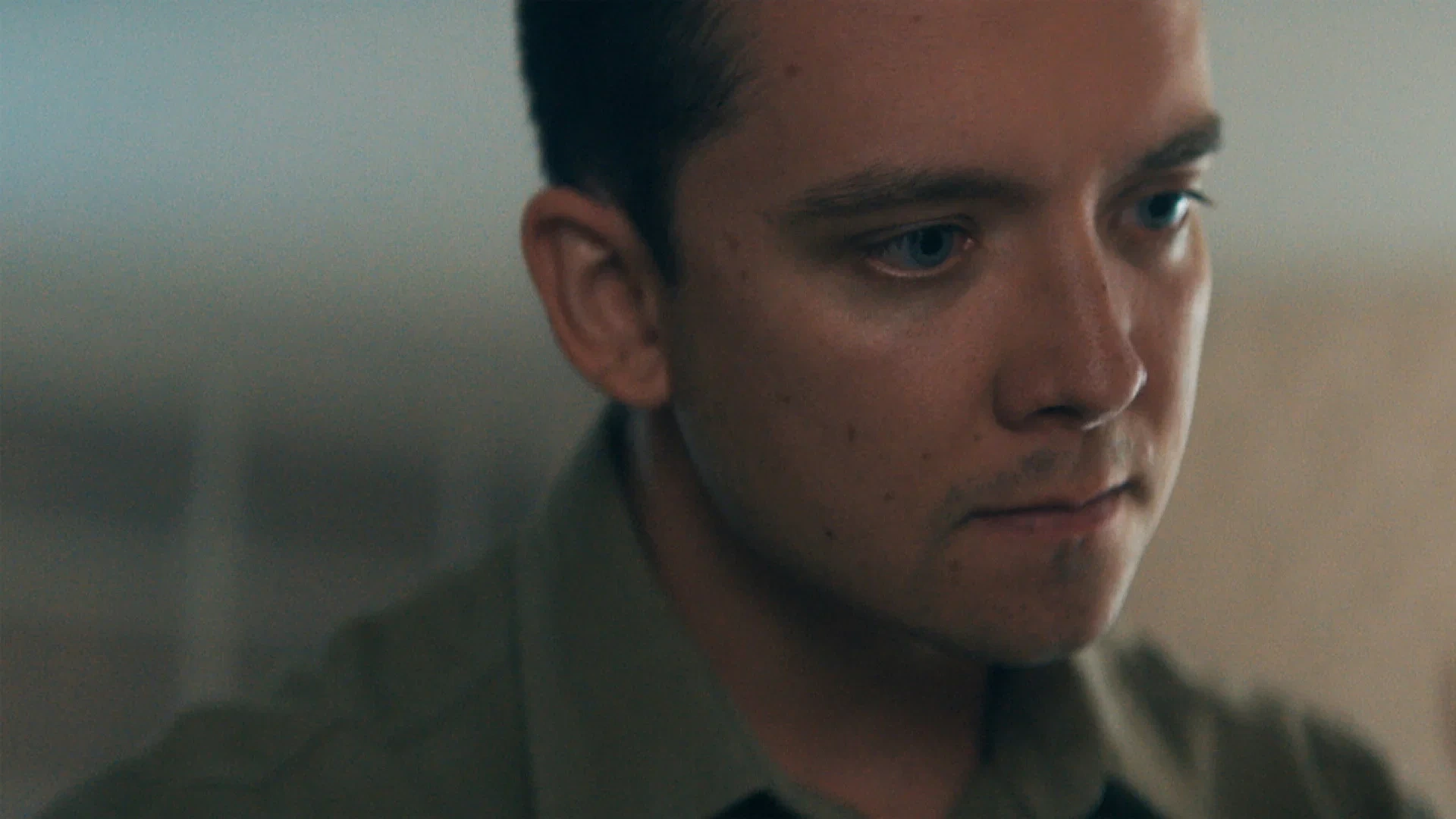
One of the clearest storylines explaining the community's nature concerns Adam, Rosie's husband played by Asa Butterfield, and his brother Isaac, played by Aston McAuley. After Grace's accident, Isaac uses a smartphone to call an ambulance despite restrictions on such devices. Instead of the need to save the child becoming the center of discussion, breaking the rules becomes grounds for punishment and exclusion. Adam publicly condemns his brother and is rewarded for his loyalty with promotion to a leadership position.
The paradox is both harsh and simple: a person who acted to help pays the price, while someone who demonstrated his willingness to enforce authority's rules gains influence. Through this relationship, the series needs no lengthy speech to show how fear of punishment regulates the community's members, or how social standing can take precedence over human considerations.
Adam is more than a controlling husband. He measures his value through proximity to the center of power, and his pursuit of recognition within the community shapes his relationship with Rosie and his treatment of his brother. The series also hints at contradictions and personal pressures in his life, but does not always give them enough space to become convincing inner conflict. Asa Butterfield consequently seems constrained at times by what the writing permits: the character serves a clear dramatic function, but his human possibilities extend beyond what we see.
Eyes that watch without raising their voice
Mr. Phillips, played by Christopher Eccleston, represents the public face of authority within the community. His presence rests on certainty and commands, making him difficult to challenge for characters who have long associated safety with obedience. The role does not require constant outbursts; it is enough to understand that his words are received not as an opinion open to discussion, but as a decision awaiting execution.
Beside him stands Mrs. Phillips, played by Siobhan Finneran, as another face of surveillance. She watches Rosie and constricts her life through observation and proximity, while the series hints at private pain beneath her composed exterior. The character's appeal lies in the possibility that someone helping preserve the system may also be harmed by it. This possibility remains less developed than it deserves, however, as the series moves quickly between numerous characters and crises.
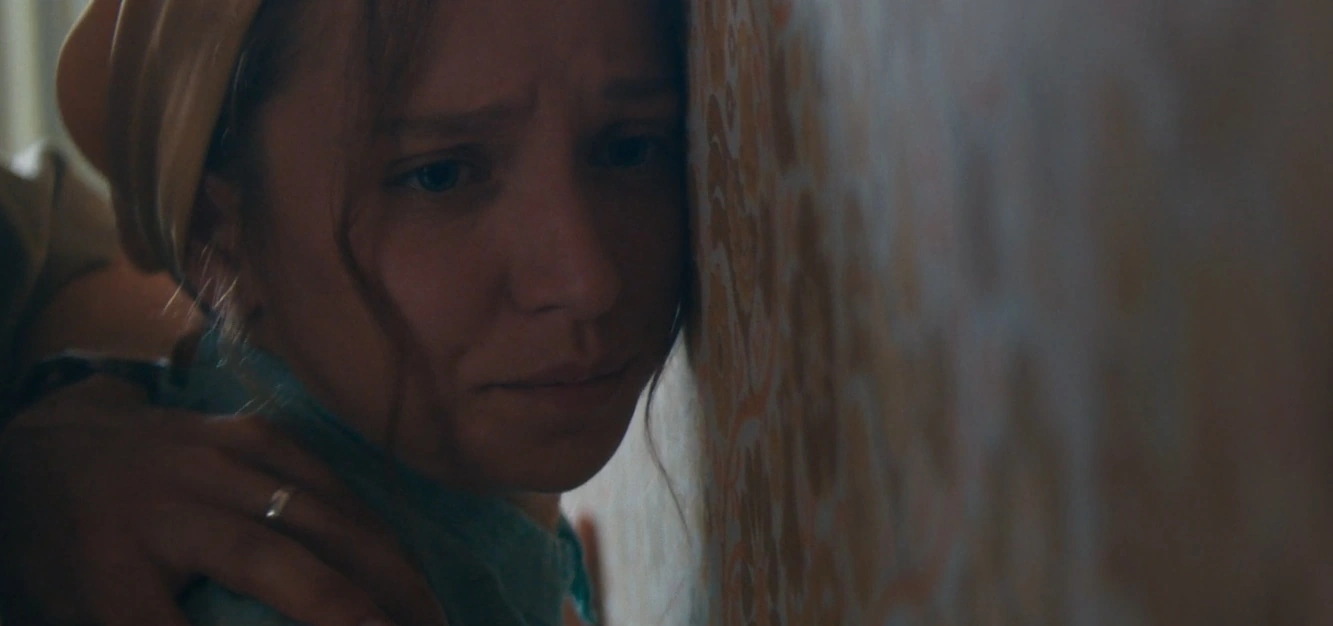
Overall, acting is one of the production's strengths. Even when dialogue becomes too direct, the performers continue to give seriousness to a world that could easily have become a collection of stereotypes. Yet good performances, however valuable, cannot by themselves give every relationship the depth the screenplay has not supplied.
Many stories searching for a single center
Across six episodes, the series addresses violence, exploitation, exclusion, punishment, family life and attempts to escape, alongside Sam's troubled past. These subjects give the dramatic world tangible danger and keep the characters' fates in question. Moving between what the community declares publicly and what happens beyond other people's sight also allows viewers to discover contradictions gradually.
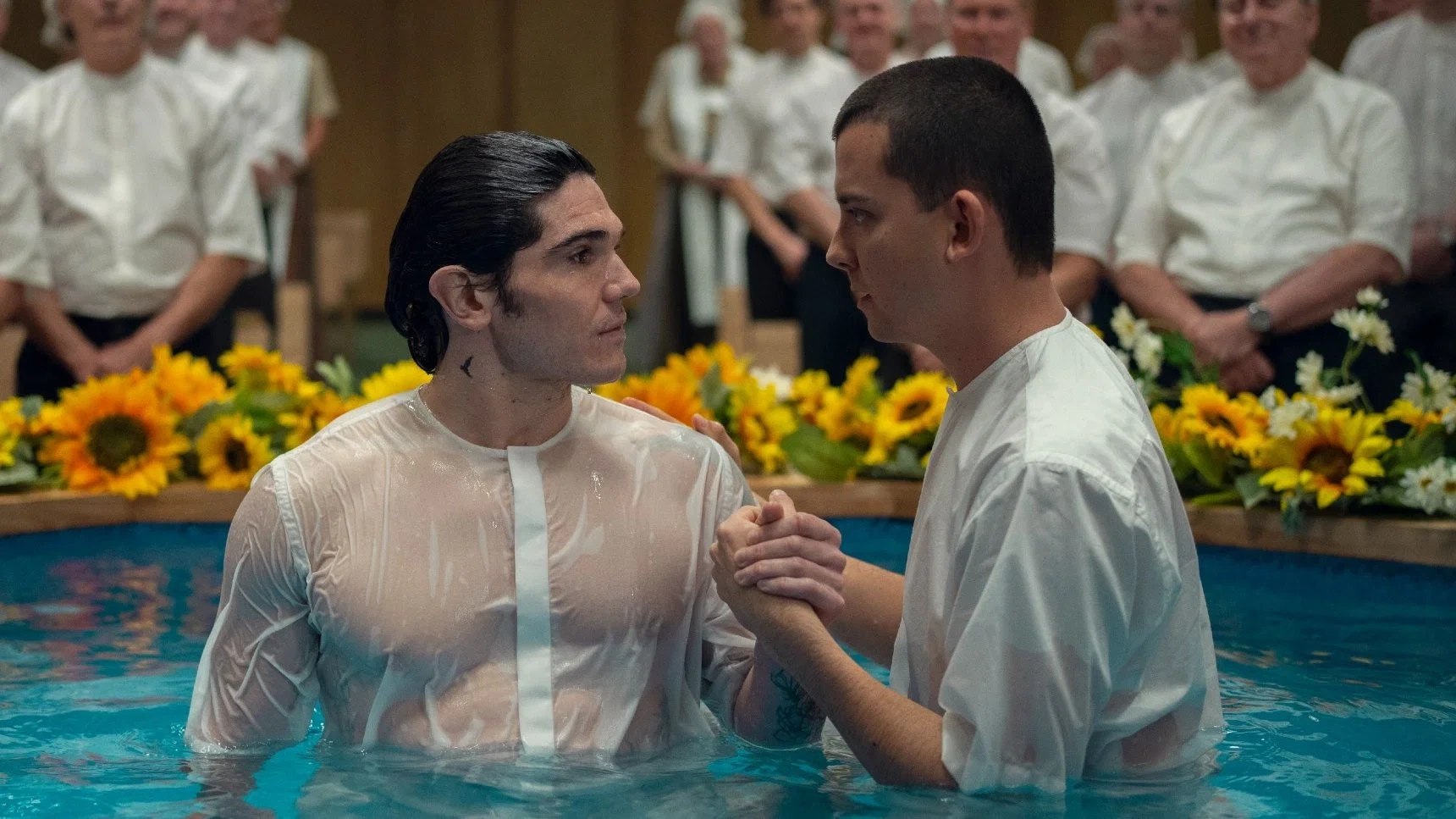
Breadth of subject is not always matched by comparable depth. Some storylines arrive with considerable promise, then recede before we see their full effect on the characters. Over time, the sense of witnessing a succession of crises becomes stronger than the sense of watching a psychological transformation grow step by step. The problem is not the sheer number of events, but that some receive too little time for their emotional consequences to remain after the scene ends.
This is also apparent in the rules governing technology. Modern devices are treated as serious violations in some situations, while the community's everyday life permits practical exceptions. Such selectivity could have become a striking dramatic observation about adapting rules to serve interests, but the screenplay does not always clarify whether we are seeing deliberate double standards or insufficiently controlled details. This area needed greater precision because the community's system is the foundation of the entire conflict.
Open countryside and a pace that does not move consistently
The rural locations offer one of the series' most expressive contradictions. Open roads and peaceful landscapes surround a community with limited choices, as though the space available around the characters did not mean they could go anywhere. This paradox gives the environment a role beyond a beautiful backdrop and supports the distinction between geographical isolation and the isolation people create for themselves.
Nevertheless, the pacing does not always turn this calm into tension. Moments of driving, waiting and reflection recur; some deepen the psychological atmosphere, while others slow the story without a clear addition. The editing could have been more selective, especially when a significant event is delayed while our understanding of the characters remains unchanged.
Paradoxically, this slowness in some passages is matched by haste in emotional developments and major revelations. Neither a quiet approach nor the presence of surprises is the problem; the allocation of time between building emotions and moving the plot is insufficiently balanced. As the ending approaches, some trajectories become more predictable, reducing the suspense generated by the opening.
Final verdict
Final verdict: an engaging experience that never fully explores its premise
Unchosen has an intelligent starting point, a central character worth following and actors capable of sustaining tension and doubt even when the writing loses precision. It successfully raises an appealing question about the difference between protection and control, and why people cling to a comforting picture of the world despite signs contradicting it. Watching its episodes cannot therefore be described as an experience devoid of pleasure or curiosity. The series nevertheless needed a tighter focus on Rosie's own journey, fairer space for supporting characters and greater control over the transition between psychological mystery and shock driven thrills. These flaws do not erase its suspense or convincing performances, but prevent it from reaching the depth promised by its beginning. We therefore consider it suitable for viewers who enjoy psychological drama with an enclosed atmosphere and gradually unfolding secrets, provided they do not expect an exceptionally complex study of every character or surprises that remain powerful until the final moment. My rating for the series: 7 out of 10.
Your turn
The question remains: was the greatest danger Rosie faced the stranger who entered her world, or the rules that left her unable to judge whom she could trust?
AUDIENCE VOTE
Do you agree with the MB rating?
Choose once from this browser. You can change your answer at any time.