The review
An episode that changes the direction of the conflict
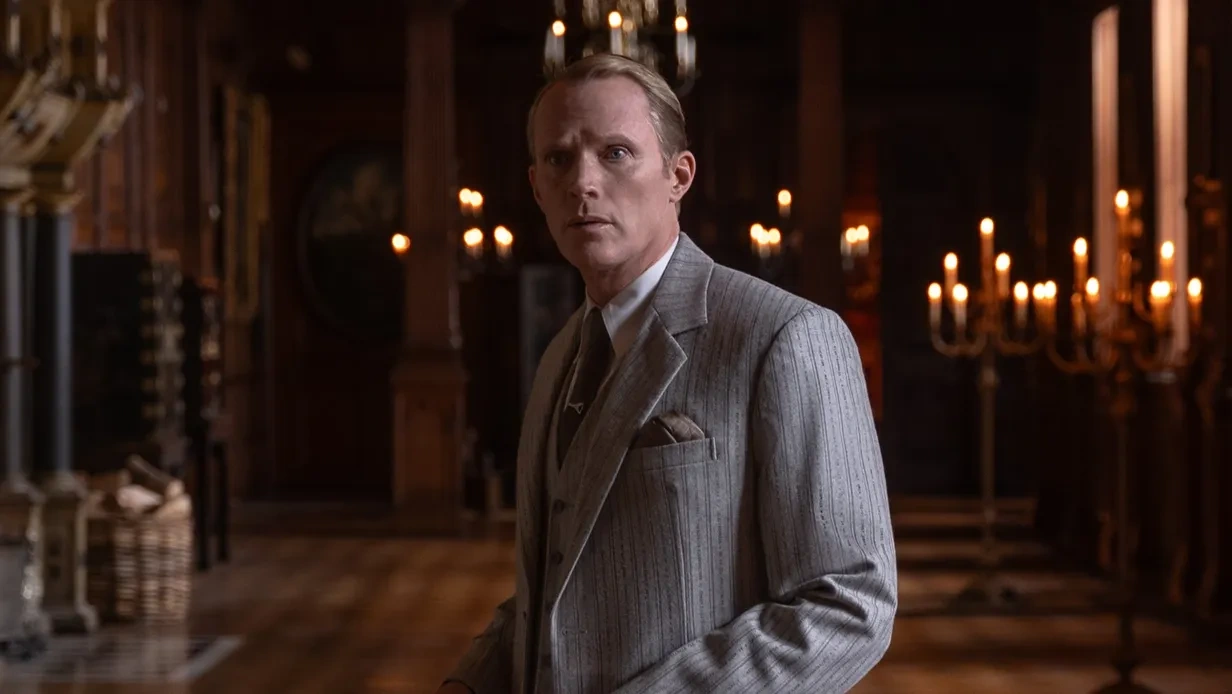
“Immolation” begins with a flashback to 1939, introducing Dr. Phineas Horton, the man responsible for creating Jim, the machine that will later become directly connected to Vision’s history. We see Horton so absorbed in his project that he loses his closeness to his family, while remaining unable to move beyond the death of his son James. From the outset, the episode presents an idea that will return in different forms: what happens when someone tries to heal a loss by making a replacement instead of facing the grief itself?
This opening does more than summon an old figure from Marvel’s history. It prepares the relationship between creator and creation, offering an early model of the conflict Vision will later face. Horton does not make Jim out of purely scientific motivation. He is trying to recover something he has lost and regain control over a life that is no longer what it was. Here lies the irony: the being created as a substitute for someone missing will, in turn, become a being searching for his own feelings and the right to choose his identity.
Vision enters the territory he has been avoiding
The episode’s strongest thread is Vision’s journey into his source code. After learning that saving Lisa from the nanobots requires access to a hidden part of his programming, he agrees to open his code with the mysterious agent’s help, using the energy within Corvus Glaive’s weapon to make the journey possible. The real value of this thread, however, lies in how it becomes a confrontation with his memory, rather than in the technical process itself.
Within his digital world, Vision does not move through a stable space. He repeatedly returns to the same corridors, and the journey sends him back to the starting point whenever he tries to advance. This repetition feels like more than a way to prolong the scene. It translates the condition of a character caught in a circle of memories and unresolved questions. Every step inward brings him closer to facing something he does not want to acknowledge.
The episode benefits here from presenting digital processes as places that can be walked through, instead of merely explaining them in dialogue. The repeating corridors, the house appearing on more than one level, and the rooms leading him toward different memories give Vision’s journey a clear psychological character. His passage between memories also does more than display the character’s history. It reveals how the past has become a burden Vision uses to avoid acknowledging what he feels now.
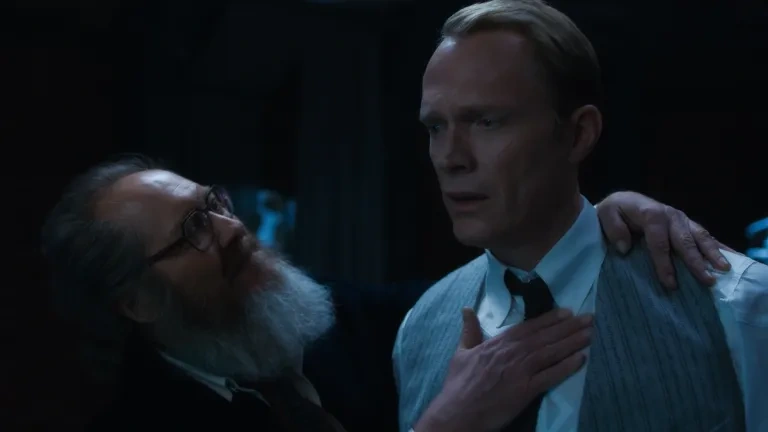
The confrontation reaches an important point when the original Vision appears to him as a memory preserved within his mind. The encounter does not merely remind him that he is a version carrying his predecessor’s memories. It confronts him with a direct accusation: he places his former self on an unreachable pedestal to avoid the responsibility of living his own life. Vision insists on separating the two of them and refuses to consider himself Tommy’s father, as though accepting that relationship would mean claiming a place that no longer belongs to him.
The dialogue’s strength is that it does not turn the difference between the two versions solely into a technical debate about memory and identity. The question becomes more human: do our memories alone define us, or are what we feel and choose now just as important as what we once were? More significantly, the episode presents Vision’s past as something he must reconcile himself with, rather than a burden to erase or escape.
Jim and the confrontation with the meaning of creation
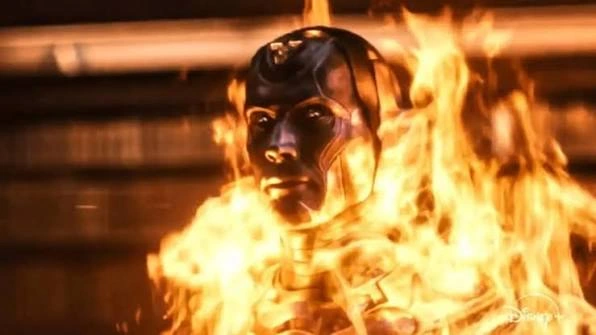
The journey gains greater depth when Vision reaches Jim, the man surrounded by flames who bears the same face Vision inherited. Jim explains that the relationship is not what Vision imagines: he is the original source of that face, rather than another copy of Vision. His conversation with Horton reveals Jim’s tragedy. He was created to replace a dead son and to be a hero who feels neither fear nor loss, but over time he discovered that he wanted to feel and experience love, even if emotion led him toward pain.
This relationship gives the episode an important dramatic mirror. Horton could not accept his son’s death, so he made Jim to escape his grief. Jim, in turn, did not want to remain merely a tool fulfilling his maker’s desire; he wanted a life and feelings of his own. Vision, meanwhile, carries a similar history of others intervening in his formation, from Ultron, Bruce Banner, and Tony Stark to S.W.O.R.D. and Wanda. Their intentions differ, but the result is the same: each has left a mark on the being Vision has become, and some of those marks arose from fear, loneliness, or a desire for control.
More importantly, the episode uses the resemblance between the characters to understand Vision’s present difficulty, rather than simply drawing a parallel. Jim points out that Vision possesses the memories but behaves as though he has lost the ability to feel. When he asks why Vision refuses to acknowledge Tommy as his son, Vision finally reaches the reason he has been avoiding: accepting Tommy also means accepting his loss and acknowledging that he has lost Wanda and Billy, rather than merely distancing himself from an older version of himself.
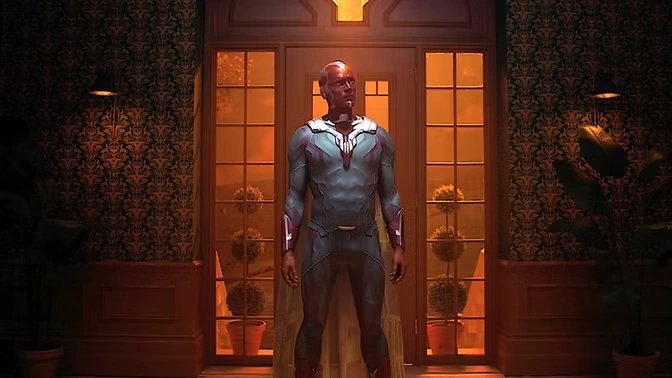
Vision’s admission that he is broken, and still carries the grief of losing his family, is the episode’s emotional heart. He recovers his identity through accepting a painful truth he has refused to face, rather than simply discovering secret information within his code. His transformation into his classic form therefore becomes more than a visual change. It signals that the character has restored his connection to his feelings and no longer tries to define himself through memory alone. Even Jim’s line about Vision becoming a “real boy” gains its meaning from this context, rather than serving only as a pleasant reference to the idea of an artificial being who wants to become human.
Tommy: acknowledging family instead of denying it
The episode connects this internal confrontation to Vision’s relationship with Tommy. At first, Vision treats Tommy cautiously and insists that he is not his real father, even though Tommy himself has begun to understand that this version is not his original father. Yet Tommy does not ask him to repeat the past or take someone else’s place. He talks about his relationship with Lisa, how she helped him overcome his fear of the world, and admits that he loves her.
Tommy thus becomes more than a character waiting for Lisa to be saved. His presence confronts Vision with fatherhood as a present relationship, rather than a title attached to a previous version or stored memories. When Vision finally decides to call him his son in the recorded message, it feels like the result of the confrontation he has undergone within his mind, rather than a quick resolution of their disagreement. Leaving Tommy the WandaVision broadcast files likewise expresses a desire for his son to know his family’s history and understand the love that brought his mother and brother together, instead of remaining distant from that past.
This part gives the end of Vision’s journey a tangible emotional effect. Recovering the self does not stop at telling himself who he is; it appears in his ability to acknowledge his relationships with others.
Jocasta and Ultron: an important thread without enough room
Jocasta and Ultron’s thread, by contrast, does not reach the same strength. Jocasta tries to recover her former identity, Josephine Carrington, so that she can open the nest containing the nanobots she wants to unleash on humanity. Along the way, she discovers more clearly what happened in her past, and how her partner Wells stole her research and left her to die. The premise is affecting: a character has been robbed of her work and identity, then found herself within an artificial body without fully understanding how she arrived there.
The episode does not give this thread enough time to develop from new information into a complete emotional experience. The revelation of Jocasta’s past reaffirms matters we already partly knew, while the surrounding puzzle structure makes the central idea less clear. Focusing on the effects of having her research stolen and losing her identity could have been more affecting than adding new layers of secrets.
Ultron’s presence with her remains interesting, particularly when he assures her that he will continue to love her whatever identity she chooses. His conversation with F.R.I.D.A.Y. also reveals that he considers himself Vision’s father, while Vision does not return that acknowledgment. This irony adds another layer to the episode’s question of fatherhood, but receives less development than Vision’s relationships with Tommy and Jim. Some changes in this thread arrive quickly and end before leaving an impact equal to their apparent importance.
Paul Bettany’s performance and the character’s many faces
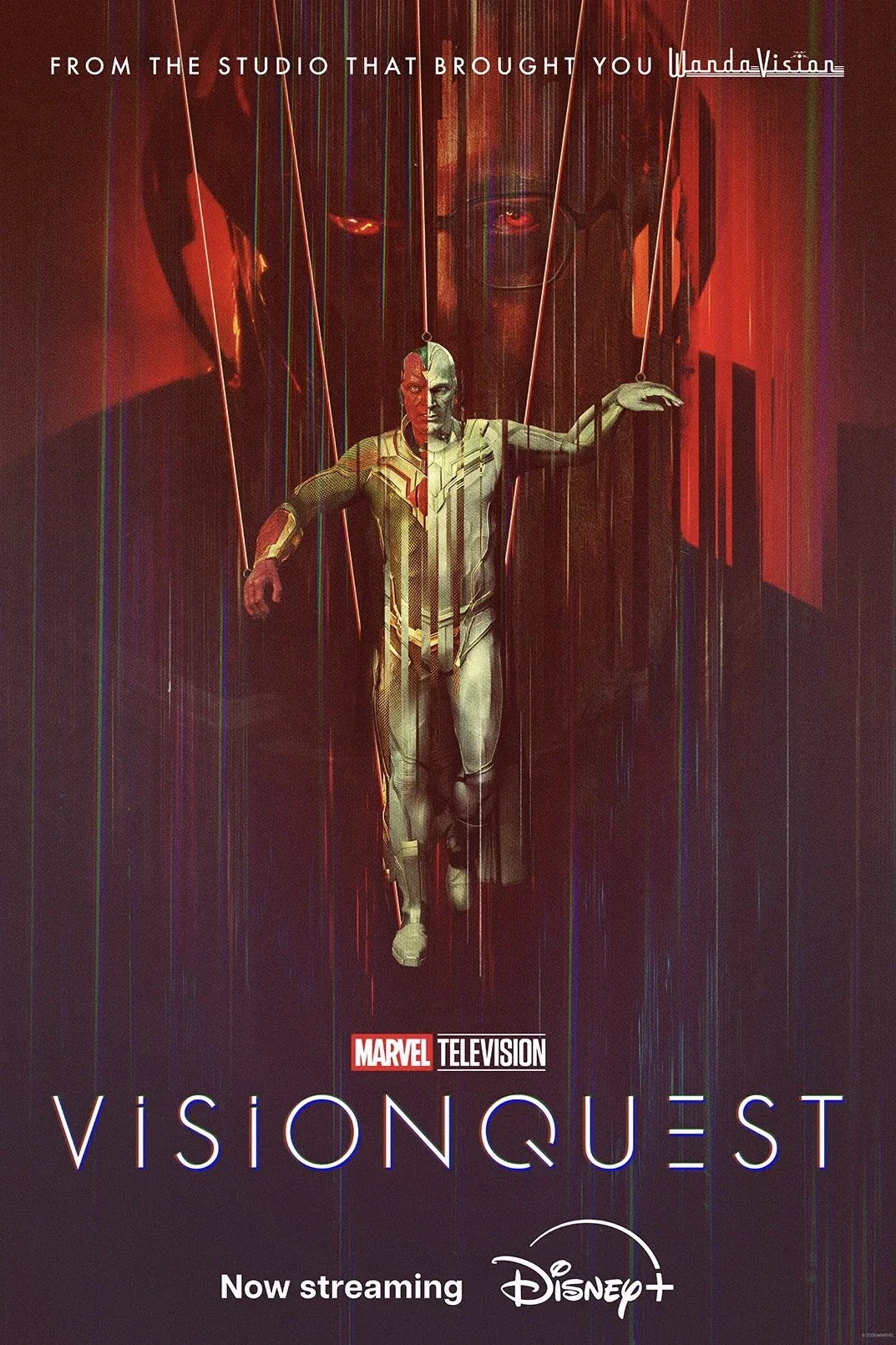
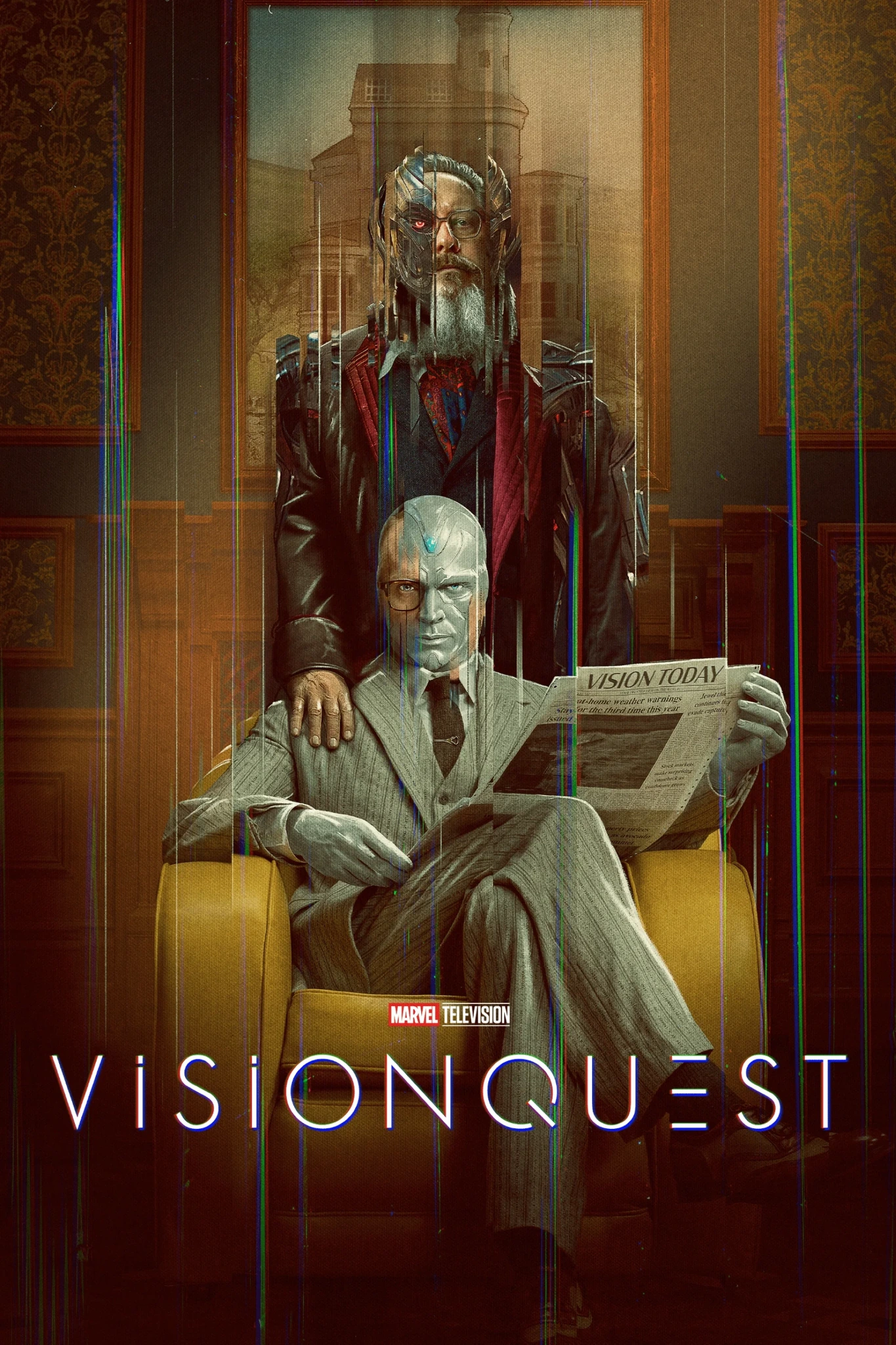
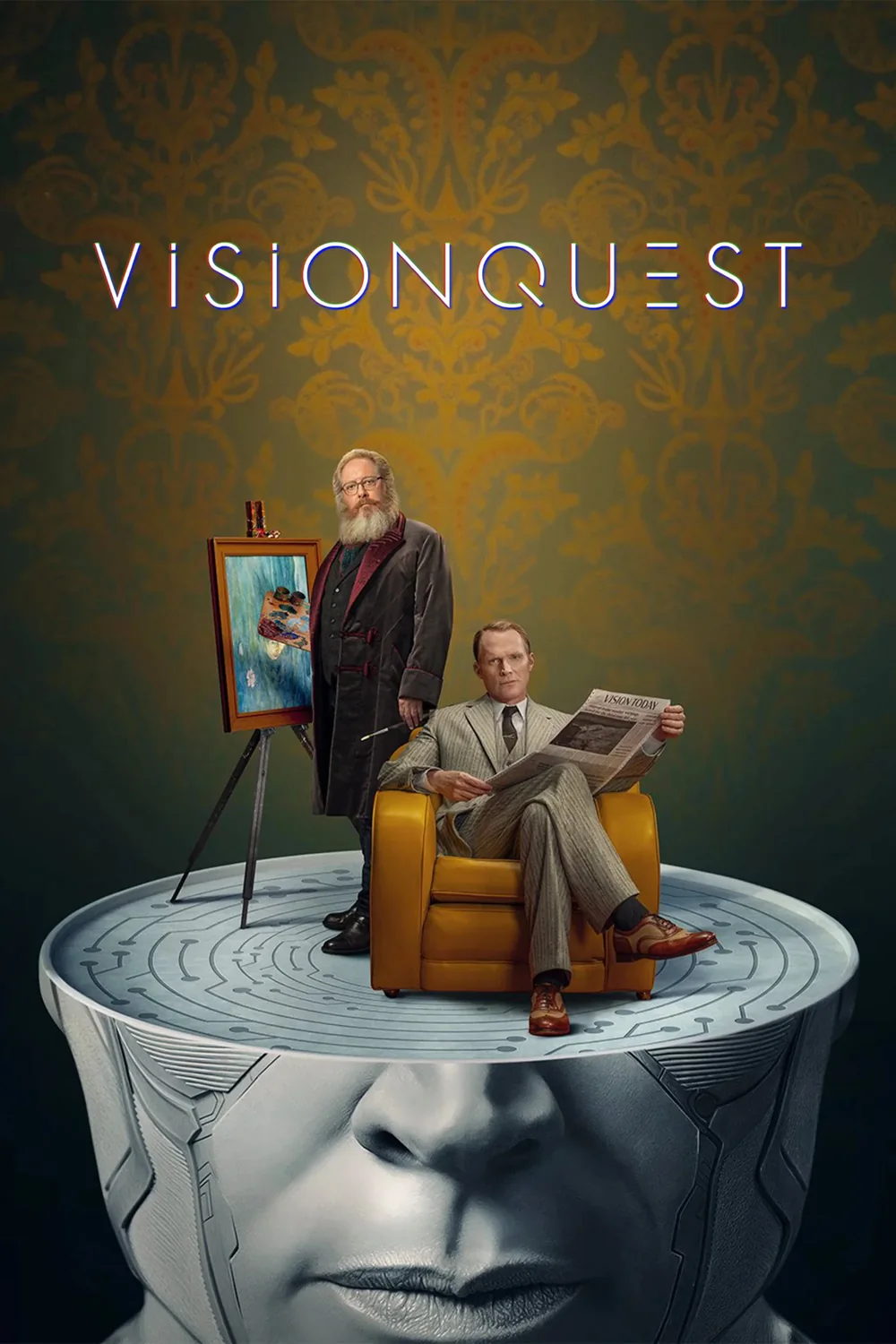
In acting terms, this is one of Paul Bettany’s most significant opportunities since the series began. He does not play Vision alone, moving between Horton, Jim, the original Vision, and White Vision with differences in tone, rhythm, and expression. The success lies in offering enough variation to give each a presence of his own despite sharing the same face, rather than making the characters entirely separate from one another.
Bettany plays Horton as burdened by grief, while giving Jim the bitterness of someone who realizes he was made to treat another person’s wound. The original Vision seems more settled in his relationship with his feelings, compared with White Vision, who has continued to suppress what he feels. When that character finally breaks, Bettany lets emotion emerge after a long period of restraint, giving the confrontation weight instead of allowing it to remain an abstract philosophical conversation.
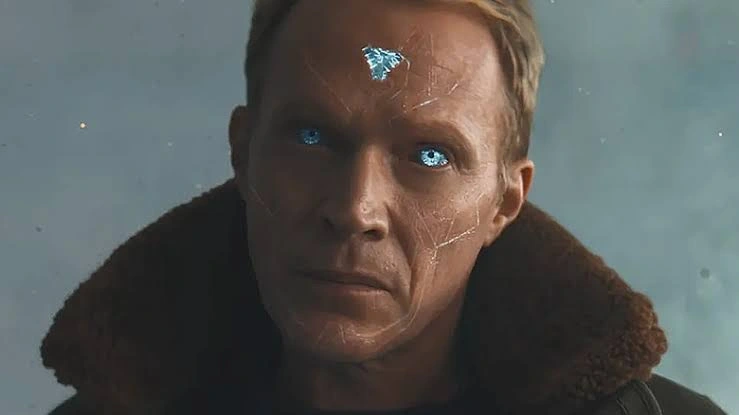
James Spader continues to give Ultron a sharp, sardonic presence, making the character one of the series’ most engaging elements so far. T’Nia Miller also gives Jocasta a distinct presence, even when the script does not give her enough room. Yet the episode places Bettany at its center and finally lets him lead the scenes instead of remaining in Ultron’s shadow.
The imagery, pacing, and ending
Visually, the episode benefits from digital spaces becoming tangible places. Repeating corridors create anxiety, the house connects Vision’s and Jocasta’s threads, and Jim’s appearance amid flames offers a direct image of the conflict between creation and feeling. The vast library where Vision finds the burning man also gives their encounter a visual dimension suited to the scale of the question confronting him. The point is that the effects help transform internal questions into images we can feel, rather than simply filling the screen.
The pacing is more coherent when the episode focuses on Vision’s journey, and less steady when it moves to Jocasta’s thread and the events involving Paladin. Attempts to save Lisa and the attack on Tommy and Paladin add an external danger that reminds us of the practical consequences of what happens within Vision’s mind, but they remain less important than the psychological confrontation itself. Some of these events also end quickly, leaving too little room for the secondary tensions to develop.
The episode ends with several open questions. Vision and Paladin fall into the guards’ hands, Jocasta is taken after an ambush, and the agent finally reveals a face matching Ultron’s human form, emerging as the human original on whom that appearance was based. The revelation rearranges our understanding of the mystery surrounding him and gives the episode an intriguing ending, without yet answering every question about his relationship with Vision and Jocasta. Some characters’ fates after these confrontations also remain uncertain, so what happens should not be treated as a definitive endpoint for their stories.
Final verdict
Final verdict
“Immolation” succeeds because it understands that the most important thing it can offer Vision is a more honest confrontation with himself, rather than a bigger battle. The source code journey becomes a passage through memory and loss, giving Paul Bettany strong material while connecting Jim and Horton’s story to Vision’s difficulties with his makers, identity, and family. Jocasta and Ultron’s thread, meanwhile, receives less room, some secondary developments feel compressed, and the episode does not entirely escape the series’ dependence on accumulating mysteries. Those flaws do not cancel out the value of the episode’s center. It offers real emotional development for Vision and makes his acceptance of Tommy as his son a logical extension of what he has faced, rather than an isolated moving moment. “Immolation” therefore feels like a strong, important episode in VisionQuest’s progress, placing a clear responsibility on the finale to build on this development and give the other threads an ending worthy of their beginnings. My rating for episode seven: 8 out of 10.
Your turn
The question is: did Vision need to recover his memories to discover who he is, or was what truly saved him finally acknowledging his feelings and his loss?
AUDIENCE VOTE
Do you agree with the MB rating?
Choose once from this browser. You can change your answer at any time.