The review
Progress collides with an ancient curse
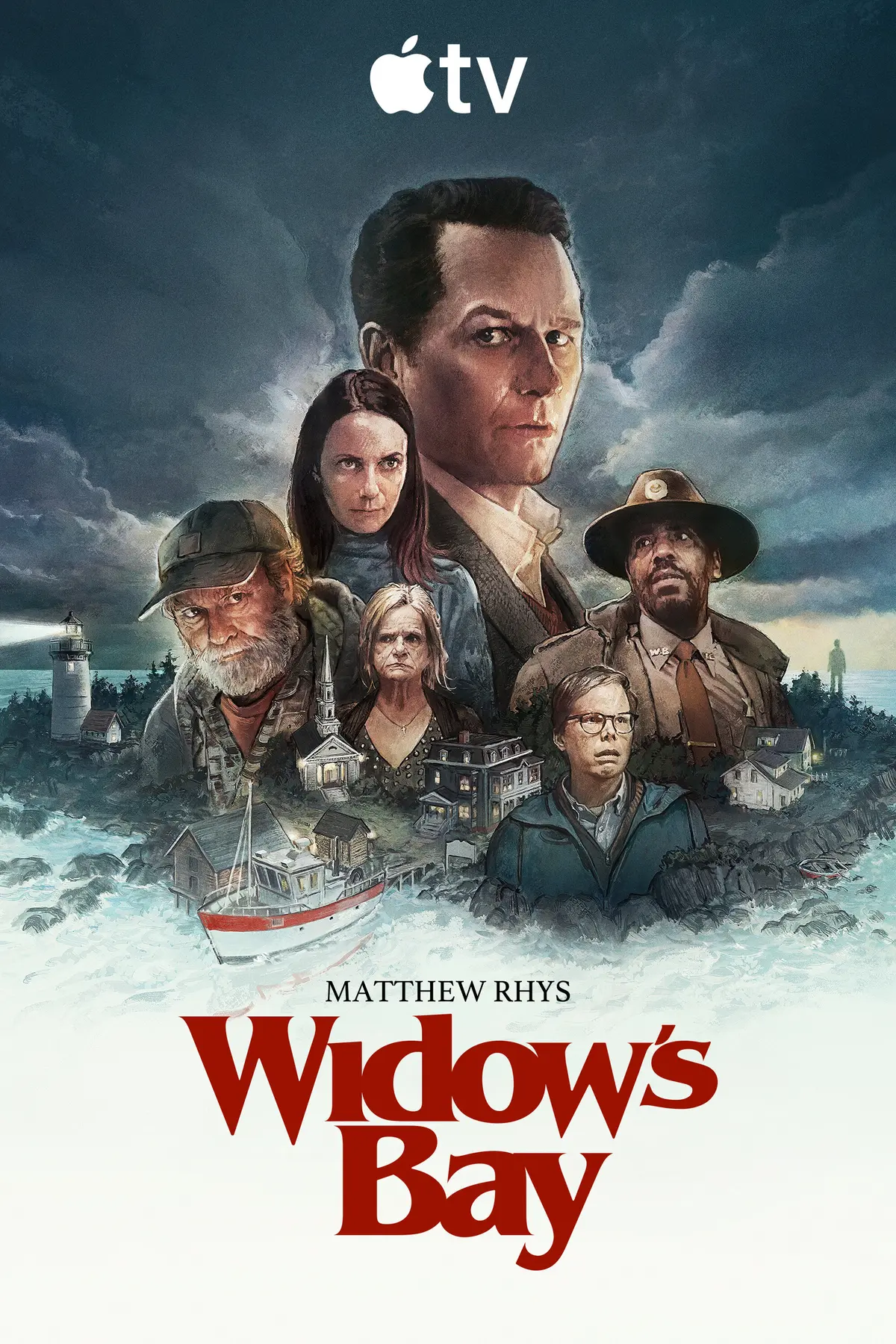
The New England island survives through fishing and whaling traditions, and many residents live as though they belong to another century. Mayor Tom Loftis dreams of turning it into a prosperous destination comparable to Martha's Vineyard. He sees development, investment and visitors as a future.
The islanders see something else: an awakened land, an old power that rejects strangers and resists any attempt to disturb what has been buried. The central conflict is therefore not humans versus a single monster, but progress versus memory, rational planning versus inherited fear and a mayor's ambition versus the will of the place itself.
Horror and comedy protect each other
Many horror comedies fail by allowing one genre to cancel the other. Widow's Bay finds a remarkably stable balance. The humor does not destroy fear, and the horror does not drain the show of warmth or absurdity.
The comedy can even intensify the unease. Residents discuss the curse with the casual practicality of people talking about weather, making the supernatural feel like part of ordinary civic life. The longer everyone behaves as though catastrophe is routine, the stranger and more convincing the island becomes.
Tom learns that disbelief is a luxury
Tom initially appears not only skeptical but unwilling to understand the island. He trusts plans, numbers and projects, while the community speaks in ghosts, blood and sacrifice. His refusal to believe makes him seem naïve rather than heroic.
His development is gradual and satisfying. Every episode removes another piece of certainty until he understands that negotiation with the island's power is not superstition but survival. That journey (from managerial confidence to terrified recognition) is the backbone of the season.
The island is the villain
The series wisely avoids reducing evil to one killer, ghost or creature. The real antagonist is the island, or the ancient intelligence living through it. The entity remains mostly unseen, but its effects are everywhere: bells, rituals, offerings, vanished people and a history soaked in blood.
By the finale, it is clear that the island truly serves a blood-hungry power. Yet the season resists explaining every rule and preserves enough uncertainty for a second chapter. The restraint gives the place scale: it feels older and larger than the characters' current crisis.
A community that existed before the camera arrived
Tom is an excellent lead, but Patricia becomes the season's most affecting character: confident on the surface, fragile and frightened underneath. Wyck Crawford, meanwhile, operates almost as the island's voice, the angry, sarcastic man who sees disaster coming and tries to stop others from dismissing it.
The supporting players are equally important. Few people feel like decorative functions. Each seems to possess private routines, old resentments and a life that began long before the first scene, giving the island the density of a real community rather than a horror set populated by victims.
What if a place refuses to let you change?
Beneath the mythology lies the season's most painful question: what happens when a person lives somewhere that does not permit reinvention? In Widow's Bay people do not leave, forget or escape the identity assigned to them. The coward remains a coward, the failure remains a failure and the outsider remains outside.
That idea turns the supernatural plot into an emotional prison. The real terror is not simply being killed by a curse, but remaining the same person for an entire life no matter how desperately you try to become someone else.
Love gives life meaning and creates danger
Despite the darkness, the season suggests that human connection is the one thing capable of giving life value. Ruth has lived simply, yet appears more peaceful than many residents who possess greater knowledge or power. Survival is located in relationship rather than mastery.
The show does not idealize love. Affection also drives people toward destructive choices, sacrifice and denial. That contradiction makes the message more mature: connection can save a person, but it can also become the reason they refuse to see what must be done.
Rich mythology with deliberate delays
The season's strongest qualities are its balance of humor and fear, richly detailed mythology, carefully written ensemble, excellent performances and patient accumulation of mystery. Few recent series create such affection for a setting this openly hostile to its own inhabitants.
The weaknesses come from that same patience. Middle episodes occasionally slow down, several mysteries are prolonged through postponement rather than meaningful development, and the finale leaves enough doors open to frustrate viewers who expected a more self-contained resolution.
Final verdict
Final verdict
Widow's Bay is not only one of the strongest recent horror series, but one of the most interesting shows of its period because it refuses to settle for fear or comedy alone. It asks what a place means, why people remain loyal to histories that wound them and whether anyone can escape a past determined to preserve their role. The season does not answer every question and deliberately saves part of its mythology for later, but it achieves something more important: it makes us love this beautiful, cursed and frightening island precisely because resisting it is so difficult.
Your turn
Is the island a supernatural prison that prevents its people from changing, or are the residents themselves preserving the cycle?
AUDIENCE VOTE
Do you agree with the MB rating?
Choose once from this browser. You can change your answer at any time.