The review
Screenplay and dialogue: a beginning shaped by need
Toma and Ana meet at university while studying literature. Their relationship begins with a conversation about Nietzsche and antisemitism before intellectual closeness becomes romantic attraction. The film does not linger over their courtship. It quickly reveals the nature of the relationship when Ana experiences a sudden anxiety attack. Toma emerges as the calm person who stays rather than runs, trying to reassure her and looking for a doctor who can help her receive better treatment.
This opening works because it gives the relationship a clear foundation without turning Toma into an ideal hero. He really is there for Ana and responds patiently to her fear, but the film introduces a question that we can return to later: what happens when one partner’s role depends on the other continuing to need them?
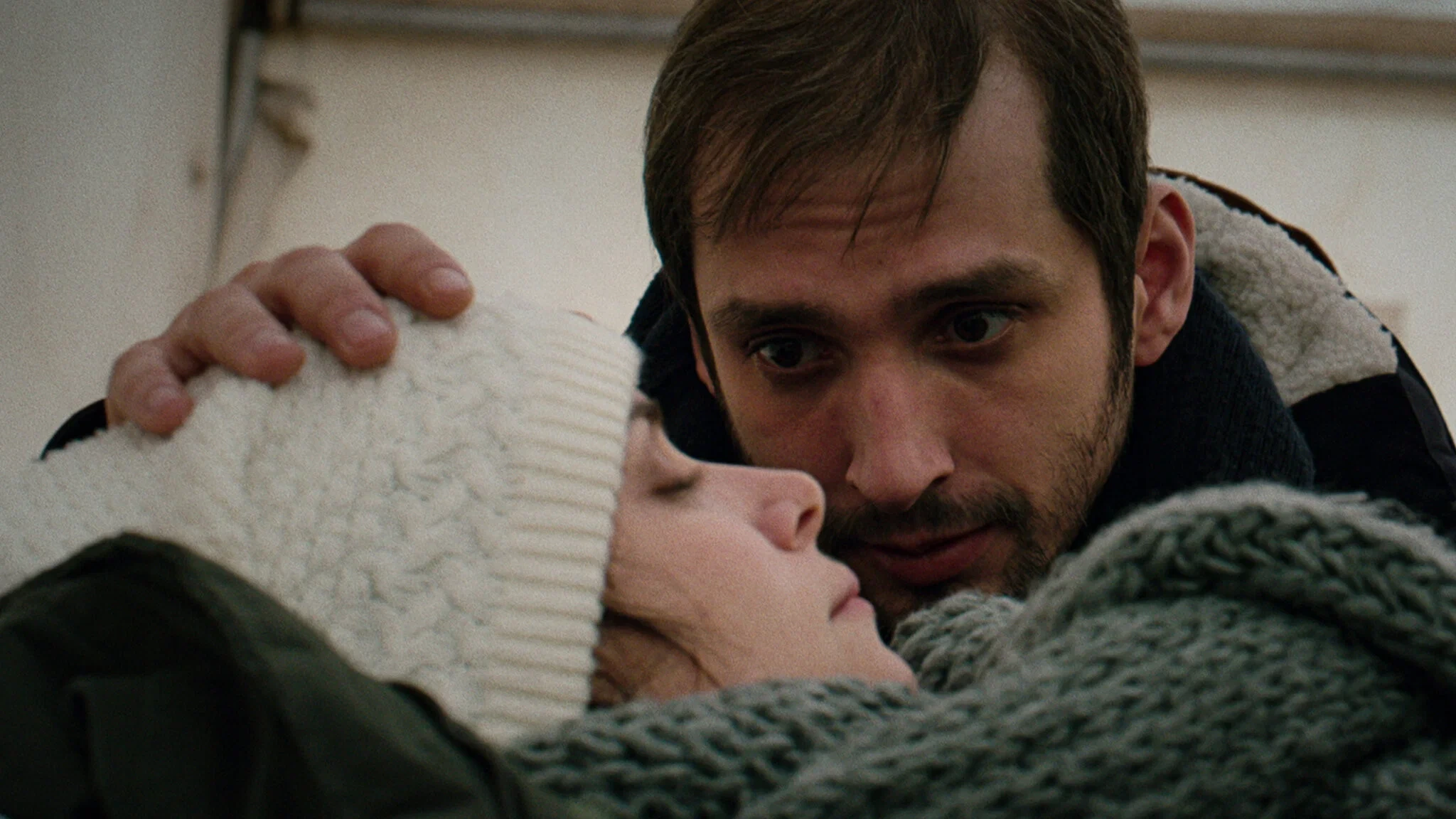
The film offers no direct answer, which is a strength at the level of its central idea. This is not a relationship between a healthy person rescuing an ill one, but between two people who each carry their own problems, even if those problems are not equally apparent at first. Ana experiences anxiety attacks while Toma seems more composed, but that composure does not mean he has no vulnerabilities.
The two families: the roots of distress and the limits of explanation
Ana’s background becomes clearer when Toma accompanies her to her family home. The atmosphere reveals an uncomfortable relationship with her stepfather and details from the past that make the house a troubled place rather than a source of safety. These signs should not be turned into a definitive accusation: Ana denies having been assaulted, and the film leaves a gap between what we know about her stepfather’s behavior and what we can say with certainty happened.
Toma’s family seems no more stable. His mother is highly intrusive, while his father treats him violently, opposes his relationship with Ana, and humiliates him for choosing her and supporting her financially. This confrontation does not explain everything Toma will do later, but it presents a family model built on imposing opinions and maintaining control, a model that becomes more significant as the relationship develops.
Here the film successfully connects both characters to their environments without reducing them to their pasts. Family background gives us ways to understand certain behavior, but it does not provide a complete excuse for it. That distinction matters: the film is more compelling when we see someone reproduce what troubled them in their own life while believing they are acting differently.
Reversing roles: when independence threatens the meaning of sacrifice
As the story progresses, Ana begins to overcome some of her fears. She undergoes treatment and becomes less dependent on Toma, then becomes pregnant, gives birth, finds work, and gradually moves toward a more independent life. The film treats these developments as the beginning of a new test for the relationship rather than the end of its problems.
As Ana regains the ability to manage her life, Toma begins revealing another side of himself. His jealousy emerges and his desire for control grows. He changes from the man who offers her safety into someone who makes her life more difficult. This change is the film’s real center, because what initially seems like pure sacrifice does not retain that appearance when Ana’s need for him changes.
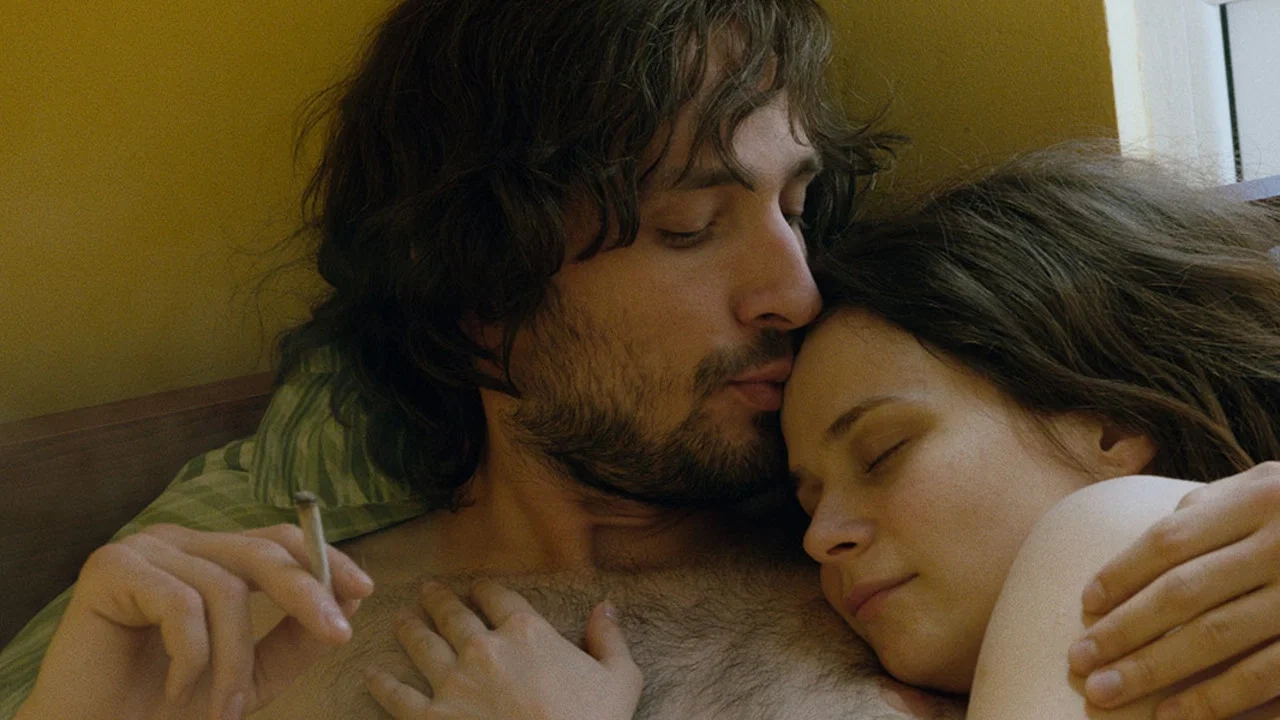
This shift can be read as a change in the relationship’s balance of power. At first, Toma has a clearly defined role: supporter, organizer, the person who seeks treatment and carries much of the responsibility. When Ana no longer needs that level of help, however, he does not know how to handle his new position. Part of his attachment may have rested on feeling indispensable to her rather than on his ability to accept her independence. His later behavior supports this reading, but it does not mean the film establishes a single, definitive motive for his falling in love with her.
Crucially, the film does not grant either Ana or Toma complete innocence. Ana is not an ideal person simply because she has suffered, and Toma does not become a straightforward villain simply because he grows jealous and controlling. We see a relationship in which the positions of the person who needs and the person who controls change, exposing both partners’ vulnerability when their old roles no longer work.
The performances: two changing presences within the relationship
This idea depends heavily on Diana Cavallioti as Ana and Mircea Postelnicu as Toma. Cavallioti creates a striking shift between Ana’s ordinary state and her anxiety attacks, then handles the character’s later changes as Ana begins regaining her independence. Her strength lies in more than emotional intensity: her presence changes from one stage to another, sometimes so much that it becomes difficult to hold onto a single thread connecting the character’s different phases.
Postelnicu begins with a quiet performance that presents Toma as a patient man capable of containing a crisis. As the relationship changes, layers of irritation, jealousy, and tension emerge. The character’s presence changes without the actor losing his connection to what came before. The contrast between the performances serves the reversal of roles and makes the relationship more convincing in its strongest moments.

Not every change is equally convincing, however. The problem is not that the characters change, since that is the foundation of the story, but that some transitions happen so quickly that we see their outcome before feeling how they developed. The strength of the performances therefore cannot always compensate for what is missing from the dramatic structure.
Psychotherapy: between understanding and overexplaining
The film places psychotherapy and the interpretation of behavior at the center of its story, but sometimes explains what the characters’ actions have already made clear. Toma’s sessions with his psychoanalyst recur, while dreams and interpretations enter the narrative. It is not always easy, however, to tell what position the film wants us to take toward these explanations: should we believe them, or see them as possibilities that do not have the final word?
This aspect could have given the film greater depth if it had left more room for the viewer, rather than sometimes dissecting the character more than the drama needs. The real value lies in watching the effects of these problems on a changing relationship, rather than naming every problem or tracing every action to a specific psychological cause.
The film also raises important questions about mutual dependence without always developing them sufficiently. Ana’s gradual release from fear is more than an individual improvement: it changes the entire relationship. That change deserved a more gradual development so that we could understand more deeply how Toma moves from supporting her to imposing restrictions.
Pacing and the ending: changes denied enough time
The film sustains interest early on because the relationship seems capable of developing in several directions, and neither character reveals everything immediately. The second half loses some momentum, however, through repeated jumps in time and changes that do not always receive enough room to become convincing.
Even the ending, which tries to shift our understanding of what we have seen, tends to explain its intended point excessively rather than simply letting its effect linger. Instead of giving us space to reconsider the relationship, it makes parts of it less ambiguous than they should be without resolving all the questions left by the preceding structure.
This does not erase the film’s achievements. It offers finely observed scenes, two strong performances, cinematography responsive to psychological states, and natural dialogue that keeps the relationship close to life. Those elements run up against an unnecessarily tangled structure, pacing that loses coherence in the second half, and characters who sometimes change too quickly for us to believe the transition.
Direction and chronology: responsive images and a tangled narrative
Director Călin Peter Netzer uses the handheld camera to capture the characters’ psychological states. The image moves fluidly between them, following the tension and emotional condition of each situation. The dialogue also feels natural in many scenes, so the characters do not constantly seem to be explaining the film’s ideas to the audience.
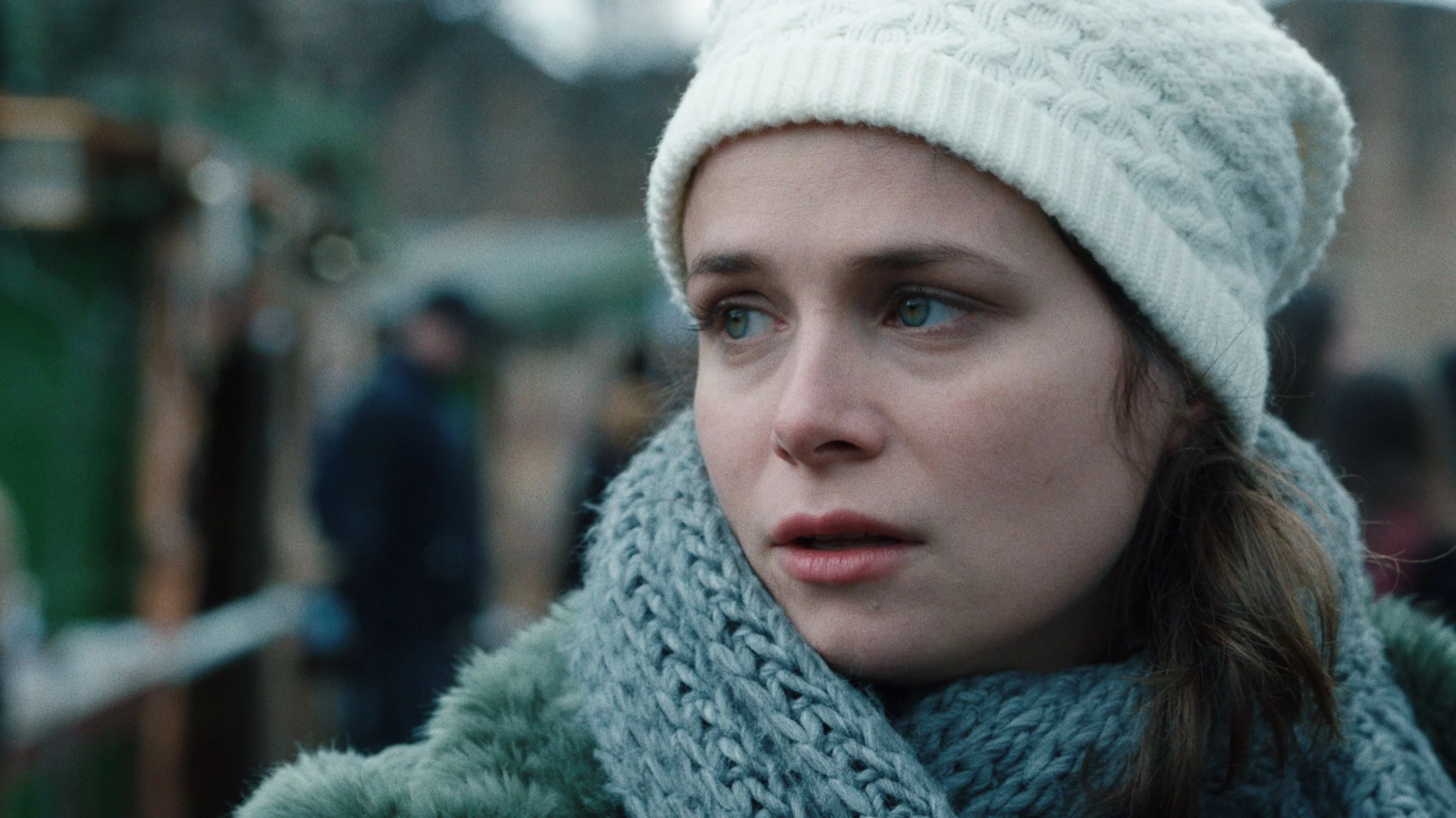
The main problem lies in the ordering of events. The film continually moves between different stages of Ana and Toma’s lives, asking us to reconstruct the relationship from scattered fragments. A visual device helps establish time: the gradual changes in Toma’s appearance and hair, alongside Ana’s changing hairstyle. The idea is clever and gives viewers clues to pick up, but it cannot by itself resolve the confusion created by so many temporal jumps.
More difficult still, this structure does not always add new meaning to the scenes. Sometimes a time shift offers a useful comparison between the characters; elsewhere, it interrupts a development that we needed to follow continuously. The problem therefore goes beyond demanding greater concentration from the audience: it involves losing some of the emotional connections that make a change understandable and moving.
Final verdict
Final verdict
The film offers an interesting human perspective on love, dependence, and control. Its greatest strength is that it does not treat care as an invariably pure act, or make the person who needs help less capable of influencing the relationship. It shows how positions of power can change, and how someone accustomed to rescuing another person may become unable to accept that person’s independence. The film’s psychological ambition does not always find the right narrative form, however. Frequent flashbacks, repeated explanations, and insufficiently gradual changes make the experience less coherent than its material allows. I therefore see it as a film with a good central idea and strong performances, but not a drama working at full strength: the closer it comes to understanding its characters, the more complicated its route to them becomes. My rating for the film: 7 out of 10.
Your turn
Do you think Toma loved Ana for who she was, or was he also attached to the role her need for him gave him? Did the film convince you of the relationship’s shift from care to control, or did its jumps in time make that change feel faster and less affecting than it should?
AUDIENCE VOTE
Do you agree with the MB rating?
Choose once from this browser. You can change your answer at any time.