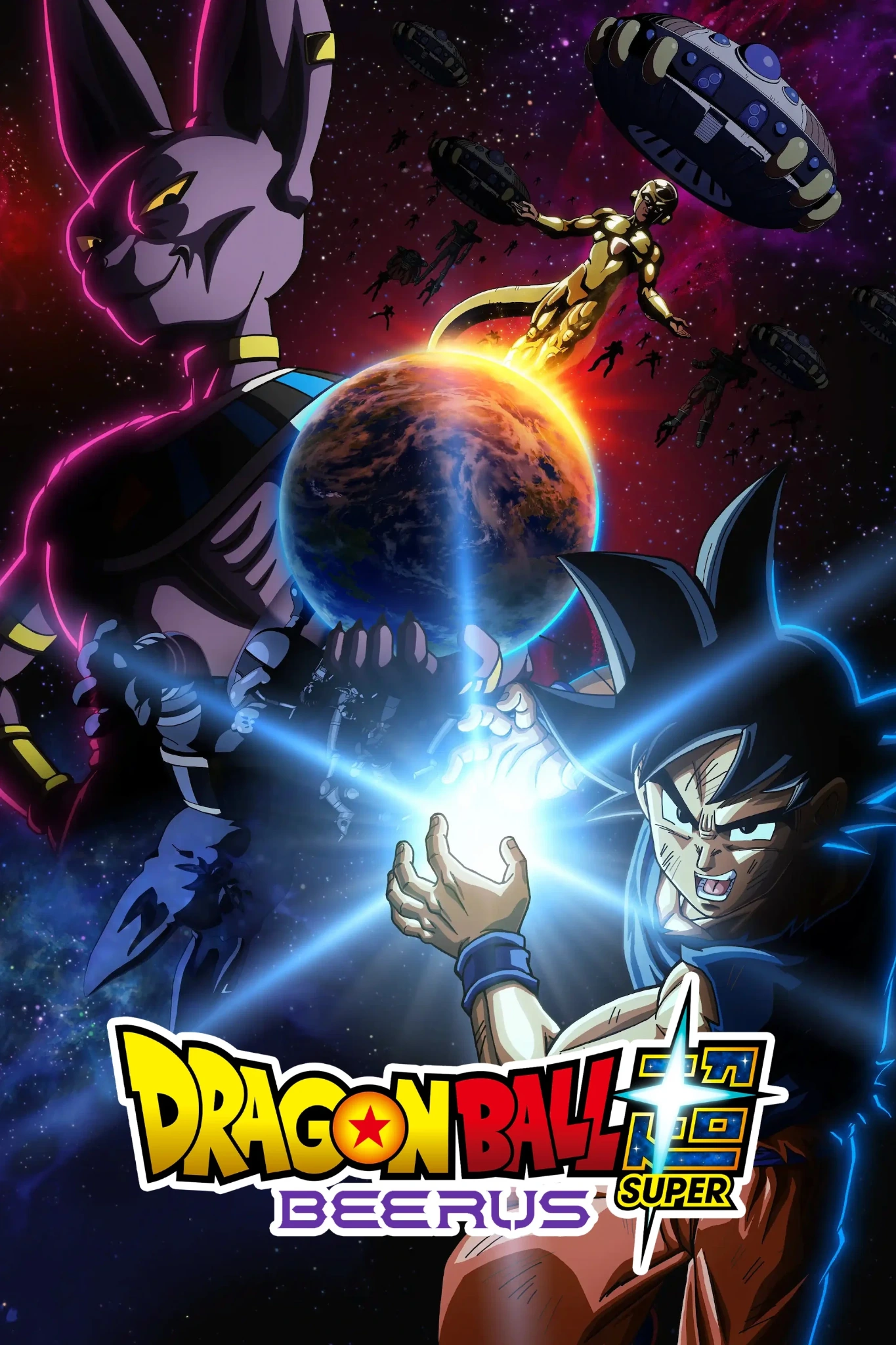
The review
A ridiculous game becomes a real threat to Earth
The episode opens with an unexpected confrontation between Beerus and Oolong: a game of rock, paper, scissors whose outcome will decide Earth's fate.
The idea is wonderfully absurd, and this is one of the qualities that gives Dragon Ball its distinctive personality. Here is a God of Destruction capable of wiping out an entire planet, yet he leaves that planet's fate hanging on a simple game.
The scene benefits from the contrast between Beerus's terrifying nature and Oolong's desperate efforts to save everyone. As the rounds repeatedly end in a draw, the tension rises, while the surrounding characters' reactions add to the comedy.
One of the best visual additions is the depiction of Oolong as though he were fighting a real battle against Beerus. This choice gives the encounter a satirical edge and makes it funnier than simply showing an ordinary game between the two characters.
The problem is that the scene runs a little longer than it needs to. The repetition initially serves the joke and helps convey everyone's mounting anxiety, but it reaches a point where some time could have been cut without losing its impact.
Even so, I think the scene does its job well. It restores some of the series' distinctive humor, after the previous episodes made me feel that this side had been reduced in favor of moving events along more quickly.
The comedy does not remove the danger, however. Once Beerus loses interest after Oolong fails to achieve the required outcome, he prepares an attack capable of destroying Earth.
Here, the episode moves from absurdity to a genuine threat.
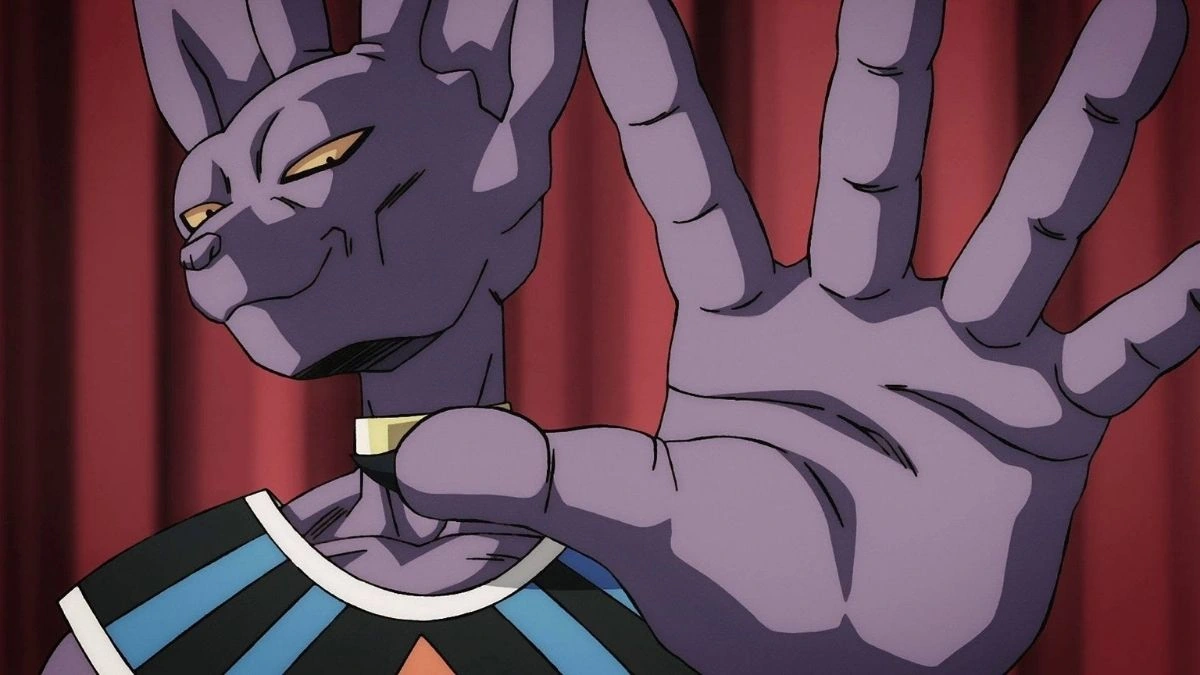
What works beautifully in this moment is the use of color to emphasize Beerus's power, especially as the enormous purple attack appears. Its visual presentation looks better and more striking, giving the scene a sense of danger without requiring an actual fight.
This matters because the episode does not offer a major battle. Instead, it uses the imminent threat to sustain tension and prepare the way for the event that is its central purpose.
Shenron steals the spotlight again
Before Beerus can launch his attack, Goku arrives with one last idea to save Earth: use the Dragon Balls gathered for Bulma's birthday and summon Shenron to discover how to achieve Super Saiyan God.
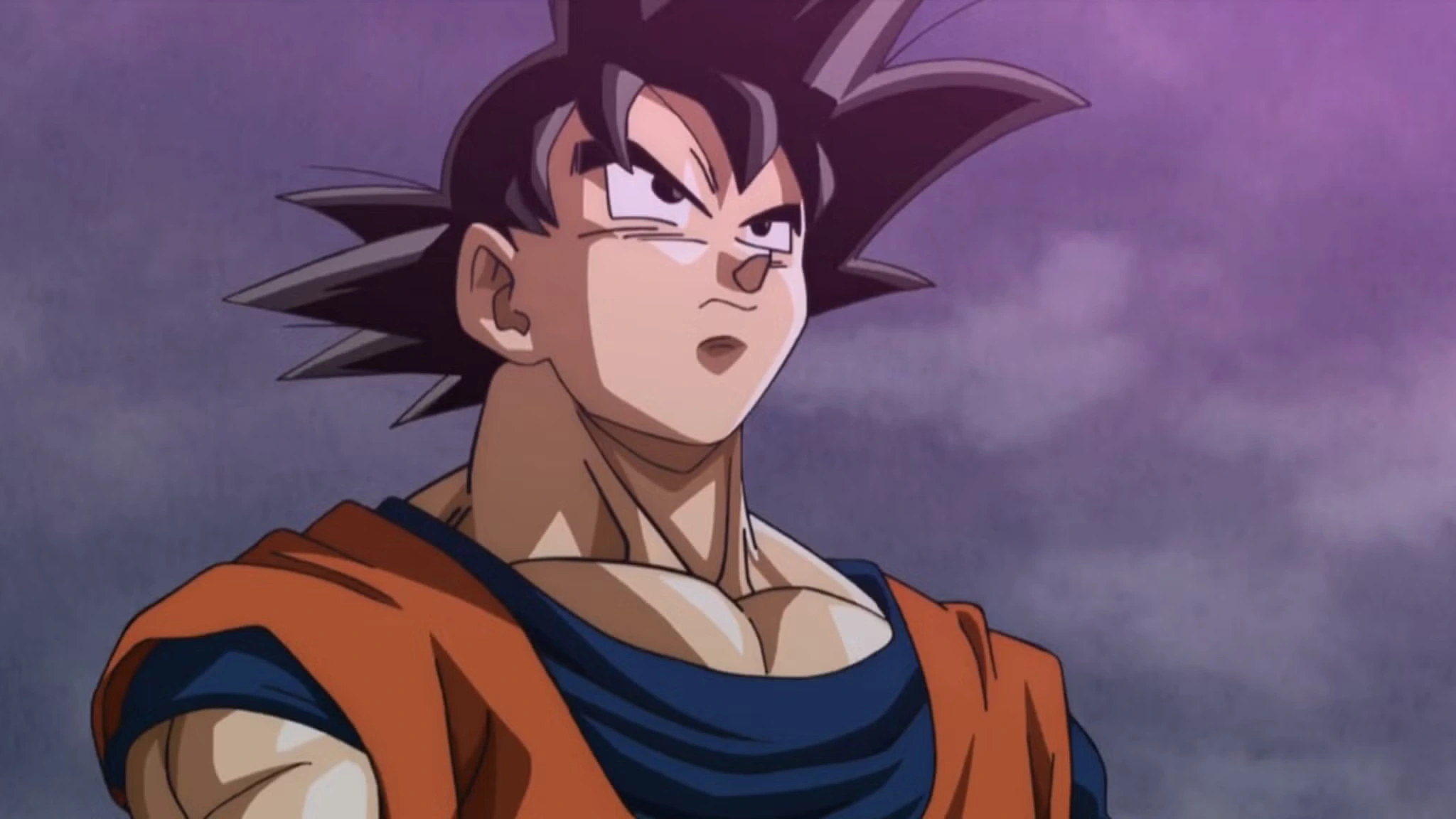
The episode then delivers one of its finest visual moments.
Summoning Shenron is nothing new to the series' audience. We have seen it many times, so simply bringing back the legendary dragon is not enough to make the scene interesting. The new version nevertheless makes his appearance feel special through the way his body takes shape.
We see light emerge from the Dragon Balls, gradually gathering and becoming the dragon's familiar form, before his features and scales are revealed in a way that gives the summoning a sense of scale and awe.
For me, this is one of the episode's clearest visual improvements, and perhaps its most successful example of giving a familiar element a renewed presence.
But the scene's appeal is not purely visual.
When Shenron discovers that Beerus is present, his behavior changes noticeably. He seems anxious, hesitates to answer, and becomes eager to keep his distance from the God of Destruction.
This change adds a good comic dimension to the character while also serving the world we are watching. Even a being we are accustomed to seeing as a granter of wishes seems unable to feel at ease in Beerus's presence.
His attempt to hurry back into the Dragon Balls before granting the wish adds another humorous touch.
More significantly, the episode needs no lengthy explanation to establish Beerus's status. Shenron's reaction alone conveys the fear surrounding this god.
This is an instance of comedy successfully communicating something about the world and its characters, rather than functioning as a funny interlude detached from the rest of the story.
The ritual that creates Super Saiyan God
After learning the required method, the episode moves to the event I had been waiting for throughout: the attempt to achieve the new transformation.
The idea requires five righteous Saiyans to gather and transfer their energy to Goku so that he can achieve the Super Saiyan God form.
The episode does not begin the ritual on an entirely serious note, however.
There is some initial confusion, particularly as the group struggles to follow the instructions correctly. This produces a light comic moment that preserves the series' character.
Videl then provides the solution through her pregnancy with Pan, who has yet to be born but can be counted among the righteous Saiyans needed to complete the ritual.
There is something amusing about Pan becoming part of this process before her birth. It also gives the scene a light moment before it moves into epic territory.
Once the group is complete, the episode's tone begins to change noticeably.
The humor gradually disappears and the imagery opens out, with clouds gathering and parting, shafts of light descending, and waves of energy surrounding Goku.
This transition matters because it makes the transformation feel different from just another increase in power. There is a sense of witnessing something exceptional, beyond the transformations we are used to seeing.
The result is one of the episode's standout visual moments.
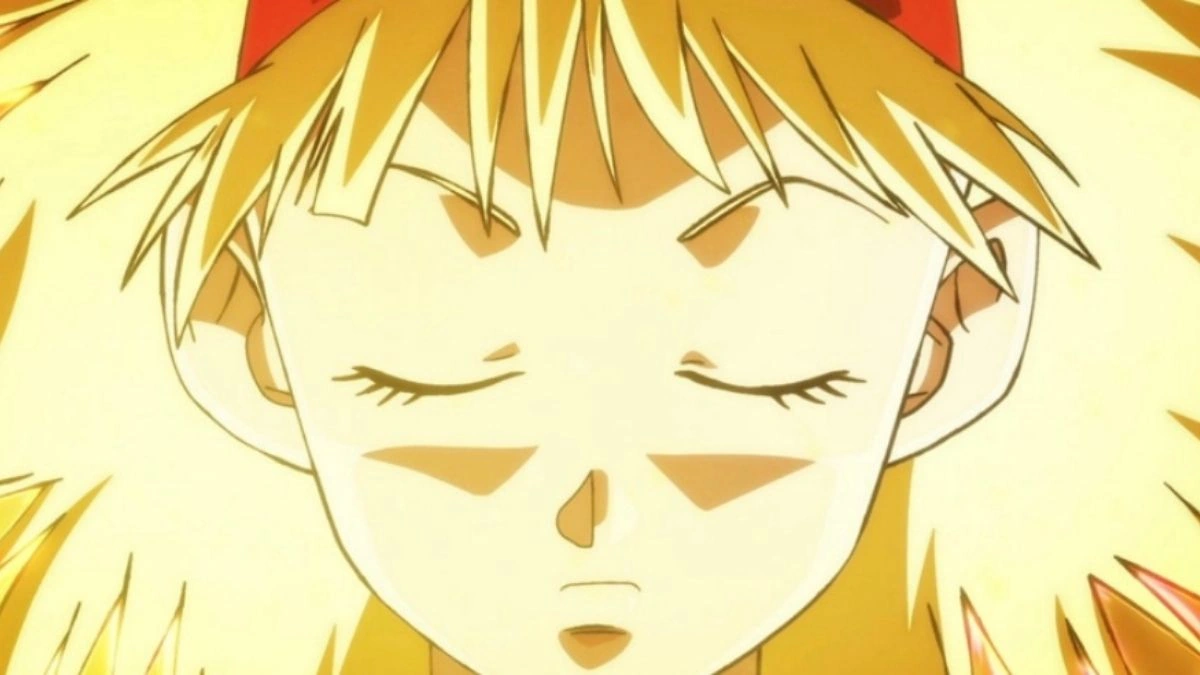
The new form gives Goku a different presence, while the surrounding colors and effects help convey grandeur and scale. The golden color used in the ritual also looks more appealing in the new version.
Despite the scene's success, I do not think every change works in its favor.
The new version reduces some details from the original ritual, such as the rain, hail, and shifts in weather and time during the transformation.
Those details gave the scene additional visual variety and helped make the transformation seem to affect the surrounding world, rather than just Goku and those standing near him.
I therefore think the new version gains in some respects, particularly in the appearance of the energy and its golden color, but loses some elements that gave the original scene its distinctive character.
This does not mean the new version is bad. It means that visual improvement does not necessarily make every new choice better than the previous one.
Finally, Goku stands before Beerus in his new form, and the episode ends at this long awaited confrontation.
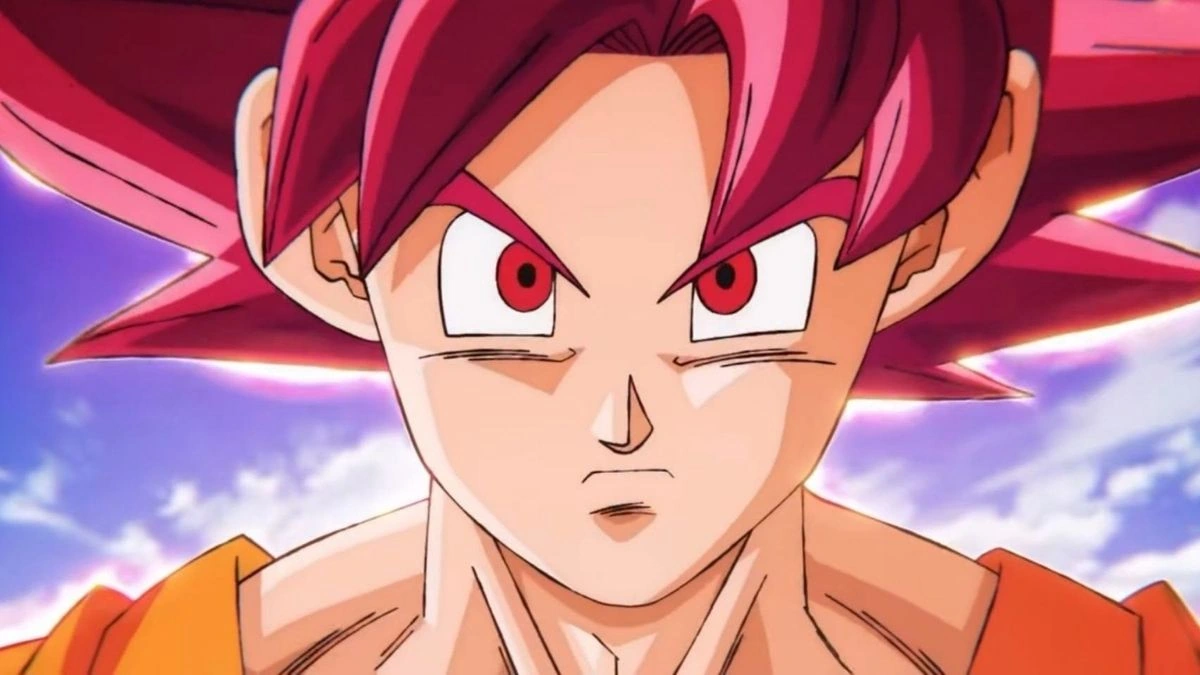
It is a very appropriate ending, bringing us to the moment everything has been building toward without presenting the battle itself before its time.
Has the new version improved the original episode?
Viewed as part of the retelling of the Beerus arc, the episode shows a clear improvement in narrative cohesion over the previous installment.
Episode three had problems with pacing and the way its events were assembled. Some portions felt like scenes placed side by side without enough fluidity between them.
Here, the structure is clearer. Events move toward one central goal, achieving Super Saiyan God, and most scenes directly serve that purpose.
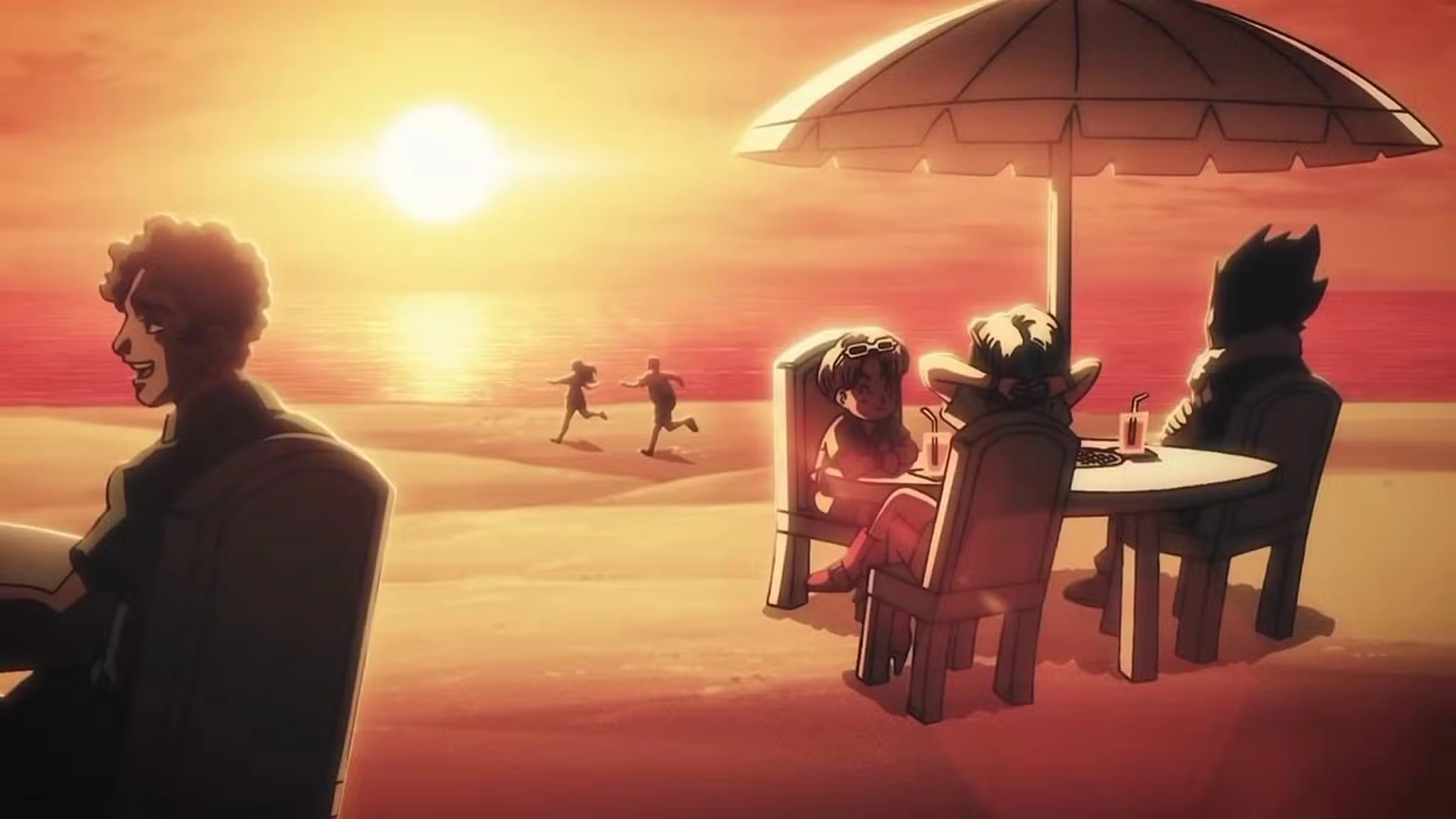
The return of some details of Vegeta's family life through a brief flashback is also a successful choice.
After Vegeta's family trip was absent from the early episodes, this return offers a glimpse of his newer identity as a man with a clear concern for his family, without devoting extensive time to scenes that could have affected the story's pace.
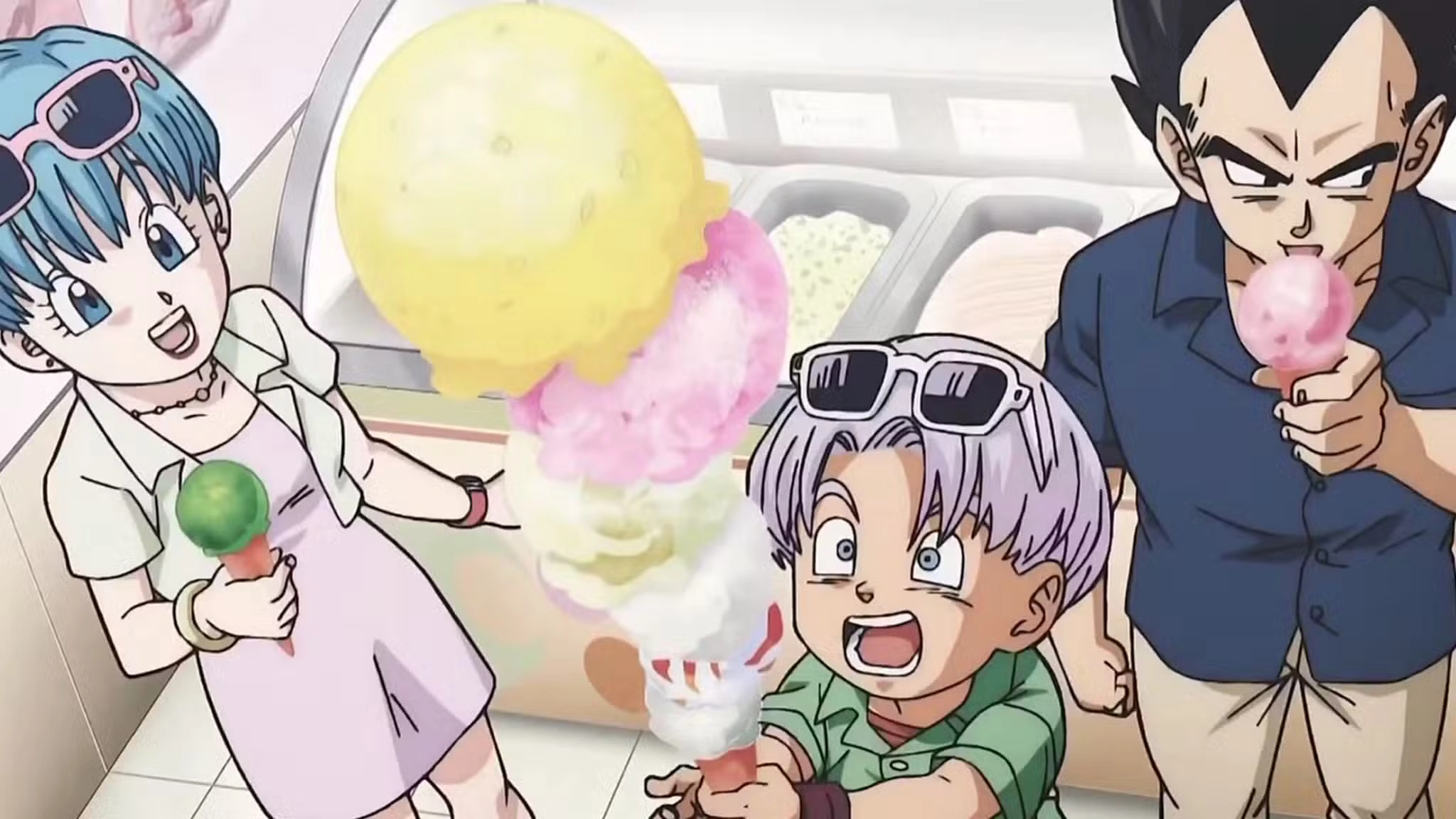

It is a good example of retaining important information about a character while presenting it in a way that does not interrupt the episode's progress.
The problem is that this positive development does not extend to every choice.
The clearest example is the treatment of the Pilaf gang.
Most of their scenes have been removed, while they remain present in a few moments without enough of the comic situations that originally gave their appearances a clear purpose.
As a result, their presence feels unnecessary. They neither contribute significantly to the plot nor fulfill an effective comic role.
In my view, it would have been better either to retain the scenes that give them a clear function or to remove them altogether, rather than offer limited appearances that add nothing to the experience.
This problem reveals that abridging a story requires more than deleting scenes. It requires understanding each scene's function before deciding whether to keep or discard it.
Goku and the missing music
One of the choices that works least well for me is the treatment of Goku's arrival on Earth and his conversation with Bulma.
The problem was already present in the 2015 anime: Goku does not respond to the danger with the seriousness it demands, and the dialogue has a lightness that does not fully fit the moment.
The original version's cheerful music heightened this impression, making Goku's arrival feel more like a comic situation when it should have carried greater excitement and gravity.
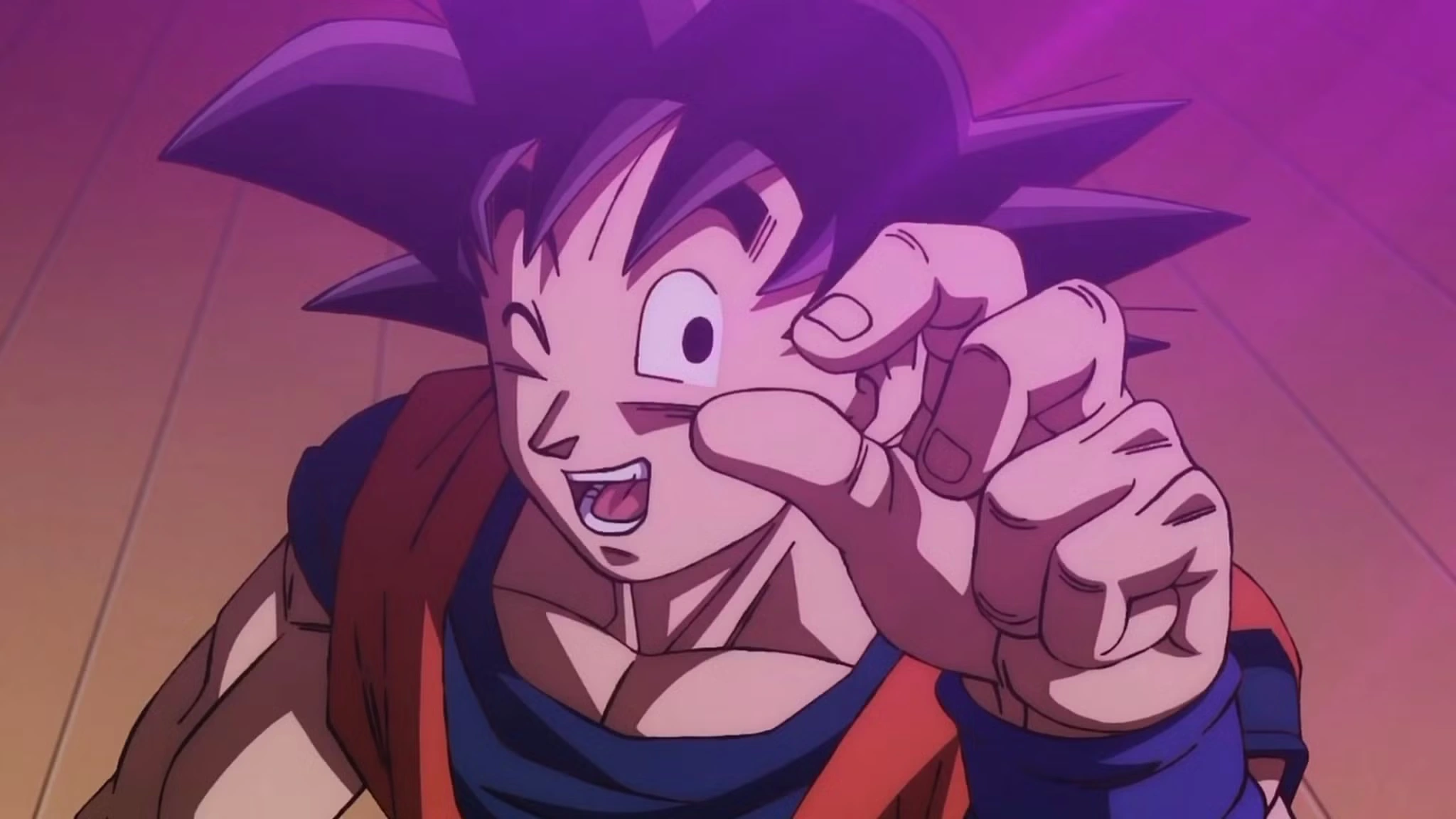
The new version does not offer a real solution.
The questionable dialogue remains unchanged, while the music has disappeared without being replaced by a score better suited to the moment.
The scene is therefore accompanied primarily by the sound effect of Beerus's attack, without background music to help build the necessary feeling.
I think removing an unsuitable element is not enough by itself to improve a scene, particularly when no alternative fulfills the same dramatic purpose.
Even poorly chosen music can contribute a feeling that an otherwise empty soundscape does not provide.
This makes the alteration feel incomplete. The new version has not addressed the underlying problem, but has merely removed one of its elements.
Interestingly, the episode itself demonstrates that the team can make clear improvements, whether in Shenron's summoning, the new transformation, or some of the redrawn shots.
These unsuccessful choices consequently stand out more because they sit alongside moments that genuinely benefit from the opportunity to retell the story.
Final verdict
The final verdict: good improvements do not make an entirely superior version
I think episode four is better than its predecessor in the cohesion of its events and the fluidity of its transitions. It also restores some of Dragon Ball's characteristic humor without losing the sense of danger that comes with Beerus's presence. Its chief strengths include Shenron's summoning, the visual presentation of Goku's transformation, and improvements to some scenes and shots. Other decisions, however, add little real value, such as keeping the Pilaf gang after cutting most of their scenes and the unsuccessful handling of Goku's scene and its music. Beautiful as it is, the new transformation ritual does not surpass the original in every detail, particularly after the removal of effects that gave the earlier scene greater variety. This raises an important point about the future of this version: redrawing scenes and improving individual shots are not enough on their own to establish it as the best way to experience these events. Dragon Ball Z: Battle of Gods still holds a strong position as the best presentation of the Beerus arc, at least on the basis of the elements available for comparison here. Even if the coming episodes deliver more spectacular battles, that will not erase the reservations surrounding some current choices. Ultimately, episode four performs its task well. It brings us to the birth of Super Saiyan God, maintains a mixture of humor and epic spectacle, and offers visual moments worthy of praise. It is not a perfect retelling, however, nor does it comprehensively improve on everything that came before.
Your turn
I would like to hear your opinion: do you prefer the Super Saiyan God transformation ritual in the new version, or do you think the original was more complete and affecting?
AUDIENCE VOTE
Do you agree with the MB rating?
Choose once from this browser. You can change your answer at any time.