The review
One battle... but a constantly changing rhythm
Episode five relies on a confrontation that occupies almost its entire running time. This is a clear risk because continued fighting alone does not guarantee continued suspense. Any long battle can lose its impact when it becomes a repetitive exchange of blows, however powerful its participants may be.
The episode tries to avoid this problem by dividing the confrontation into stages that differ in nature. Goku does not begin the fight in complete control of his new abilities. He gradually discovers their limits while Beerus continues testing what his opponent can offer.
This difference gives escalation a function beyond making the blows stronger. When Beerus moves so quickly that he seems to create multiple copies of himself, the confrontation becomes a test of Goku’s ability to deal with an opponent whose movements are hard to predict. When the fight moves into the water, the nature of movement and the fighters’ constraints change. Reaching space, meanwhile, expands the danger from the fighters’ bodies to Earth itself.
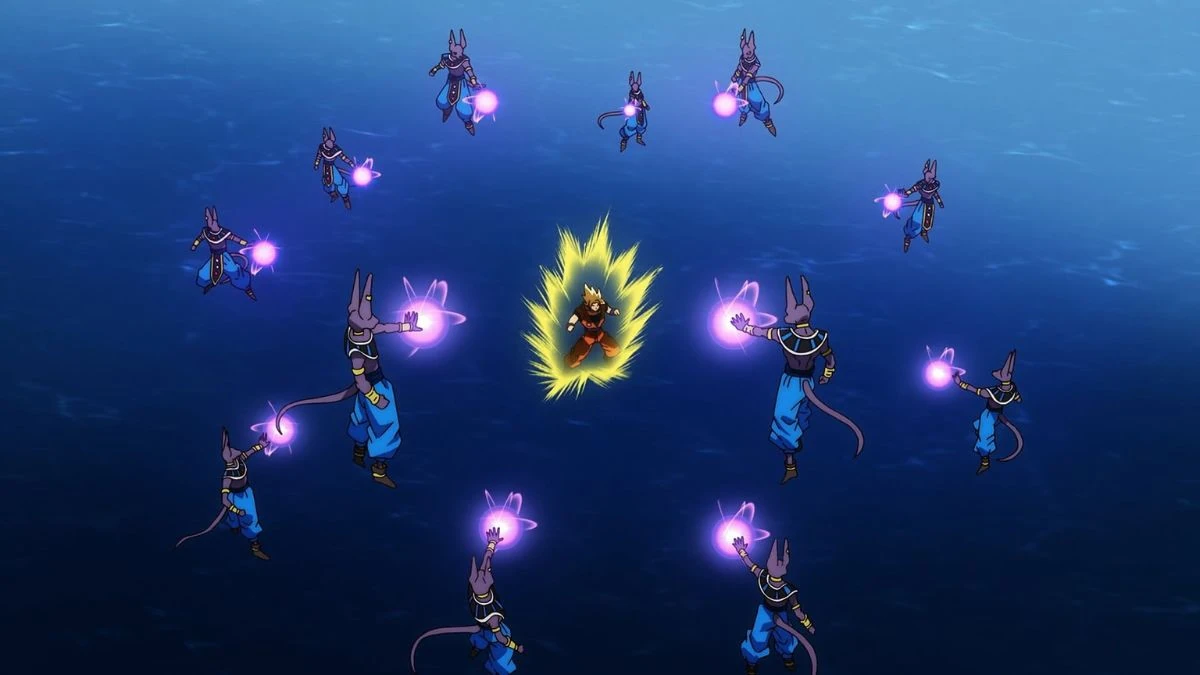
These transitions do not amount to major narrative development, but they help change the nature of the challenge. Even so, there remains an important distinction between developing fighting techniques and developing dramatic conflict. The episode offers a substantial amount of the former, while the latter depends on what we discover about the two characters during the confrontation.
The value of the fighting therefore lies in what each stage adds to our understanding of the difference between them, rather than in the number of blows they exchange. Goku fights while testing the limits of his power. Beerus fights while trying to discover whether anyone can push him into making a real effort.
This contrast gives the battle its character.
Spectacular images do not necessarily make an impactful blow
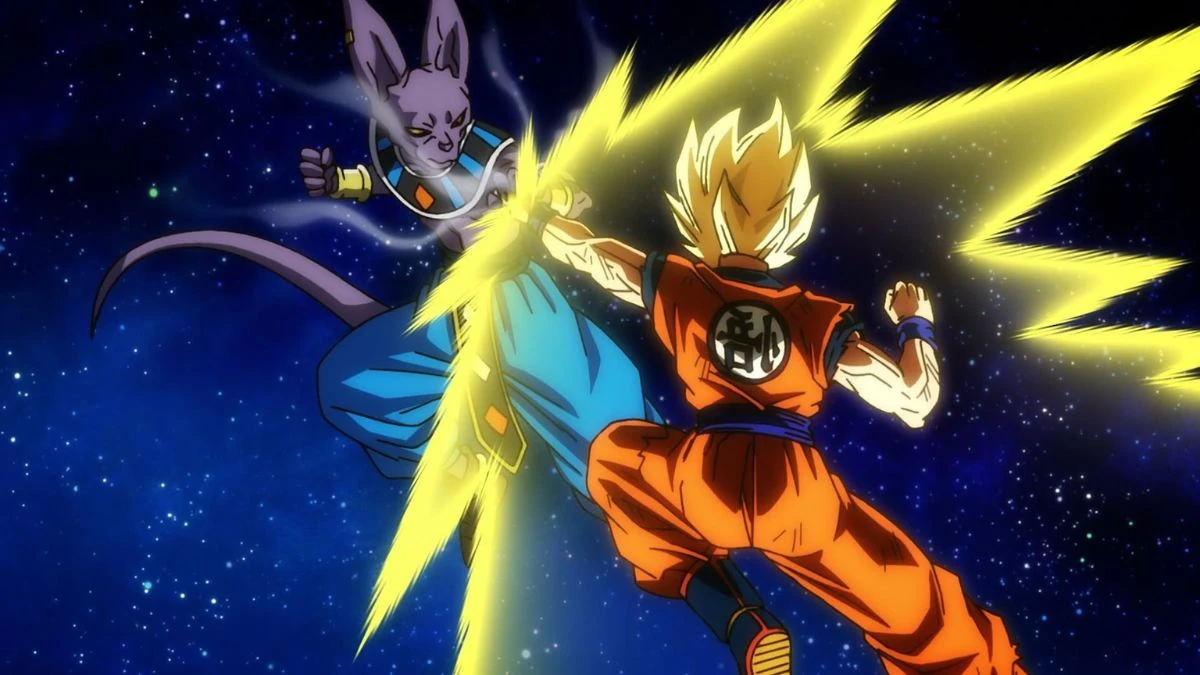
Visually, episode five offers several good scenes, particularly in its treatment of the auras surrounding the fighters and their energy attacks.
The auras do not always appear as fixed fields of color. Instead, they carry an internal movement resembling tongues of flame. Some energy attacks also look more lively and dimensional, giving them a visual presence suited to the confrontation’s increasing scale.
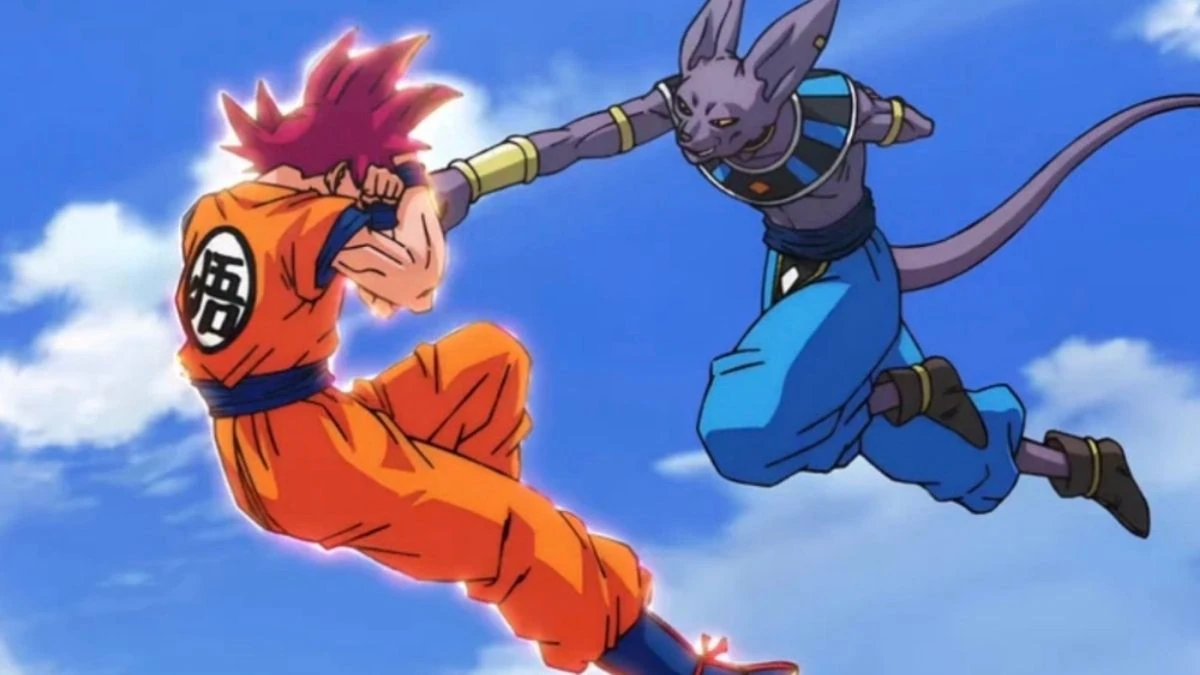
But the strength of a visual effect alone is not enough to make an action scene successful. The real impact also depends on how the viewer is prepared for the moment of a blow and on the relationship between camera movement, editing, and sound.
This weakness is clear when Goku uses the Kamehameha to counter the energy projectiles Beerus sends toward Earth.
As a concept, the scene has all the elements of an exciting climax: danger threatening Earth, a multiple attack that is difficult to stop one projectile at a time, and Goku choosing to concentrate his power into one strike.
The execution, however, does not make the best use of these elements.
The chosen angles do not give the buildup of power the expected impact. The vocal performance during the attack also falls short of the tension on which the moment rests. Most importantly, the editing divides the final stage of the cry into several pieces rather than allowing it to develop into one coherent explosion.
Here, the problem is more about timing than the scale of the effects.
A scene in which the audience waits for an enormous release of energy needs a clear sense of power accumulating, followed by a release that delivers the dramatic payoff of that accumulation. When the release is fragmented, some of the impact is lost.
We therefore find that the episode often succeeds in conveying the confrontation’s visual scale, but does not always sustain a sense of weight behind the blows. This matters because the blow that looks strongest is not necessarily the most affecting to watch.
Goku... what remains of power when its sign disappears?
The end of episode five and the beginning of episode six offer one of the confrontation’s most important developments: the Super Saiyan God aura begins to disappear, and Goku returns to his usual Super Saiyan form.
At first, it seems the fighter has lost the power that allowed him to face Beerus. It is natural to expect the gap between them to widen until continuing the fight becomes impossible.
What happens defies that expectation.
Goku remains able to keep up with his opponent to a degree that surprises Beerus himself. Beerus then offers a possible explanation: perhaps Goku has absorbed divine power into his own abilities, so that its continuing effect no longer depends on the transformation remaining visibly present.
This idea gives the character’s development a meaning beyond acquiring a new fighting form.
At first, divine power seems like something additional that Goku receives. The next stage suggests it has become part of his abilities even after its outward signs have disappeared.
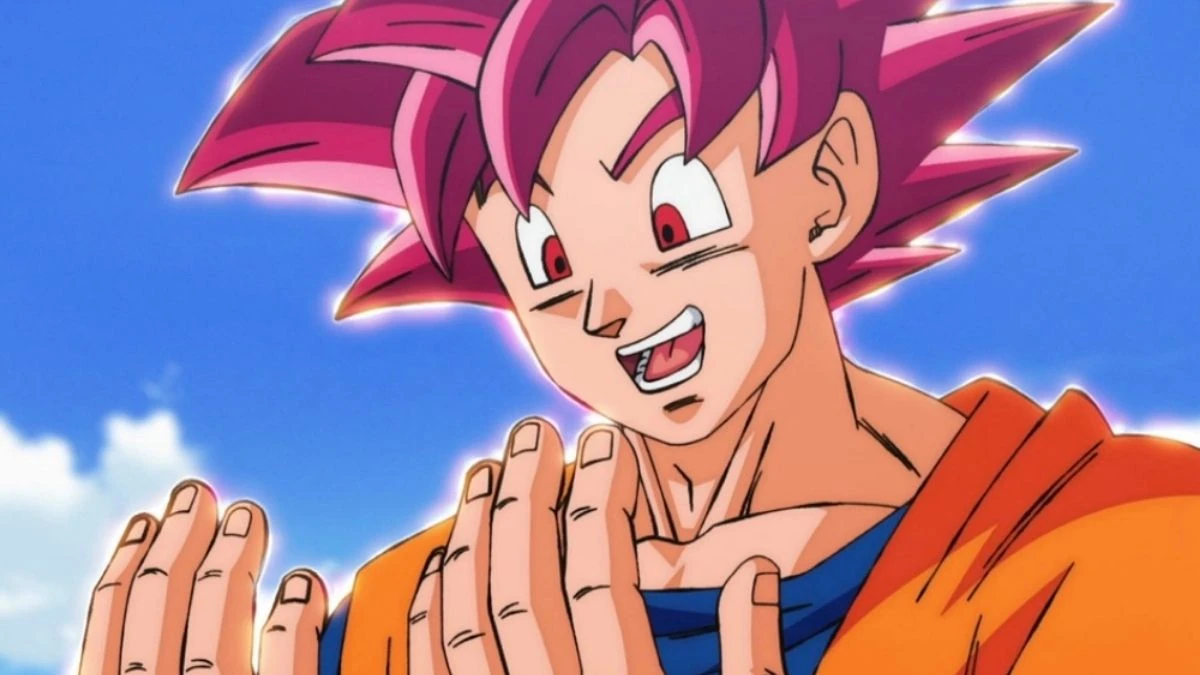
It is important, however, not to treat Beerus’s interpretation as a definitive account of every detail of this power. The episode offers an explanation from a character watching events and trying to understand them, rather than a complete presentation of the transformation’s rules.
Dramatically, this development lets the battle continue without introducing another transformation at the same moment. It also shifts the tension to a different question: how far can Goku continue with this power once his body begins losing its ability to fight?
The distinction between the two questions matters.
Possessing power does not necessarily mean being able to use it indefinitely. This makes physical exhaustion an essential element of the confrontation’s final stage, instead of reducing it to a comparison of energy levels.
Beerus... the opponent who began enjoying being challenged
Goku may seem to undergo the greatest development in power, but Beerus experiences the more interesting change in the relationship between the fighters.
Beerus does not enter the confrontation regarding Goku as an equal. He has a clear advantage and treats destroying Earth as something he can do if he chooses.
The continuing confrontation reveals another side of him.
The more Goku manages to resist, the more engaged Beerus becomes in the fight. His comments and the way he interacts with his opponent begin moving away from the image of someone carrying out a threat and toward that of a fighter who has finally found a confrontation worth his attention.
Even Goku’s amusing behavior and persistent stubbornness seem less irritating to Beerus as the battle progresses.
An important critical reading emerges here: Goku does not completely change the balance of power, but he does change the nature of their relationship.
From the beginning, Beerus has the ability to determine Earth’s fate. He now faces someone who refuses to accept that this ability is enough to end the discussion.
This does not mean Beerus undergoes a complete moral transformation or suddenly becomes an entirely different character. The two episodes do not provide enough evidence for such a judgment.
Perhaps he has simply enjoyed an unusual battle and begun respecting the fighter who gave him that experience.
This more cautious interpretation does not diminish the development’s importance. It makes Beerus’s final position understandable without assuming that he has lost his power or abandoned his nature altogether.
What distinguishes this relationship is perhaps that respect arises from Goku’s determination to fight while knowing his opponent is still stronger, rather than from Goku winning.
Episode six’s best moment... and why the ending weakened it
Episode six reaches one of the confrontation’s strongest moments when Goku delivers a final blow that drives both him and Beerus toward space.
After this effort, Goku’s resistance gradually stops until he is unable to keep fighting.
The scene’s approach changes strikingly here.
Instead of continuing the display of explosions and tremendous speed, the moment narrows to two fighters in a vast emptiness and Beerus admitting that Goku put up a strong fight, even making him feel some concern.
More importantly, Beerus does not make this admission in front of others. He waits until he is sure no one is listening.
This small detail says a great deal about him.
He can acknowledge his opponent’s worth, but seems unwilling to let that acknowledgment become a public declaration that diminishes his superior image.
He then repeats a simple gesture, striking Goku’s forehead with his finger. It becomes a closing sign that takes us back to the beginning of their relationship as fighters.
The contrast between this tiny movement and the enormous power we have just seen gives the scene a distinctive effect. After all the explosions, the decisive moment comes through a small gesture carrying a degree of mockery and respect at once.
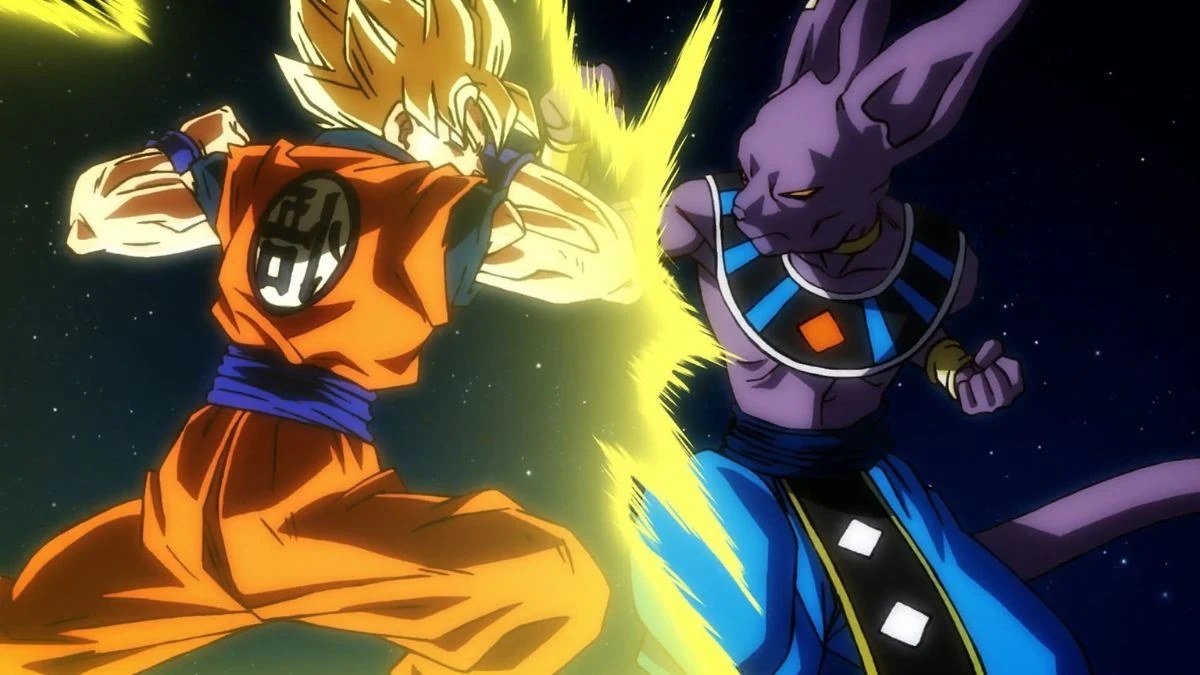
We find that this moment could have served as the fight’s main ending.
The episode makes a different decision.
Goku regains consciousness as he falls and returns to face Beerus once more, in a brief extension of the battle that adds little to the nature of the conflict.
The choice is easy to understand in character terms. Goku’s stubbornness and refusal to give up are clear aspects of his behavior.
What serves a character does not necessarily serve dramatic construction.
The previous scene had already achieved a strong emotional outcome. The superior opponent acknowledged his rival’s worth and closed the confrontation with a gesture carrying a clear meaning.
Returning to the fight delays that closure without offering a comparably significant new shift.
The problem is not simply that Goku comes back. It is that his return follows a moment in which the work had already reached an appropriate climax.
As a result, the episode sacrifices some of the first ending’s strength for an additional burst of action that could have been omitted without any real loss.
Vegeta... a brief moment carrying a long relationship
When Goku can no longer resist and falls toward Earth, Vegeta is the one who catches him.
This detail may seem small compared with the fighting we have witnessed, but it carries a different weight when we consider the relationship between the characters.
Vegeta is not merely another fighter standing on Earth awaiting the outcome. He is Goku’s rival, someone accustomed to seeing strength through a desire to surpass others and prove himself.
His presence as Goku falls therefore adds something to the scene without needing a direct emotional speech.
The way he scolds Goku even as he catches him and saves him from falling preserves his sarcastic, superior manner. It also reveals a relationship no longer built on antagonism alone.
The episode does not need to inflate this moment for it to have an effect.
The banter between them actually helps ease the tension after a long confrontation without feeling like an attempt to restart the battle.
An important distinction between two kinds of comedy appears here.
Banter after a dramatic event is complete can give the audience an opportunity to absorb its outcome. Banter or additional action that interrupts the decisive moment before it settles may draw away some of its power.
We therefore find Vegeta’s use at this stage more disciplined than the decision to return Goku to the fight after Beerus’s admission.
The former adds to our sense that the confrontation has ended, while the latter delays reaching that ending.
Why didn’t Beerus destroy Earth?
The confrontation finally reaches the question around which the episodes have revolved: what will happen to Earth after Goku fails to defeat Beerus?
In direct terms, the condition that could guarantee the planet’s safety has not been met. No other fighter can stop the God of Destruction if he decides to carry out his threat.
Beerus appears to be preparing to launch his attack.
But the beam veers off, and he seems to fall asleep suddenly. Whis decides to take him back to their home.
This ending relies on the humor familiar to the world of Dragon Ball, but gains greater value when connected to what has happened throughout the battle.
If Beerus is pretending to sleep, as Whis later implies, the trick becomes a way to retreat from his threat without explicitly admitting that he has changed his mind.
He does not want to destroy Earth, but does not necessarily want to announce that Goku has succeeded in influencing him.
In this reading, pretending to sleep logically extends the scene in which Beerus acknowledged Goku’s worth out of everyone else’s hearing.
In both instances, he seems to be trying to preserve his superior image even as his behavior reveals something more complex.
Another reading, however, deserves consideration.
The episode retains some ambiguity between Whis accusing Beerus of pretending and Beerus insisting that he really slept. If we take the sleep as genuine, the comic ending depends more on coincidence than psychological change.
Even so, the reading that he is pretending seems more consistent with the confrontation’s trajectory. That consistency alone does not make it an established fact.
This makes the ending interesting.
Goku has not defeated Beerus in the traditional sense, but the fight may have made him reconsider his decision.
The question shifts from Goku’s ability to win to the ability of his very presence to make a difference to his opponent.
Earth survives without the enormous disparity in power between the two disappearing.
This outcome suits Beerus’s nature better than an ending in which he suddenly loses merely because the story needs its hero to win.
Two successful episodes... but not every climax needs further escalation
When we consider the episodes as one conclusion to the confrontation, we notice that each has a different function.
Episode five mainly develops the fighting visually and physically, trying to sustain interest in a long confrontation by varying its stages. Episode six gives the conflict its dramatic consequences and clarifies its effect on Goku and Beerus before ending the danger threatening Earth.
The episodes’ strength is that they do not rely on major surprises alone. They give the relationship between the fighters real importance. The comic style also remains present without continually erasing the tension.
The work falters, however, when it confuses more action with greater impact.
Some action moments need more tightly constructed images and sound. Some dramatic moments would have been stronger if the direction had trusted them enough to end without digression.
These flaws do not undo the confrontation, but they prevent it from achieving its fullest possible impact, especially when the ending already contains good elements that need no further complication.
Final verdict
Final verdict
Episodes five and six of Dragon Ball Super: Beerus bring the confrontation between Goku and Beerus to a generally satisfying end, thanks to the escalation of the action, Beerus’s growing presence, and the way the battle gains a meaning beyond identifying the stronger fighter. Even so, the weak execution of some decisive moments and the insistence on extending the confrontation after an appropriate dramatic climax reduce the experience’s power. Ultimately, the battle’s importance is not that Goku managed to surpass Beerus. It is that he may have persuaded an opponent with an enormous capacity for destruction to choose not to use it. Our question for you remains: do you think Beerus spared Earth out of respect for Goku after their fight, or was the ending simply a comic device for retreating from his threat?
AUDIENCE VOTE
Do you agree with the MB rating?
Choose once from this browser. You can change your answer at any time.