The review
The writing: six stories and a fragile connection
The screenplay consists of six shorts about love, desire, solitude, relationships and the search for closeness. It does not always find a strong thematic link that makes them feel like pieces of the same experience. Several stories stand well on their own, yet moving from one to the next creates sharp changes in quality and tone.
Some entries are direct dramas, while others are strange and experimental. Some grow from emotion and relationships; others pursue sex, impulse and the look of desire. The film is not fully coherent, but its value lies in leaving us with six possible forms of love rather than pretending to define it once and for all.
Clean Shaven: the most complete story
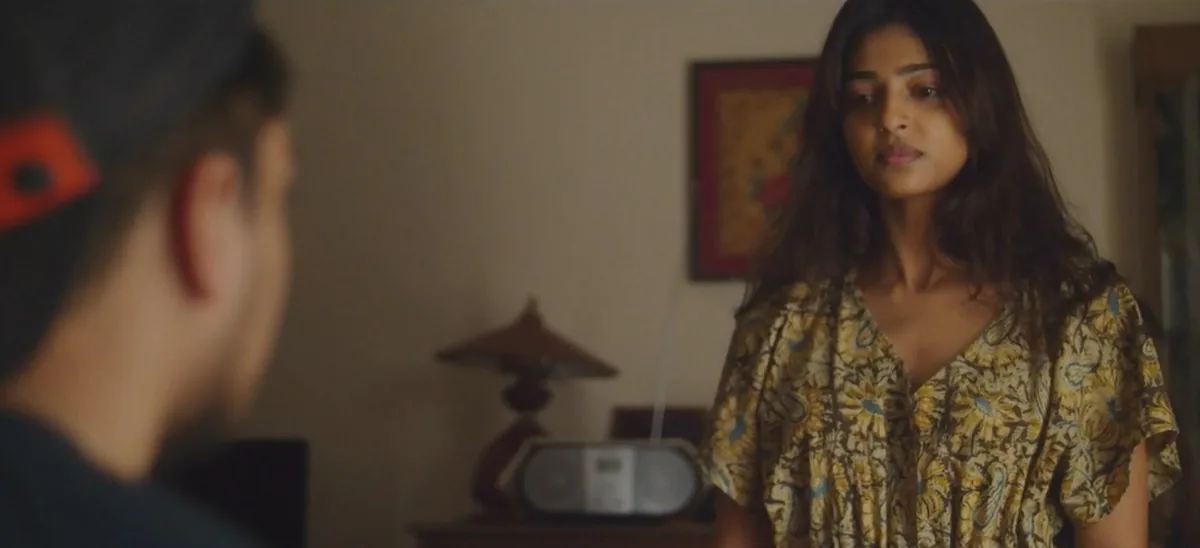
Clean Shaven carries the anthology's greatest social and human force. Archana lives in a marriage shaped by her husband's authority. Her proximity to the teenage neighbor Alwyn awakens a different awareness of desire and her body. The story's real subject is not simply that relationship but the way she begins to see herself.
The apartment tells us a great deal. A balcony resembling a cage makes Archana appear visible to others without enjoying real independence. It is a clear and effective visual thought that needs little explanation. Radhika Apte's restrained performance gives the change credibility through hesitation, quiet and fear, rather than a loud declaration.
Desire is not there merely to provoke. It reveals a woman realizing how long she has seen herself through other people's eyes. This is the most complete and affecting chapter, and the one that remains in the memory.
Afterbirth: inside a young mother's mind
Mia Wasikowska moves into a very different space with Afterbirth. A young mother loves her child but does not seem emotionally or practically ready for motherhood. Rather than follow conventional plotting, the short moves into her inner world. Its strongest tool is visual: the 4:3 frame and montage that sets contrasting images against each other make us feel close to her thoughts.
Strange and troubling moments sit beside lighter ones. That tension gives the film a distinct personality. The cost is that the style occasionally feels too emphatic: the idea and images are strong, yet the film sometimes seems more intent on displaying its method than moving the story forward. Even so, Wasikowska shows a clear visual instinct, though not every choice works equally well.
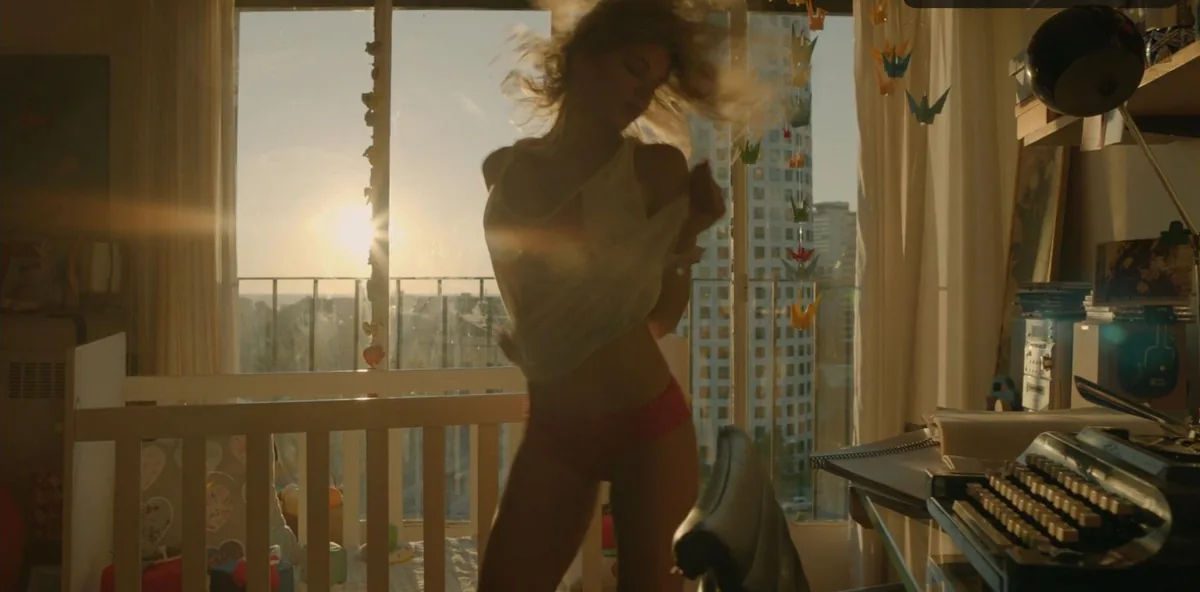
Dance Dance Dance: emotion with too little restraint
Dance Dance Dance returns to direct drama. Rio tries to approach a friend and receives a harsh response. After telling his parents the truth about himself, he is thrown out and finds shelter among homeless people, where the difficulties continue. The story has a clear humane position, though it handles that position less precisely than Clean Shaven.
Sebastián Silva brings movement and energy, but energy does not always give the events enough precision or patience. Some moments press for a quick emotional impact instead of letting feelings develop. The premise affects us more strongly than its execution.
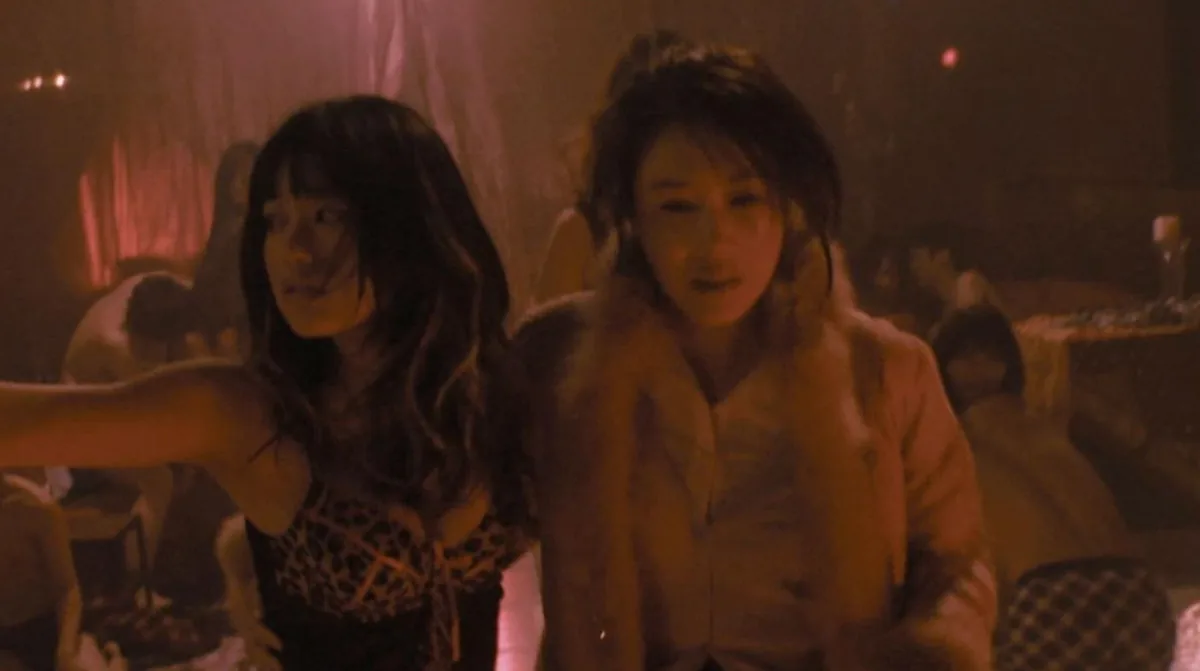
Love of Love: visual daring and limited feeling
Sion Sono makes one of the strangest and boldest contributions. Love of Love enters a different realm of relationships and desire, using color and a heightened look to build a world closer to fantasy than ordinary reality. There are striking images, shocks and comic turns, but daring alone cannot carry the experience.
It has a clear visual personality, yet it does not leave the emotional imprint of the best segments. It knows how to make us look without always making us feel.
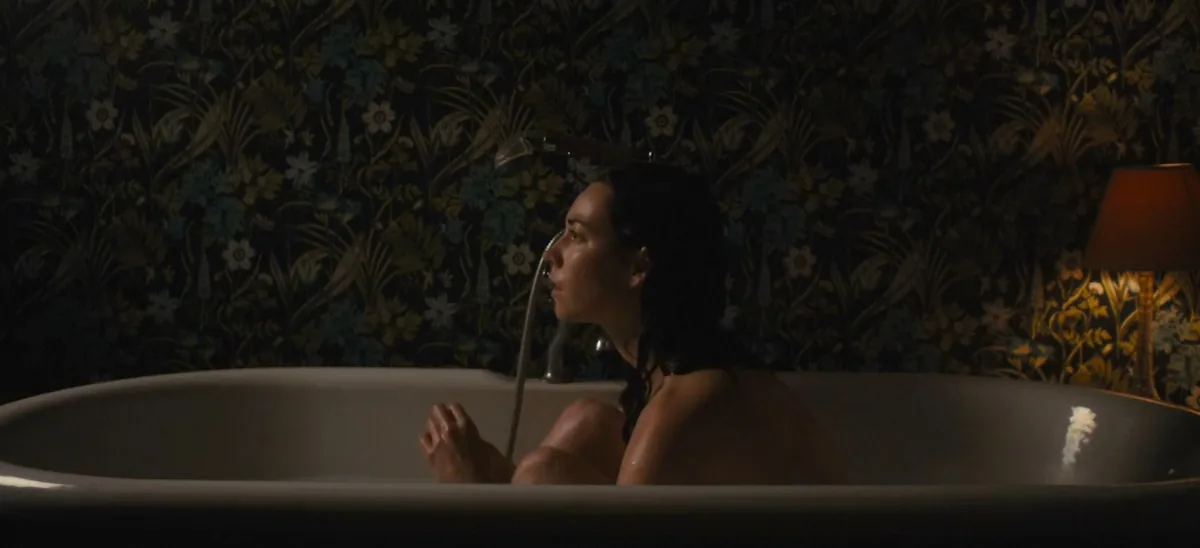
The Love of My Life: a relationship slowly coming apart
A man and woman sit in a café while their relationship wavers. Memories and pregnancy reveal how their feelings have changed. The chapter depends more on tone than incident: a slightly restless camera, golden city light and movement between moments allow the relationship to seem as if it is slowly unraveling before us.
Gael García Bernal wisely avoids turning the breakup into grand melodrama. Feeling emerges through small details and shifts in how the two look at each other. The story still relies more on style than on plotting and does not have the structure of Clean Shaven. But it understands how something once loved in a partner can gradually become a source of irritation.
I Do: a beautiful image seeking a fuller story
Natasha Khan's final chapter follows Nora as her wedding approaches and anxiety grows. A meeting with someone important from her past lets her reconsider where she stands. The images are beautiful and the performance fits the mood, yet the short can resemble an extended music video more than a complete story.
The ambiguity does not always grow into depth. Even the wild horses, a symbol meant to give the segment emotional breadth, do not feel especially new. It nonetheless leaves a visual impression, in keeping with an anthology that often gives image and mood a great deal of room.
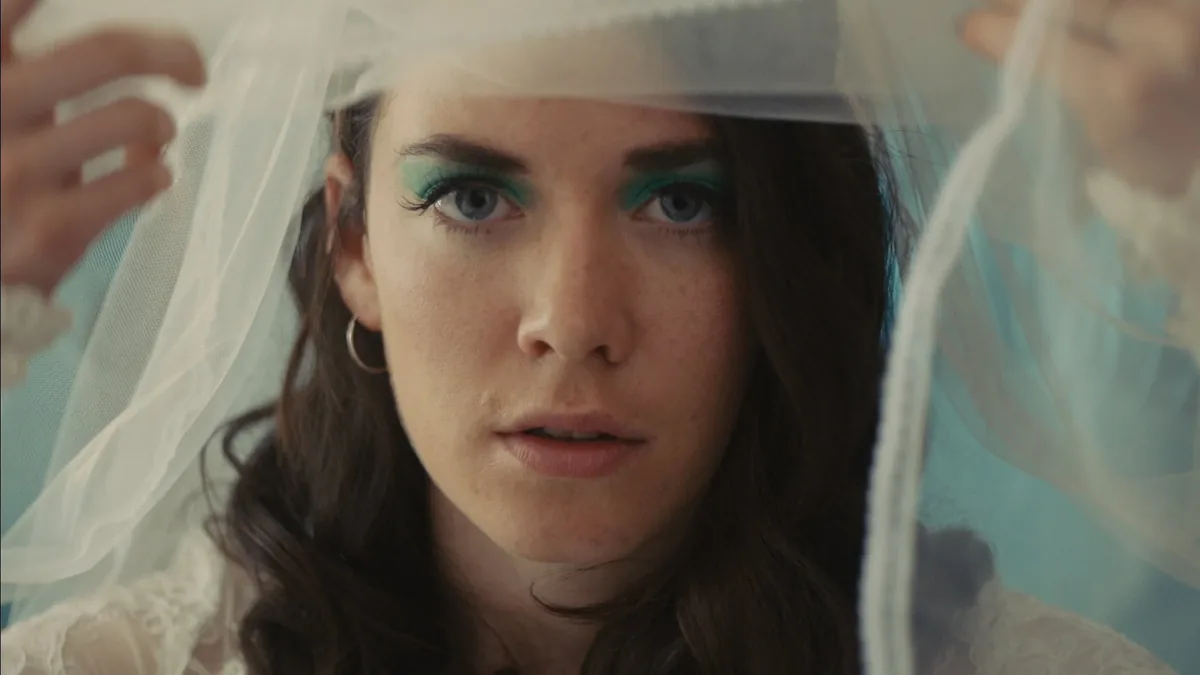
Six directors, six distinct voices
Each director brings a distinct voice. The drama of Clean Shaven, experimentation of Afterbirth, direct energy of Dance Dance Dance, visual fantasy of Love of Love, melancholy of The Love of My Life and music video sensibility of I Do create real variety. They can also make the feature feel like shorts set next to one another rather than one film with a unified character.
Even the opening neon and images of old dancers seem more interested in appearance than in preparing us for what follows. By contrast, the location montages that begin individual shorts work better, giving each its own identity.
Does the film say something about love?
Madly is more compelling as an idea than as a uniformly satisfying experience. It refuses to present love only as something beautiful. Here it can be desire, loneliness, fear, obsession, suffocation or an attempt to find oneself through someone else. Not every short translates those ideas with the same strength. Some are honest and quiet; others lean harder on visual style or provocation than on depth.
Perhaps a measure of unevenness belongs to the premise: love is not one experience, so the six stories need not resemble each other. The problem is not their differences. It is that the link among them is not always strong enough.
Strengths and weaknesses
The anthology's strengths are its range and several excellent stories, especially Clean Shaven. Strong performances across more than one segment and an evident interest in image, music and mood give it memorable moments. Its greatest weakness is the uneven quality and lack of a firm thematic connection. Some chapters focus on style or boldness without building a comparable emotional impact.
Final verdict
Final verdict
Madly is not coherent enough to feel like one complete experience from beginning to end, but neither is it a collection without value. Clean Shaven and a few other chapters are genuinely strong, while others rely too heavily on appearance or feel less mature. What remains is an unsettled image of love: sometimes beautiful, sometimes lonely, sometimes obsessive, sometimes painful. Its unevenness weakens the whole without erasing what the best stories achieve.
Your turn
Did the uneven quality of the stories weaken Madly, or is that variety precisely what makes it worth watching?
AUDIENCE VOTE
Do you agree with the MB rating?
Choose once from this browser. You can change your answer at any time.