The review
Screenplay and dialogue: Brian, an unprepared protagonist
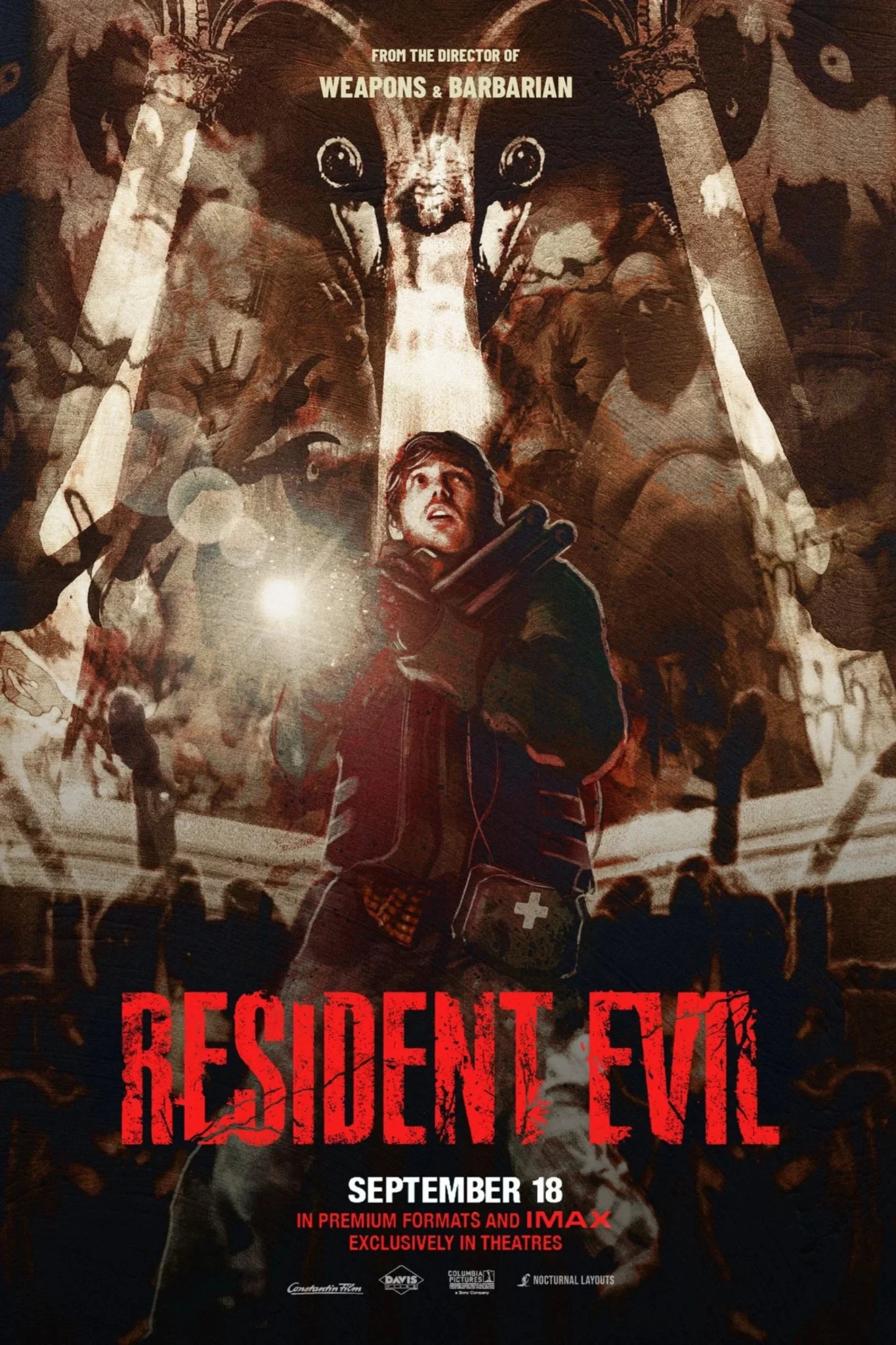
The film's best decision is Brian himself.
He is not a trained police officer.
He is not a soldier.
And he has no experience fighting monsters.
He is simply a medical courier assigned to deliver an important package to Raccoon City Hospital.
Even before the disaster begins, the film establishes that this is someone who makes bad decisions.
He drives through snow in an unsuitable car, handles a sensitive conversation with his girlfriend Michelle badly, and gradually finds himself caught in the worst night of his life.
That makes the horror more effective.
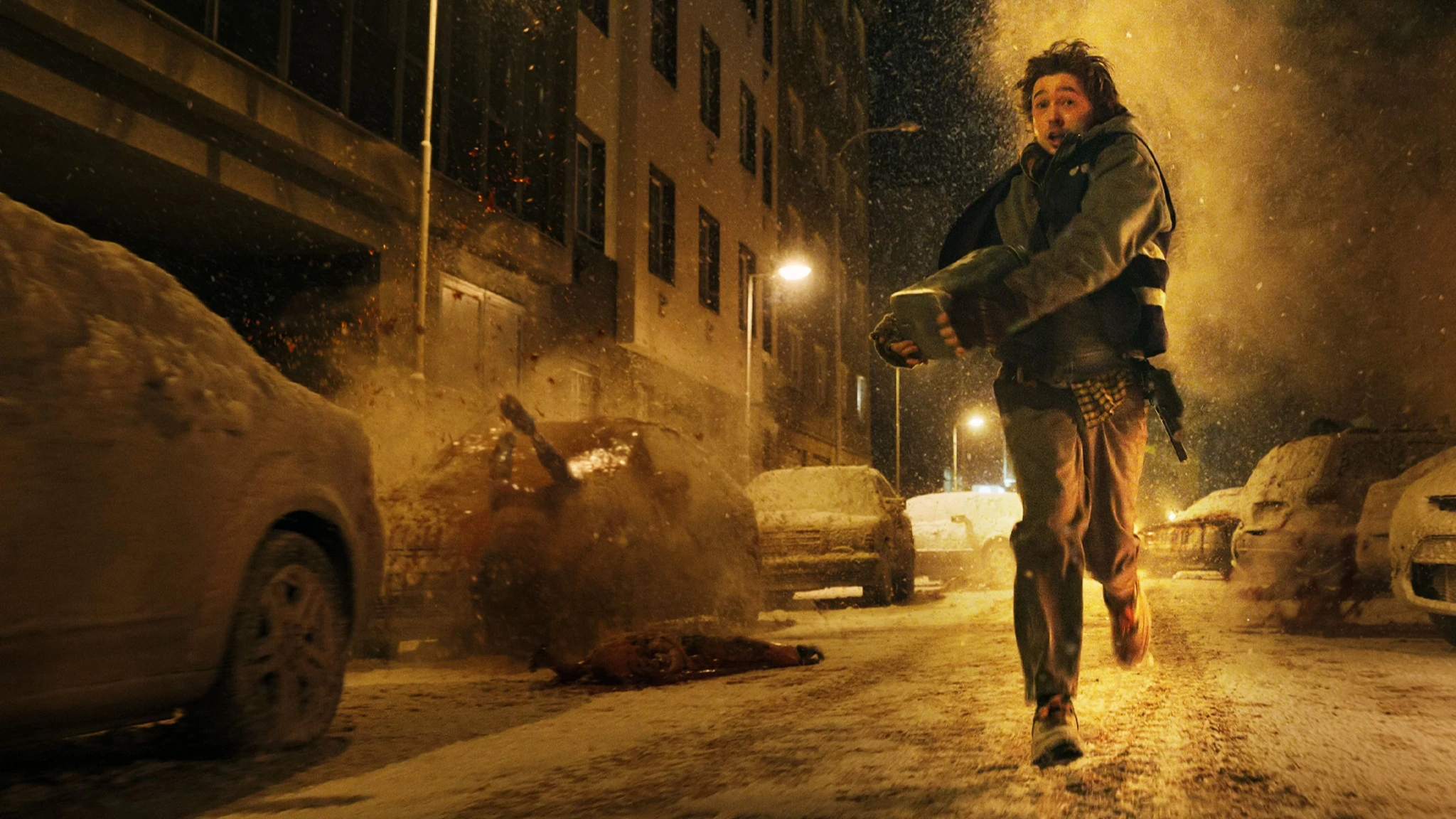
Brian has no more idea what to do than we do.
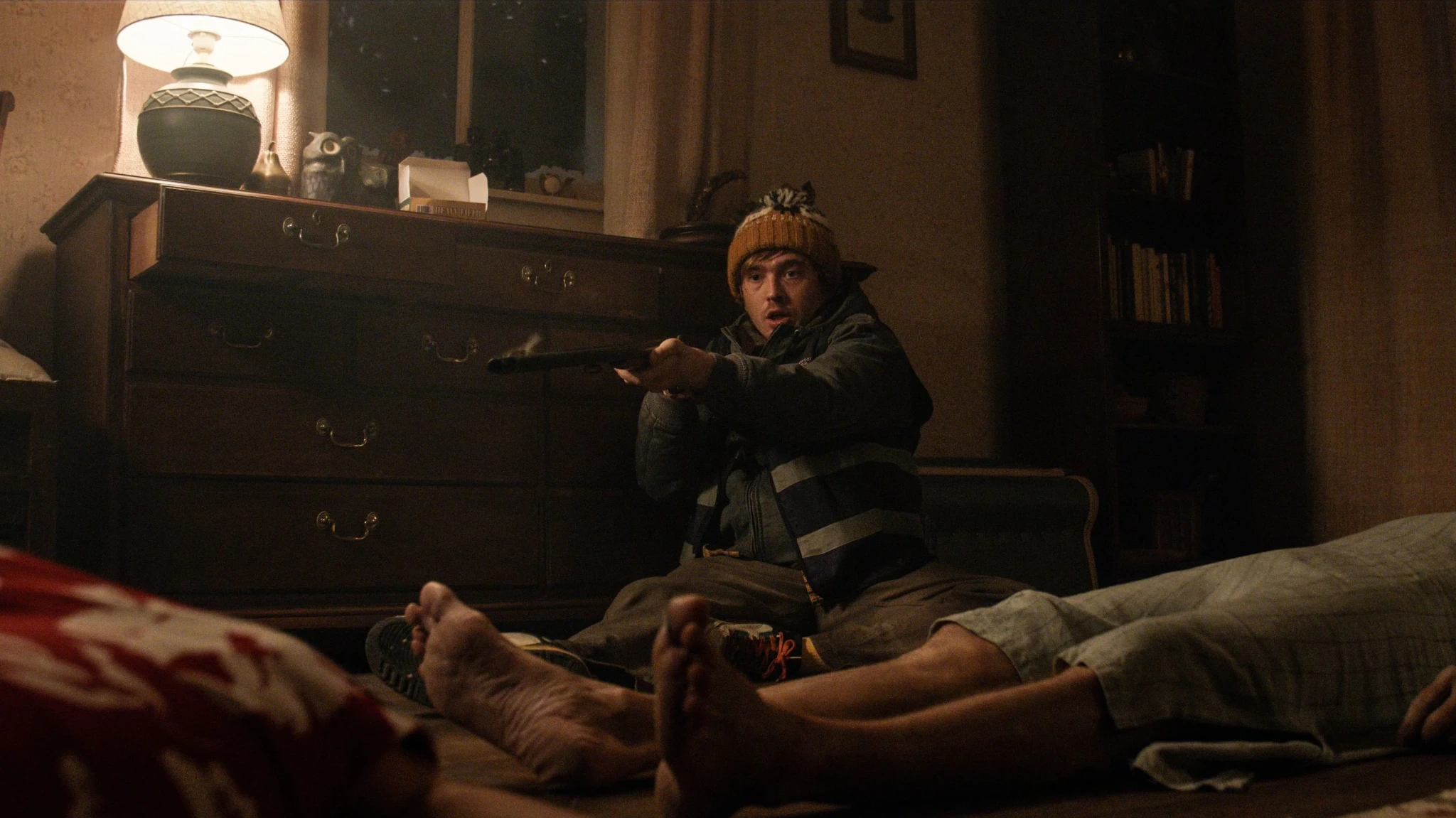
Getting hold of a gun does not suddenly turn him into an action hero.
When he fires, he misses.
When he encounters a locked door, he gets angry with it instead of acting as though he knows there is a puzzle waiting to be solved.
All of this makes him very funny, but it also makes him human.
Adapting the game's logic, rather than its story
The film does not adapt a particular story; it adapts the way you think inside the game.
That is a very important distinction.
There is a route you need to reach.
A door that will not open.
Limited ammunition.
Someone who tells you your next objective.
A creature you do not know how to kill.
And a clear path ahead that you know you do not want to take, but every other route is blocked.
That is Resident Evil.
Dividing the film into something resembling missions or levels therefore works extremely well.
Even little details such as the typewriter and the green herb serve as references for people who know the games, without bringing the film to a halt to say: look at this reference.
Here, the film achieves something many adaptations struggle to do.
It does not require you to know the games to enjoy it.
But if you do know them, you will understand why certain scenes have been designed this way.
A protagonist who learns without becoming a killing machine
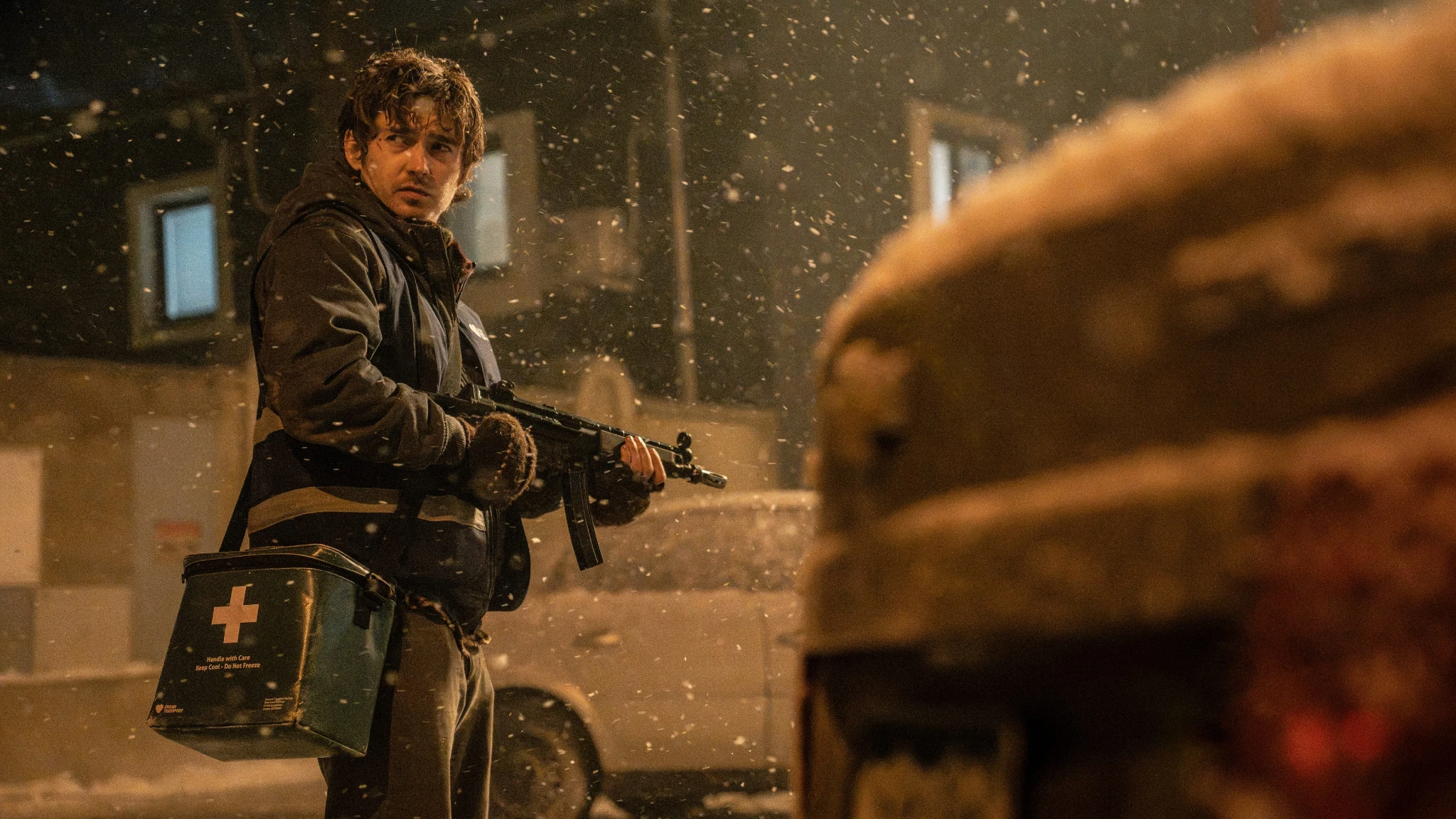
One of the things I most respected is that the film avoids gradually turning Brian into a killing machine.
He does improve, yes.
He gets better weapons.
He develops a better understanding of how to handle certain situations.
But that improvement really resembles a player who began knowing nothing and has started to learn.
It does not mean he has become an expert.
Throughout the film, Brian keeps running, screaming, struggling for breath and looking shocked by almost everything.
Austin Abrams is excellent at conveying this.
His physical performance matters far more here than the dialogue.
The way he holds a gun.
His hesitation.
His expression when he sees something he cannot understand.
And the constant sense that he survived the previous encounter through luck more than skill.
All of this makes us care about him.
Austin Abrams: fear and conscience
The film depends almost entirely on Austin Abrams.
For long stretches, Brian is alone.
If he were not an engaging character, the whole structure would collapse.
Abrams succeeds because he does not try to make Brian likable in the conventional way.
He is a little odd.
Irritable.
He mutters to himself.
And he makes bad decisions.
But he has something very important: a conscience.
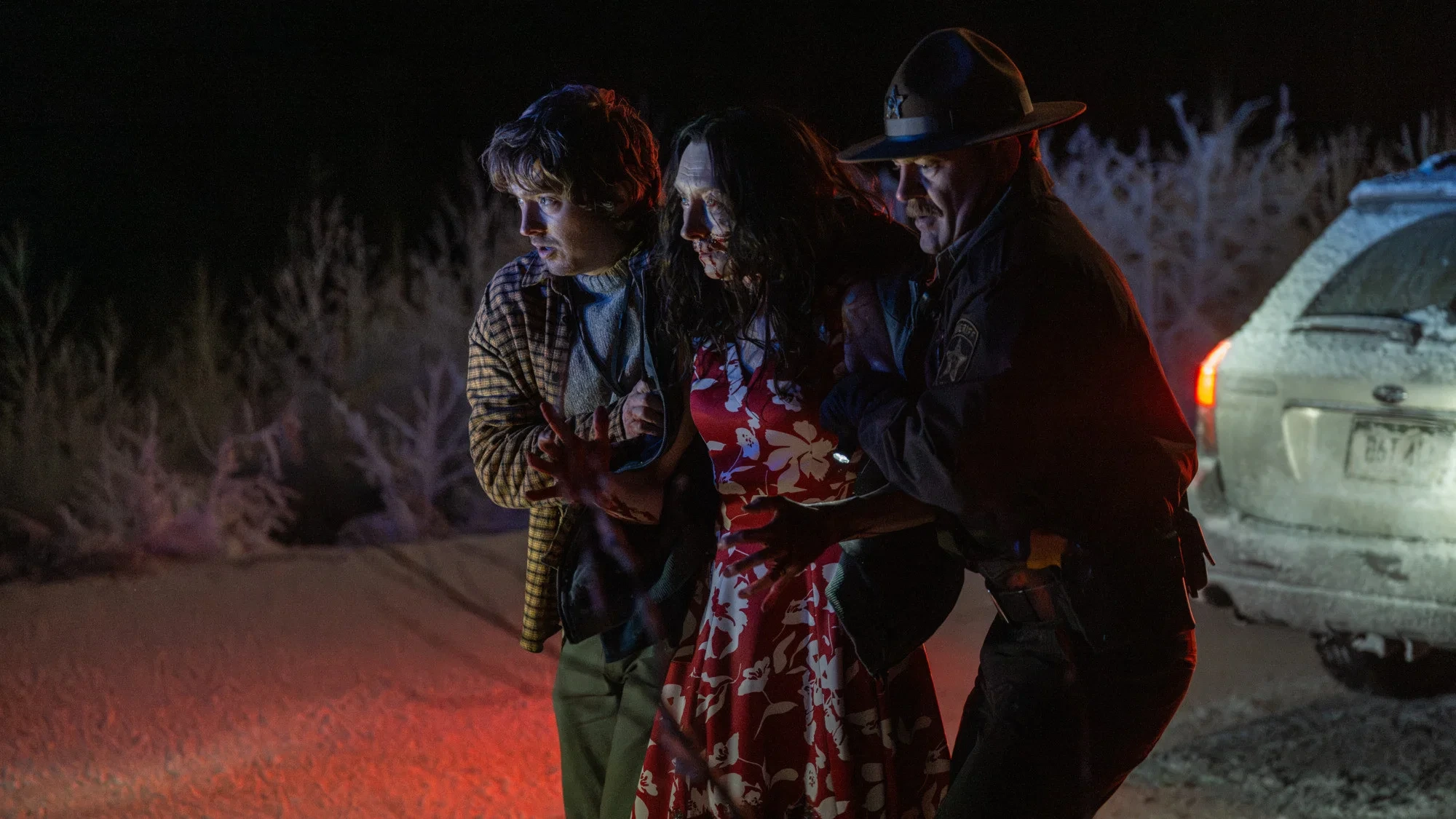
When he hits the woman on the road, he tries to help her.
When he learns that the bag he carries could help produce a cure, he keeps trying, even though running away would be entirely understandable at that point.
He is not brave because he feels no fear.
He is brave because he keeps going despite being frightened almost all the time.
For me, that is far more convincing than a hero who always knows how to deal with monsters.
A cold opening and relentless escalation
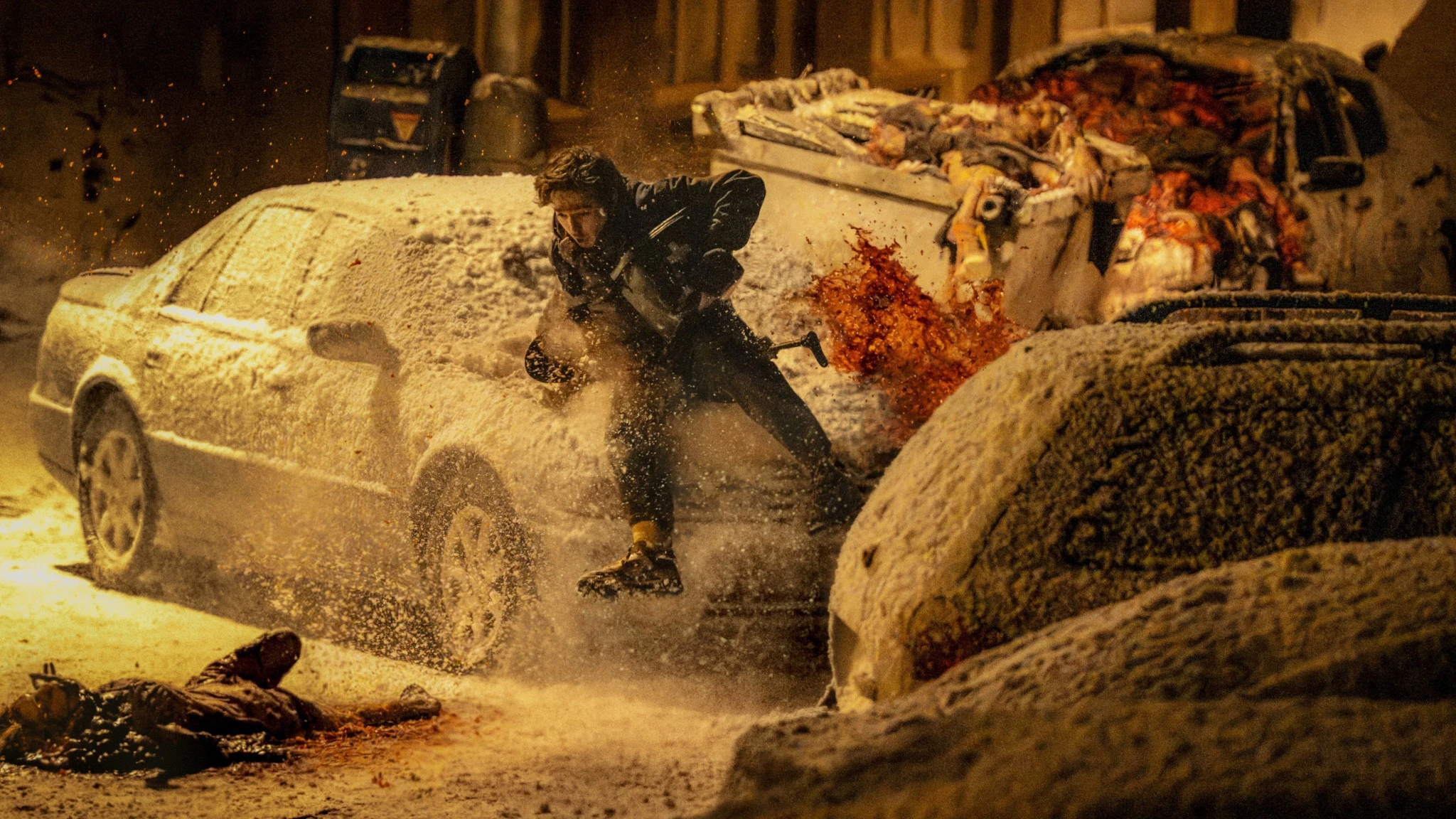
The film opens in a way that grabs your attention.
Snow.
Darkness.
An empty road.
A woman appearing suddenly.
At first, everything depends on not knowing what is happening.
Then Zach Cregger starts gradually turning up the madness.
A dog transforming unnaturally.
Corpses that do not stay corpses.
Bodies joining together.
A little girl's leg turning into something entirely different.
Creatures in the sewers.
People falling from buildings.
And a maternity ward becoming a full-blown nightmare of the body.
Crucially, the film does not show its entire hand at the beginning.
Whenever you think you have seen the worst it has to offer, something worse appears.
That fits the Resident Evil games very well.
Creature design and body horror
The creature design is one of the film's greatest strengths.
Bodies do not simply become conventional zombies.
There is something worse.
Body parts move in ways they should never move.
People merge with one another.
Limbs transform.
And bodies lose their human form entirely.
This kind of horror makes infection far more repulsive than a dead person simply walking toward you.
At the same time, some of the excess tips into comedy.
That is deliberate.
The film understands that a scene can be disgusting and funny at once, before returning to tension a minute later.
Fear as comedy, and the limits of knowing you are in a game
Comedy might seem an odd fit for Resident Evil, but most of it works.
The film does not stop the horror to tell a joke.
The laughter usually comes from Brian's own reaction.
He sees something impossible and responds more or less as any ordinary person would.
He does not have a heroic one-liner ready.
Sometimes all he can manage is something close to: what the hell is happening?
That feels natural.
But a problem develops later.
As the film progresses, it begins to recognize how funny it is and pushes that aspect harder.
At that point, it sometimes becomes less effective.
The best comedy grows spontaneously out of the situation.
When the film starts explicitly pointing out that “we are inside a game,” some of the enjoyment fades.
Direction that plays with expectations
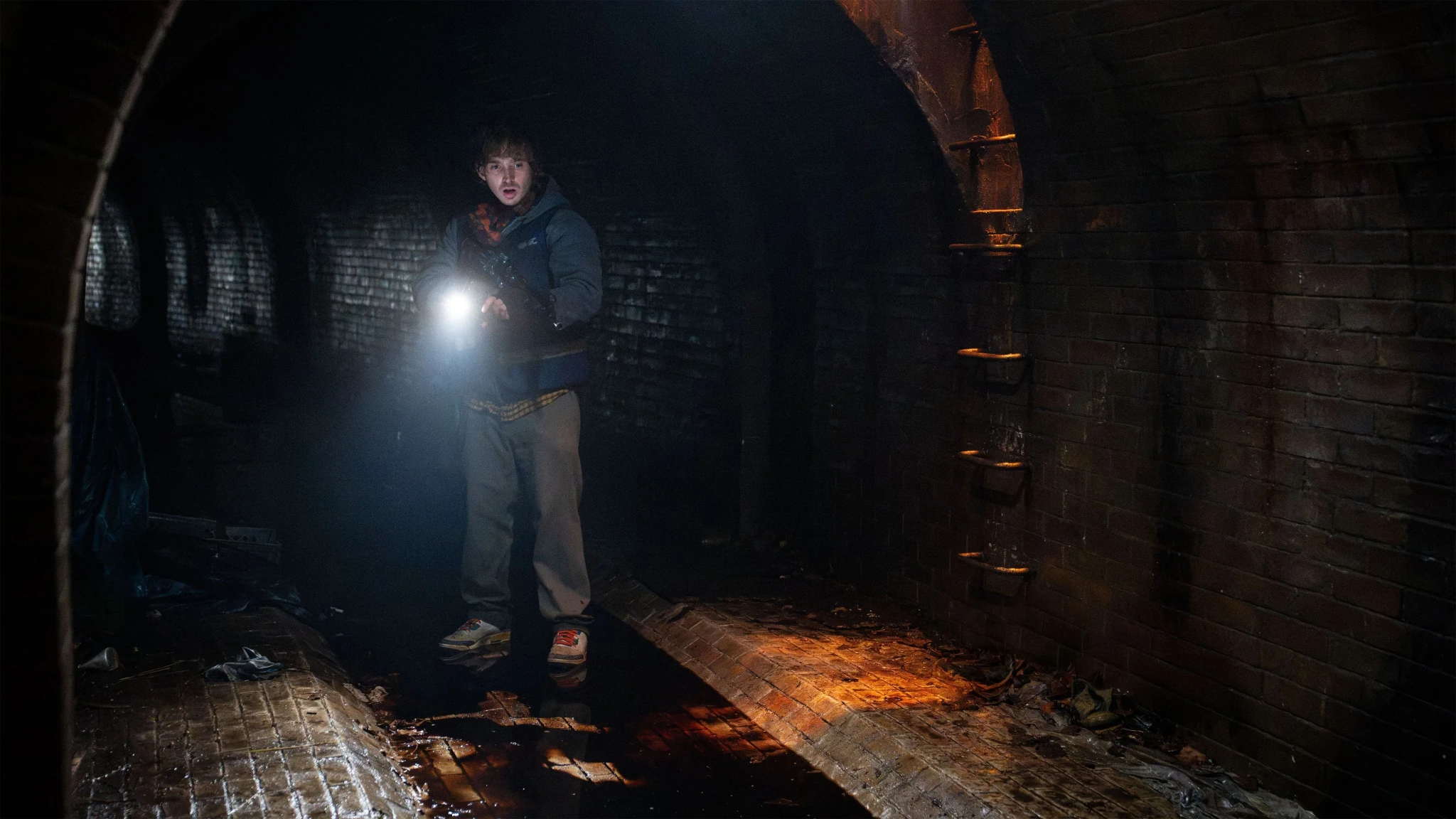
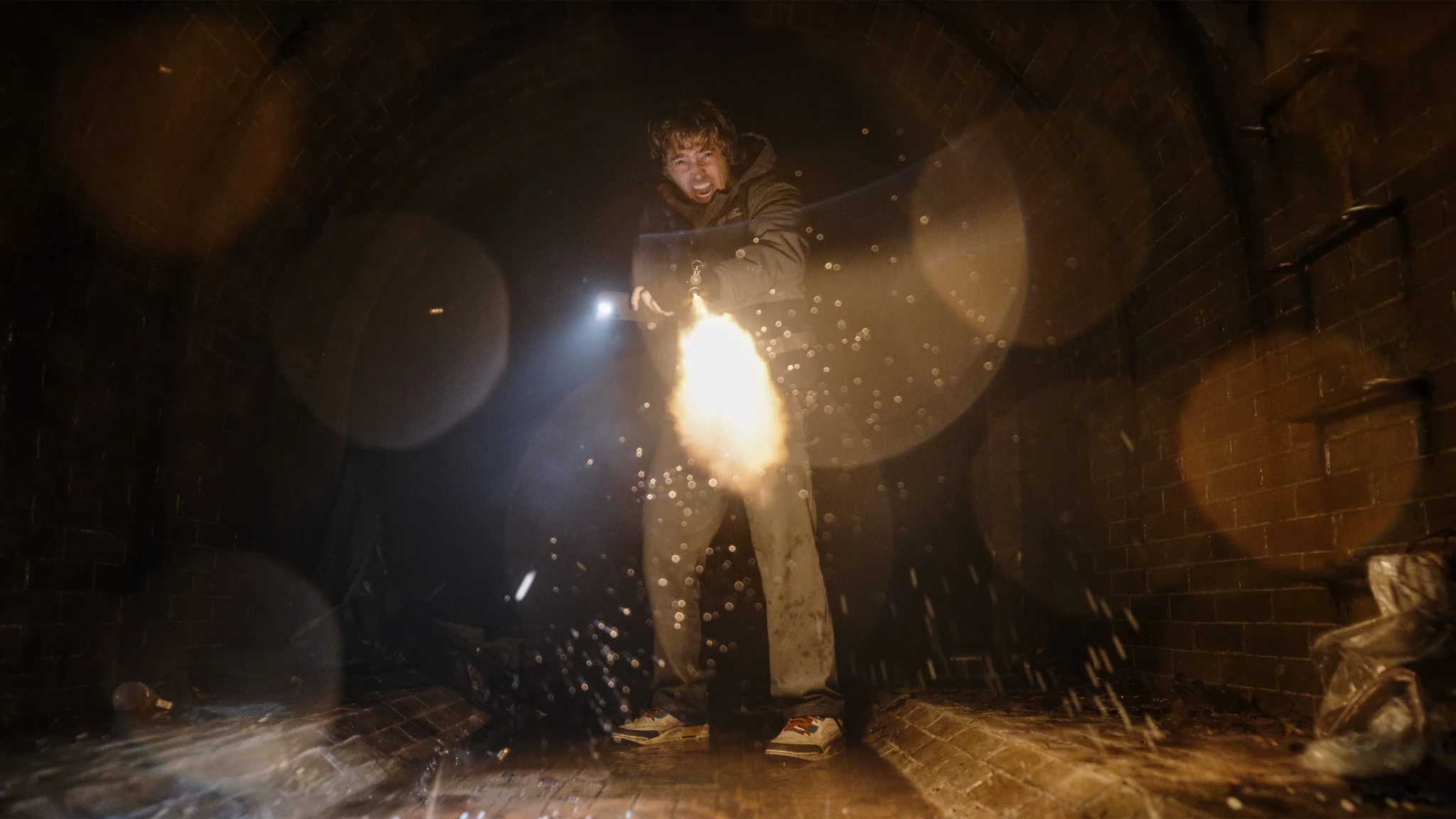
One of the strongest aspects of the direction is its handling of anticipation.
Zach Cregger knows that the audience knows horror films.
We expect the jump scare.
We can almost predict the moment when the monster “should” appear.
In some scenes, everything builds toward that moment… and then nothing happens.
Once you relax, the blow comes from somewhere else.
The tunnel sequence is an excellent example of this game with the audience.
These tricks never feel detached from the film's identity.
Brian does not know the rules of what is happening either.
We are in the same position.
Whenever we think we have figured out the pattern, the film breaks it.
Raccoon City as a succession of obstacles
The film does not try to present Raccoon City as a vast metropolis whose entire history needs explaining.
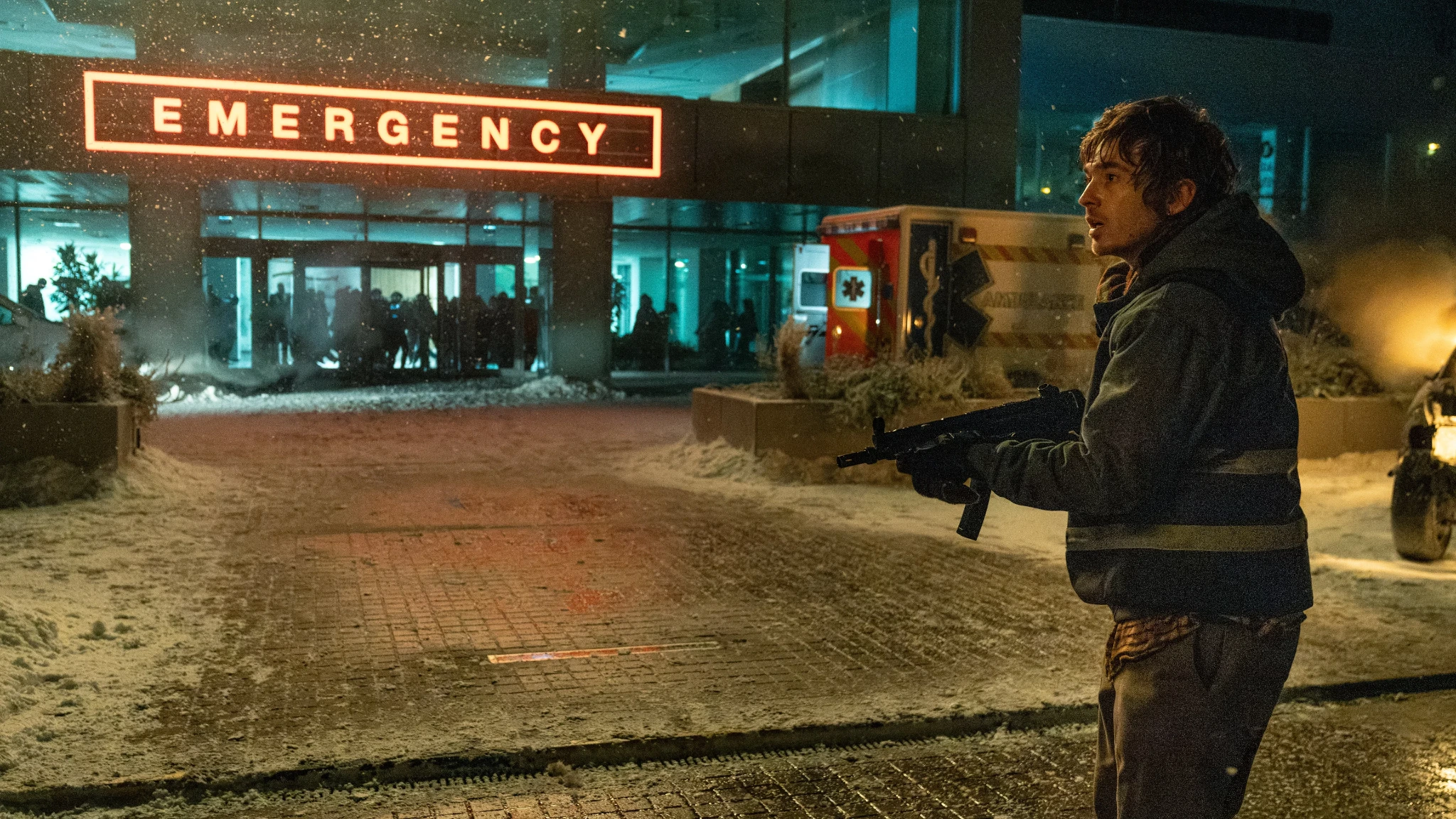
To Brian, the city is a succession of obstacles.
The road.
The house.
The tunnel.
The hospital.
The sewers.
The maternity ward.
Every location has its own dangers and rules.
At times, the camera enters a space as if a player were rotating the camera inside a new room before moving forward.
We scan the darkness.
Look down the corridors.
Try to identify the threat before the character does.
That makes the cinematography itself part of the adaptation, rather than leaving adaptation solely to the story.
Supporting characters: function before depth
There is, however, a clear problem.
Because the film is designed like a game, the supporting characters sometimes really do feel like people you meet, get information from, and leave behind as you continue.
Maxine, for example, arrives with a strong presence that suggests she will have an important role.
Then she disappears quickly.
Paul also has a clear function in directing Brian toward his next objective.
You can defend this as an imitation of game logic.
But a film is still a film.
Having a clever concept behind underdevelopment does not make the underdevelopment disappear.
I wanted more time with some of these characters, particularly Maxine, before the film discarded them.
Umbrella: a presence that serves the journey
Another good decision is to use Umbrella Corporation without turning the film into a lengthy lecture about the company.
We know that the disaster is connected to it.
We know there is a potential cure.
And we understand that what Brian is carrying matters.
That is enough for this story.
The film does not want to explain every secret of its world.
Nor does it want to set up ten characters for future installments.
It wants to get Brian from point A to point B alive.
That focus keeps the film lean and fast.
Michelle and fatherhood: an idea that needs more room
This brings us to the aspect I think could have been stronger.
Before the disaster begins, we learn that Michelle is pregnant and Brian is not psychologically ready for fatherhood.
He handles the conversation badly.
The film then fills his journey with images of birth, bodies, transformation and new life.
The maternity ward makes this idea particularly explicit.
It is easy to read Brian's entire journey as a nightmare about a man afraid of responsibility and of his life changing completely.
But the film does not develop that idea enough.
It is there.
It is clear.
Yet it lacks the depth that would make it the story's true center.
The final message: fear turns into longing
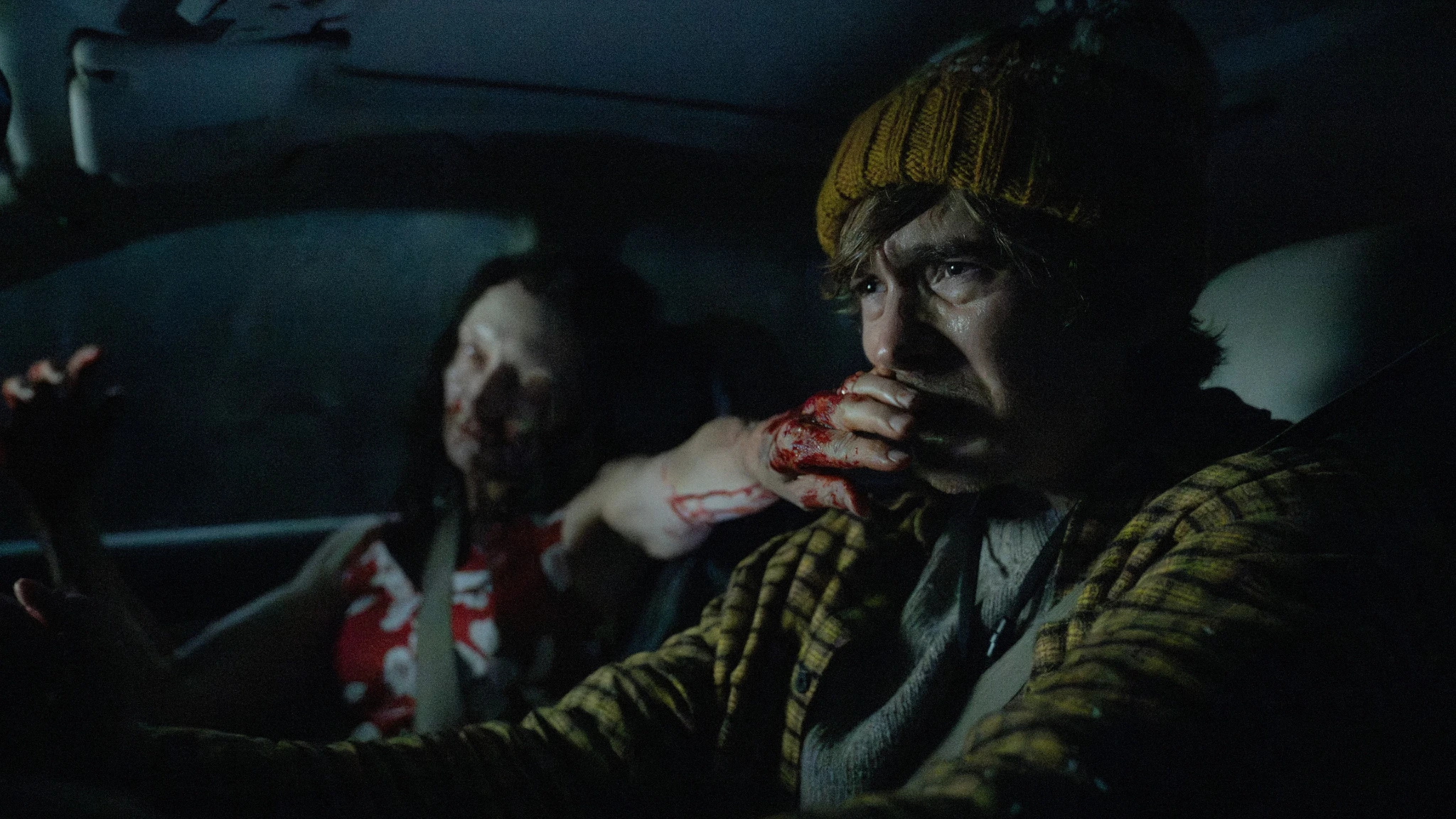
Nevertheless, an important moment comes when Brian realizes that the infection is spreading through his body and records a final message for Michelle.
For the first time, we clearly see that his fear of fatherhood has changed.
The man who avoided the conversation at the start now wishes he could have the chance to live that life with her.
This gives the journey a human meaning.
But I wish the film had given the idea more space before the ending.
At times, the horror, missions and creatures receive more precise development than Brian's own inner change.
The maternity ward: theme and horror meet
Brian is afraid of fatherhood.
Now he literally passes through distorted, disgusting images of birth and new life.
The sacs.
The small creatures.
The blood.
And the bodily transformations.
The idea is very clear, perhaps clearer than it needs to be.
Visually, however, the sequence is extremely effective.
The film takes something associated with life and turns it into full-blown body horror.
That is well suited to Resident Evil's world, where human science itself often turns life into something deformed.
Reaching the laboratory, then losing hope
Here we reach the decision that will certainly divide audiences.
Brian finally reaches the laboratory.
The bag he has spent the entire film trying to deliver enables the scientists to produce a cure.
For a moment, the whole journey feels worthwhile.
But the infection has progressed too far through his body.
Brian himself transforms into a huge monster.
His body begins killing and absorbing the scientists.
The last scientist tries to reach him with the cure.
There is one final chance.
The syringe is close.
Then it falls.
The film ends with Brian completely transformed as troops arrive in the area.
A bold ending that arrives faster than it deserves
I am very divided about it.
On the one hand, I admire its boldness.
The film does not reward Brian simply for trying.
Nor does it suggest that the hero must win because he has endured all these disasters.
He arrived.
He completed the mission.
But that was not enough.
It is a cruel ending that fits the film's persistent mockery of the idea that people can control everything.
On the other hand, I feel that its execution is too rushed.
The film is excellent at building each stage.
When it reaches the ending, though, it seems eager to finish the level quickly.
The transformation happens.
The cure falls.
Cut to the ending.
The idea is strong.
But the sequence could have used more time to make a greater impact.
Was Brian’s journey meaningless?
This is an important question.
At first glance, you could say yes.
If Brian transforms, the scientists die and the cure is lost, what was the point of everything he did?
But I do not think the film wants us to see it only that way.
Brian himself has changed.
He began by fleeing a responsibility that was relatively small compared with what awaited him.
By the end, he risks his life to deliver something that could save people he has never met.
The irony is that he grows as a person… and then his own body betrays him.
The ending does not say that the journey was meaningless.
It says that maturity does not guarantee a reward.
That is a harsh idea, but one that fits Zach Cregger very well.
Cinematography and lighting
Technically, the film is very strong.
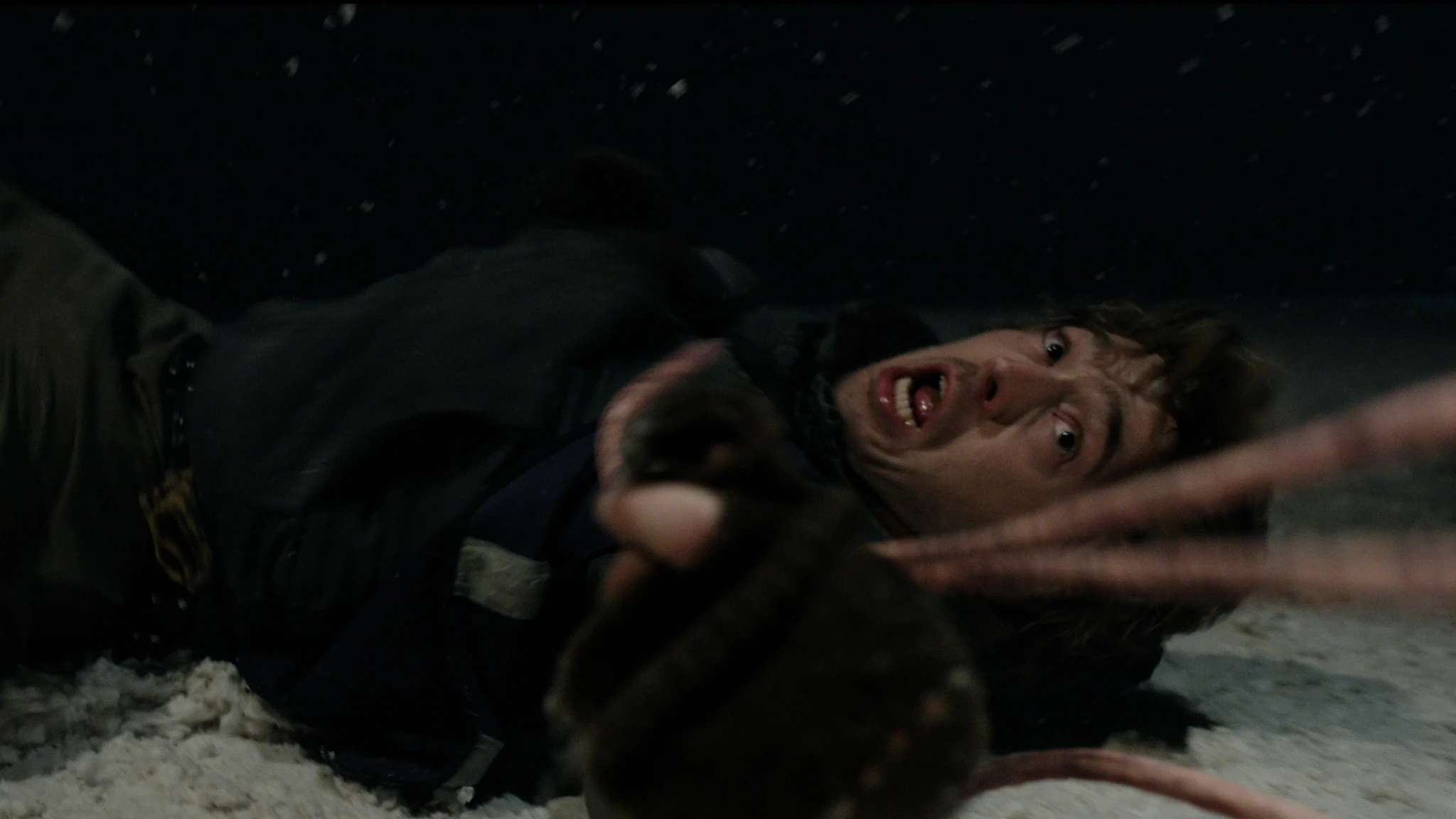
Dariusz Wolski's cinematography makes excellent use of darkness.
This is not darkness that prevents you from seeing anything.
It lets you see just enough to worry about what remains unseen.
Bodies move in and out of the light.
Corridors extend beyond your view.
Weapons occupy the foreground.
And spaces make us wait for something to emerge from the background.
Particularly in the early stretch amid the snow, the imagery is cold and very simple.
For me, this is one of the film's most beautiful and powerful passages.
Editing and pacing
The film is relatively short, which works very well most of the time.
There are few subplots.
No long pauses to explain the history.
Brian has a goal, and the film keeps pushing him toward it.
The editing knows when to accelerate and when to let a moment of silence do its work.
Ironically, though, the film may be a little too short.
I would have welcomed an extra mission or more breathing room before the ending.
Some characters disappear quickly, and the conclusion itself feels compressed.
Even so, I much prefer this to a bloated, two-and-a-half-hour Resident Evil film full of exposition.
Music and sound design
The music also draws on the influence of John Carpenter's films, particularly The Thing.
But the sound design itself matters more to me.
Footsteps in an empty place.
Movement behind a door.
Ammunition being readied.
Something moving that you cannot see.
These details make locations frightening before any monster appears.
The film understands a fundamental principle of survival horror:
Sometimes waiting for something to appear is worse than the thing itself.
Strengths and weaknesses
The film's greatest strength is that it understands Resident Evil instead of imitating it.
It knows that the horror does not reside only in zombies.
It lies in running short of ammunition.
Locked doors.
The route you have no choice but to take.
Not knowing what is in the next room.
And always feeling less prepared than you need to be.
Austin Abrams is excellent and carries the film almost alone.
The creature design is very strong.
The cinematography, lighting and editing are excellent.
The balance between horror and comedy works most of the time.
The biggest weakness is that the supporting characters do not get enough room.
The comedy also becomes too obvious and direct in the final third.
The emotional idea involving Michelle and fatherhood lacks the depth given to the elements built around game logic.
And although I like the idea behind the ending, it arrives faster than it deserves.
Final verdict
Final verdict
This is one of the most successful films at understanding the difference between adapting a game's story and adapting the experience of playing it. It does not need Leon or Claire to convince us that we are inside Resident Evil's world. All it needs is to put an unprepared man in a dark corridor, give him three bullets, and close every door except the one he does not want to enter. Austin Abrams is excellent, the body horror is just the right kind of outrageous, and the film is fast and entertaining. It does not waste time building an enormous cinematic universe before delivering a good story. But it is not perfect. The supporting characters are comparatively weak, the comedy becomes too dominant near the ending, and Brian's emotional storyline needed more space. The cruel ending will delight some viewers and deeply frustrate others, but at least it is difficult to forget.
Your turn
Did you like the film's decision to end Brian's journey so cruelly, or would you have preferred the cure to arrive at the last moment and finally give him a chance to return to Michelle?
AUDIENCE VOTE
Do you agree with the MB rating?
Choose once from this browser. You can change your answer at any time.