The review
The screenplay and the lives at stake before the arena
The story follows Haymitch Abernathy in his youth, before he became the mentor we knew in the earlier films. These are the fiftieth Hunger Games, held for the second Quarter Quell, when the number of tributes doubles and the selection becomes crueller. The opening gives the rules context by letting us see Haymitch’s life before the Games swallow it.
We get to know his relationship with his mother and younger brother, his girlfriend Lenore Dove, and the people who make up his world in District 12. Those scenes allow us to see someone beyond the new name on the list of tributes. We understand what he is trying to protect and why he cannot simply accept injustice as part of life.

Francis Lawrence takes this part of the film seriously. A loss can only mean so much to us if we do not know what the person means to the protagonist. Giving those relationships room early on lends genuine emotional weight to what follows.
When the Reaping begins, its cruelty goes beyond the possibility that Haymitch will enter the arena. The first boy selected is killed when he tries to flee, and Haymitch is drawn into the Games. His refusal to accept injustice comes into focus as a lasting part of his character, long before he has to compete.
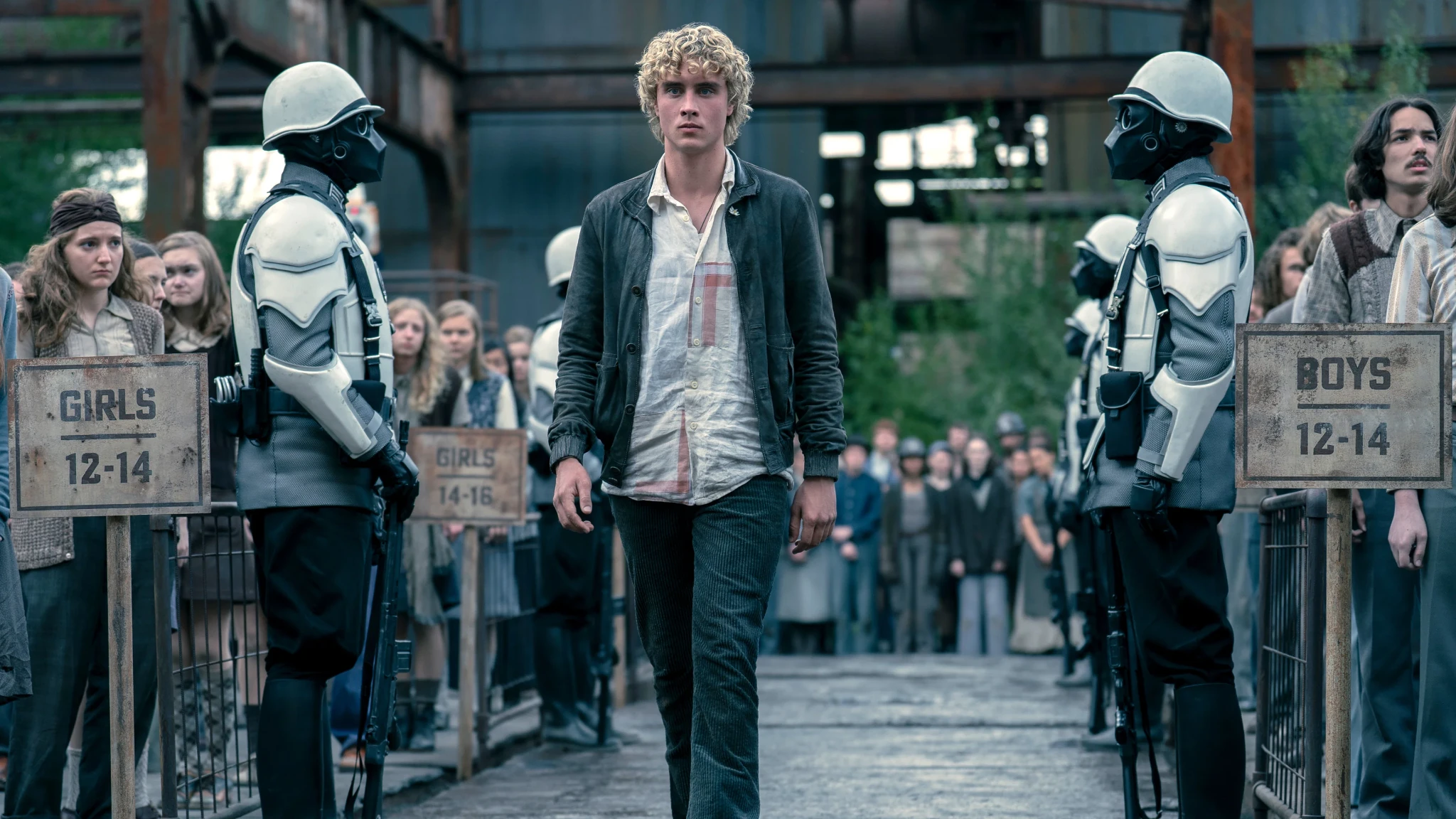
The film establishes those bonds before the tributes reach the arena, so the later losses carry the weight of people we know. We know what Haymitch could lose, and the people around him have had a life in the story before it asks us to grieve for them. That is what gives the tragedy its weight.
Rebuilding Haymitch from the inside
The film’s most important achievement is rebuilding Haymitch from the inside. We knew him as a cynical, worn-out man. Here we meet an idealistic young person willing to stand beside those who are more vulnerable. In a place designed to turn everyone into enemies, he feels responsible for protecting other tributes.
We see this with young Louella, in his closeness to Ampert, and in his strained, changing relationship with Maysilee. Each bond brings out something different in Haymitch: tenderness, impulsiveness, his ability to earn trust, and how hard he finds it to leave anyone behind even when staying puts him in danger.
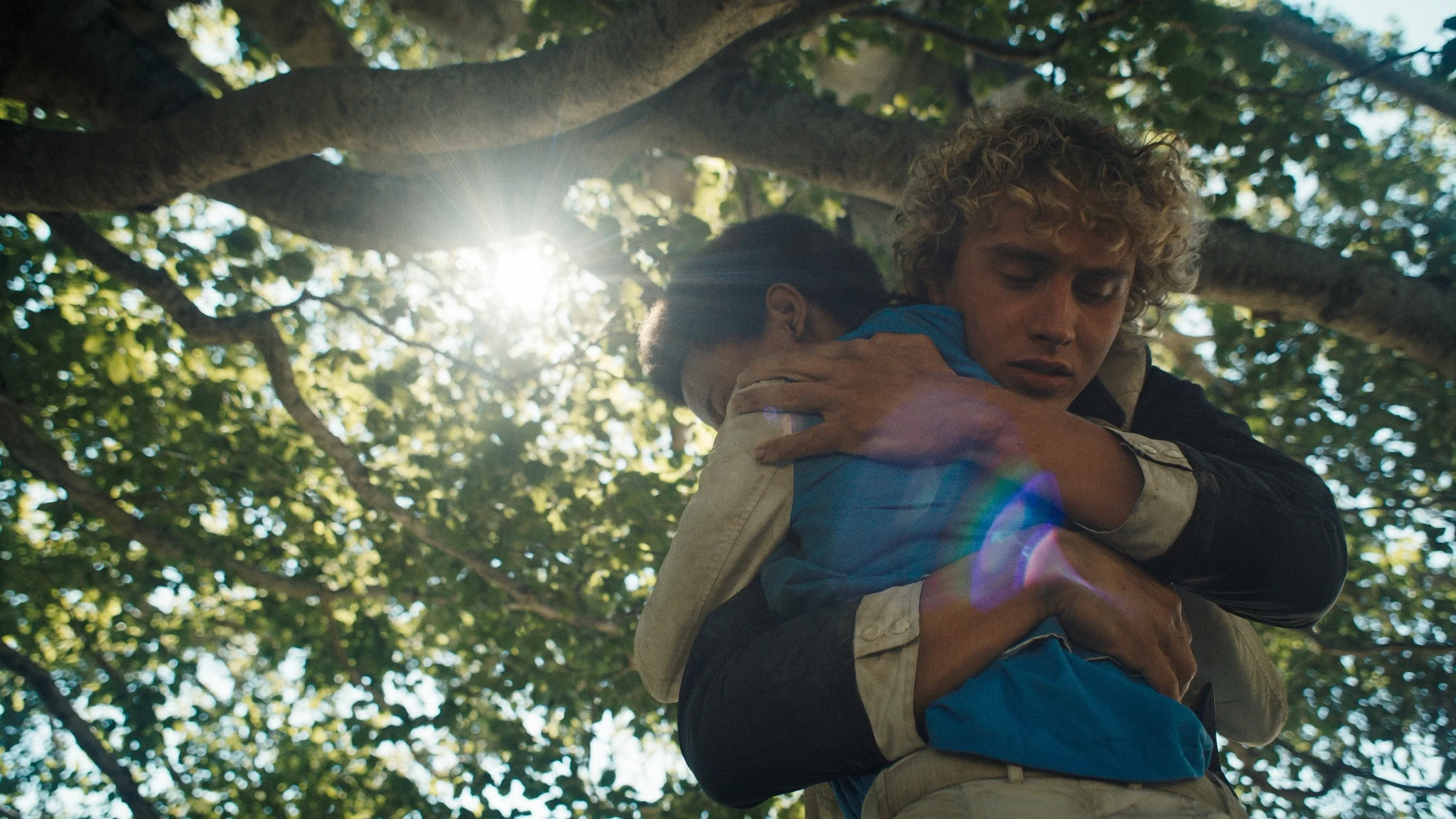
Joseph Zada makes the young Haymitch his own while carrying the beginnings of the man Woody Harrelson played. There is vulnerability behind his bravery and a recognisable hesitation that makes his decisions intelligible. His restraint gives moments of loss a force that a louder performance could have missed.

Above all, Zada makes it believable that this young man could become the broken person we know. The distance between the two is the result of repeated losses and the deliberate exploitation of what he believes in. His performance is the film’s emotional centre, giving a shared purpose to a succession of painful events.
The power behind the Games
Beyond the violence of the competition, the film shows how those in power work behind the scenes and can make people’s desire for change part of their own plans. Plutarch Heavensbee sees that Haymitch wants to rebel. He draws him into a plan to sabotage a large water reservoir and knock out power, affecting both the Games and the Capitol.
Haymitch joins in because he wants to resist the system, while Plutarch is harder to read as an ally. He knows how to speak to people so that each side believes he is working in its interests. That makes their relationship more interesting than a straightforward alliance between a young rebel and a man inside the institution.
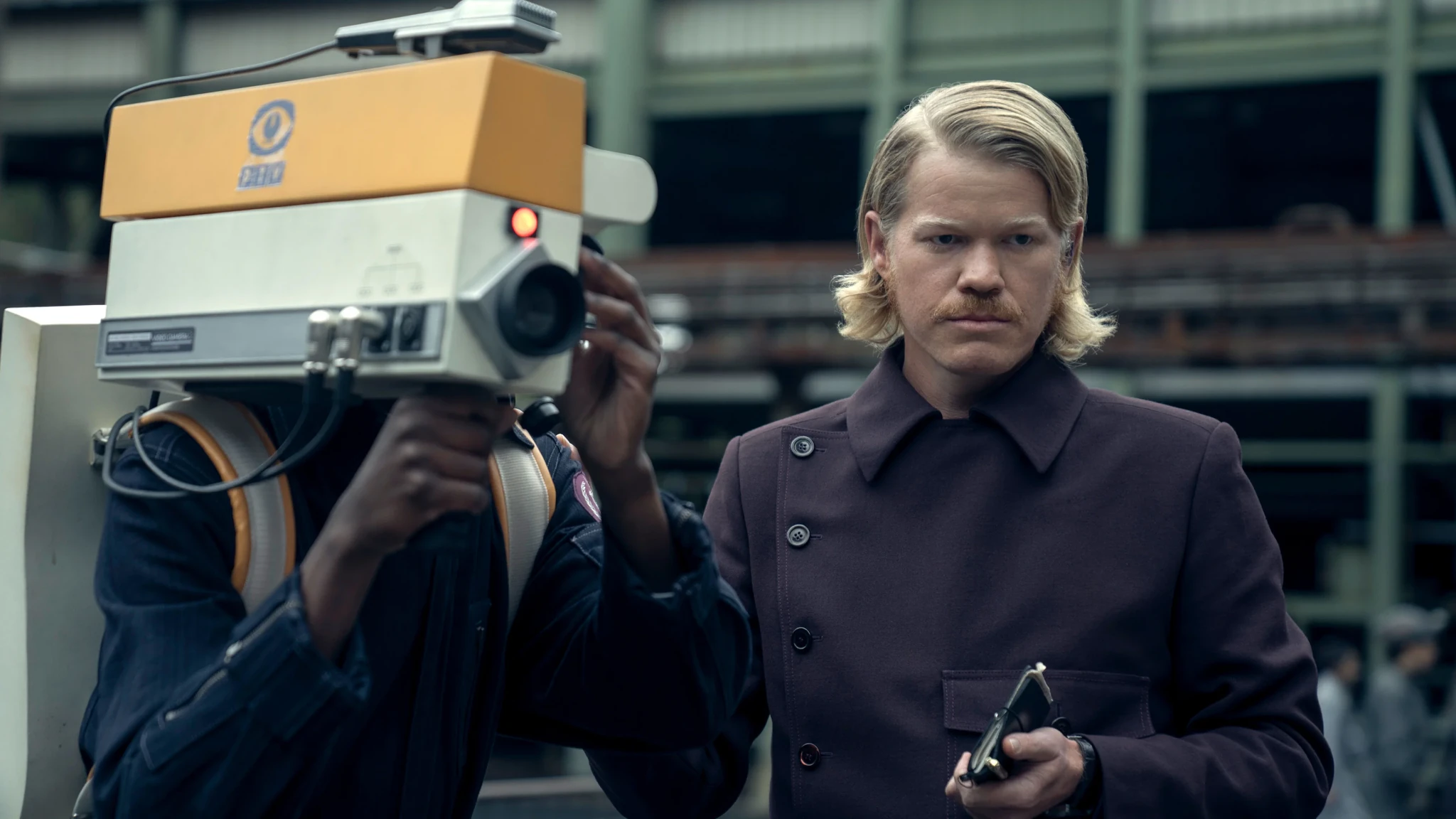
Jesse Plemons is quiet and measured, an apt choice for a character who can command attention at speaking volume. His gaze and steady delivery give Plutarch an unsettling appeal. He always seems to know more than he reveals, drawing near to others while letting them see only part of where he stands.
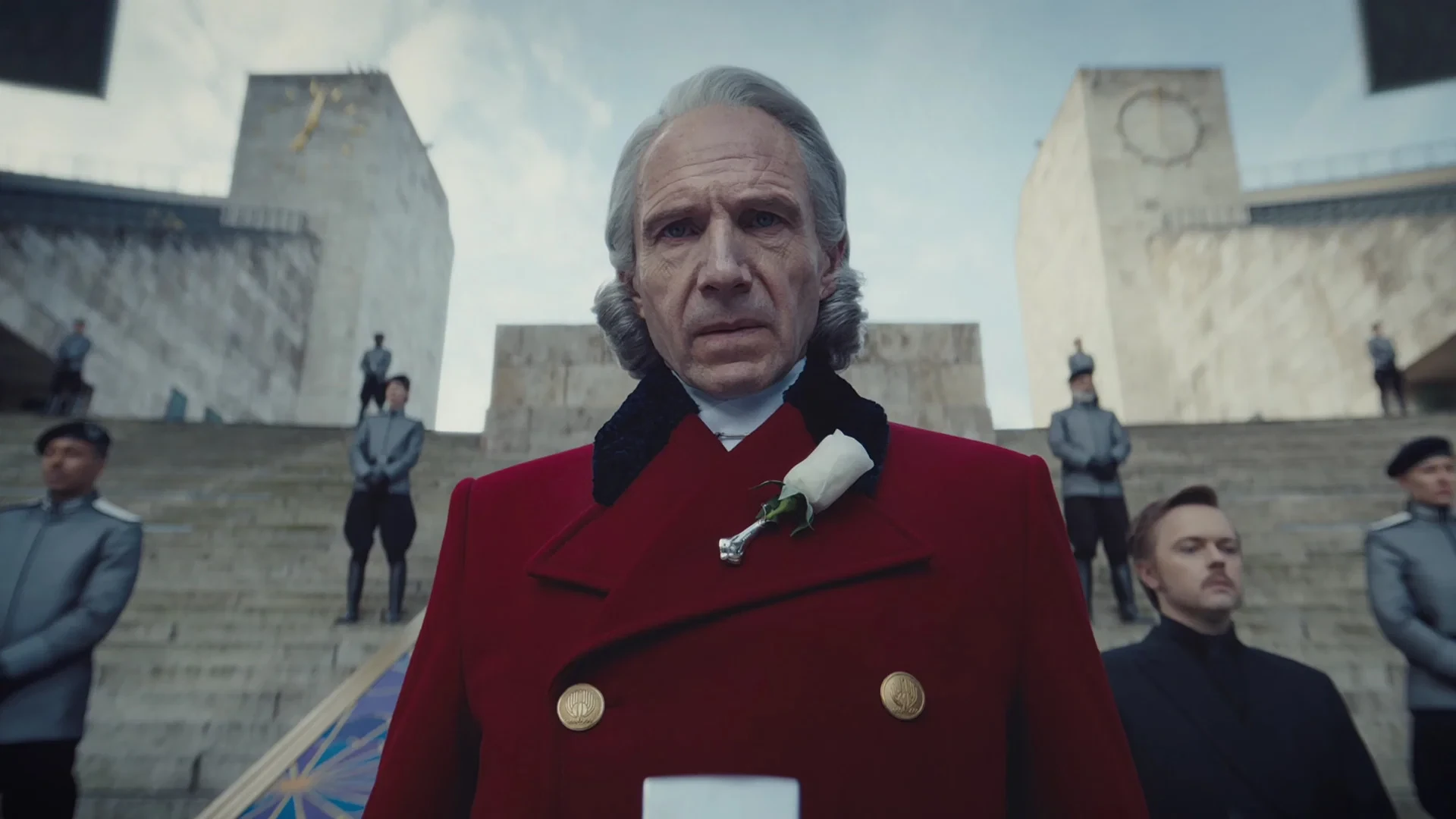
Ralph Fiennes gives President Snow a frightening composure. He can unnerve Haymitch and the audience with stillness in moments when he appears to be doing very little. He reminds us that violence in Panem depends on an authority outside the arena, one that runs the Games, sets the rules, and benefits from the outcome.
An arena that deceives the eye
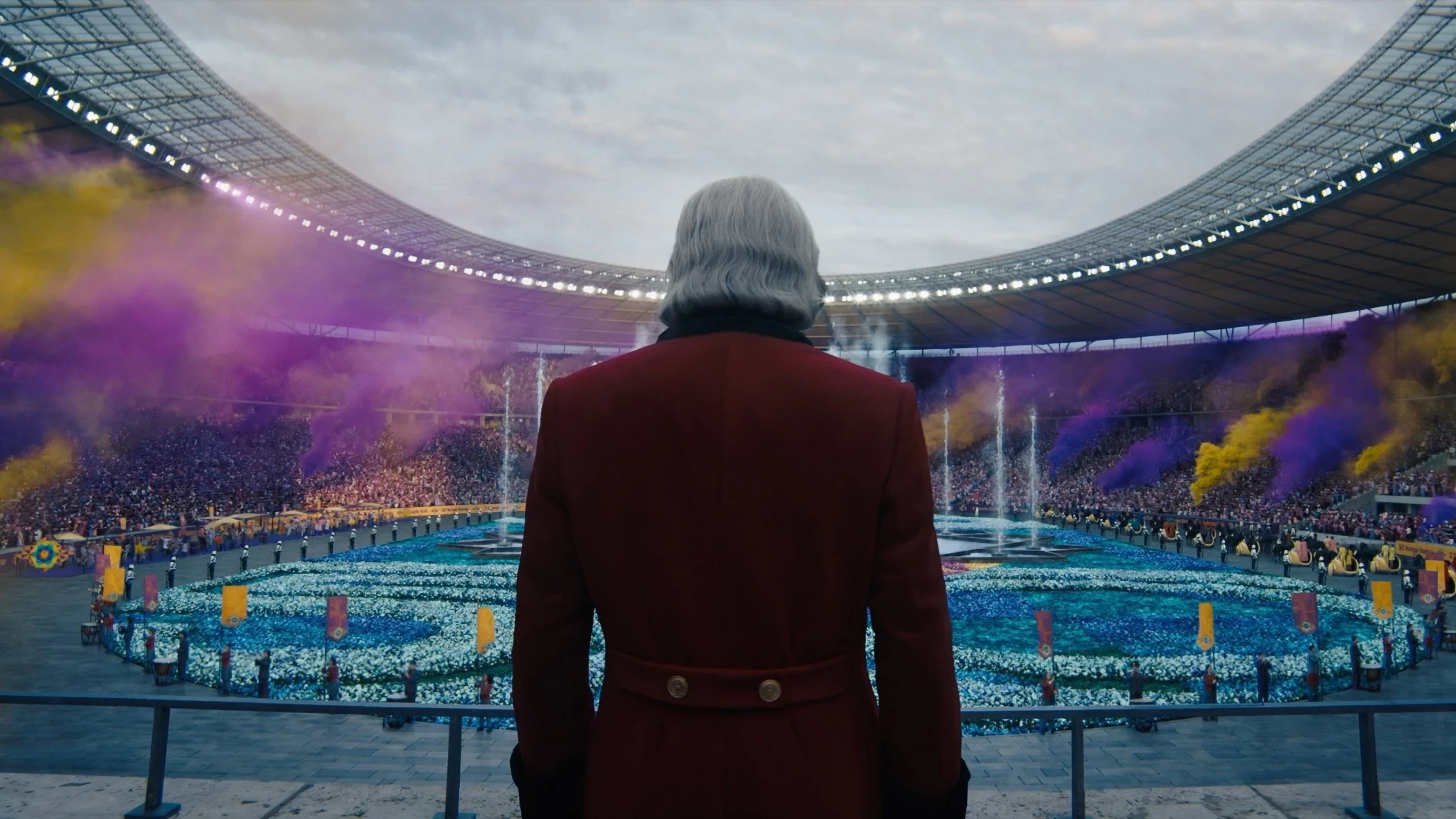
One of the film’s strongest choices is to make the arena’s design an extension of political power. The mountain valley initially looks like a thriving natural space, rich with trees, plants, flowers, and wildlife. It gradually reveals itself as a place engineered to fool the eye and endanger anyone who enters. It can be hard to tell whether some creatures are real or mechanical, and the very things that make the place beautiful can put people in danger.
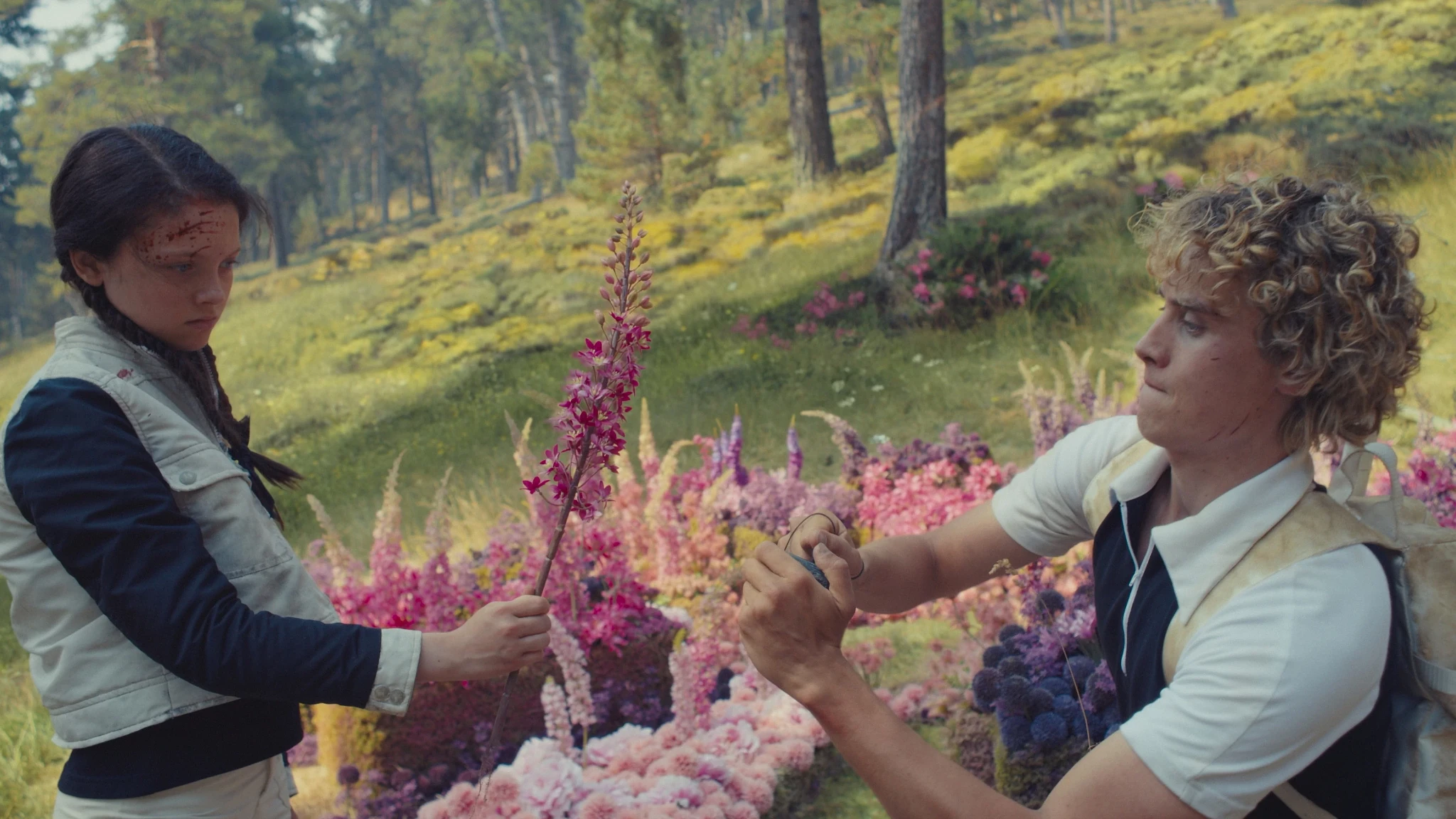
That contradiction gives the arena an identity of its own. It is visually inviting and profoundly unsafe, designed to make a spectacle of death. It resembles Panem in miniature, a polished surface concealing a brutal system that turns human suffering into a show it can control.
The visual design draws on the science fiction of the 1960s and 1970s, from clothes and hairstyles to furniture and sets. The homes of Snow and Plutarch feel distinctly different from the valley that holds the Games. Those distinctions give the world social and visual layers, with a sense of what belongs to opulence and what belongs to ruin.

The arena carries a range of artistic and cultural echoes, from the strange forests and green world of The Wizard of Oz to landscape paintings. Together they make it feel like a theme park built to entertain an audience. Trees, flowers, and animals become things that can kill. Entertainment itself becomes part of the machinery of violence.
Action, cinematography, and music
The same idea shapes the confrontations. The tributes fight through confusion, errors of judgment, exhaustion, and injuries we can feel in their movements. Even in the late encounters, they gasp and stumble, coming up against the limits of what their bodies can do.
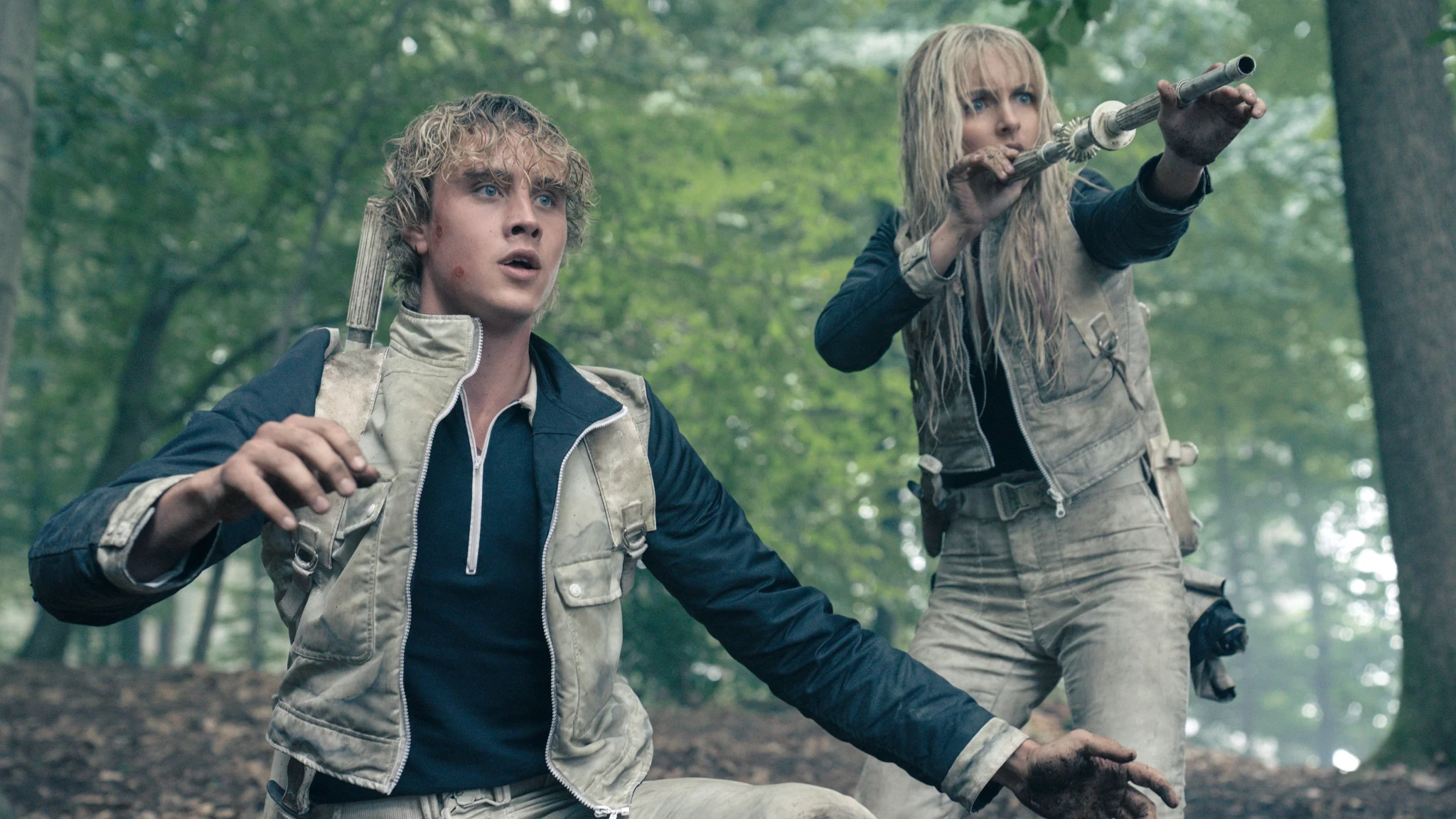
This approach keeps the violence painful and connects the action to the story’s meaning. The film has strong set pieces and confrontations, with the greatest stakes in what happens to the characters and what the experience does to Haymitch.
Jo Willems’s digital IMAX cinematography makes the most of the arena’s size and detail in wide shots. The images give each environment a distinctive physical presence through colour and texture. The effects help the place feel material, where every element has a weight and an impact, from the largest threats to the smallest details.
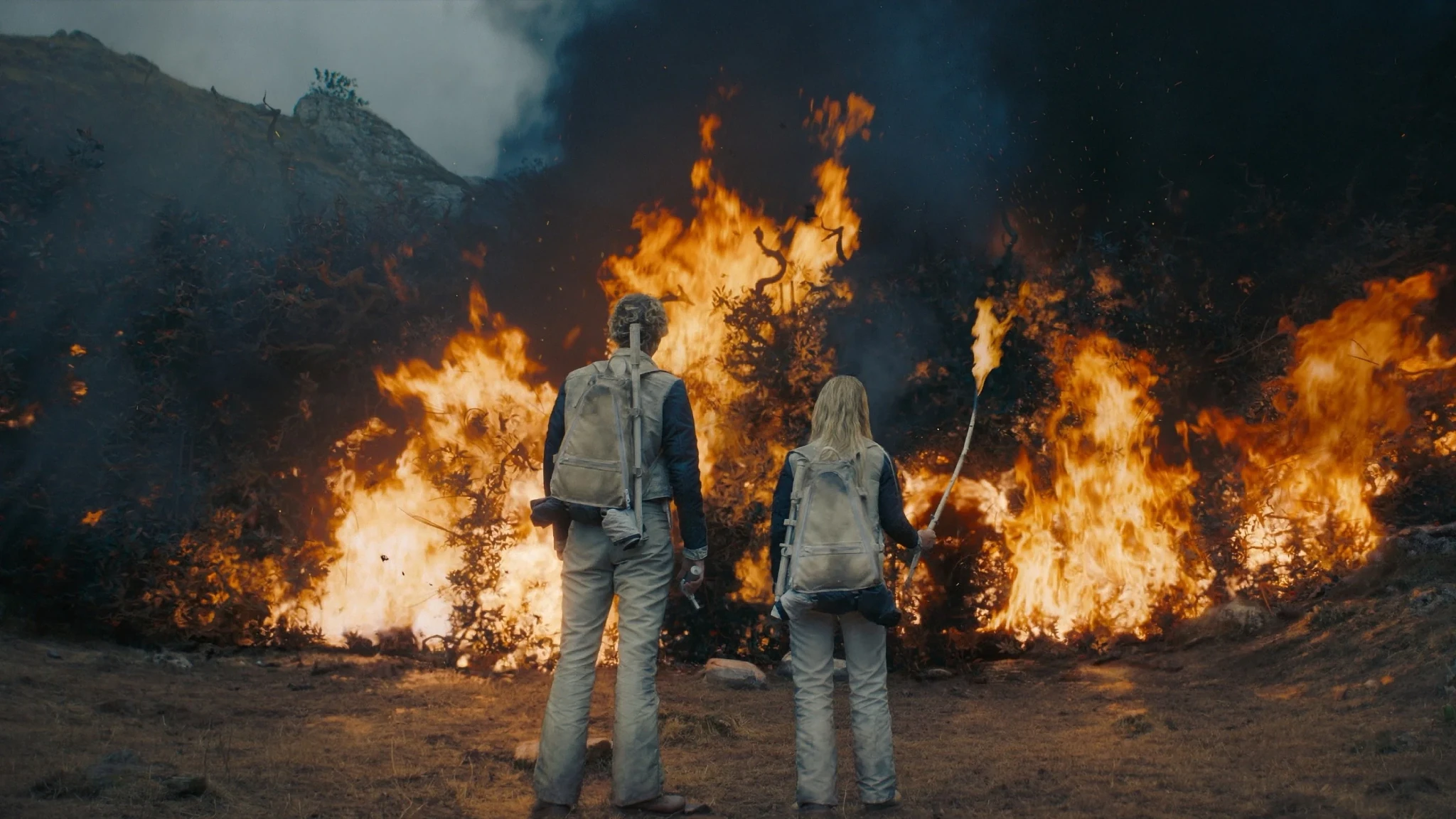
James Newton Howard’s score gives the action emotional depth. It carries the weight of loss and the sense of danger, allowing some moments to outlast what we see on screen. It connects the film to the spirit of the series while preserving a character of its own.
The supporting characters
Alongside Zada, a strong ensemble gives Panem a broader life. Elle Fanning finds Effie Trinket’s oddity and affectation while giving this version of the character a presence of her own. Kieran Culkin brings showmanship and vulgarity to Caesar Flickerman, while Glenn Close makes Drusilla’s exaggerated appearance feel at home in the Capitol and its strange fashions.
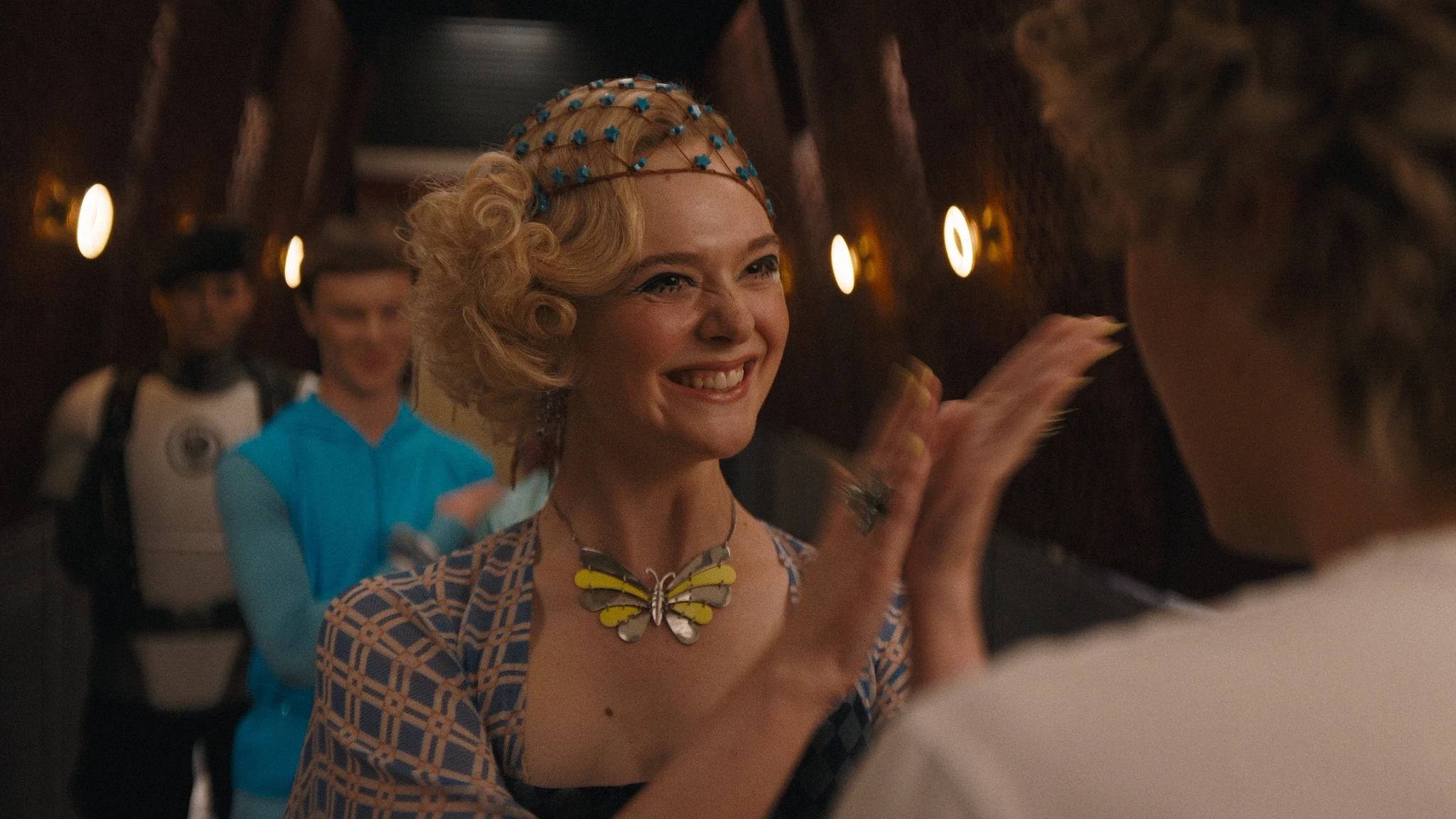

Mckenna Grace makes Maysilee sharp and hard to overlook. Molly McCann gives Louella innocence and vulnerability, Ben Wang makes Wyatt a distinct presence in the group, and Percy Daggs IV leaves an impression as the quiet Ampert. The size of the cast comes at a cost. Some roles have too little room, and a performer like Maya Hawke could have been given more to do.
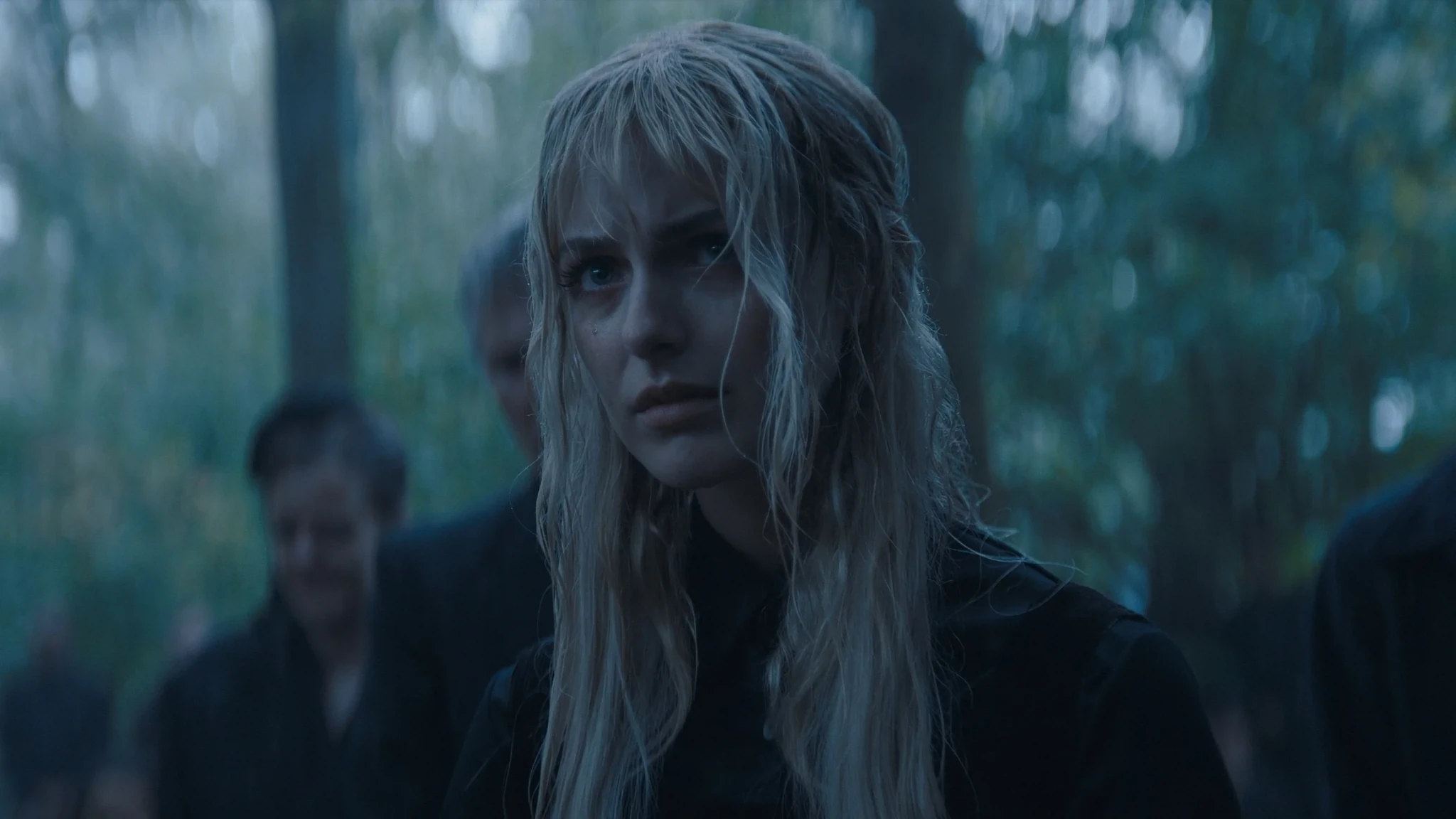
The film holds together, though some characters feel less complete than others. After taking the time to establish so many relationships before the Games, it inevitably leaves a few storylines wanting more space.
A story that stands on its own and a finale that needs time
The film can be watched on its own, even by someone who has never seen the other entries. Knowing what becomes of Haymitch makes his story more painful, while the story itself gives us ample reason to understand him and care. Returning viewers will recognise people and connections, most of which do more than evoke familiar memories.
Some of the hints at what comes next are more direct than they need to be. The film works because it makes us care about what is happening in front of us, independent of who might appear or what an allusion might foreshadow.
Even at close to three hours, the last act moves faster than it should. Some consequences could use more time to settle emotionally, and the large cast pushes several storylines into the background. Those weaknesses are evident without undermining the strength of the film’s overall construction or the force of Haymitch’s journey.
Final verdict
Final verdict
This is a strong, affecting film, and perhaps one of the series’ most complete entries in performance, visual world, and emotional weight. Haymitch’s familiarity gives the story a starting point. What the film makes of it is a tragedy about how power can crush someone by exploiting the qualities that make them human. Some characters deserve more time, and the last act moves too quickly. Zada carries the film’s emotional centre, while the craft, music, and arena design make its world worth returning to. The story has weight of its own, and remembering who Haymitch will become makes it harder to bear. What hurts most is that Haymitch enters the Games with hope. He still believes he can protect people and resist injustice. That is what makes his loss so affecting. As well as killing its victims, the system can turn what they believe in into the reason they break.
Your turn
Do you find Haymitch’s tragedy more affecting than Snow’s story in The Ballad of Songbirds & Snakes, or does knowing his fate make the journey harder to watch from the start?
AUDIENCE VOTE
Do you agree with the MB rating?
Choose once from this browser. You can change your answer at any time.