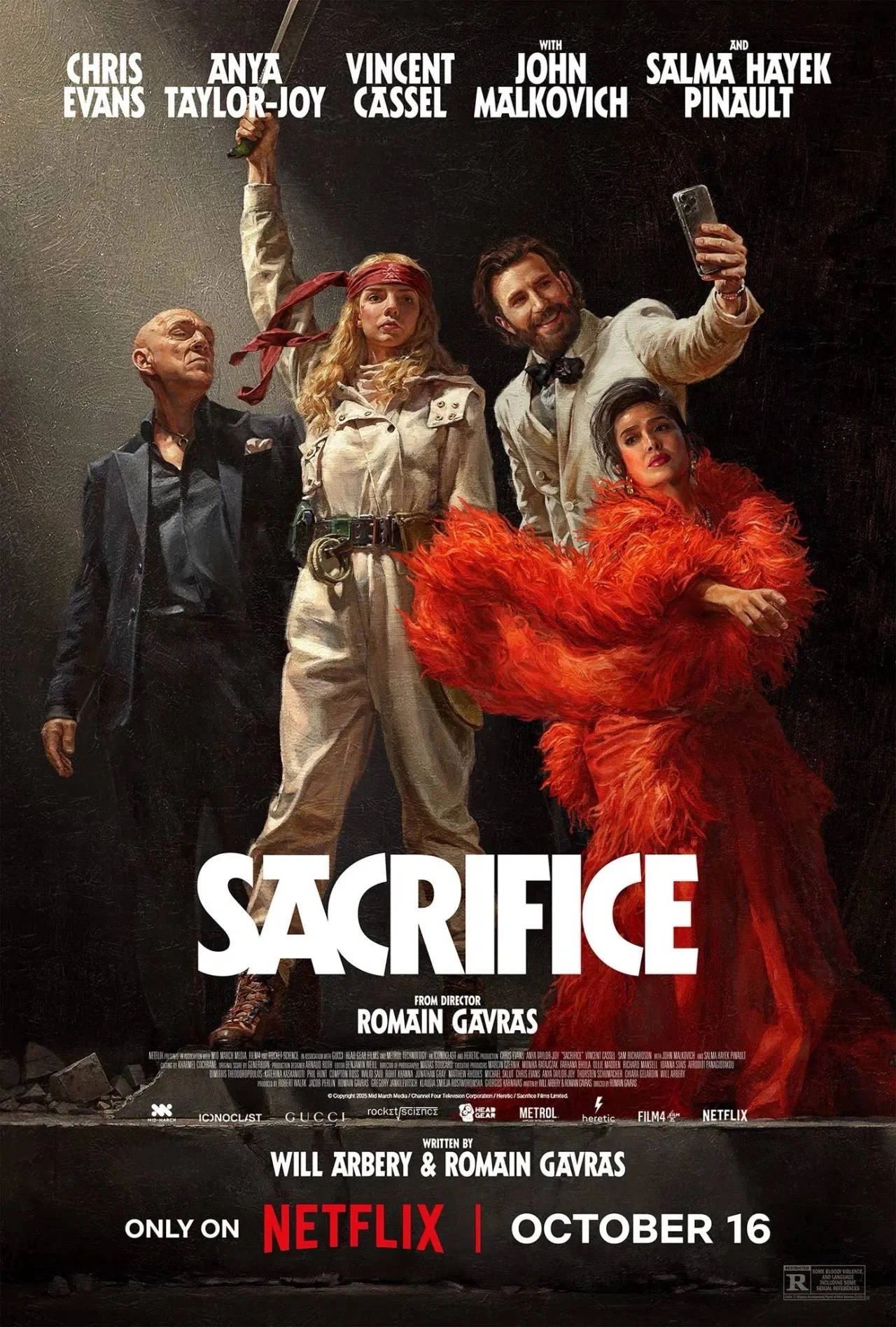
The review
The planet-saving gala: a façade collapses
The film begins in deeply satirical territory.
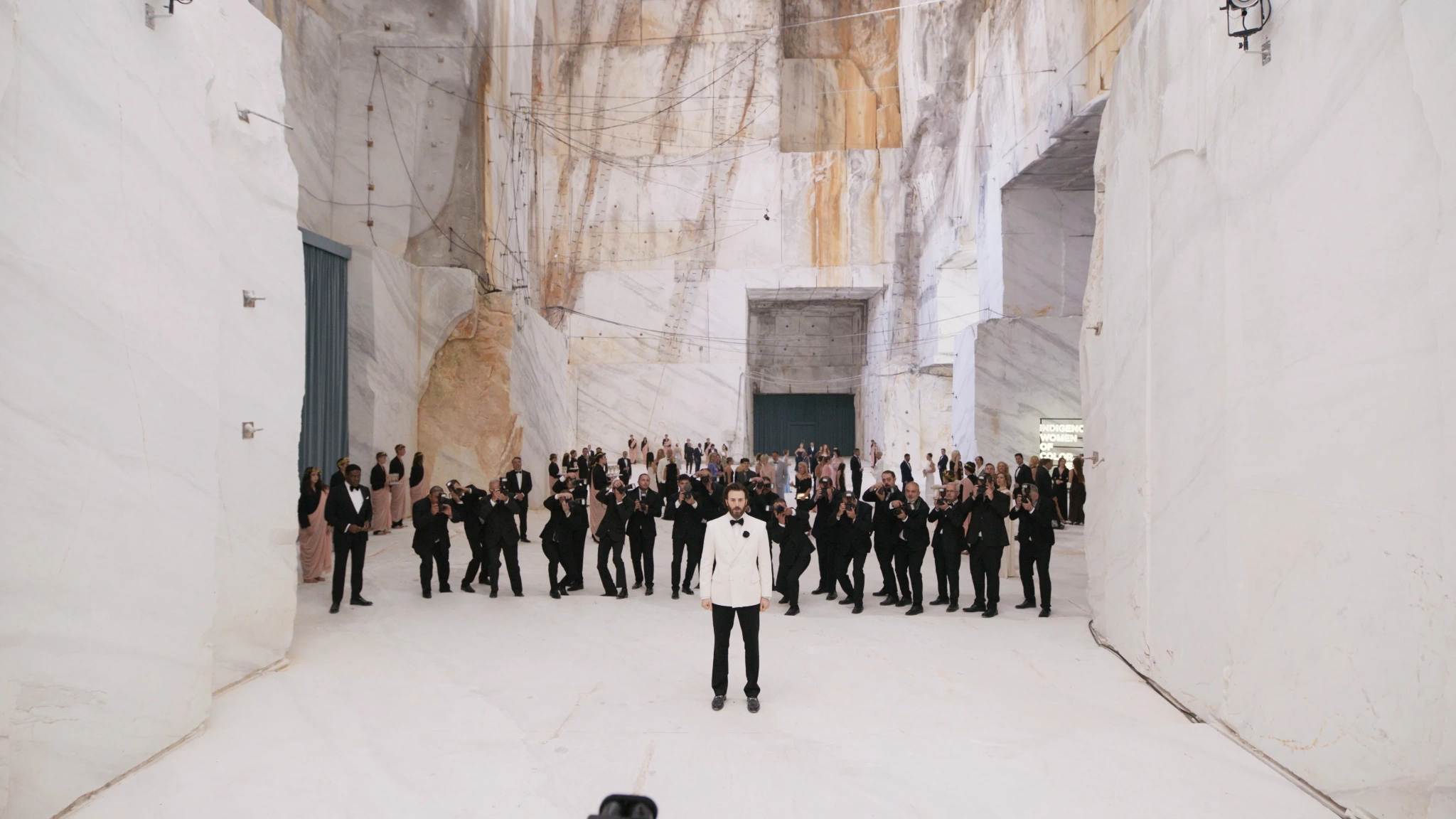
At a huge charity gala in Greece, wealthy people, celebrities, and influential figures gather under the banner of saving the planet. From the outset, the film makes clear that it does not trust this world.
People here talk endlessly about change, but seem to be participating in an extravagant social performance rather than a genuine solution.
Then Joan’s group storms in and offers an even wilder idea: the nearby volcano will only stop if it receives a human sacrifice. Three sacrifices, to be precise.
This is where the real film begins.
The question is not simply whether these people are mad.
It is also why their madness sometimes seems more sincere than the hypocrisy of people celebrating in the name of the environment while being part of the problem themselves.
Mike Tyler: searching for a real leading role
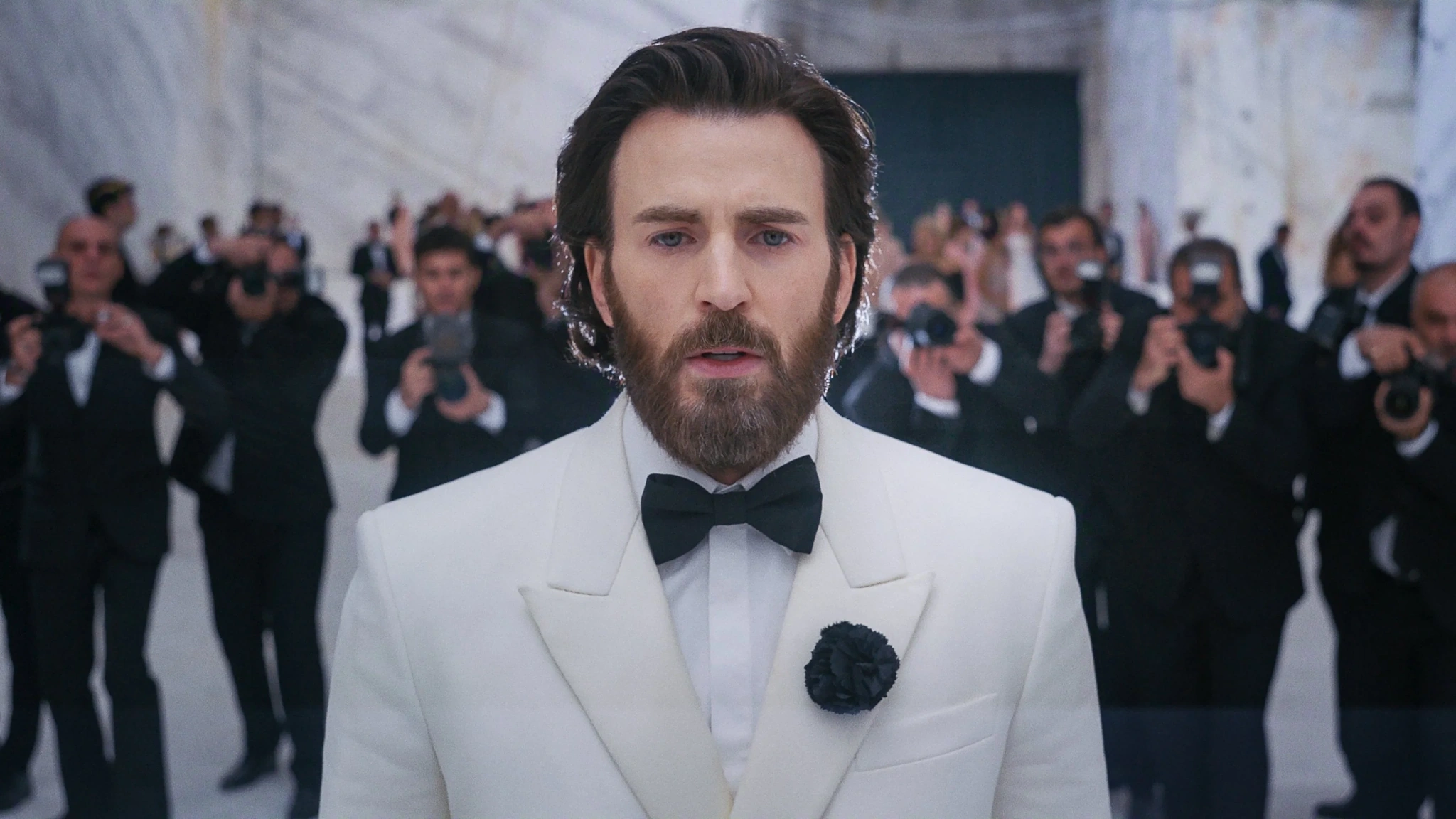
The film’s smartest decision is to center Mike Tyler, the exhausted actor played by Chris Evans.
Mike is not a genuine activist.
Nor is he a grand villain.
He represents someone living within a culture of images, searching for meaning, or at least for a way to make his life look meaningful.
From the beginning, he is shaken, obsessed with how others see him, and anxious about his image after an earlier breakdown damaged his reputation.
When he finds himself among people talking about a great mission and a cosmic sacrifice, the question becomes interesting:
Is Mike drawn to the idea because he believes in it?
Or because it finally offers the starring role missing from his own life?
That is what makes the character work.
He is not a classical hero, but a lost person searching for a story that can give him value.
Chris Evans: the person behind the star image
Chris Evans is the strongest element here.
Not because the role is loud or showy, but because he understands Mike’s contradictions so well.
The character is sometimes funny, sometimes pitiable, and occasionally ridiculous, yet Evans does not reduce him to a joke.
He lets us see a genuinely fragile man.
A man accustomed to appearing as a “star” and a “hero” on camera, who has no idea how to behave when a real situation cannot be managed through statements and photographs.
I particularly liked that the film does not treat him merely as a way to mock celebrities.
There is something genuinely human in the character, especially as the ending approaches, dialogue recedes, and physical expression and glances become more important.
Joan: a strong presence that needs deeper writing
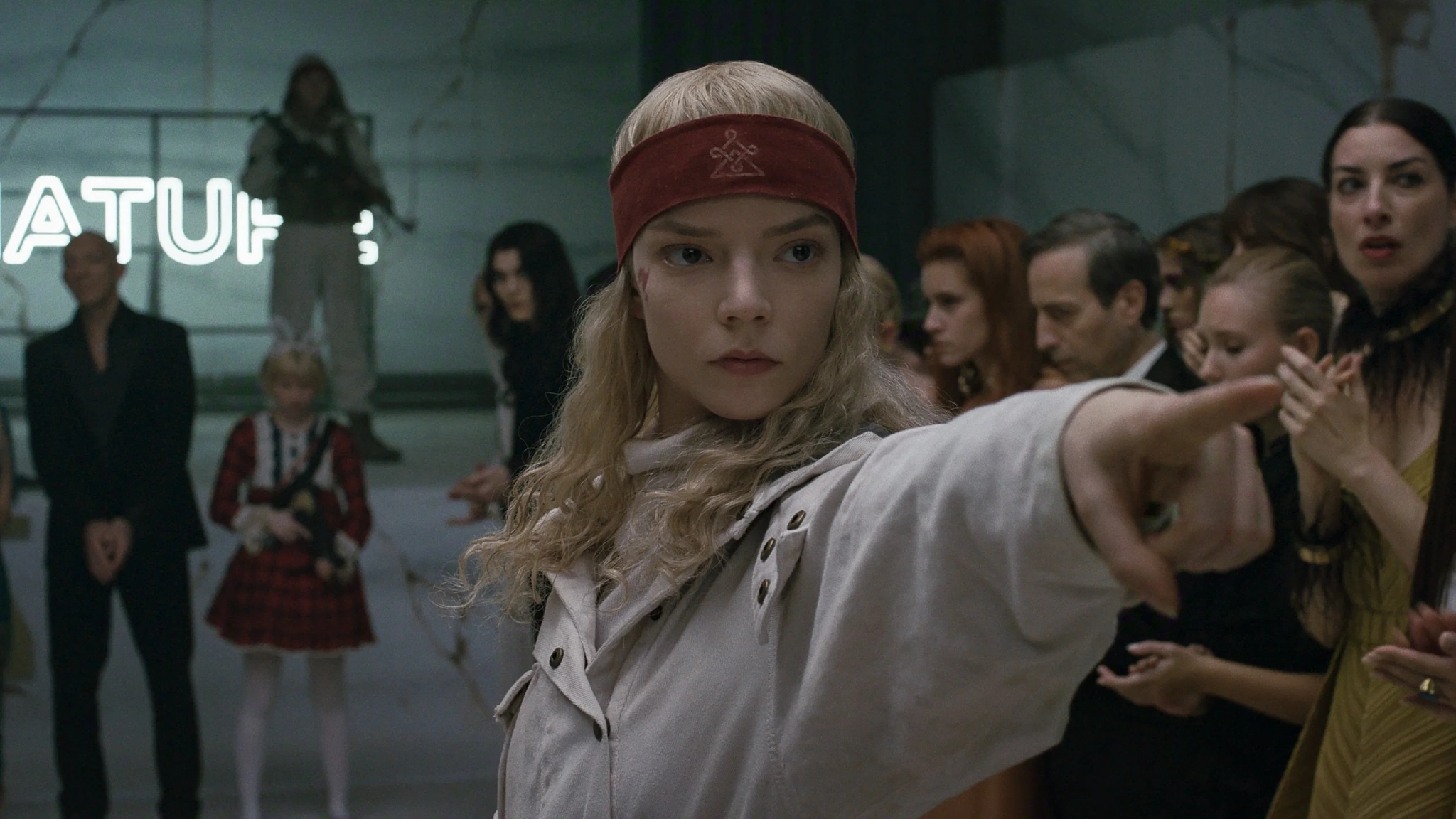
Anya Taylor-Joy, as Joan, has a very strong presence.
The character is strange, confident, and completely convinced of what she is doing, which is enough to make her compelling to watch.
The problem is not Anya’s performance, but the writing.
The film wants Joan to be an environmental militia leader, an obsessive figure, perhaps a false prophet or a true believer, and also a symbol of something larger involving faith, ideas, and extremism.
All of this is interesting on paper, but the execution does not always give her enough depth.
Her presence remains powerful, certainly, yet she sometimes feels more like an “idea” than a character whose layers gradually emerge.
Even so, Anya makes every appearance both entertaining and unsettling.
Satirizing the elite and performative environmentalism
One of the film’s best qualities is its satire of the wealthy and performative environmentalism.
It does not simply deliver a lecture; it lets the characters expose themselves.
We have rich people talking about saving the world while profiting from its depletion.
A movie star trying to look ethical at the right moment in front of a camera.
And businesspeople who know how to turn every idealistic speech into another deal.
These elements are not entirely new to cinema, but the film delivers them with an energy and visual wit that make the first half highly entertaining.
The gala is particularly effective: everything seems designed to be both luxurious and ridiculous.
From the gala to the volcano: a journey that changes the film
For me, the first half is the more coherent part of the film.
The raid, the hostages, the tension, the mockery of the guests, and the question of whether the prophecy is real all work very well.
Once the film leaves the gala and becomes a journey toward the volcano, however, it starts to waver.
Romain Gavras’s ambition becomes clear here.
He does not want to make a film confined to one location. He wants to turn the story into an almost mythical passage, a ritual journey toward the end.
I respect that decision a great deal.
The problem is that the film does not always control its tone during this stage.
Are we watching a satire?
A serious journey?
A surreal dream?
Or a political action film?
The answer is usually a little of everything.
That gives the film distinction, but also makes it unstable.
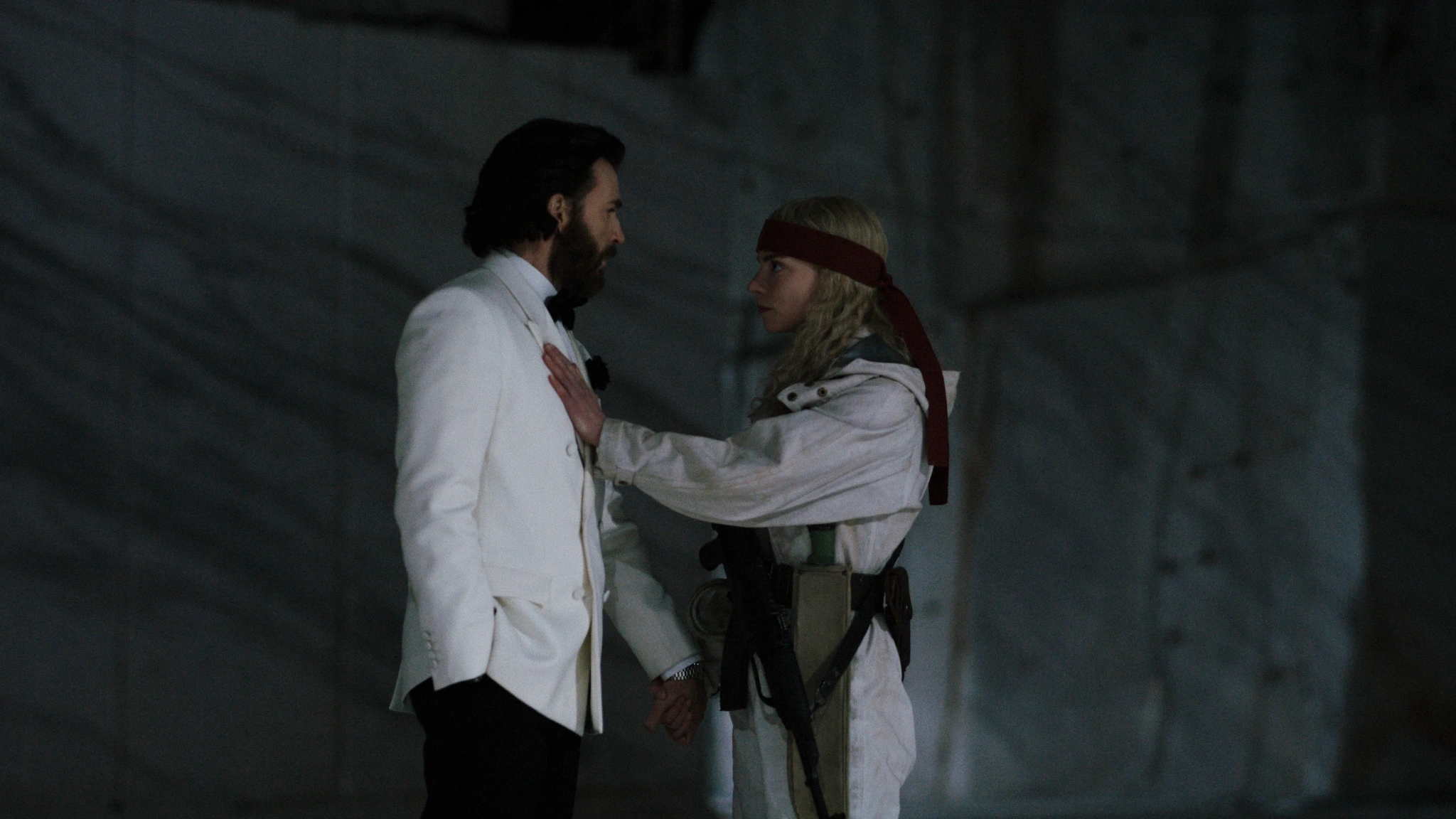
Is the film serious or satirical?
This is one of the film’s biggest problems, and also one of the things that makes it worth discussing.
It mocks celebrities, capitalists, activists, moral performance, and the idea that the world will be saved by whoever takes a good photograph at the right moment.
At the same time, it wants us to take its central idea seriously: real change requires sacrifice, and the world is approaching the abyss while everyone is preoccupied with their own image.
This overlap between seriousness and satire sometimes works extremely well.
In the final third, though, it began to confuse me a little.
There are moments when you do not know whether you are meant to laugh, worry, or engage with the symbolism.
That is not always a flaw, but here the balance was not fully controlled.
Where does the film actually stumble?
The biggest problem is not the film’s madness, but its repetition.
It delivers its central idea relatively early: the elite are hypocritical, performative activism has no impact, and changing the world demands a real price.
After that, it sometimes keeps circling the same idea in different forms.
The dialogue, particularly during parts of the journey, also becomes circular, repeating the same questions without adding enough.
There is a sense that the film does not always know how to develop Joan and her group after the initial raid.
At first, they are mysterious and frightening.
Over time, their mystery becomes less intriguing than it should.
Finally, the ending is visually charged, but I cannot say it lands emotionally with the same force as its images.
I understood what the film wanted.
I did not feel the impact of the climax it had been building toward.
Who will pay the price of change?
Beyond all the madness, the film asks a simple, difficult question at its core:
We all know the world is heading in a bad direction.
We know that words alone are not enough.
But when the moment comes that demands a real price, who will pay it?
The rich?
Celebrities?
Ordinary people?
Or will everyone keep waiting for somebody else to make the sacrifice?
This is the question Sacrifice keeps trying to ask.
I think its fundamental value comes from here.
It does not offer a neat answer.
Nor does it present itself as a solution.
At least it clearly attacks the idea that moral performance or elegant speeches alone can save anything.
Direction: bold and assured, but too fond of noise
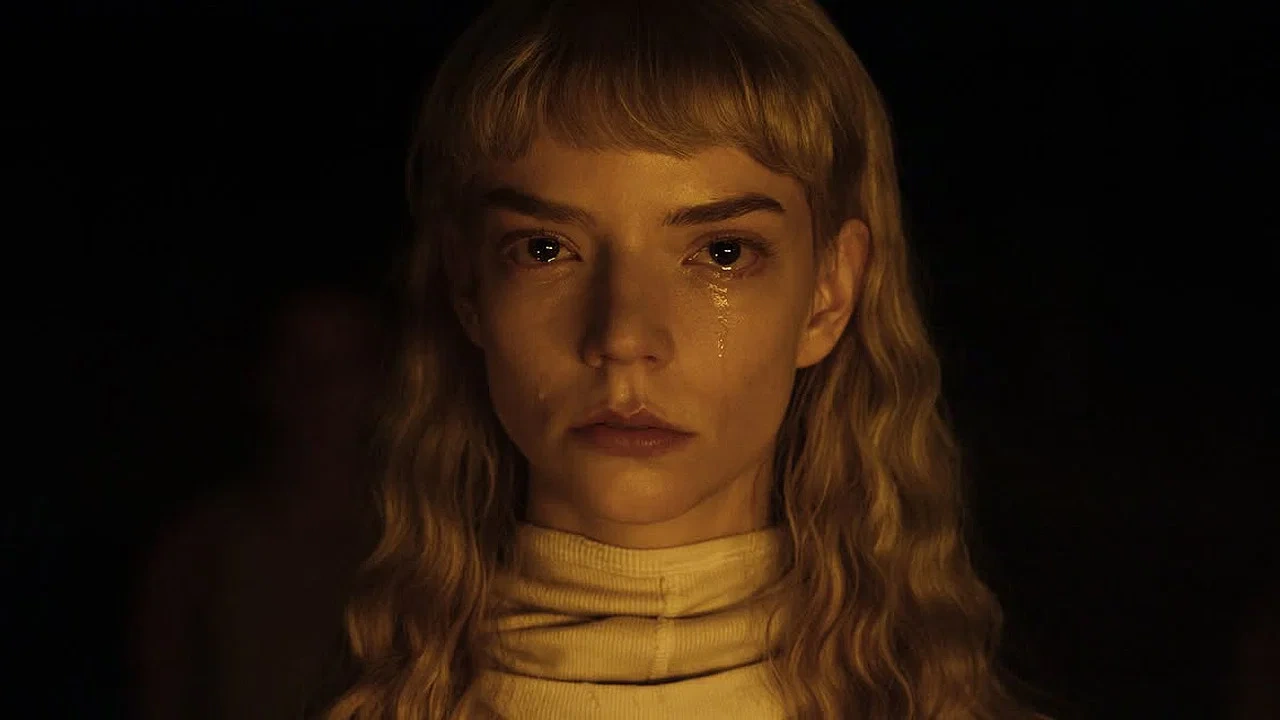
It is impossible to watch Sacrifice without noticing Romain Gavras’s hand.
The film is shot with tremendous confidence.
Wide lenses, open spaces, the Greek setting, the marble quarry, and the journey toward the volcano give the imagery scale and an epic feeling.
The visual energy is unmistakable, and the film never looks cheap or hesitant.
On the other hand, Gavras is sometimes too fond of noise.
The film is constantly pitched high.
Sonically, visually, and dramatically.
At many moments, this serves the work.
At others, I wanted more quiet so that the idea could work and the characters could breathe.
Not every scene needs to feel like an explosion.
The supporting performances: good but underused
The film includes major names: Vincent Cassel, Salma Hayek, and John Malkovich.
Honestly, not all of them get the space you would expect.
Cassel has some good moments and is well suited to the arrogant man of influence.
Hayek, however, is present more than she is used.
You feel the film could have given her considerably more room, but her presence remains limited.
Malkovich arrives late, in a scene important for the information it provides, yet leaves less of an impact than you would expect from an actor of his stature.
This brings us to a general problem with the film:
It is full of characters and ideas, but lacks the time to give them all the same weight.
Music and imagery create the atmosphere
The overall atmosphere is one of the elements I genuinely liked.
There is clear attention to the music, the sensory rhythm of the scenes, and making the experience feel strange, tense, and unstable.
Sometimes the film seems less interested in simply telling a story than in putting you into a particular state.
This is especially apparent in the final scenes, when explanation recedes a little and feeling and spectacle take over.
Some viewers may reject that approach, but I think it is one of the things that preserves the film’s identity, even when it stumbles.
Strengths
The greatest strength is Chris Evans.
His performance gives the film a human center amid all the chaos.
The visual direction is also strong, the locations are excellent, and the first half is tense, satirical, and effective.
The premise itself is intriguing, mixing political satire with mythical madness in an unusual way.
Weaknesses
The greatest weakness is the unsettled tone.
The film does not always decide whether it wants to be a sharp satire, a surreal journey, or a wild political film.
Some supporting characters are also underused, and certain ideas are repeated too often.
Despite its visual strength, the final third is not as tightly controlled as the beginning.
Final verdict
Final verdict
An ambitious film with a distinct personality, which alone makes it worth watching for me. It is not quiet, entirely balanced, or successful in everything it attempts. It is not timid, either. Romain Gavras begins with a wild idea and follows it to the end without softening it or apologizing for it. I liked its satire of the elite and superficial environmental activism. I particularly liked Chris Evans’s performance, and the film’s insistence that real change does not come from lavish speeches or images circulating on social platforms. I wanted deeper writing for Joan, greater tonal consistency, and an ending more affecting emotionally as well as visually. Ultimately, I find Sacrifice good, ambitious, and worth discussing, but not fully realized.
Your turn
Did you find Sacrifice a bold film that knows what it wants to say, or did it have a strong idea that got lost between satire, symbolism, and spectacle?
AUDIENCE VOTE
Do you agree with the MB rating?
Choose once from this browser. You can change your answer at any time.