The review
A family falling apart before the world does
One of the film’s best decisions is not to begin immediately with the chases.
First, we get to know the Platt family.
Denise is trying to finish her novel and feels that her life has become smaller than her ambitions. Her husband Greg is facing a professional crisis and drinking more than he should, while their children Audrey and Brian notice that their parents’ relationship is no longer what it was.
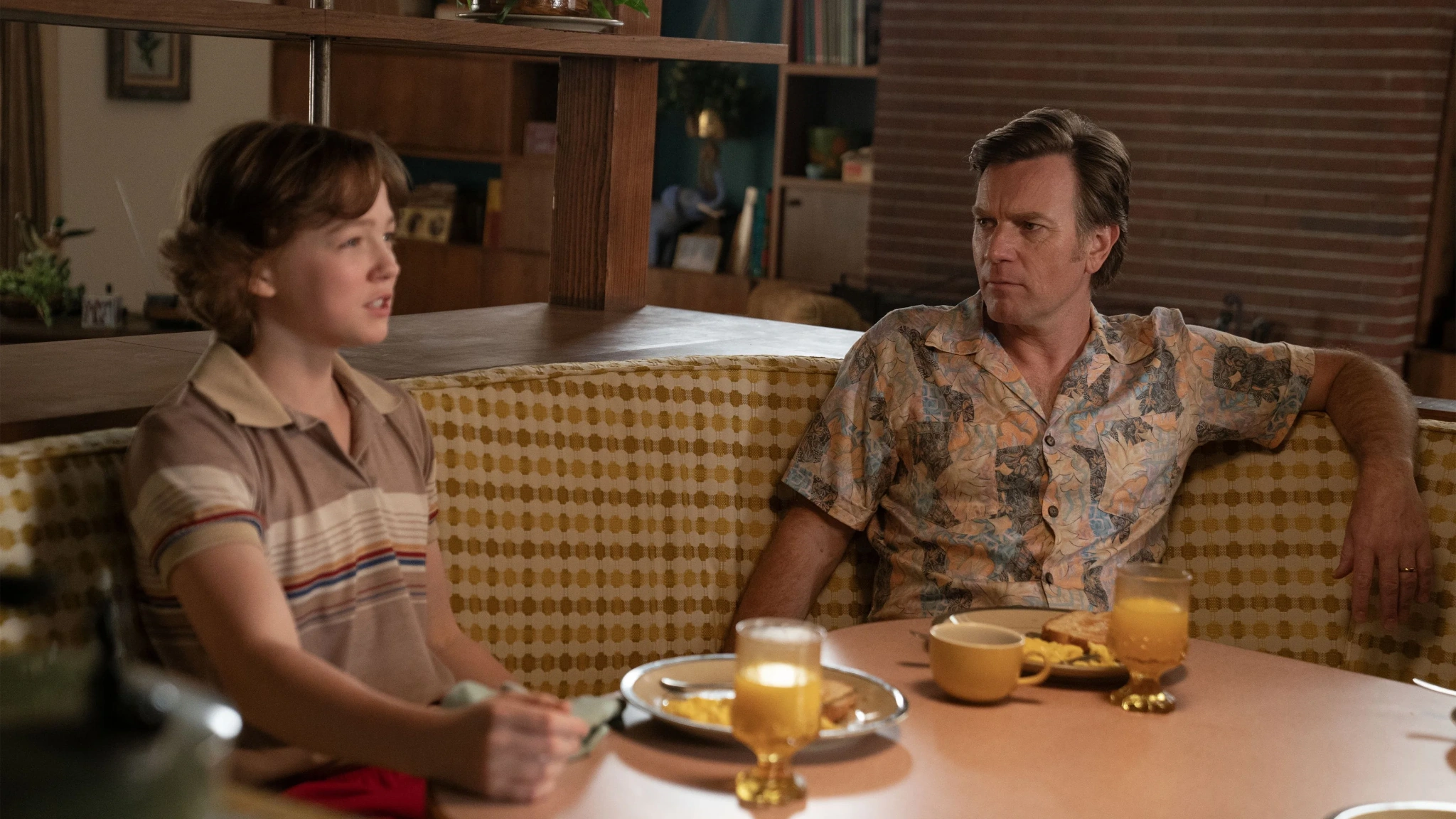
The film wants this family, rather than the dinosaurs, to be the heart of the story.
The idea itself is very good.
An external threat becomes more affecting when you know these people already have problems inside their home.
At the same time, this is where one of the film’s weaknesses appears.
The characters are written well enough for us to understand them, but not always with the depth that would make every disagreement as affecting as the director intends.
Sometimes the film seems to pause to say, “Remember, this family has problems,” before returning to the dinosaurs.
When the familiar street becomes a danger zone
The film handles the discovery of the disaster intelligently.
It does not reveal everything at once.
First come strange plants, lights, sounds, a disappearing animal and small signs that something unnatural has begun happening in the street.
Then comes the moment when everyone understands the truth:
The entire neighborhood is no longer where it belongs.
It has traveled millions of years into the past.
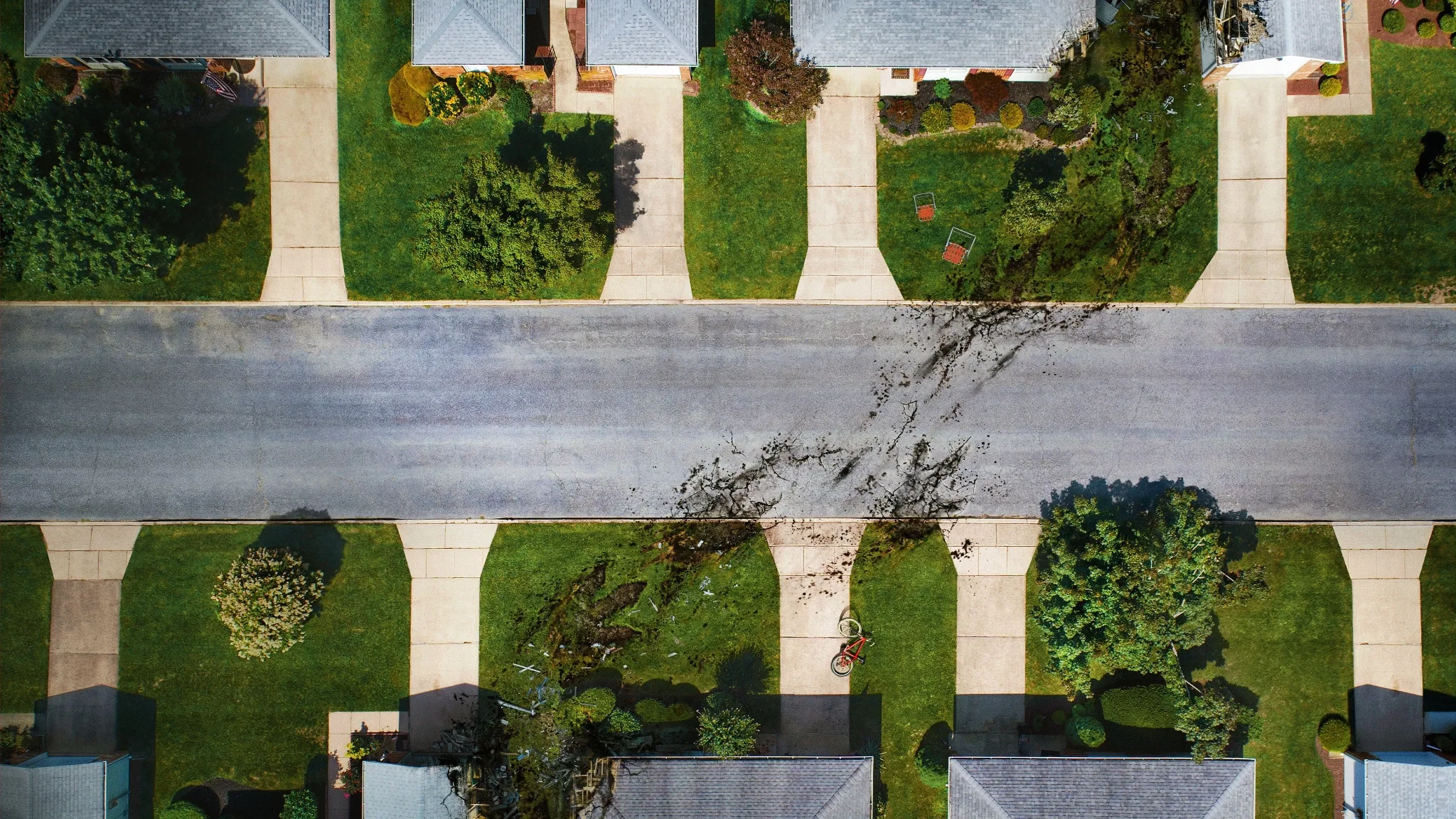
This is where the film really begins to work.
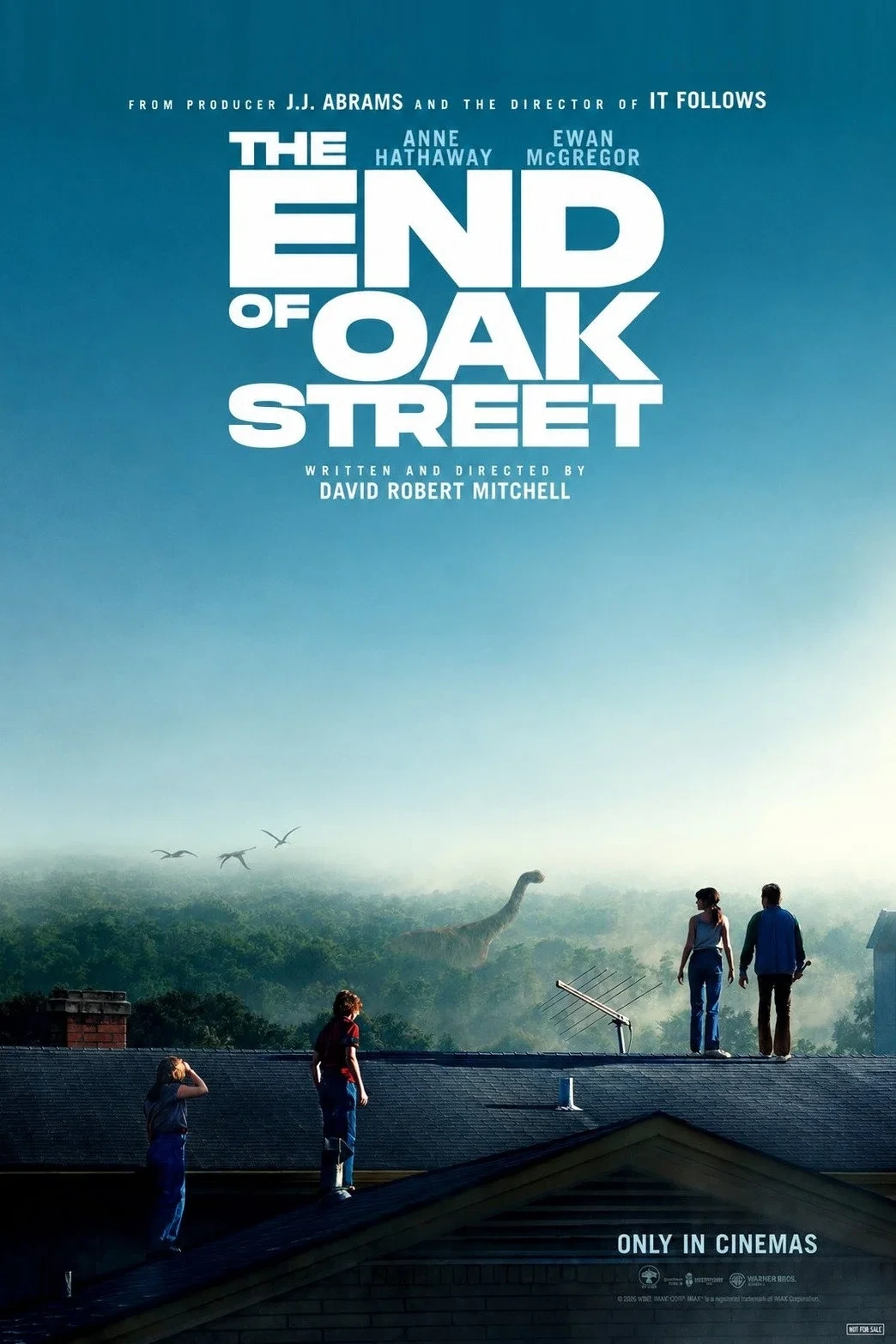
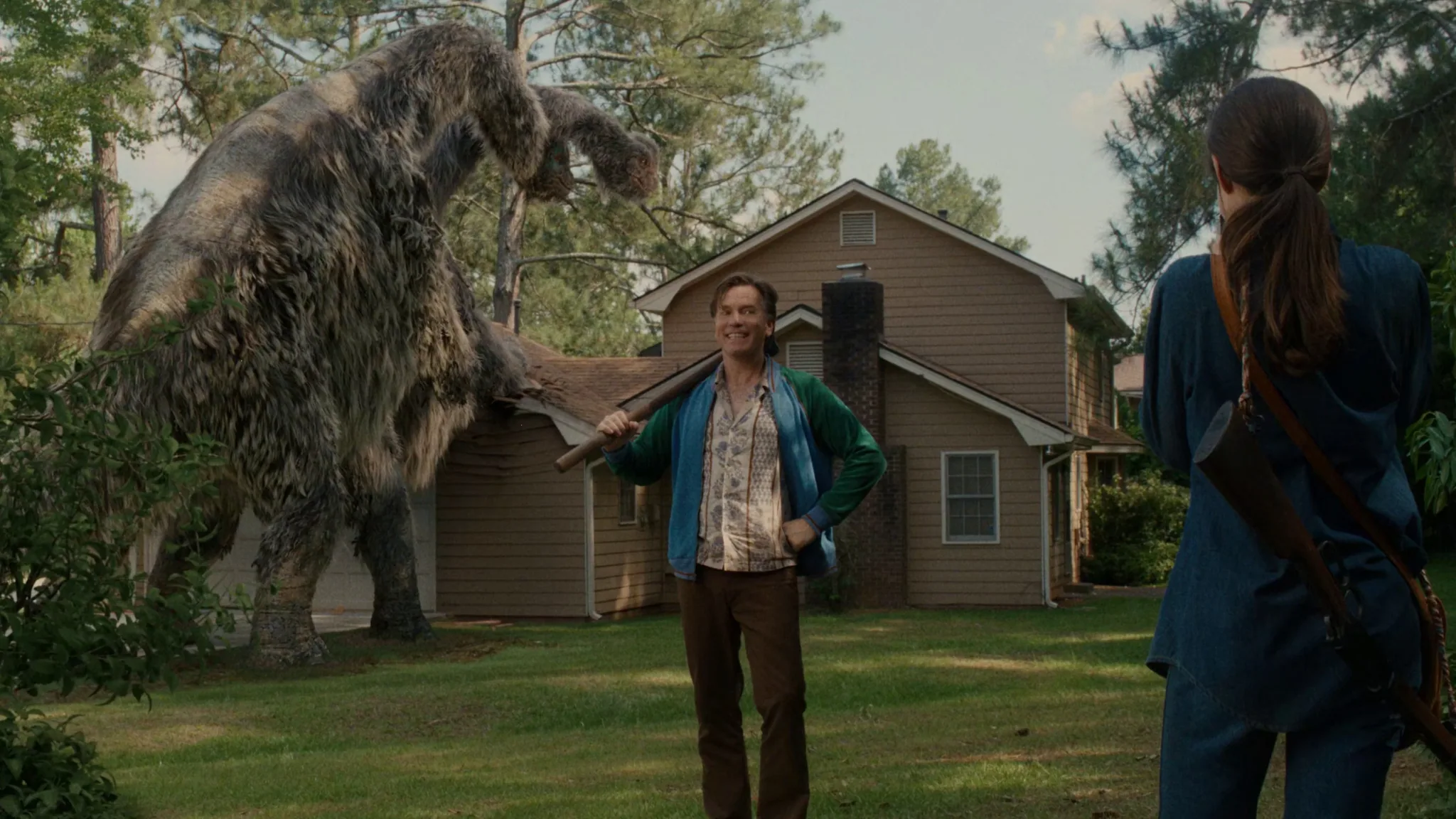
For me, seeing a dinosaur pass behind an ordinary American house, or a huge creature move between gardens and swimming pools, is more entertaining than keeping these animals in an open forest all the time.
The house becomes a fortress.
The garden becomes a danger zone.
The street where children were wandering only hours earlier becomes a place where a predator could appear at any moment.
This contrast is the film’s best visual idea.
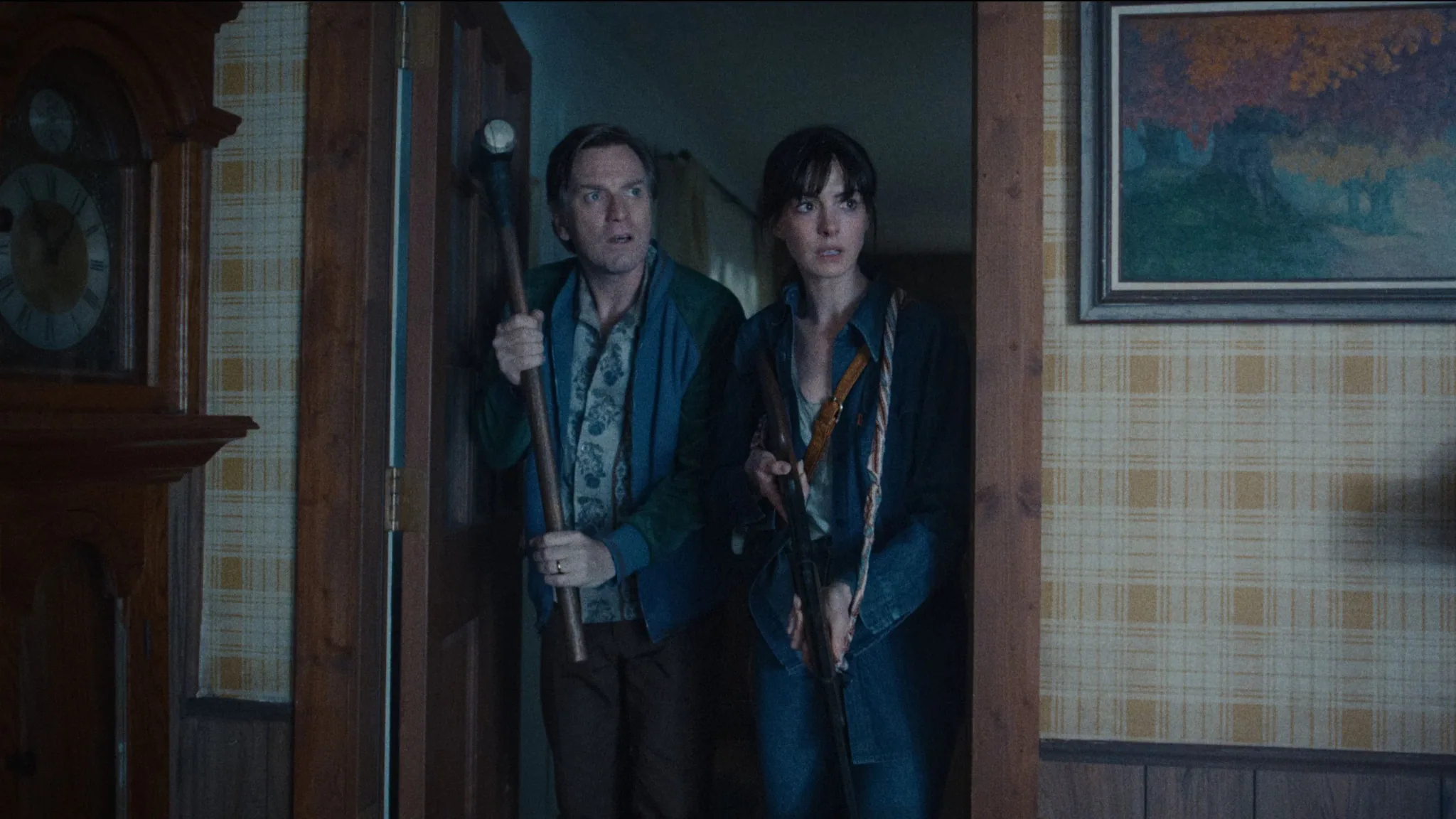
Dinosaurs with a visual identity of their own
It is very easy to compare any dinosaur film to Jurassic Park.
The film knows this perfectly well.
Instead of copying the same designs, it tries to give the animals a slightly different appearance, particularly through feathers and hair on some species.
This gives them a visual identity of their own, instead of making them look like ready-made models from another film.
More significantly, the film does not treat every dinosaur in the same way.
Not every animal is a predator waiting to eat people.
Some simply exist within the environment, which makes the world more convincing.
The characters are not entering a park full of monsters.
They are entering an entire ecosystem that humans never belonged to in the first place.
The visual effects are good in most dinosaur scenes, although some other digital effects, especially those involving the dog in action shots, are less convincing.
Denise: from frustration to taking action
Anne Hathaway is the strongest element among the family members.
Denise begins as someone who feels suffocated by her life.
She wants to write and have something of her own, while her family is falling apart in front of her.
When the disaster begins, however, she quickly becomes the most practical character.
She does not wait for a solution to fall from the sky.
She picks up a weapon, tries to protect the children and becomes the person making the hardest decisions.
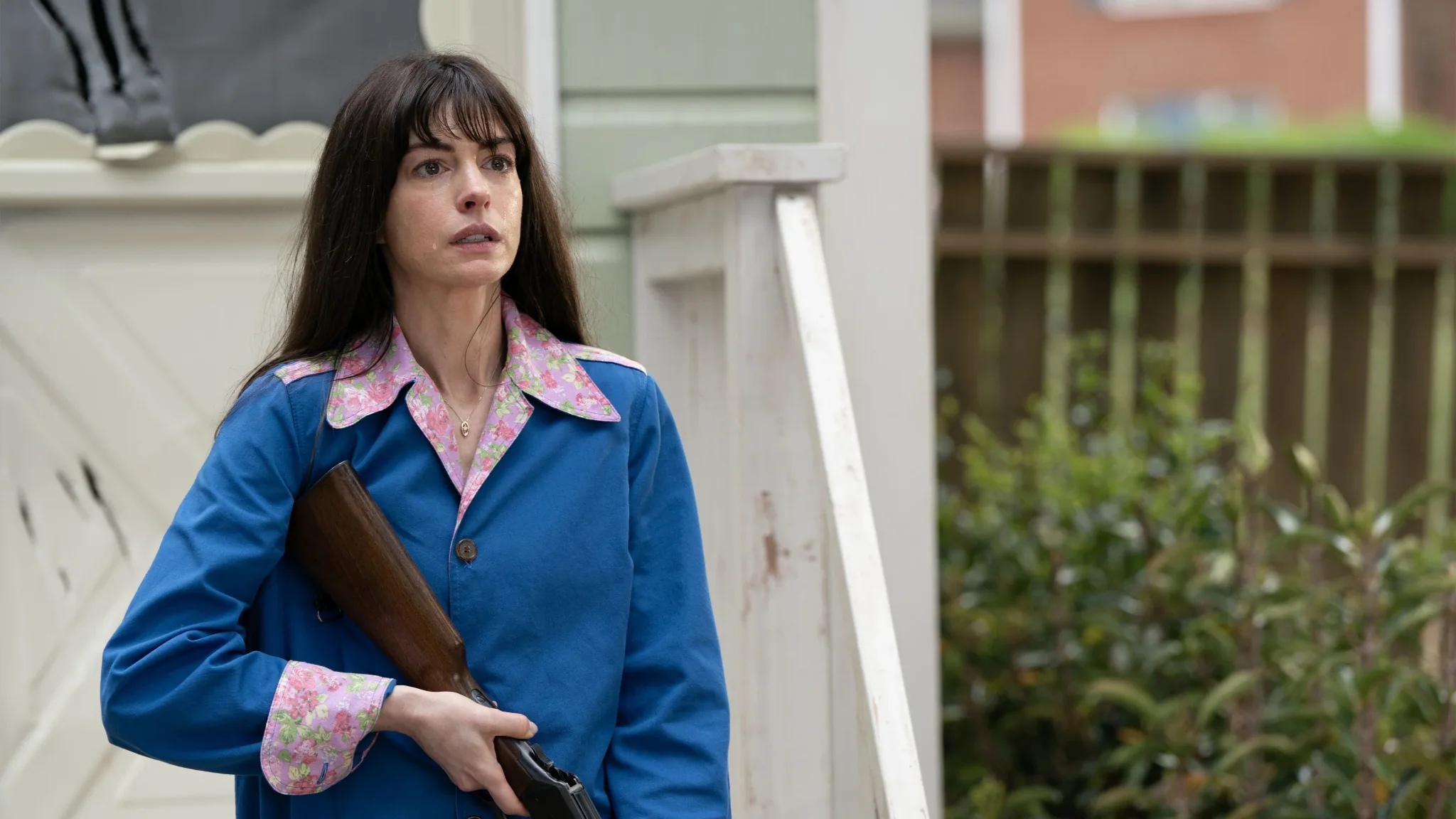
This change does not feel contrived, because its seeds are there from the beginning.
Denise is already the character who wants movement and change.
When the world she knew ends, that very quality helps her survive.
Hathaway brings strong energy to the role, especially as the film moves from family drama into dinosaur chases.
She still feels like the same woman, but the circumstances reveal a side of her she has not needed to show before.
Greg: optimism and the cost of waiting
Greg is a little more complicated.
He is a man who has already lost some confidence in himself before the story begins.
His job is not what he wants it to be, his marriage is deteriorating, and he tries to meet everything with optimism instead of admitting there is a problem.
This matters because the film later turns it into a conflict within the family.
Greg generally believes that things will somehow improve.
Denise and Audrey think more practically: if we want to survive, we need to do something now.
The film clearly draws this division between waiting and taking action.
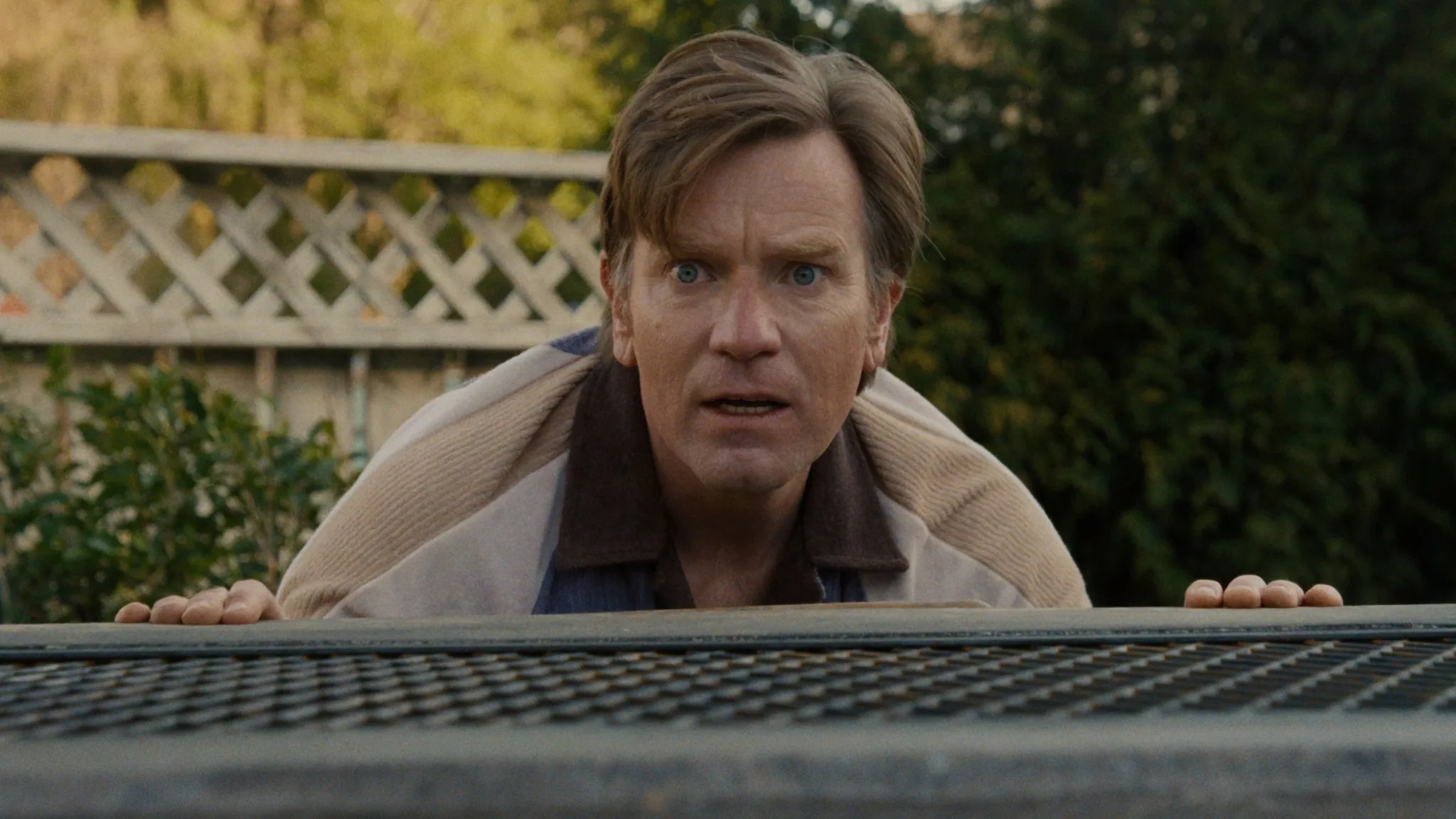
In performance terms, though, I found Ewan McGregor less affecting than Hathaway.
Not because he is bad, but because some of his reactions seem calmer than you would expect from someone watching his world literally become a land full of dinosaurs.
In certain scenes, Hathaway seems fully inside the crisis, while he appears to be in a slightly lighter family film.
Children who take part in the adventure
One thing I liked is that the film does not make the children merely a burden on their parents.
Audrey, in particular, is curious and interested in science, and she is among the first characters to try to understand what has happened.
Brian follows a different thread involving fear, courage and his relationships with the other children.
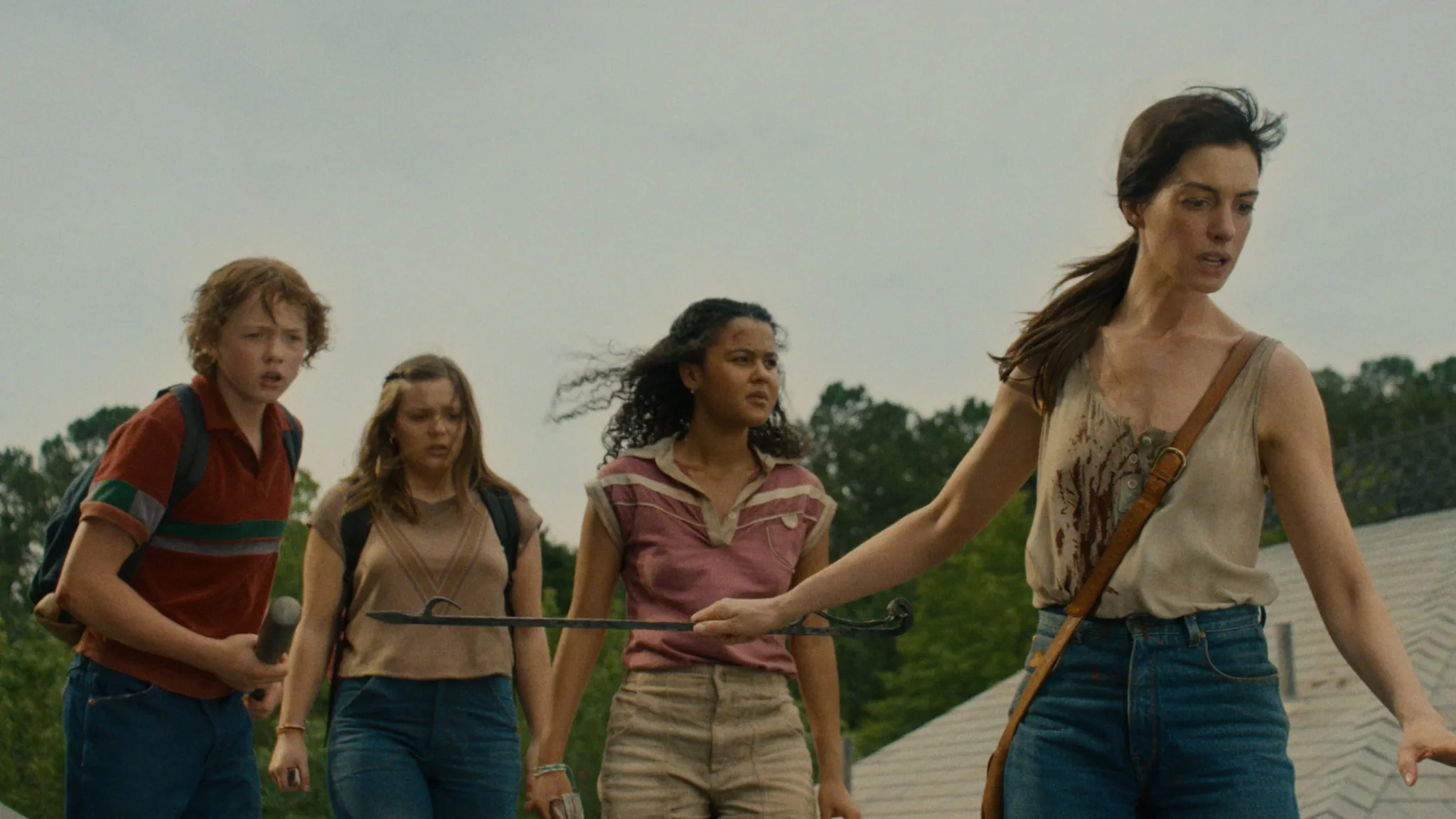
When the two children become separated from their parents, the film does not suddenly turn them into superheroes.
They are still frightened, make mistakes and try to survive using what they know.
This gives the middle of the film a different energy, because we are not seeing danger from just one perspective all the time.
Chases built around ordinary places
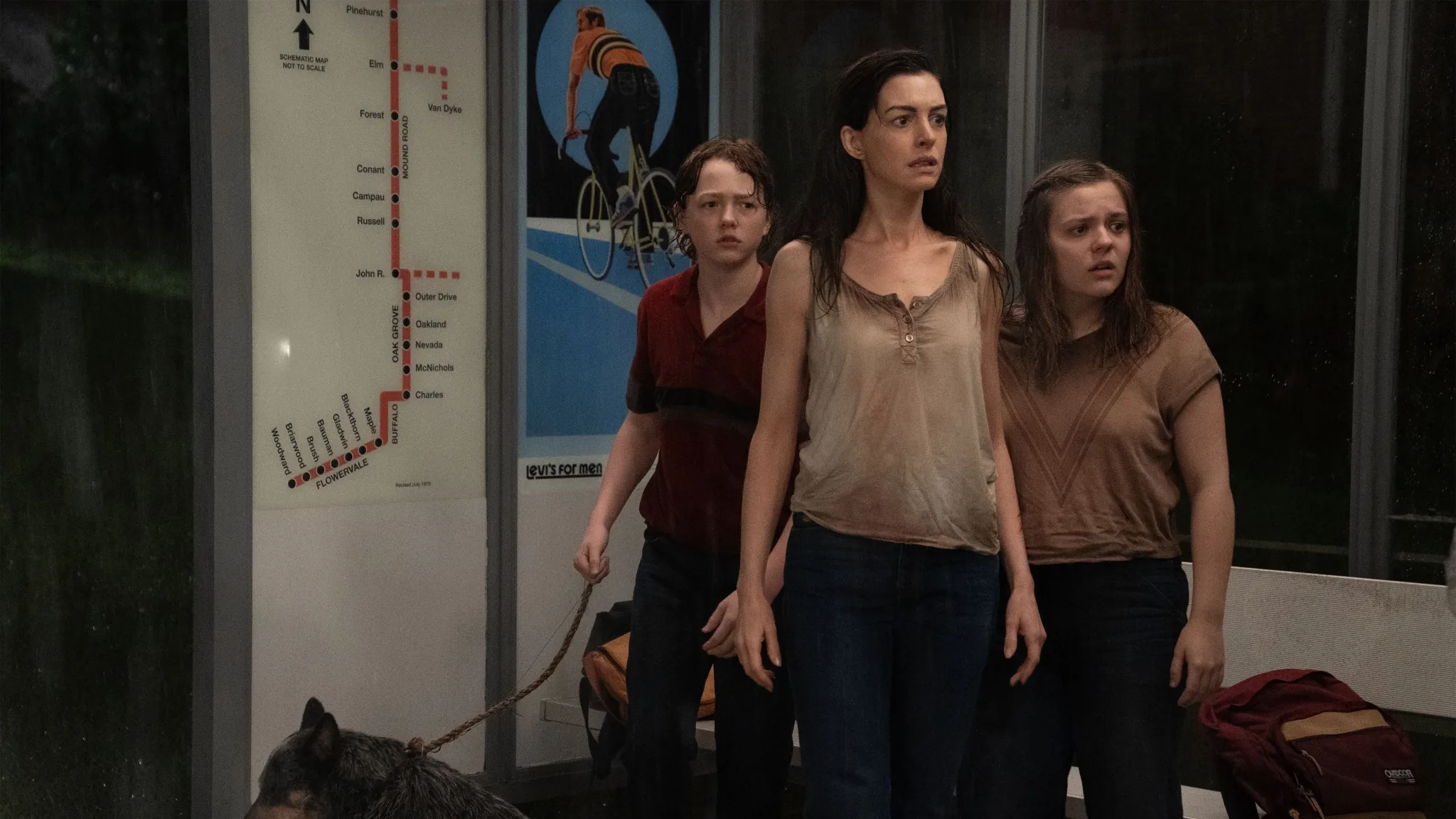
Once the characters stop trying to understand what happened and start trying to survive, The End of Oak Street becomes a very clear adventure film.
This is where David Robert Mitchell delivers his best scenes.
Chases through the streets.
Dinosaurs moving between houses.
Attacks in confined spaces.
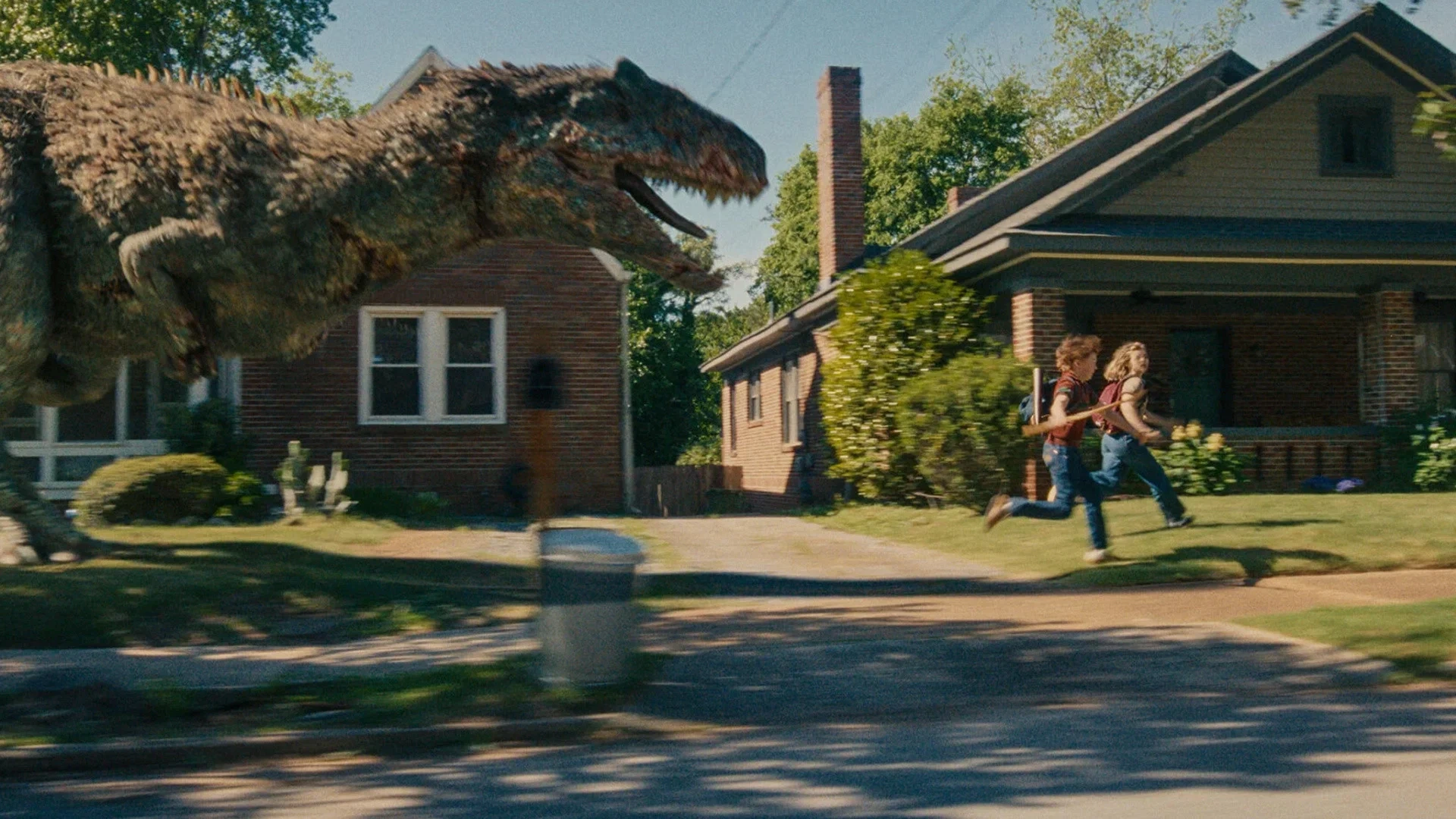
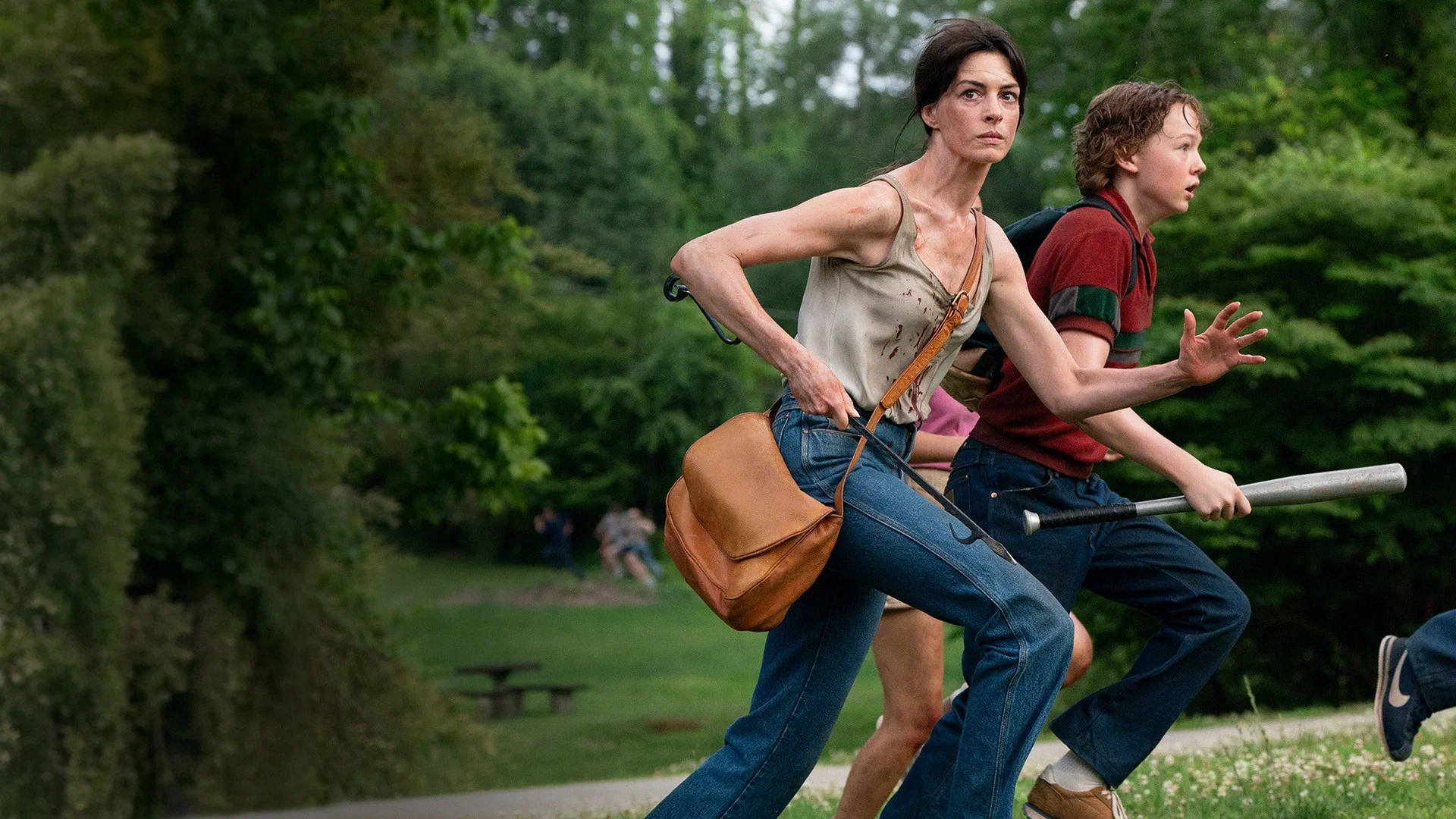
Huge animals suddenly appearing in places never designed to accommodate them.
The direction makes excellent use of wide shots.
Instead of always placing the dinosaur at the center of the image, it sometimes makes you search for it within the frame.
This is a fitting technique for the director of It Follows, where much of the tension also came from a question: is something moving in the background?
Here, he uses the same feeling on a larger scale.
Comedy that sometimes outstays its welcome
There is a clear problem with the comedy.
The film has a very childish sense of humor at times.
I do not object to comedy in an adventure film.
On the contrary, it is necessary if the entire hundred minutes are not to become one long chase.
But some jokes, especially the repeated humor about animal droppings, are overused.
The idea is funny the first time.
Then the film keeps returning to it as if convinced it is funnier than it actually is.
That feels a little strange, because other parts of the film are much more mature.
There is a collapsing marriage, addiction, professional frustration and a real fear of death.
Then the film suddenly returns to an extremely childish joke.
The contrast is probably deliberate, but it does not always work for me.
Greg’s death breaks the sense of safety
The film’s most shocking decision comes when Greg dies.
The family has already survived several encounters, and the film has trained you to expect them to survive again.
Then the Allosaurus arrives and kills Greg in front of his family.
The scene matters because it breaks the feeling of safety.
Until this point, you can treat the film as a dangerous family adventure while still expecting the main characters to be protected somehow.
Suddenly, the film says no.
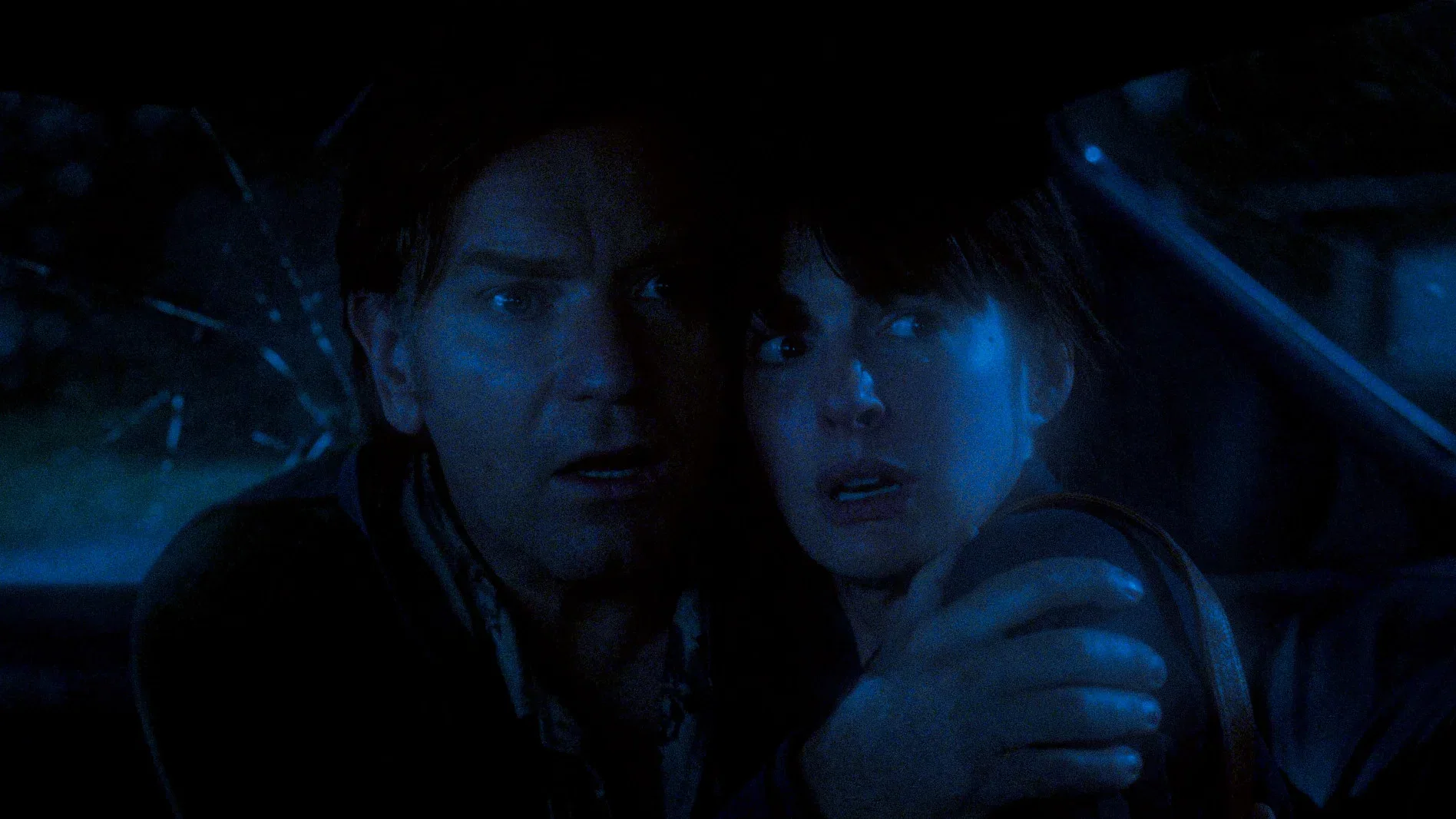
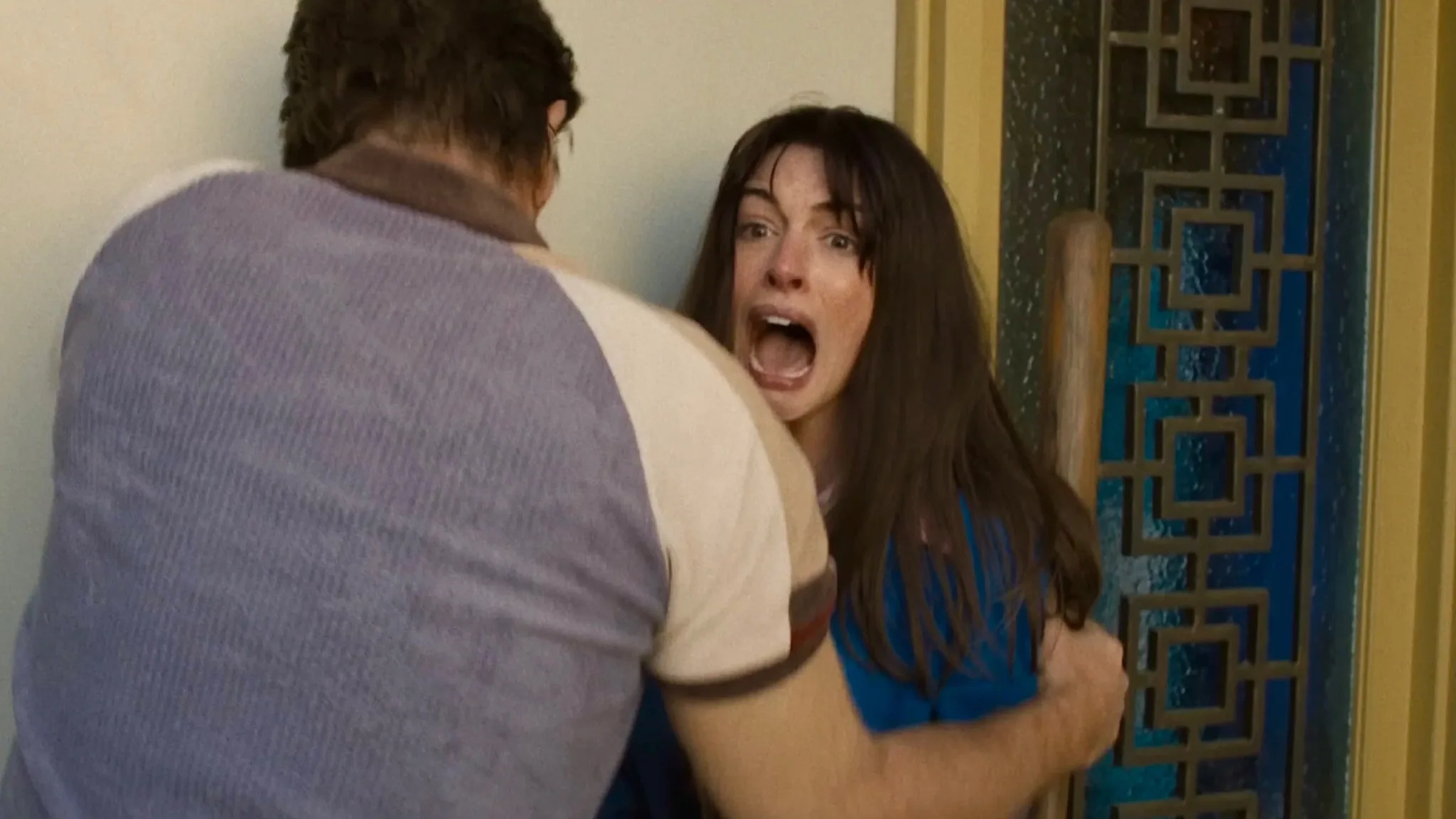
What is interesting, however, is that death itself is not the end of Greg’s role in the story.
The film later uses time travel to change the meaning of this loss entirely.
This brings me to the part of the film I find most debatable.
Time travel and the wish for a second chance
When Denise and the children reach a portal that returns them to 1982 before the disaster, the film gives itself a very unusual opportunity.
They know what will happen.
They know Greg will die.
But they cannot reach the street in time to prevent the displacement.
Denise calls him and asks him to deliver a pizza to where the family is standing.
In this way, she gets him out of the area before Oak Street travels into the past.
Emotionally, the scene works.
Watching Denise and the children embrace Greg after we have seen him die gives the moment real weight.
Structurally, however, the solution is very easy.
The film presents a death, makes you feel it and then gives the characters a way to erase the outcome.
This slightly weakens the harshness of its earlier decision.
But I think that is intentional.
Ultimately, the film is not a tragedy about losing a father.
It is a film about a family wish.
About a second chance.
Once you know there is a personal dedication at the end, it becomes clear that wish fulfillment is central to the film’s tone.
The ending: did the dinosaurs repair this family?
Two years later, we learn that the disaster’s consequences have changed.
Some people who died in the first timeline survived because of the warning.
The area where the dinosaurs appeared has been contained.
Denise finally publishes her book, titled The End of Oak Street.
This takes us back to the beginning of the film.
Denise wanted to write.
Greg wanted to feel that he could still hold his family together.
The children were living inside a crumbling marriage.
In a very strange way, the disaster gave each of them a chance to reassess their life.
Perhaps this is the film’s simplest idea:
Sometimes you do not know the value of your ordinary life until it disappears completely.
But the film presses this message harder than necessary at the end.
I would have preferred it to leave some of those feelings to us instead of tying everything up so neatly.
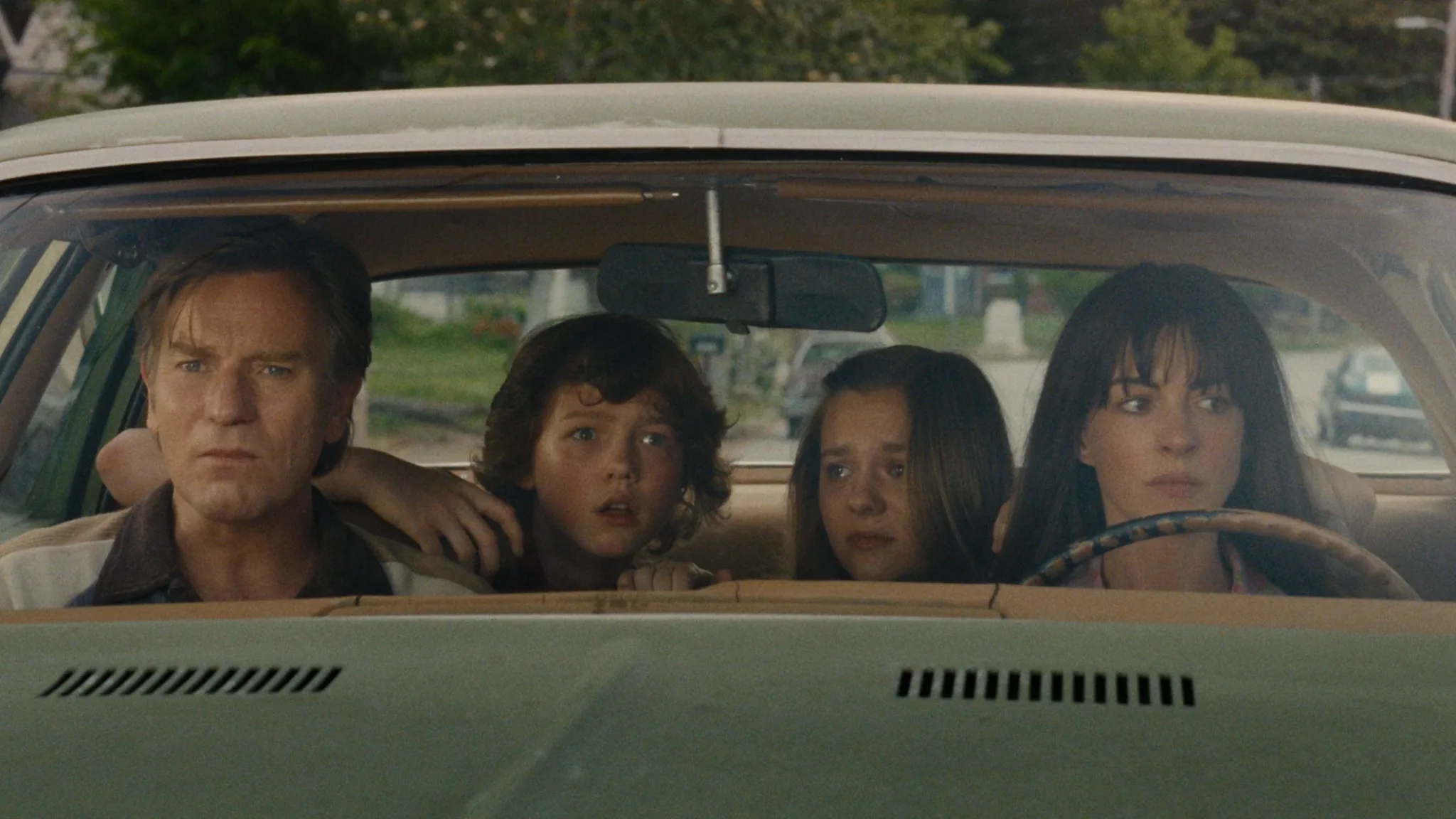
Direction: the spirit of the eighties without imitation
The film clearly loves American adventure cinema of the 1980s.
Children.
Bicycles.
The American suburb.
Family.
A sweeping musical score.
A supernatural threat entering a very ordinary place.
The good thing is that David Robert Mitchell does not become a director trying to imitate Steven Spielberg shot for shot.
His own touches remain.
Slow camera movement.
Shots that allow something strange to enter the frame gradually.
And the split diopter he sometimes uses to show two characters in different planes of the image, a choice that also suits the divisions within the family.
The film wants the spirit of old Amblin films, but is a little rougher and less innocent.
That suits it very well.
Final verdict
Final verdict
The film succeeds because it understands that dinosaurs alone are not the idea. What matters is where it places them and which characters it puts in front of them. It is a fast, entertaining summer adventure, strange enough to have its own identity, while carrying a clear love of 1980s cinema without becoming an empty imitation. Not everything works, especially the comedy and some easy solutions at the end. But when the film turns the American suburb into a chase arena for humans and dinosaurs, it is difficult not to enjoy what it offers. For me, David Robert Mitchell’s greatest achievement here is making a dinosaur film that does not need the name of an established franchise to attract attention.
Your turn
If you were in the Platt family’s position and reached a portal that could take you back into the past, would you use it to change what happened and save the people you lost, or would you fear that changing the past might lead to an even worse outcome?
AUDIENCE VOTE
Do you agree with the MB rating?
Choose once from this browser. You can change your answer at any time.