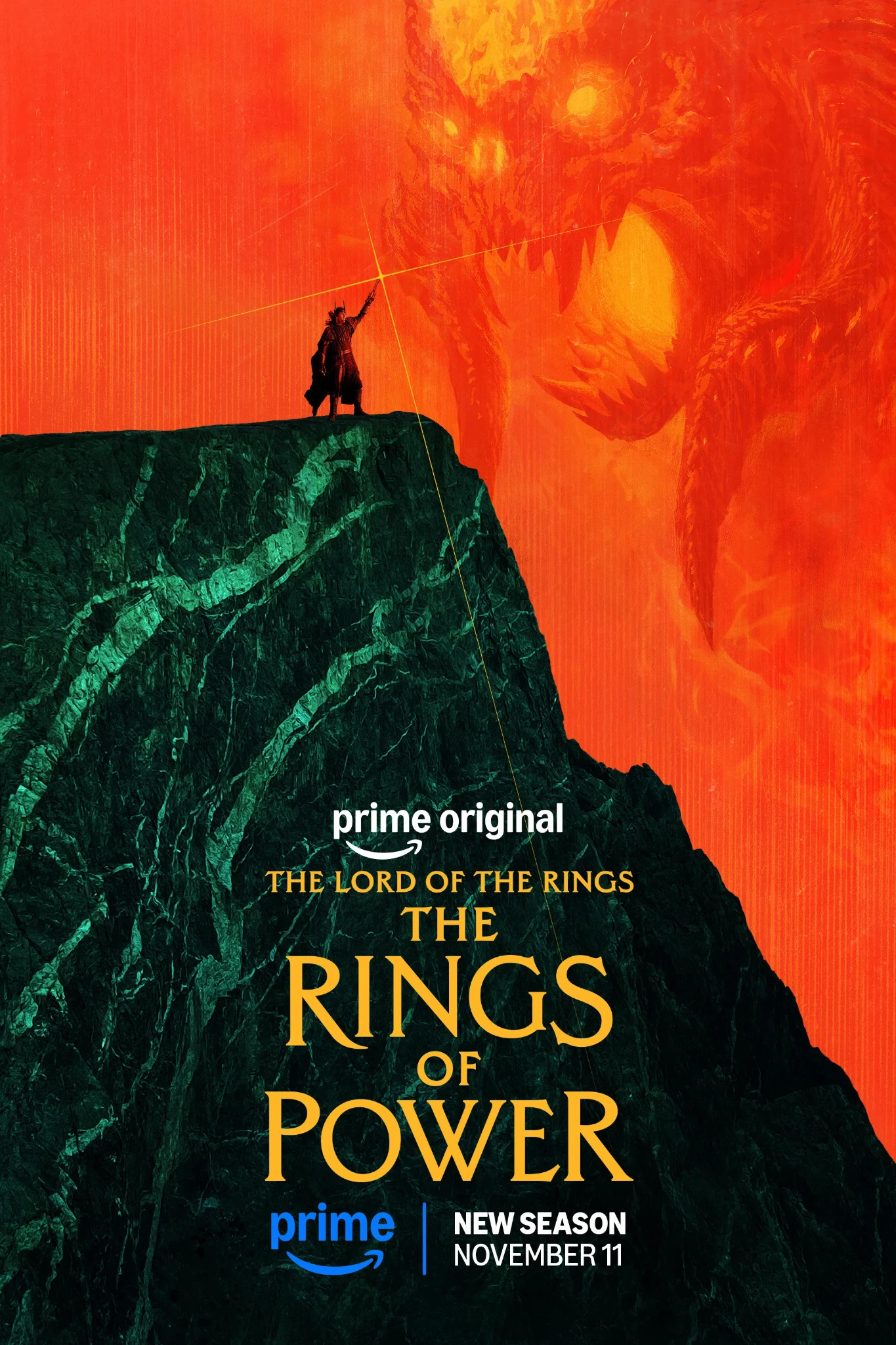
The review
A time jump raises the stakes... without solving every storytelling problem
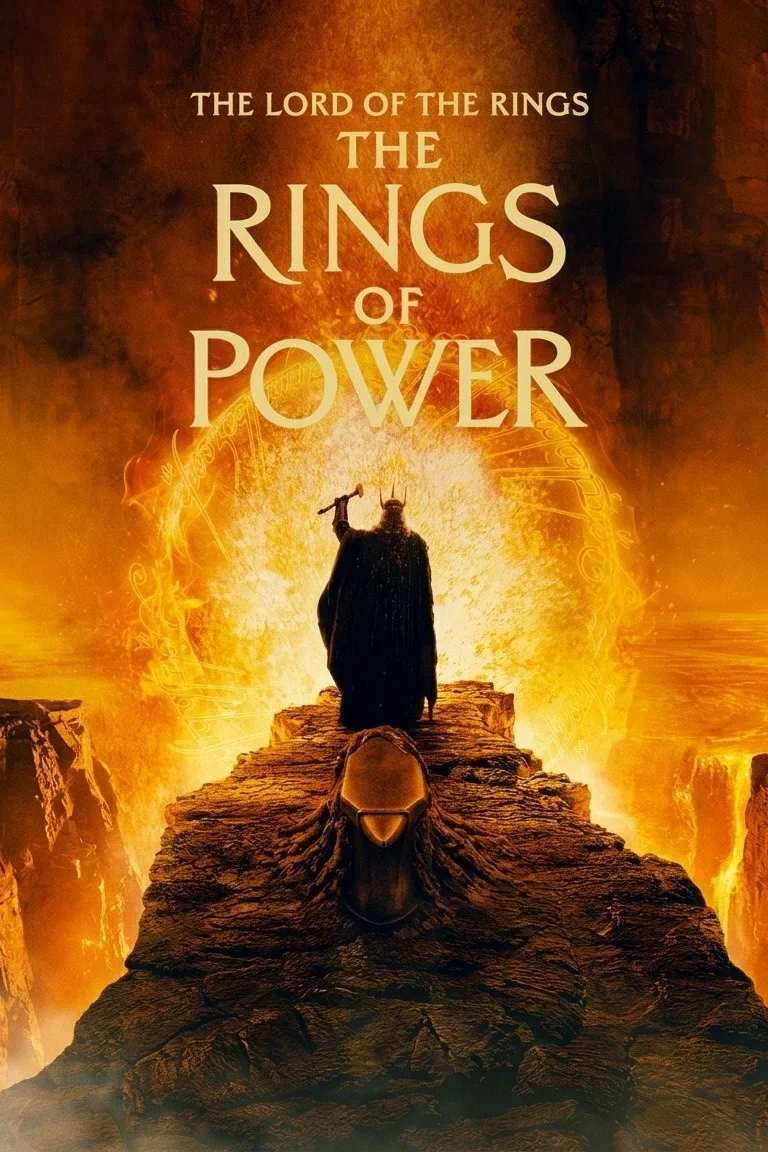
Jumping five years compresses the setup and confronts us with the consequences of Sauron’s rise. Lindon and Rivendell cling to the protection of the Three Rings, Khazad-dûm closes its gates, and the kingdoms of Men are divided or under outside influence. The series thus establishes a clear direction from the beginning.
But the opening map and voice-over recall the beginning of The Fellowship of the Ring without offering the movement and imagery that made that opening affecting. Worse, the map does not translate into the logic of events. Travel between Rivendell and Khazad-dûm, and the transport of weapons through territory supposedly under Sauron’s control, do not carry the expected danger. His declared control does not sufficiently affect the characters’ movements. The forest confrontation also seems poorly planned: the Elven defensive line is narrow and hemmed in by trees, while the adversaries attack head-on in a way that makes the danger feel overly contrived.
The pacing has improved, but remains unsettled. The first episode jumps among storylines that sometimes seem disconnected. The second and third then add Númenor, Rhûn, and Gandalf, expanding the story further. Nevertheless, episode two proves that the series can manage multiple threads when it gives each a clear conflict and an affecting outcome.
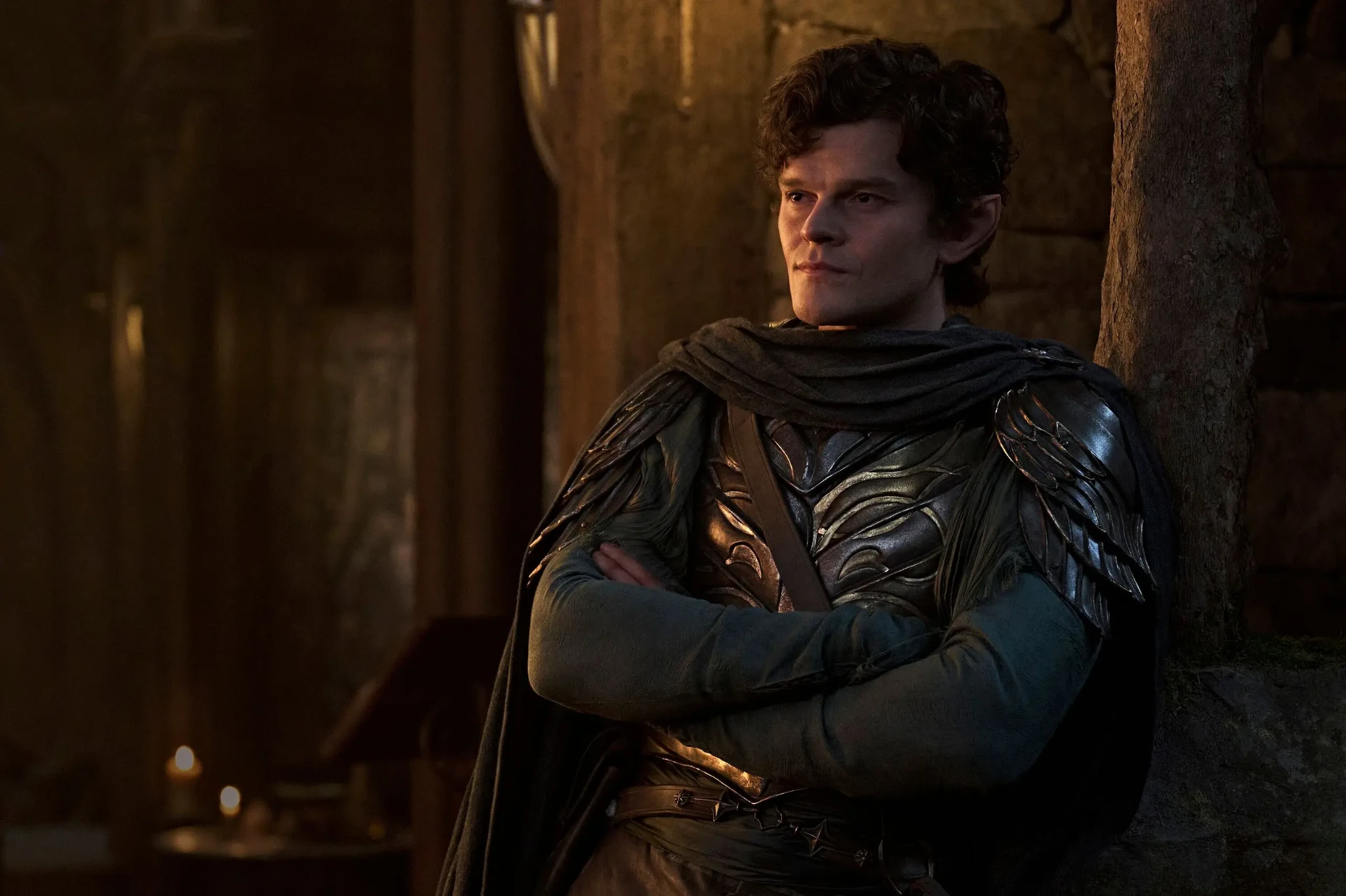
Sauron: struggling to make the Ring, succeeding at making followers
Sauron’s presence is the best thing in these episodes. He attempts to make the One Ring, but the experiment ends with the Orc used to test it burning. Nearby hang the remains of Celebrimbor’s body, a reminder that the knowledge he needs is no longer within reach. His imagined conversation with the dead smith’s shade adds a psychological dimension. Celebrimbor confronts him with his inability to love or build a real relationship. A flicker in Sauron’s eyes can be read as a trace of regret, but the series leaves that unresolved.
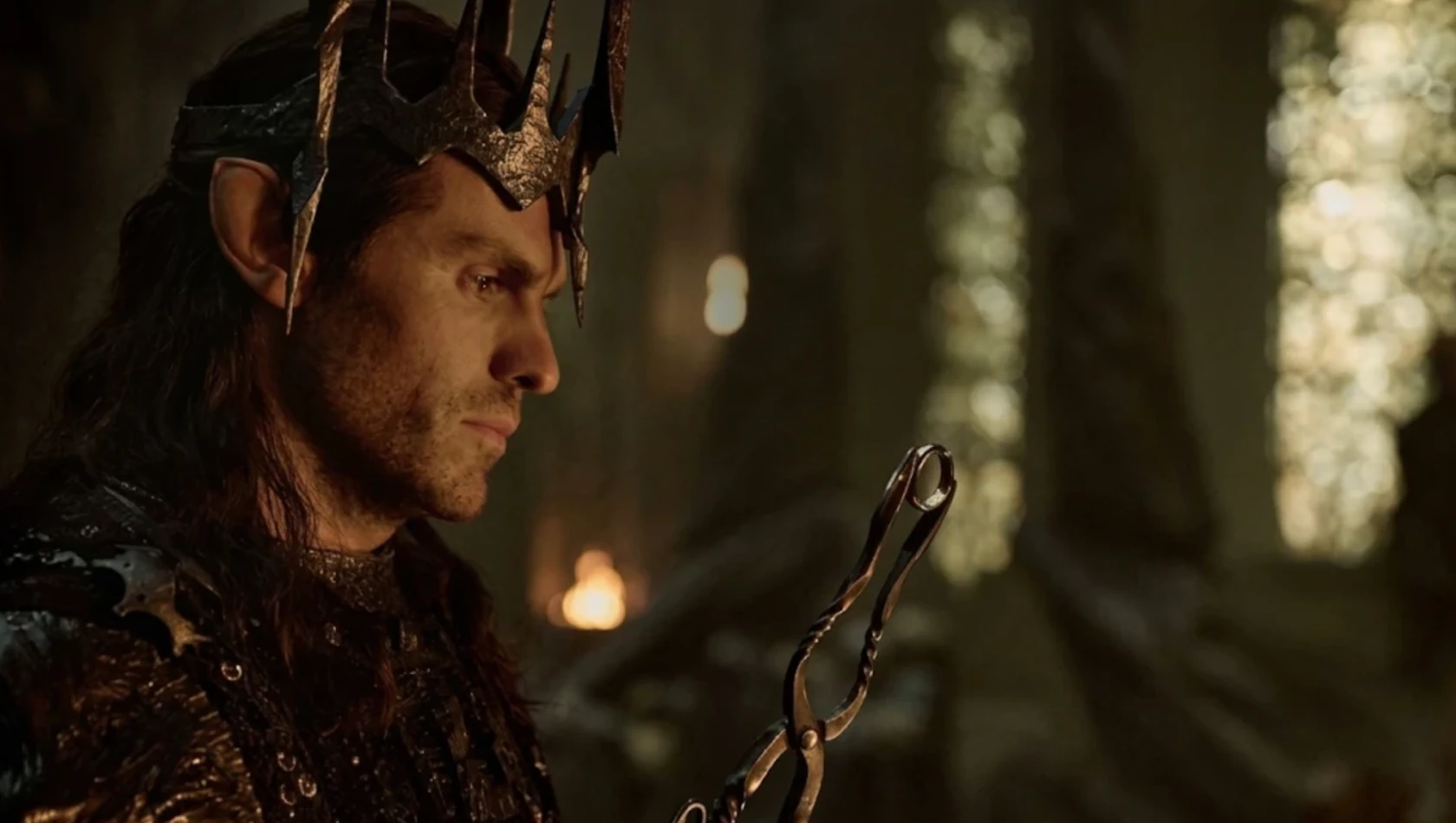
Even so, the forging scene leaves a question insufficiently answered. We previously saw Sauron help make rings and guide their makers, yet now he cannot complete the One Ring and needs reminding that he ordered Celebrimbor’s records destroyed. We can understand that he lacks knowledge he cannot obtain merely by controlling the tools. But the series does not explain this distinction clearly enough, sometimes making him seem to have forgotten what he learned. The idea it wants to explore, that evil corrupts what goodness creates rather than creating in the same way, deserves more precise treatment.
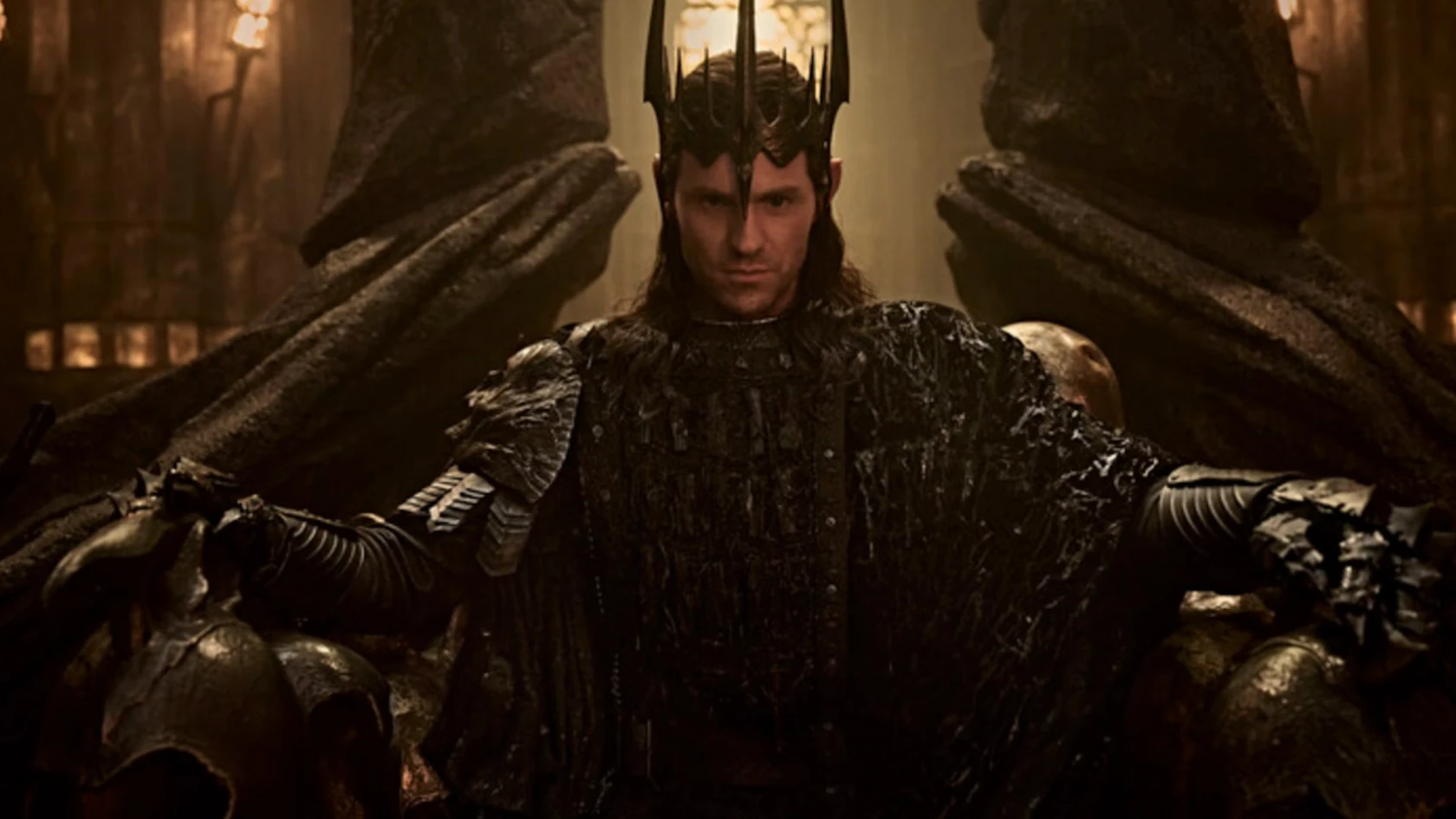
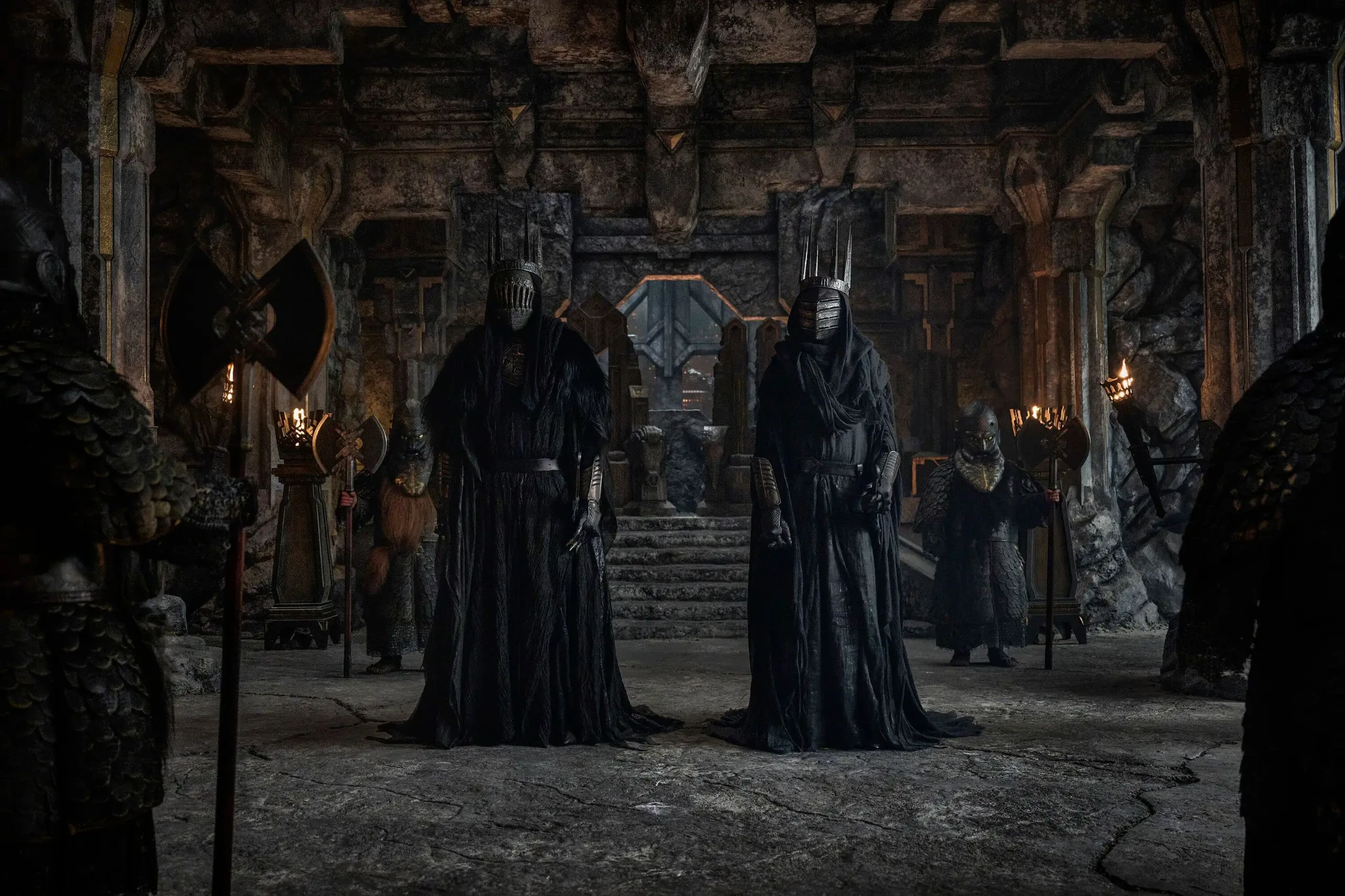
The irony is that Sauron struggles to make the Ring but succeeds in making followers. Selection for one of the Nine becomes a bloody competition that ends with Khamûl receiving the ring and his appearance changing. Sauron then uses the same approach with Theo. He draws close to an old wound, tells him his father’s name and that he belongs to a noble line that could have ruled the Southlands, then tries to discredit his mother by claiming she killed his father because of his loyalty to Sauron. Not everything he says is confirmed, but we see how he exploits what Theo wants to believe in order to draw him in.
This is Sauron at his strongest: reading other people’s needs and presenting power as a form of personal salvation. We see it again when he interrogates an Elven couple, using a poison associated with a fire dragon and making the wife’s survival depend on the antidote. Charlie Vickers moves between artificial calm and cold menace with striking ease, keeping Sauron the season’s strongest thread in performance terms. The series succeeds more when it shows us how a tyrant makes followers than when it explains the size of his army.
Númenor: Eärien gives the political conflict its weight
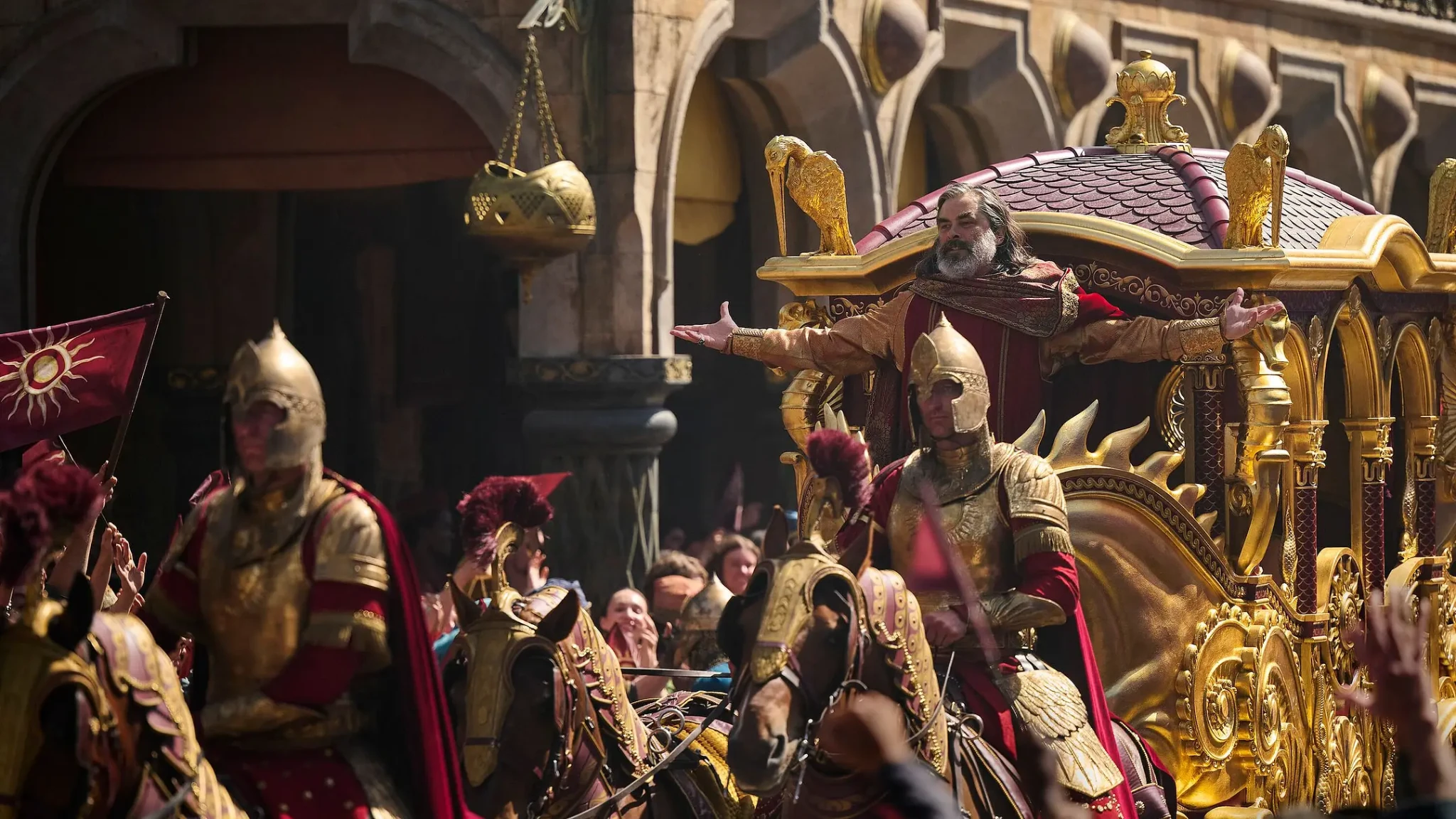
The second episode is the most tightly constructed because Númenor’s conflict rests on deception and divided loyalties, rather than military confrontation alone. Pharazôn appears in a procession displaying his wealth and popularity, but an assassination attempt reveals that not everyone shares this view. Isildur fails to kill him, and an innocent woman dies in the attempt, giving his resistance a moral complication. Míriel reminds Isildur that dividing people into two camps produces only more suffering.
But Eärien carries the episode. Initially she appears to belong to Pharazôn’s circle, before we discover that she is secretly working with the Faithful and helped leak the route of his procession. When Haleth asks her to end his life rather than let him expose her, we see the conflict between her mission and the mask of cruelty she wears in front of others. She then has to accuse her servant in her place, before her own role is uncovered.
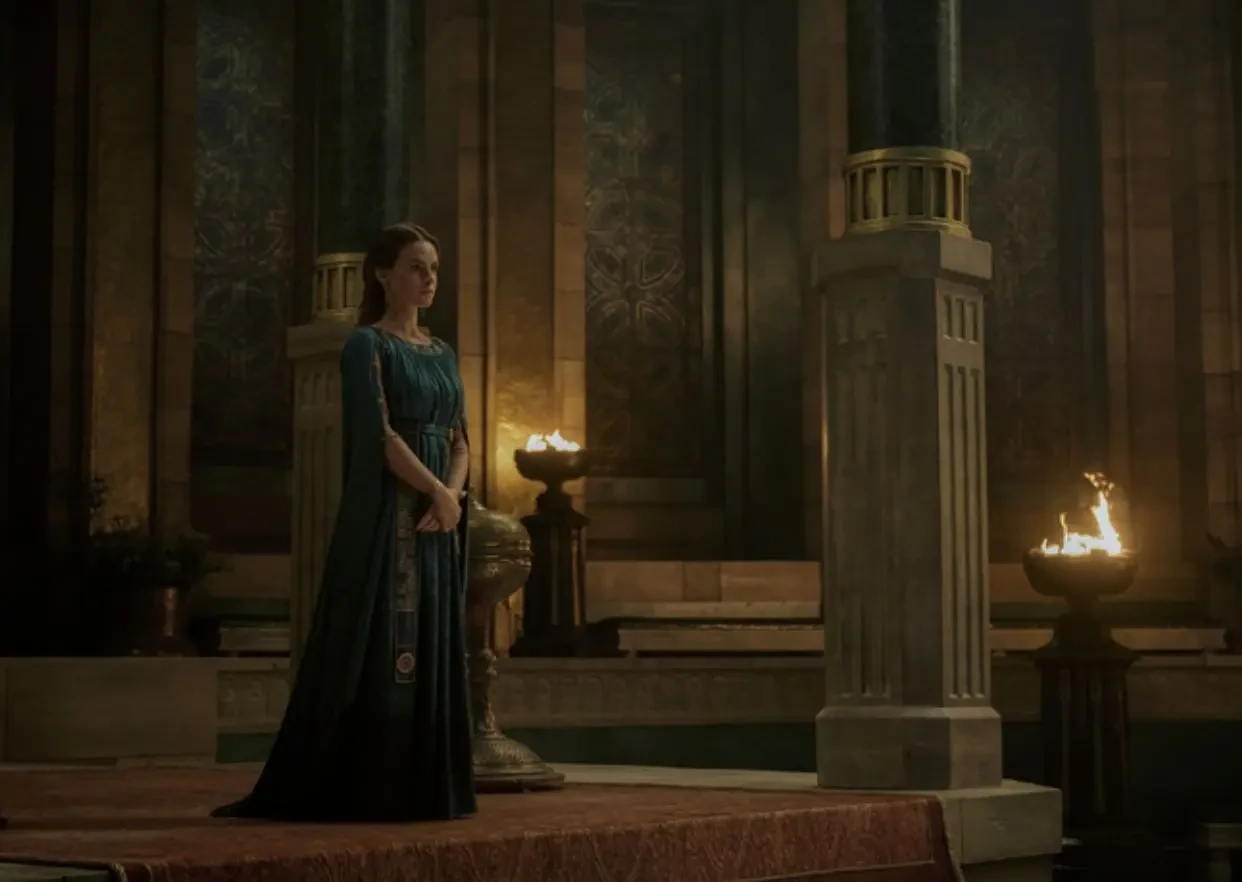
Eärien’s suicide is a harsh moment, but it is not unprepared. The episode progressively closes off her options. Ema Horvath’s performance is its clearest gain, particularly in the shifts between a cold exterior and inner collapse, while Trystan Gravelle gives Pharazôn a quiet menace. The consequences continue when Elendil is trapped and captured, before Anárion reverses the situation in episode four, saving his father and capturing Kemen. Númenor’s storyline thus becomes a conflict whose balance of power changes from one episode to the next. Meanwhile, Elrond’s insistence persuades Gil-galad to travel to Númenor himself, hoping to turn Pharazôn’s refusal into an opportunity to ask for help. Elrond accompanies him on the mission.
Marnokh and the journey to Gundabad: promising characters, excessive nostalgia
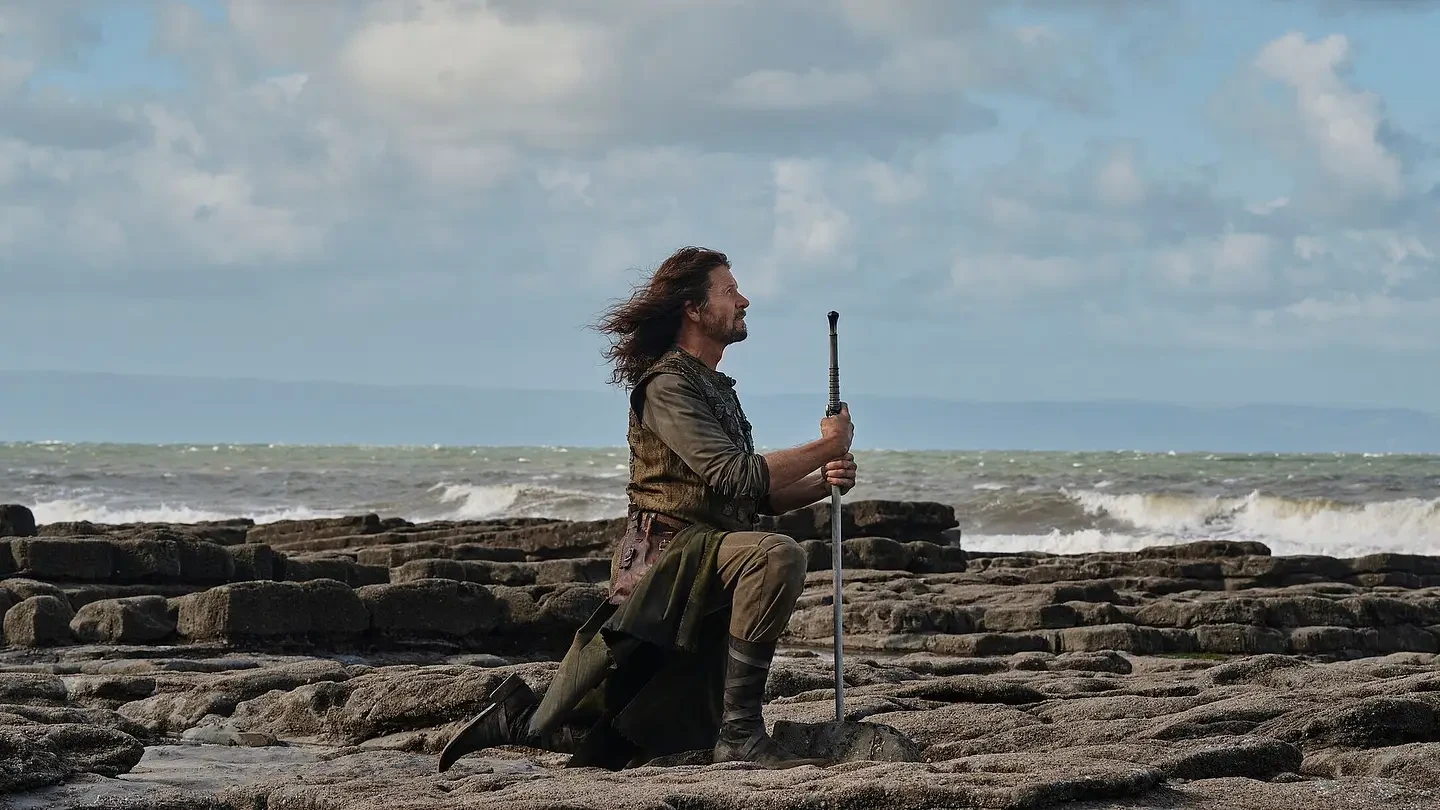
Marnokh offers a different perspective from the other Orcs. He does not want his people to become fuel for Sauron’s war, so he turns against him and brings the Dwarves and Elves information about the One Ring and the last smith, Mitali, who knows Celebrimbor’s secrets. His relationship with Galadriel and Arondir involves friction and comedy, but he does not suddenly abandon his violent nature, remaining an ally who cannot be trusted completely.
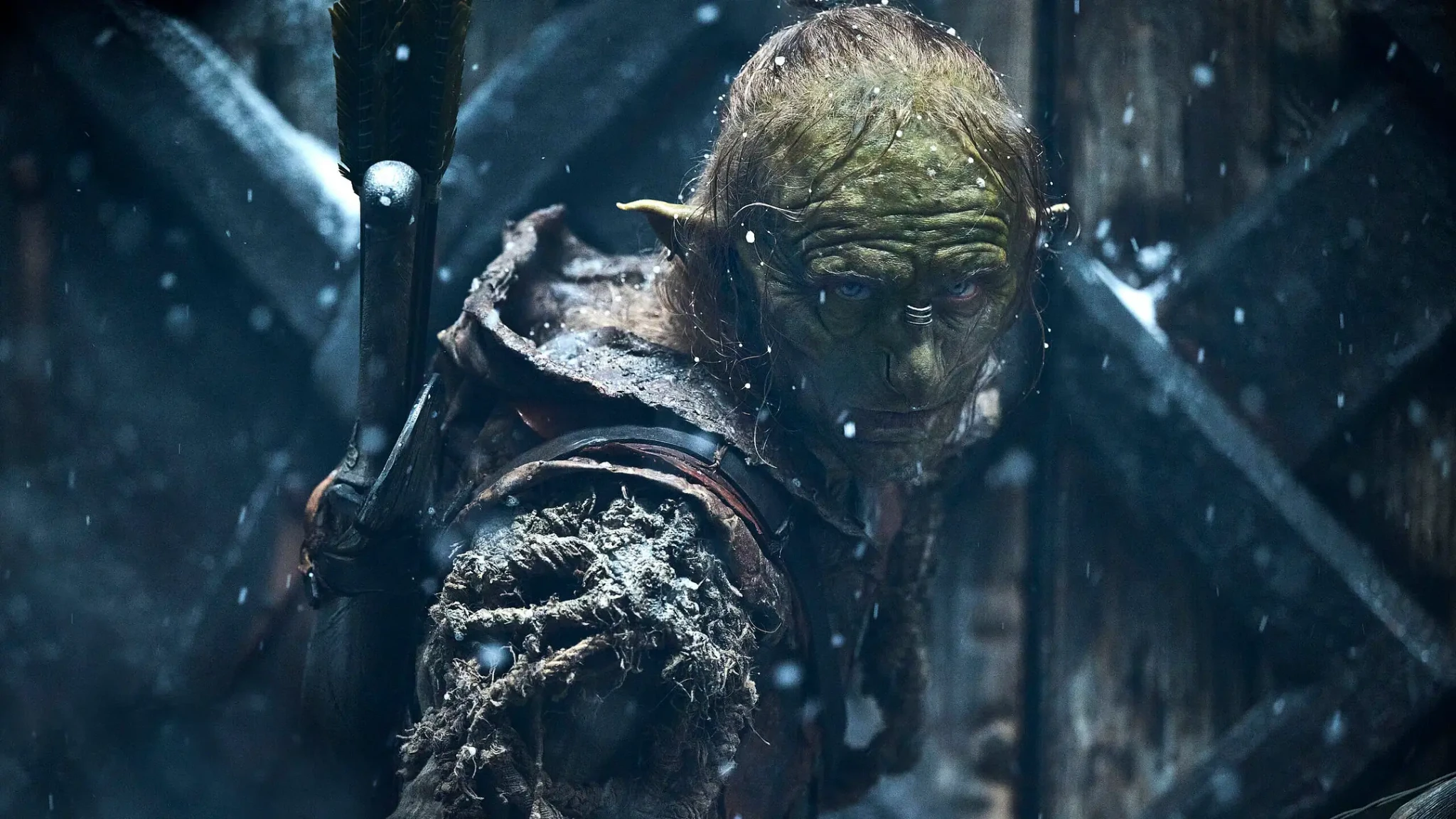
The problem is that the trio’s journey in the third episode borrows heavily from Frodo, Sam, and Gollum’s journey in Jackson’s films, from the way they move and some of their situations to hiding beneath a moss-covered tree trunk. Reference is not a problem in itself, but when new characters’ trajectory comes so close to an earlier one, their independent presence recedes. This extends the season opening’s reliance on a familiar construction rather than establishing an identity of its own. The first episode also gives us a glimpse of the beginning of Galadriel and Celeborn’s relationship, through a duel that becomes a dance and a shared dream of a forest kingdom. The scene explains her loneliness, but is long and precedes an abrupt transition to the battlefield.
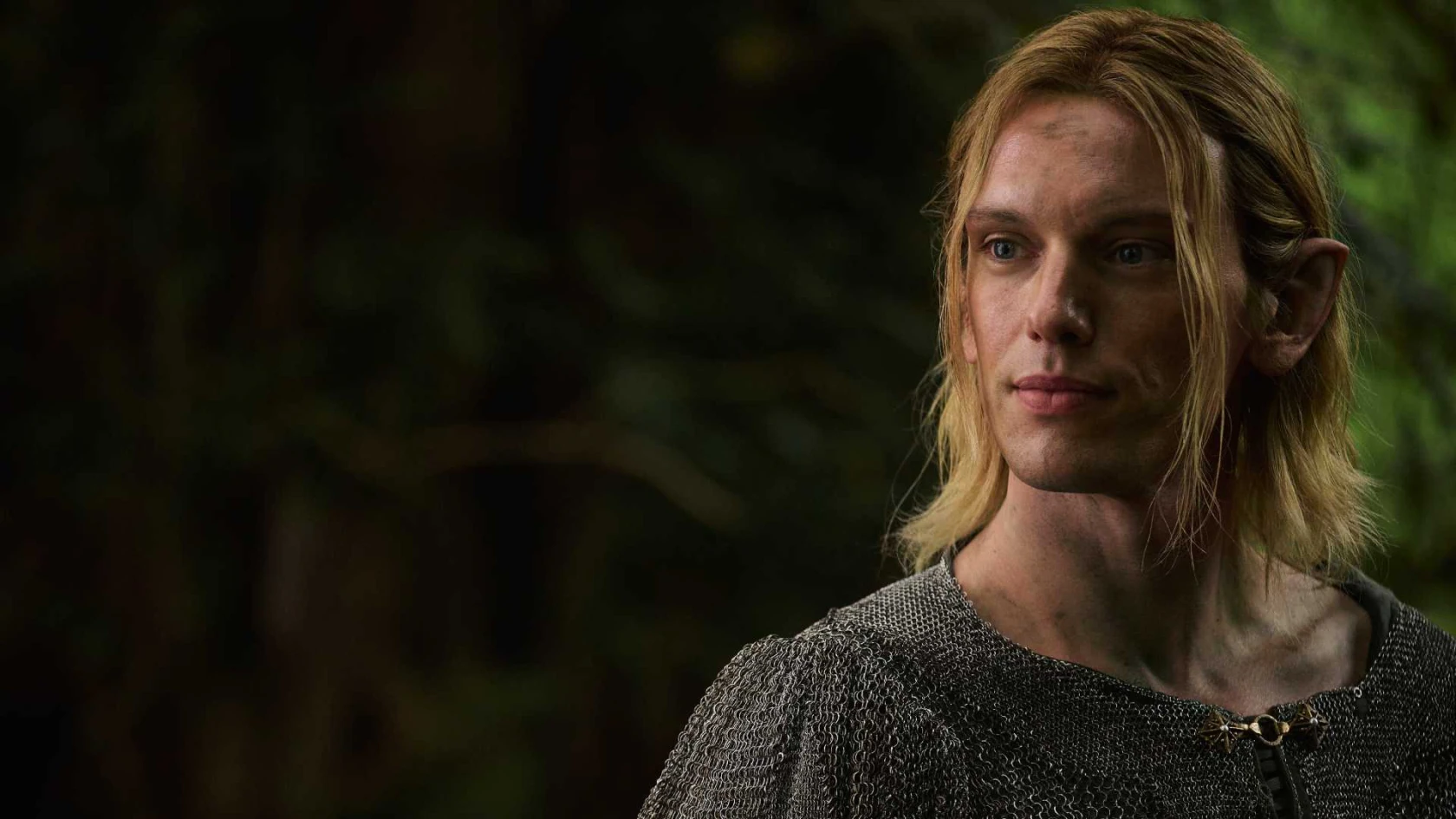
At Gundabad, we learn that Marnokh led his companions inside by pretending to surrender them, before helping them reach the cells. But Mitali died months earlier, removing the journey’s original objective. They then find Celeborn in a neighboring cell. His knowledge of the place’s secrets helps them escape, and his reunion with Galadriel gives the story a long-awaited emotional moment. Jamie Campbell Bower adds lightness and vitality to the character, but the moment does not erase the journey’s dependence on recalling earlier films.
Gandalf and Rhûn: an expansion that adds a new idea
In the third episode, the series moves to Rhûn, where the Dark Wizard tries to use a ring to restore life to a ruined land. But Khamûl returns from Mordor as Sauron’s follower, declaring his intention to unite Rhûn’s peoples and march alongside the Dark Lord. Meanwhile, Gandalf’s vision reveals that the Dark Wizard is Pallando, one of the two Blue Wizards, and that he killed his companion, contributing to Rhûn’s transformation into a wasteland. More importantly, Gandalf’s task is to save him rather than defeat him.
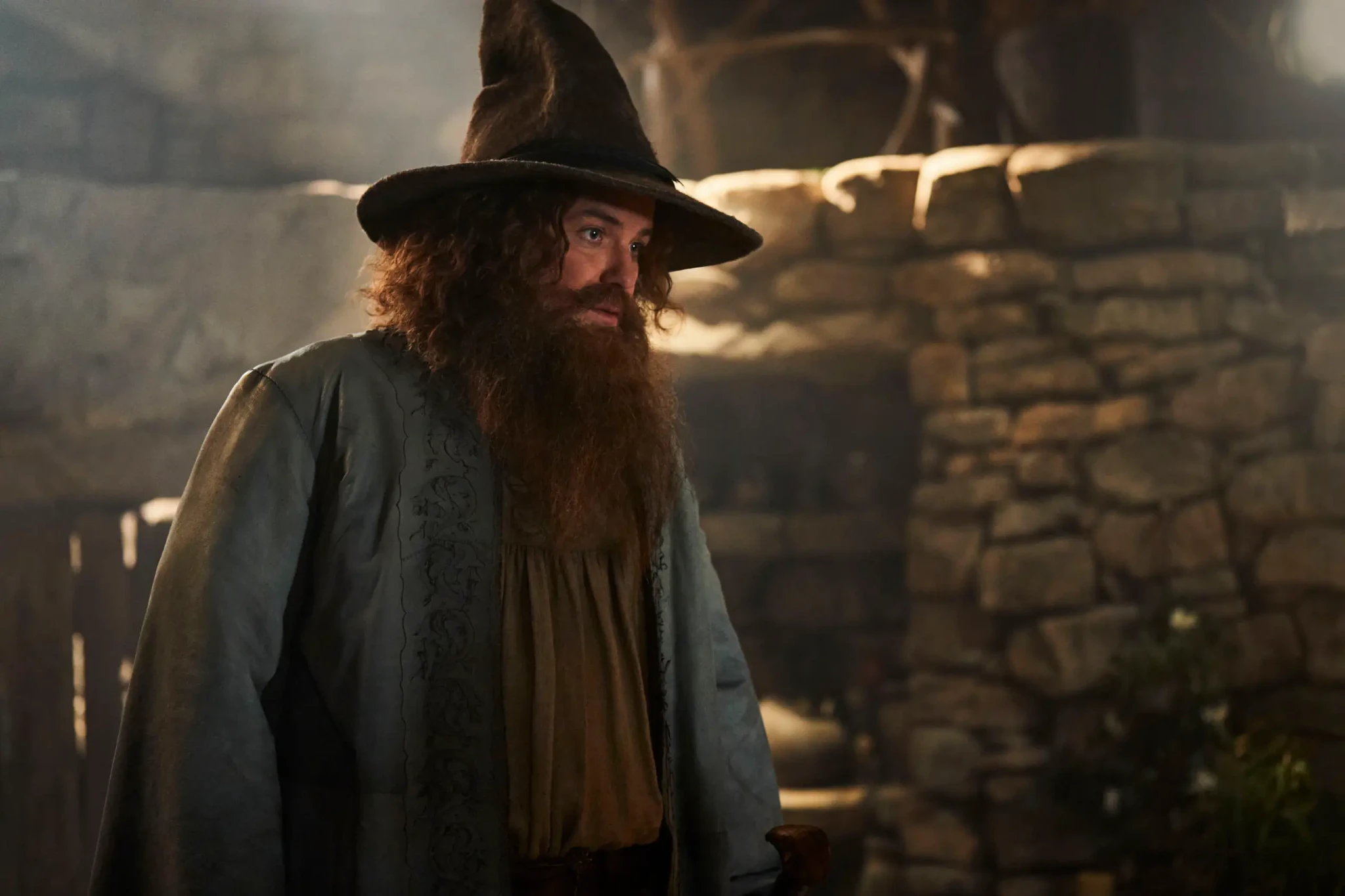
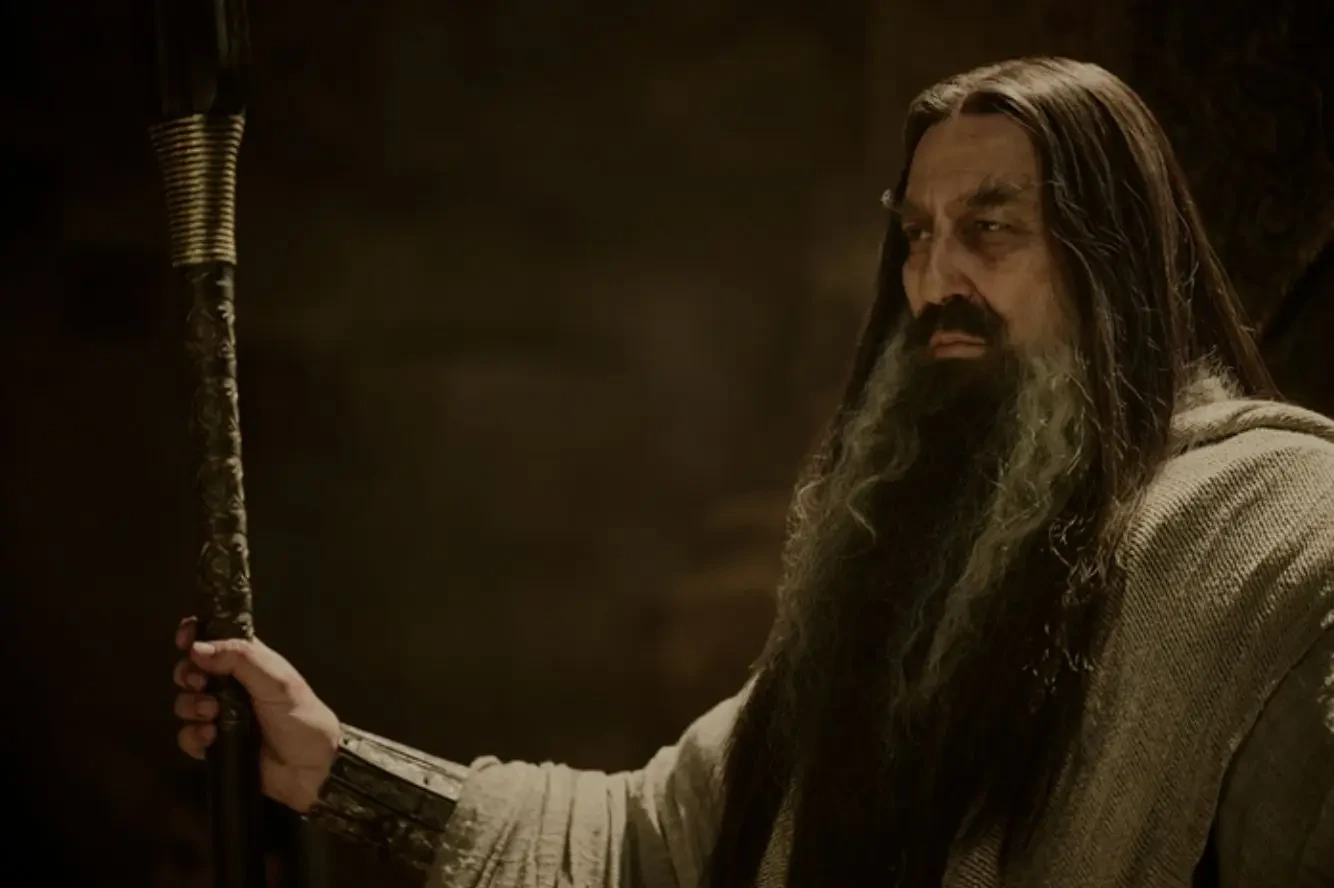
This turn introduces a different idea: not every adversary’s story needs to end in battle. The farewell to Tom Bombadil, and Gandalf’s return to find and put on his hat, give the storyline a quiet, affecting conclusion. But introducing Rhûn, the Dark Wizard, and Khamûl expands the story again. The success of this thread on its own does not guarantee a smooth integration with the others.
The Dwarves: a family conflict with a good premise and uneven execution
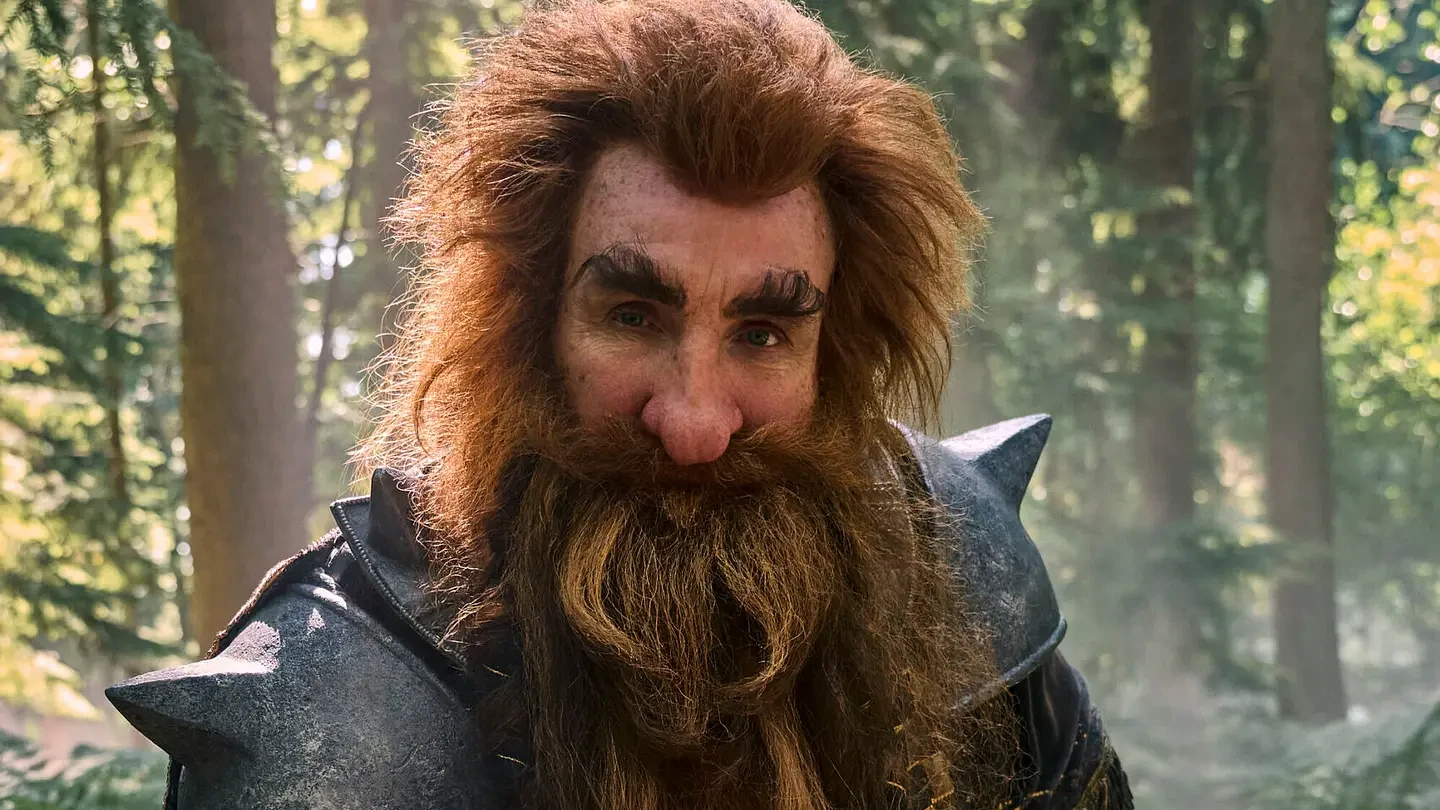
The struggle for Khazad-dûm’s throne remains the least successful thread. Thráin arrives as more than a brother seeking to reclaim his right. He is revealed to be working with Sauron and searching for the Seven Rings. He exploits the law allowing a king’s decisions to be questioned if a ring has corrupted his mind, challenging Durin IV’s claim to the throne. This gives the conflict a political and familial foundation. His threat to Disa through their former relationship also reveals his willingness to exploit other people’s vulnerabilities.
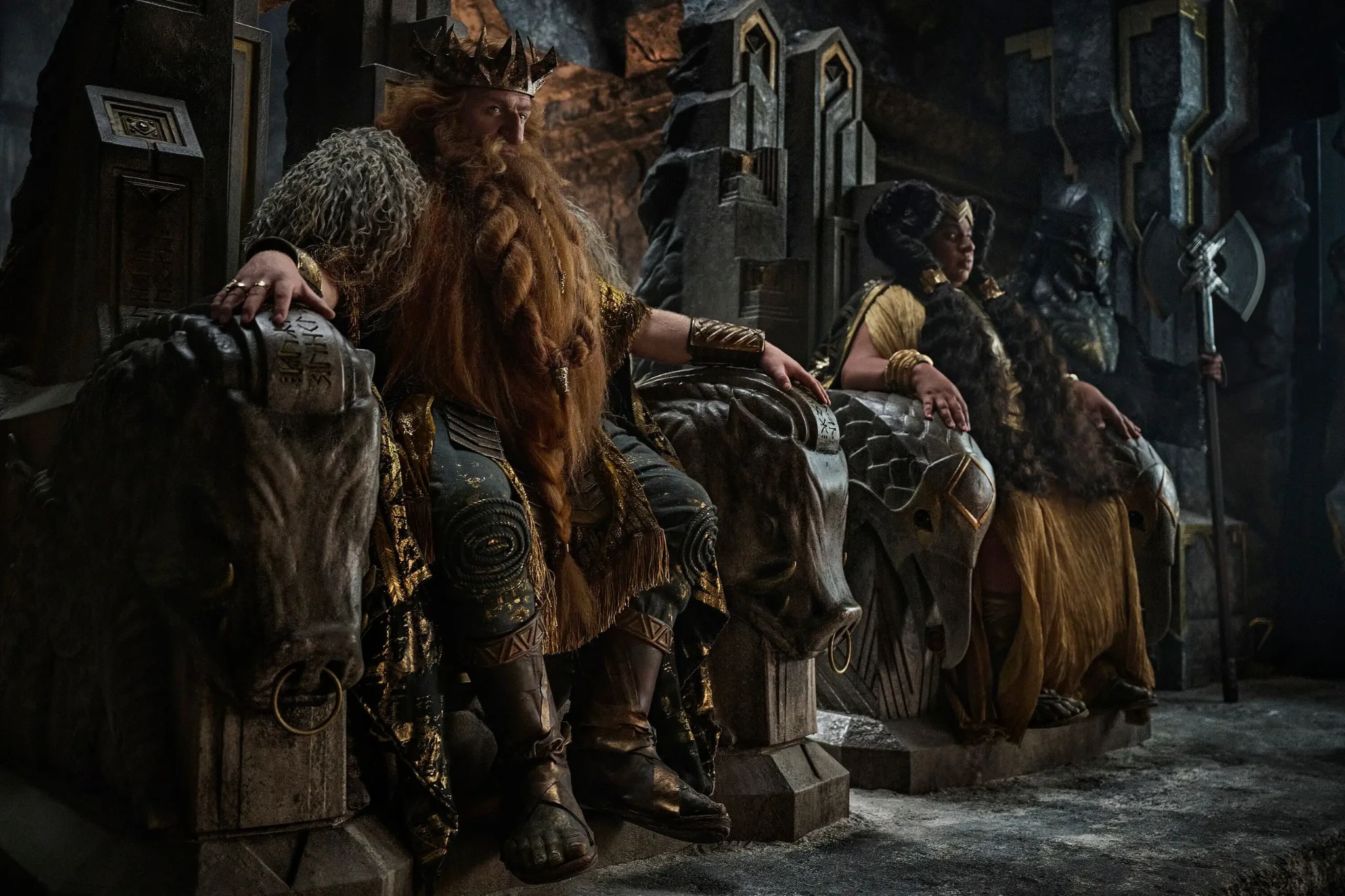
The episode deserves credit for having Disa tell Durin about the past rather than allow the secret to grow between them, and for making Durin seem willing to move beyond it and focus on the real danger. But Gamli’s last-minute arrival, telling his father he saw Disa with Thráin, prompts Durin to attack before the duel begins. The construction weakens here. The decision seems to arise from a hasty misunderstanding rather than a sufficiently prepared confrontation. Close, chaotic camerawork during the fight also makes the scene feel unintentionally comic, despite good performances and Bear McCreary’s strong music. The confrontation ends with Durin’s fall and Thráin taking the throne, without killing him despite being able to do so. This leaves open the possibility of an internal conflict in Thráin, without diminishing the seriousness of what has happened to the Dwarves.
Gundabad: losing Arondir and Theo’s transformation
The fourth episode brings several threads together. As Sauron tries to reach Gundabad on the flying beast, Galadriel, Arondir, and Marnokh reach the fortress, discover Mitali’s death, and free Celeborn. The beast’s appearance, particularly the shot of Sauron approaching it, gives the season a powerful image. The final confrontation atop the fortress also restores weight to the action after some earlier scenes faltered.
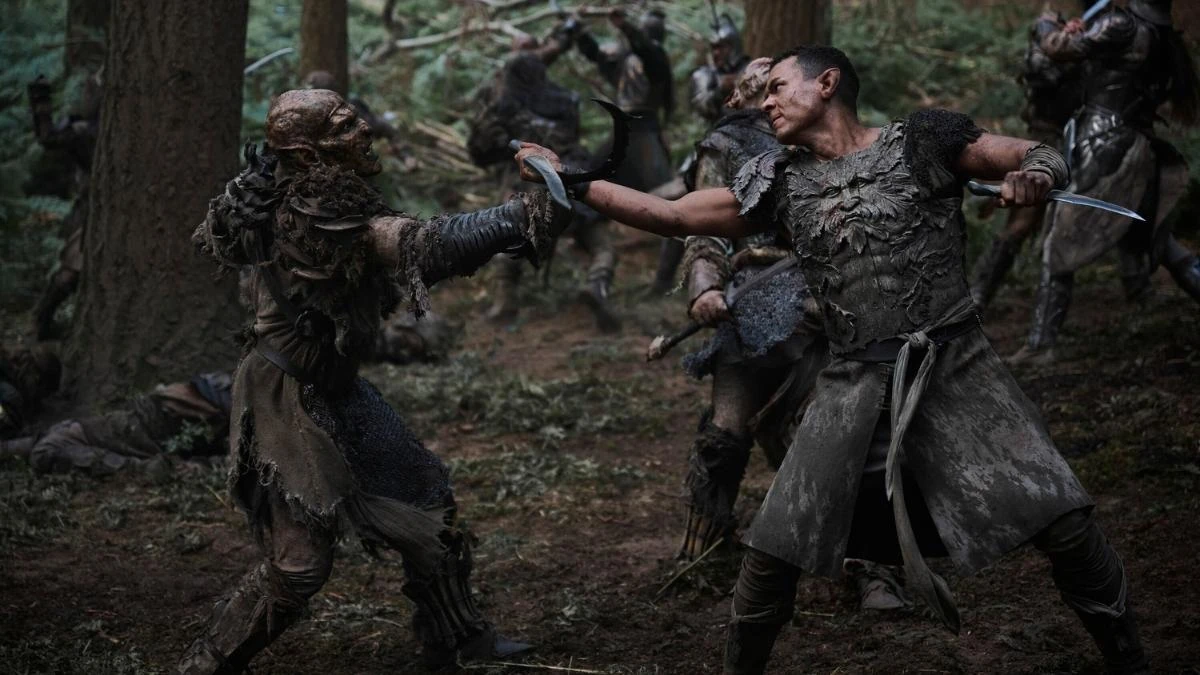
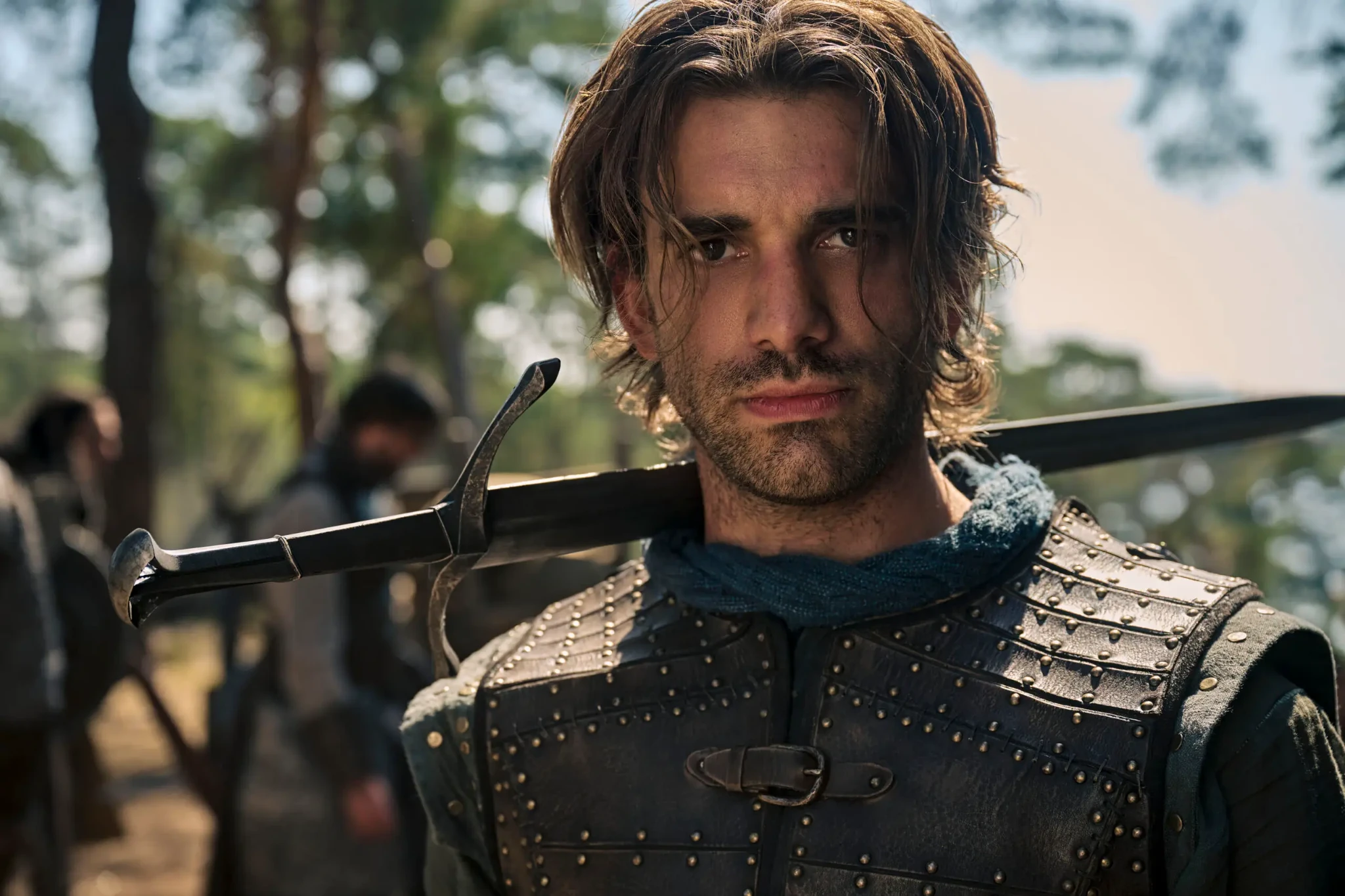
Arondir’s connection to Theo is established from the first battle, when he sees Theo’s face in that of a fallen fighter, so their final confrontation does not come from nowhere. But the real shock is not Celeborn’s appearance. It is the identity of the Ringwraith facing Arondir: Theo. The young man whose wish to know his father Sauron exploited has become his follower. Before this, one of the Nazgûl knocks Marnokh to the ground. Arondir then tries to reach Theo, as though their old relationship might give him one last chance to bring him back. But Sauron’s direct command settles the matter: Theo kills Arondir without hesitation. The ending is painful because Theo’s downfall claims the person closest to understanding and protecting him. Arondir’s death also carries clear weight because he has been part of the series from its beginning, rather than appearing merely to serve a passing surprise.
Images, performances, and the final verdict
Technically, the series can still create expansive, attractive scenes. Landscapes give the world its scale, Barad-dûr has an oppressive presence, and Númenor’s harbor is one of the opening’s most beautiful visual moments. The flying beast and the Ringwraiths also look frightening, and the music gives some confrontations additional weight. But the imagery is uneven. Some Elven locations, particularly Rivendell, look overly polished. Clothes and armor do not always convey a lived-in world, sometimes looking like costumes designed for the camera. Landscapes and wide compositions are stronger than some of the details immediately surrounding the characters.
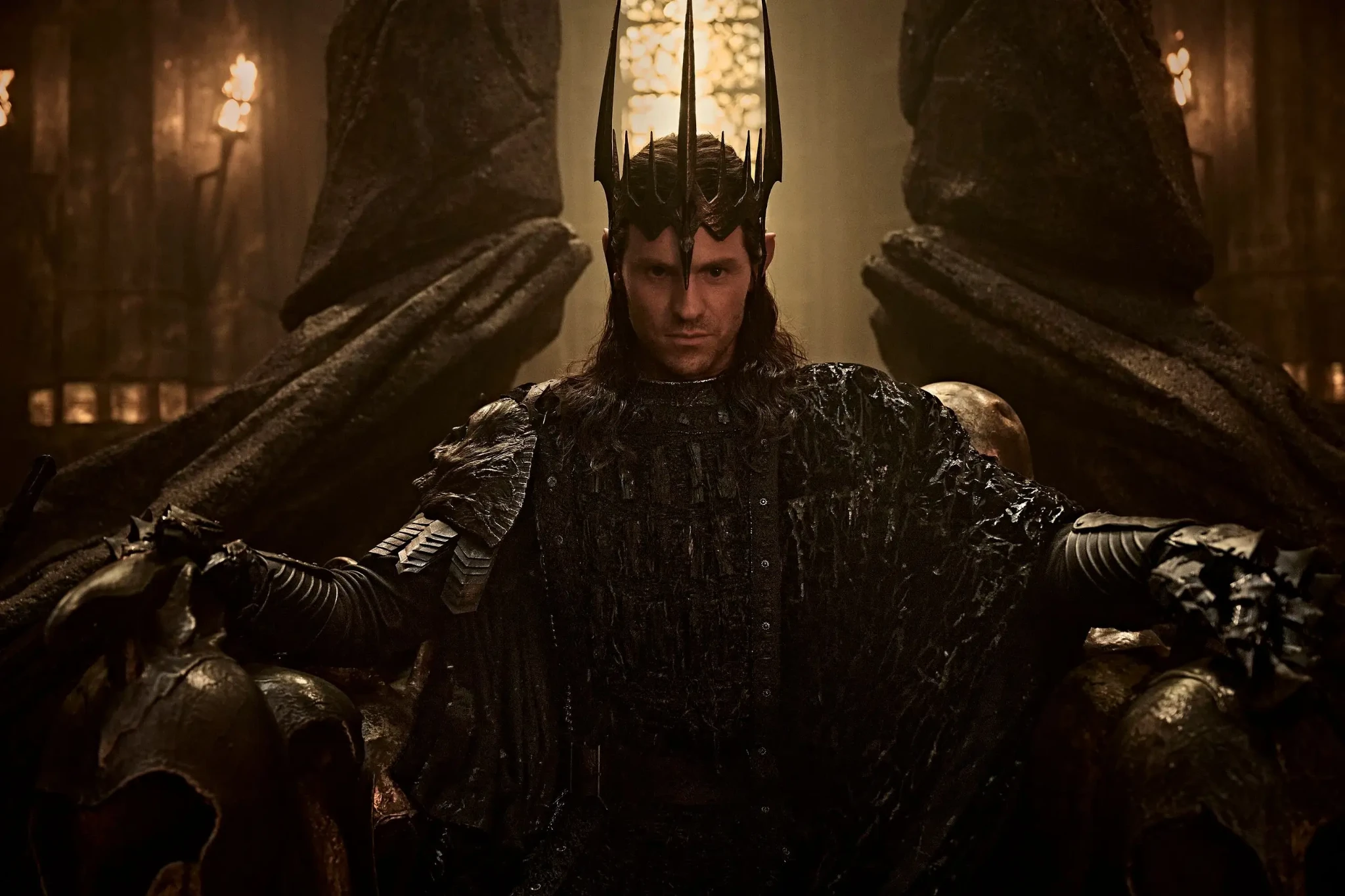
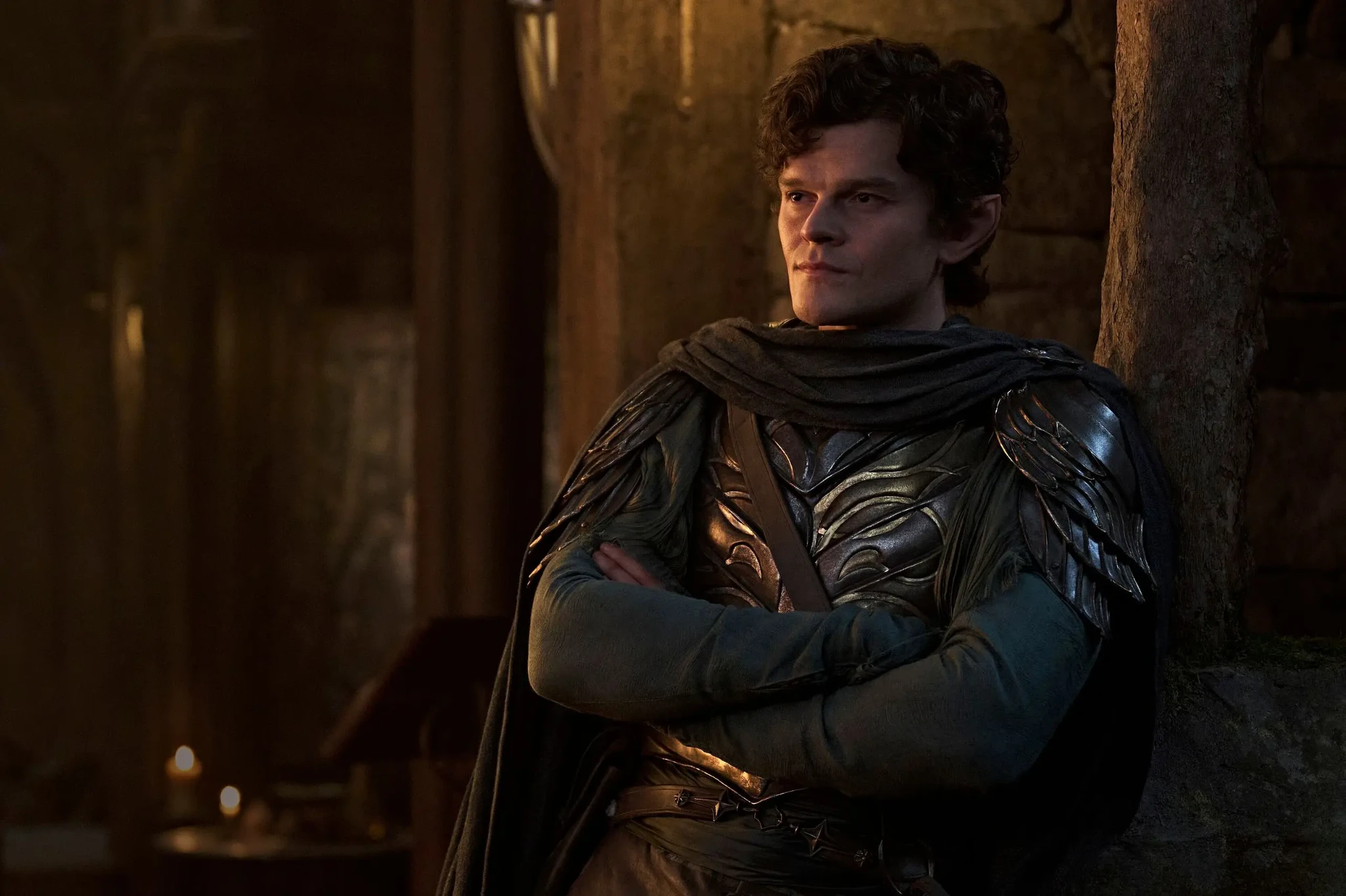
In performance terms, Charlie Vickers is the most consistent as Sauron, and Ema Horvath is the second episode’s clearest gain. Morfydd Clark gives Galadriel a mixture of loneliness and anger, while Ismael Cruz Córdova’s quietness as Arondir makes his ending affecting. Jamie Campbell Bower also adds a different presence as Celeborn. Owen Arthur and Eddie Marsan have good material for their conflict, even when the execution does not fully support them.
Final verdict
Final verdict
Ultimately, these four episodes offer an opening with real progress. Númenor’s political conflict is livelier, Sauron has a stronger and more dangerous presence, Theo’s transformation gives the war a personal cost, and Pallando’s revelation and Thráin’s rise open new paths. Conversely, the series still suffers from its story’s expansion at the expense of cohesion, scenes that borrow ready-made forms from Jackson’s films rather than trust their own characters, and weaknesses in the world’s logic and the execution of confrontations. Even so, the fourth episode brings several threads together around Arondir’s loss and Theo’s revelation, leaving a stronger impression than the journey’s beginning. My rating for the first four episodes: 8 out of 10. The question I leave with you: were Theo becoming Sauron’s servant and Arondir’s death the strongest parts of this opening, or do the reliance on recalling Jackson’s films and the crowded storylines still prevent the series from establishing an identity of its own?
AUDIENCE VOTE
Do you agree with the MB rating?
Choose once from this browser. You can change your answer at any time.