The review
Two timelines, one unsettling question
At Harvard in 1958, Ted is sixteen, gifted at mathematics and much younger than most people around him. He wants to be taken seriously beyond his talent, yet has trouble finding a place among other students. In 1995 and 1996, investigators approach a man who has remained hidden for years. The film keeps the two portraits in conversation rather than relying on the mystery of an identity the audience already knows.
The past stays close to Ted, while the later investigation approaches him through evidence and language. As a result, the interesting question is not who sent the bombs, but how the investigators find him—and how carefully the film can distinguish what it knows about his youth from what it imagines.
When the manifesto becomes evidence
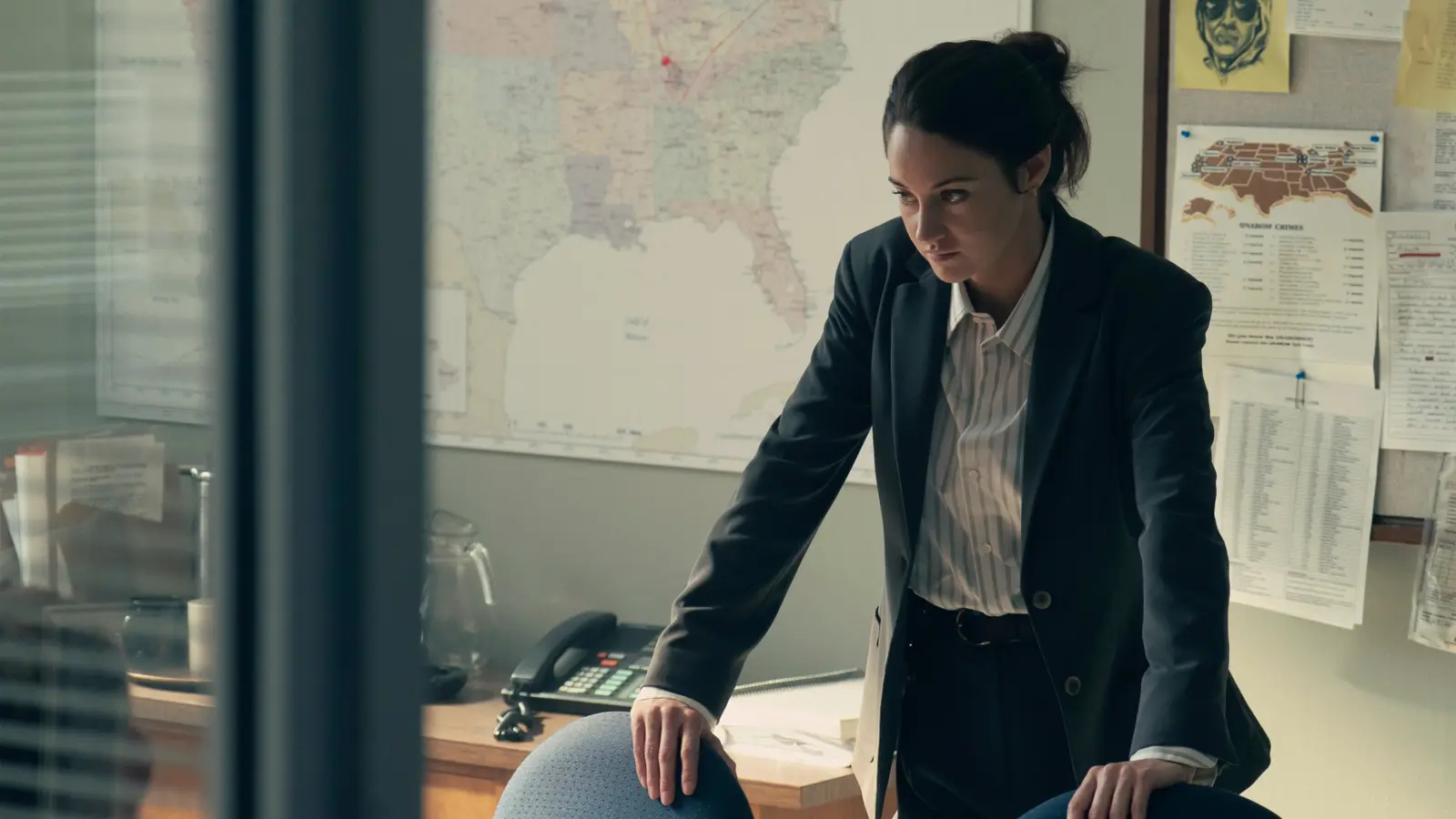
Joanne Miller looks beyond a narrow picture of a technically capable bomber. She reads the manifesto's vocabulary, argument and tone, and suspects an educated writer with a complex inner life. I like the reversal: the man spent years concealing himself, but his need to make the world listen gives investigators a large sample of his own language.
Shailene Woodley makes Joanne persistent rather than invincible: her reading of the case is resisted, so she keeps assembling what she can support. The character gives the investigation a clear dramatic perspective, and that very clarity also calls for a distinction between the movie's version and the history behind it.
An investigation larger than one character
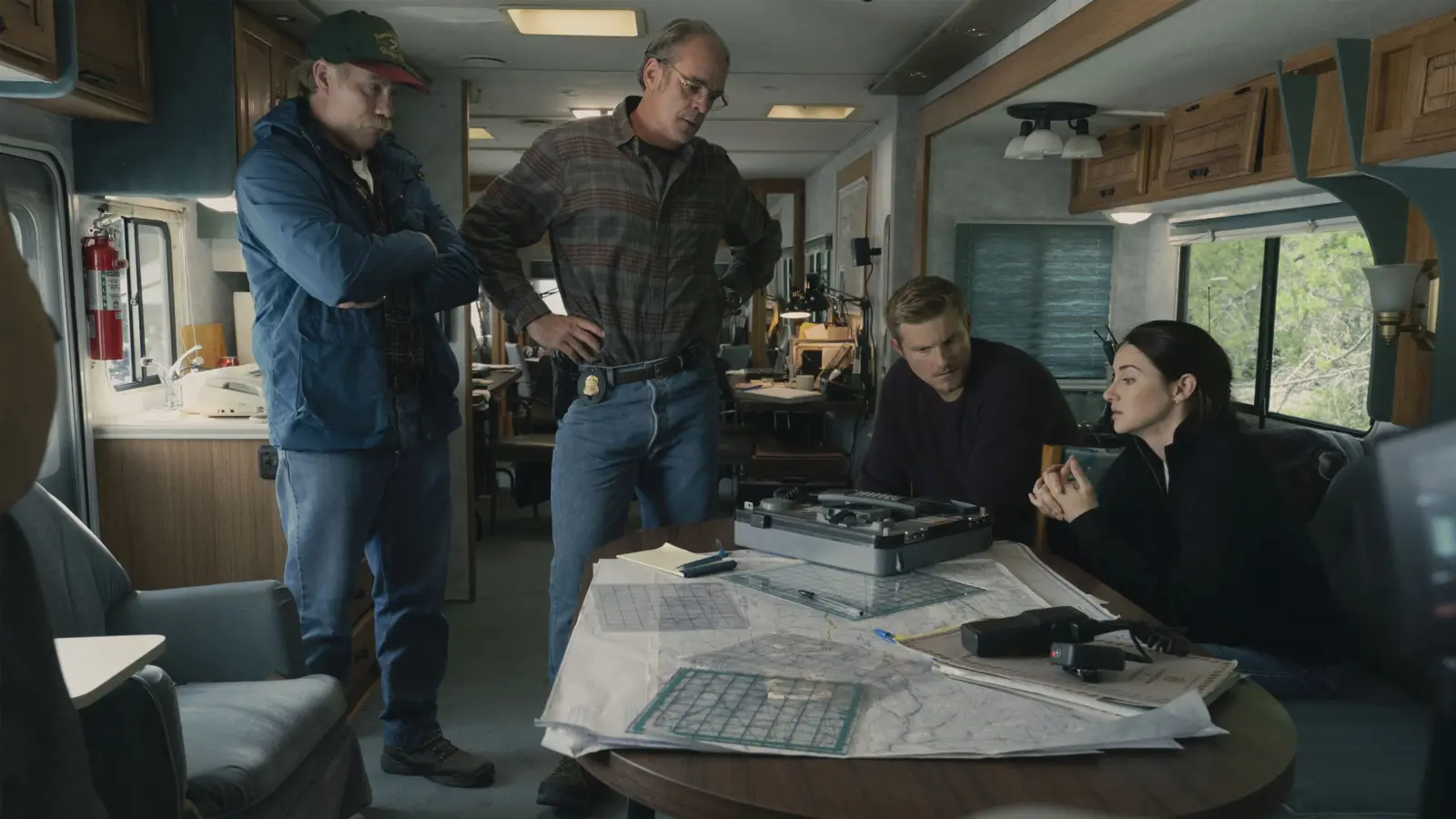
Joanne Miller is a fictional character. The actual search was the work of many investigators, analysts and people close to Kaczynski. After the manifesto circulated, his family noticed similarities to his writing; his brother David supplied writing samples to the FBI, and linguistic comparison became part of a much broader investigation.
I understand the film's decision to gather several strands into one character: it makes a complicated case easier to follow. But it would be misleading to leave thinking that one investigator solved it alone. The shared work and the family's painful role are as consequential as the movie's neat detective thread.
The teenager and the professor
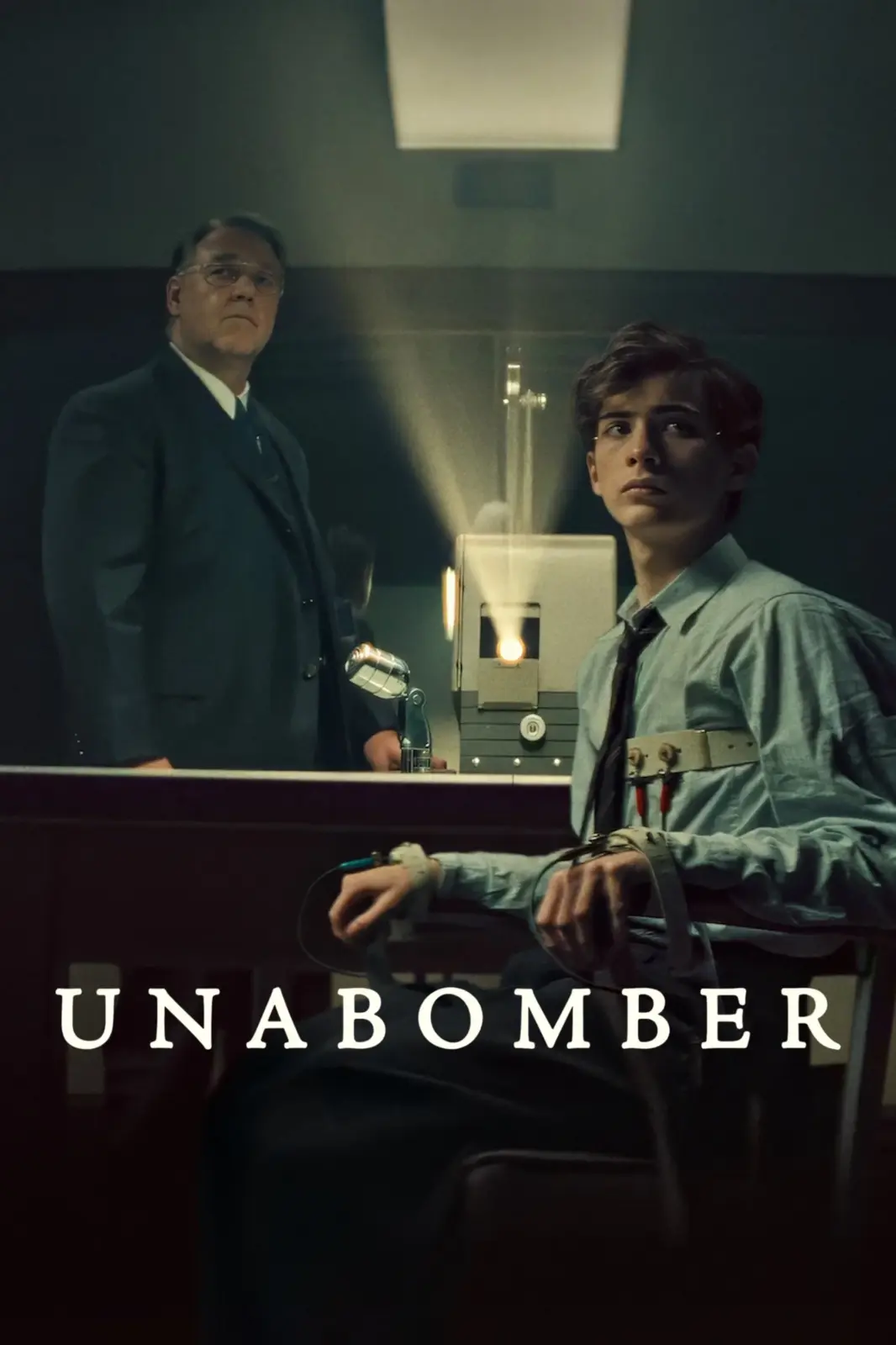
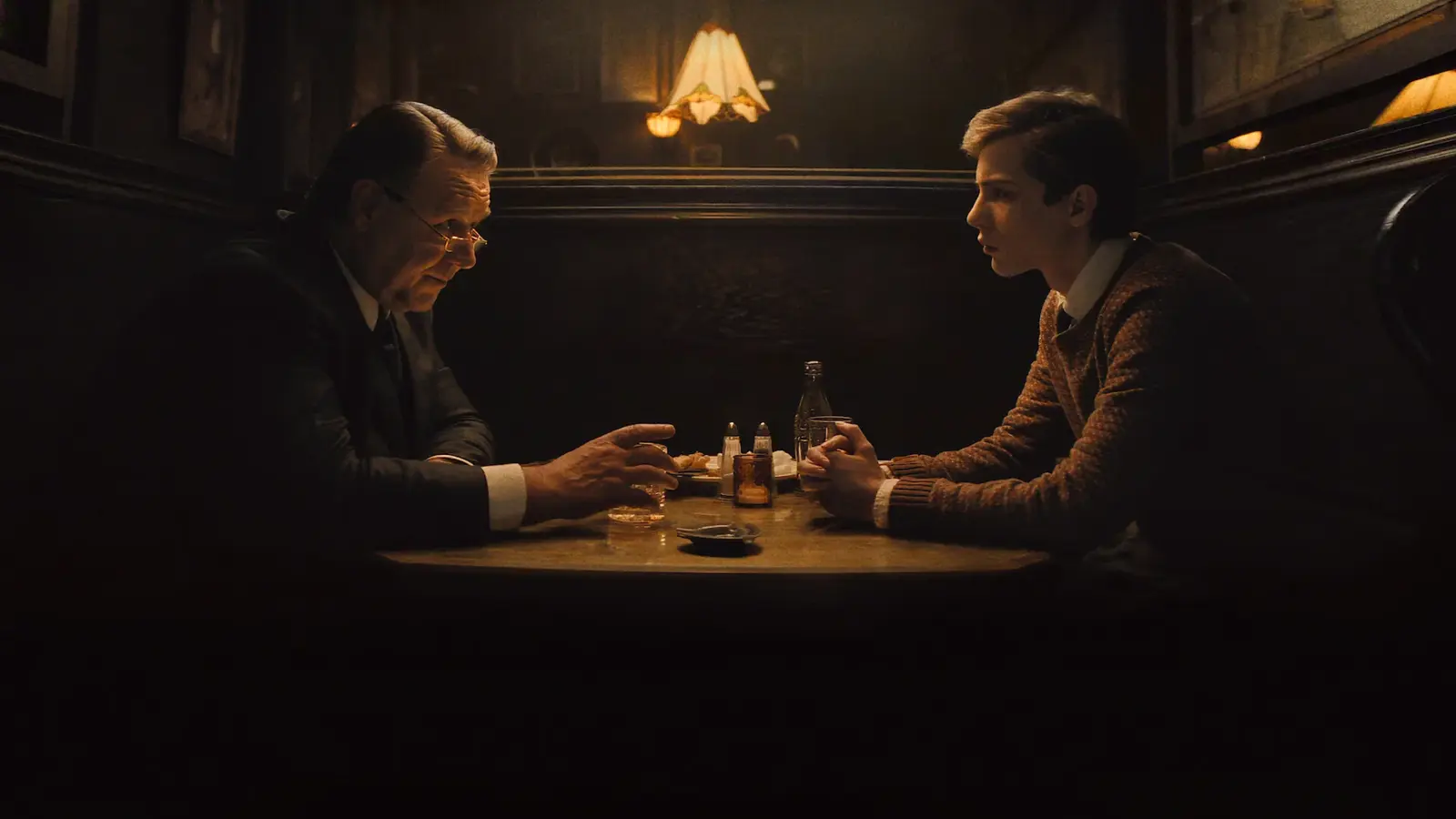
Young Ted is awkward, brilliant and eager to be valued. Henry Murray offers a programme that initially sounds like intellectual discussion. As the film reveals its methods, those exchanges become psychological pressure: students' personal convictions are attacked while their reactions are observed. The tension comes less from physical threat than from how unequal that relationship is.
Ted believes he has found people willing to hear him, then discovers that what he confided to them can be turned against him. The betrayal of trust hits harder than any single insult. Knowing what he will become makes every small change in his responses unsettling, although that knowledge belongs to us as viewers, not to the people around him then.
Russell Crowe and Murray's certainty
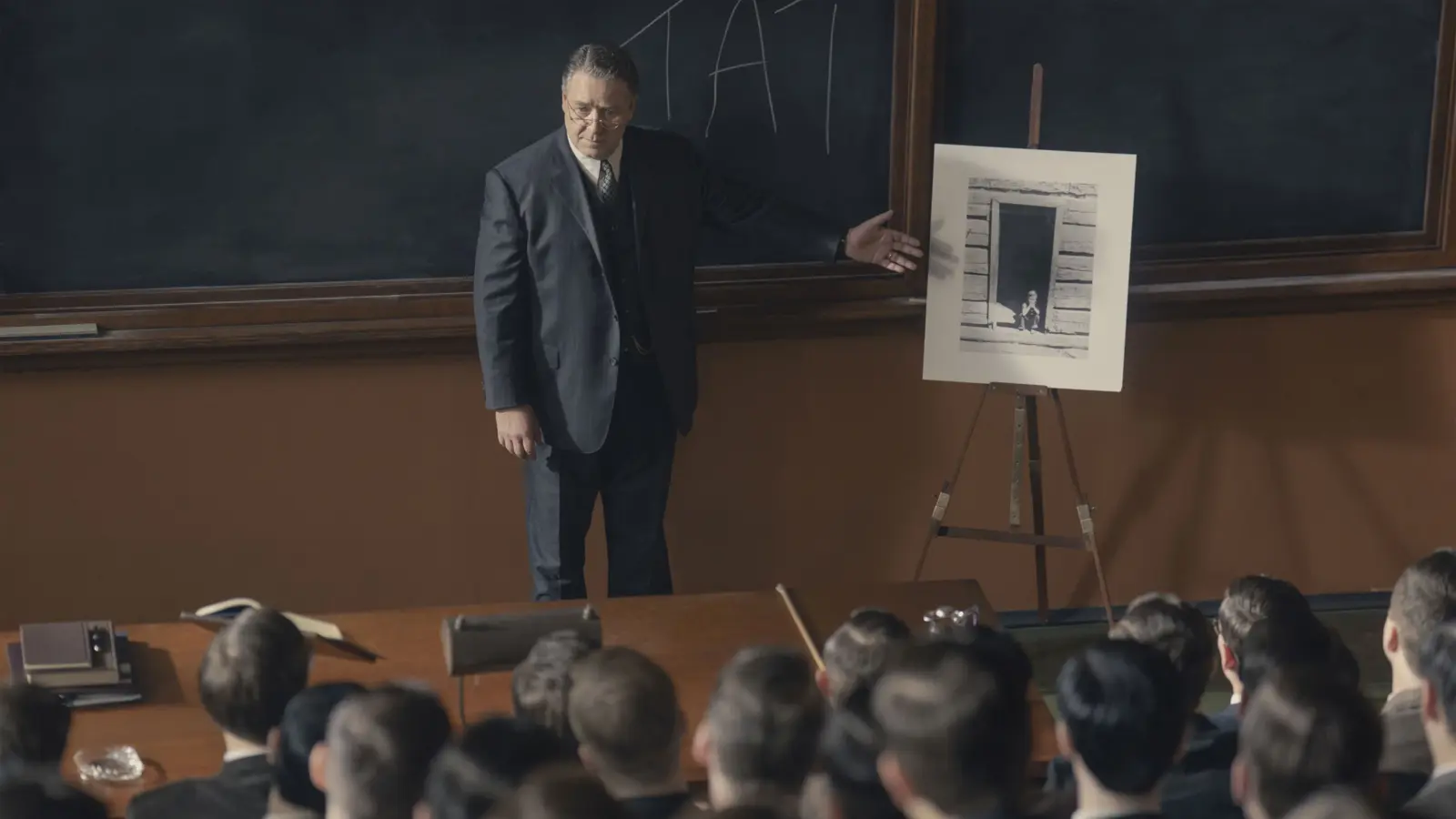
Russell Crowe gives Murray a forceful presence without playing him as a simple villain. The professor sees himself as a researcher pursuing a truth about people under pressure. That conviction is precisely what makes him troubling: he treats students' vulnerability as useful data, while the people in front of him pay a personal cost.
The film's most effective scenes let his composure do the work. Murray rarely needs to raise his voice for the imbalance in the room to become clear. Opposite him, Ted's increasing need to prove he cannot be broken makes their relationship feel like a contest neither should have entered.
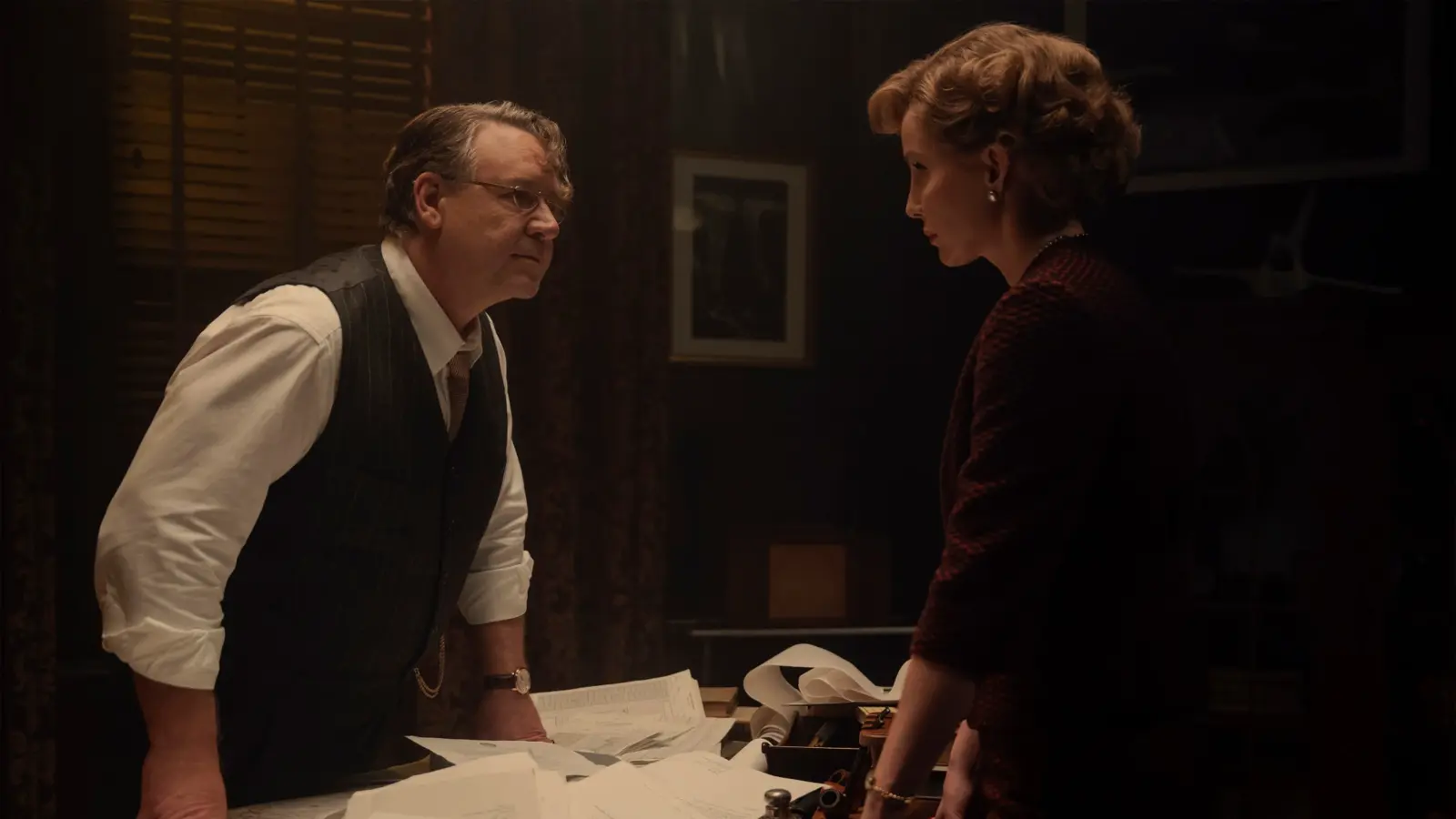
Did the Harvard experiment create the bomber?
This is the film's most compelling and most dangerous suggestion. Its story connects the Harvard experience to Ted's later emotional armour, isolation and appetite for control. As drama, that gives his development a shape. As history, it cannot establish that the experiment caused his crimes; other participants did not follow the same path, and the direct causal link has not been proven.
Years of choices, anger and radical convictions cannot be reduced to a single event. I can take the experiment seriously as one possible part of his story without treating it as an excuse. The film is stronger when it leaves that question open, and weaker when it seems close to answering it for us.
Jacob Tremblay's gradual change
Jacob Tremblay has the difficult task of playing someone whose future the audience already knows. He starts with hesitation and a desire for acceptance, then gradually lets pride, distance and a sharper need to dominate enter the performance. The change has force precisely because the menace is not fully present from his first scene.
His scenes with Crowe carry more than a clash of personalities: one man believes everyone can be broken under enough pressure; the other begins to define himself through refusing to break. That tension makes their encounter the film's dramatic centre without making it a complete explanation for the violence to come.
A final encounter built on reversed power
In the movie's final meeting between Ted and Murray, Ted reveals that the admiring letters the professor believed came from fellow academics were his own invention. He gave Murray a flattering illusion and then took it away. The scene reverses the earlier experiment: the professor who studied another person's reactions is suddenly made to feel observed and manipulated himself.
The parcel Ted leaves behind draws on what we know about his future: for a moment it looks terrifying. Instead of a bomb, it contains Moby-Dick. I like the tension without an explosion and the way the scene links their argument about nature and human control. I read these details as the film's dramatic construction, not as an authenticated record of their real final exchange.
Understanding a motive does not excuse violence
The film lets Ted voice his critique of technology, industry and humanity's relationship with nature. None of those ideas makes bombing people a logical or defensible response. From 1978 to 1995 his attacks killed three people and injured many others. The victims must remain visible even while the screenplay explores the attacker's mind.
The same hunger to broadcast his ideas eventually helped expose him. Once his manifesto was circulated, people who knew his writing could recognise its echoes. The man who found concealment in isolation also needed to be heard; that need opened a route through the anonymity he had maintained for years.
Joanne's compromise and the cost of the pursuit
The film also gives Joanne an uncomfortable decision involving a possible CBS report. A premature broadcast could alert the suspect, so she trades information to delay publication. The choice helps the investigation in the story, but exposes the family to public attention. There is no clean victory for everyone involved.
I appreciate that complication. It gives Woodley's character more to do than win arguments against colleagues and reminds us that even steps toward an arrest can carry a cost for people outside the task force.
Strong construction, familiar visuals
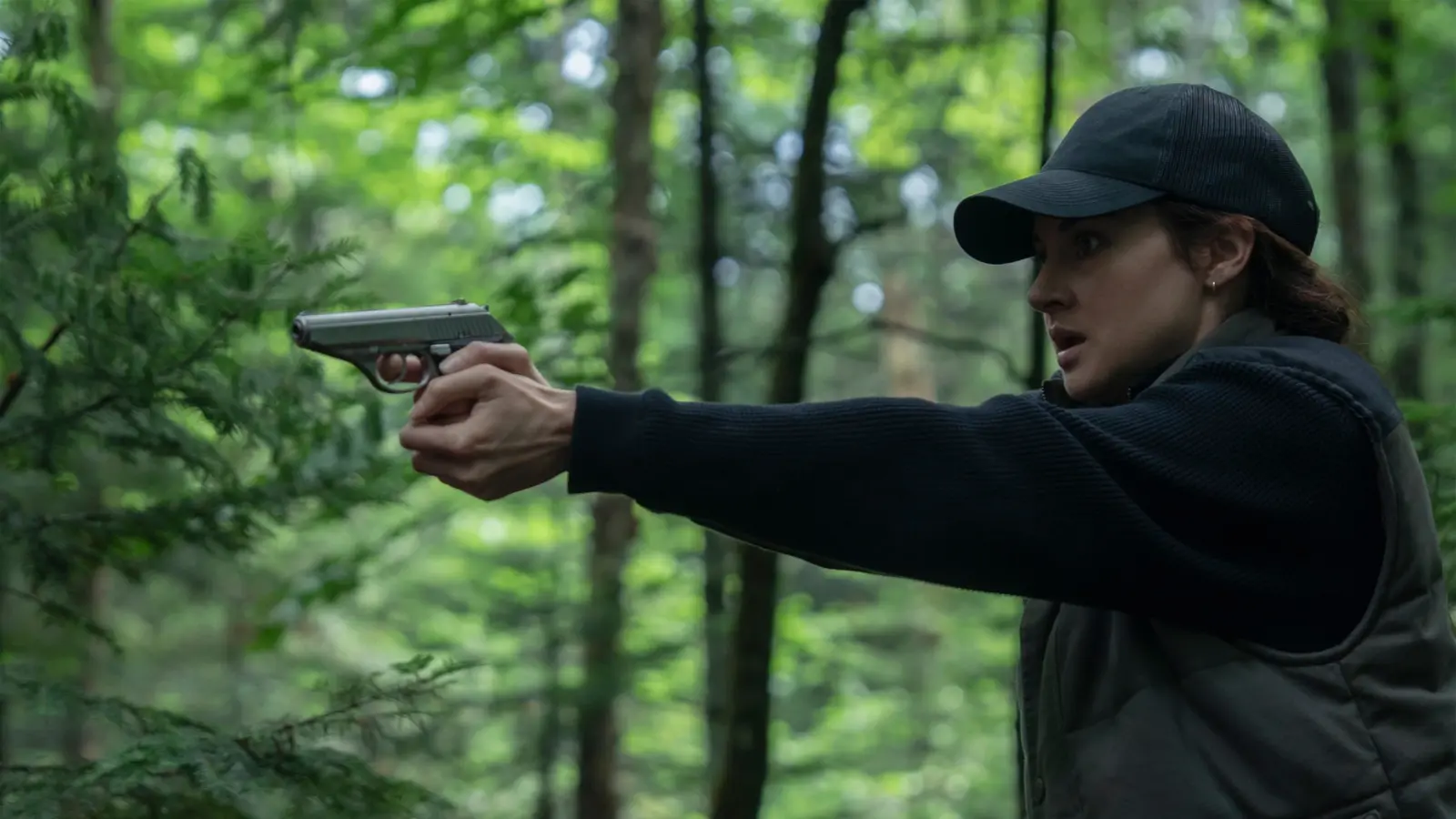
Visually, Unabomber rarely surprises me. Its images do their job, but few frames linger after the film ends. The editing matters more: a discovery in the 1990s makes a scene at Harvard feel newly charged, and a detail from Ted's youth changes how we watch the investigation. The two threads keep putting a face beside the shadow it cast later.
That structure gives the film an identity stronger than its visual style. It also makes the pacing more secure than an attempt to compress the entire decades-long pursuit into one feature would have been.
The strengths and the limits of dramatization
The interwoven timelines, Tremblay and Crowe's performances, Ted and Murray's tense relationship and the place of language in the investigation are its strongest elements. Choosing a focused period of Ted's life gives the movie room to develop those relationships instead of racing through every event.
Its main limitation is how seductive its explanation can feel. A fictional investigator streamlines a complex collective effort, while the Harvard experiment risks looking like a definitive cause. Neither shortcut ruins the drama, but both matter when the people and crimes behind the story were real.
Final verdict
Final verdict
Unabomber is a gripping psychological crime drama at its best when it lets a gifted teenager and a convinced professor challenge each other's need for control. The 1990s investigation gives that relationship pace and a chilling payoff through the written word. I admire its structure and performances more than its imagery, and I wish it left a clearer distance between a possible influence and a proven cause. Ted's Harvard experience can be examined without becoming an explanation that absolves his later decisions or erases his victims. My rating: 7.5/10.
Your turn
Did the focus on the Harvard experiment make Ted Kaczynski more understandable, or did the film give it too much weight in explaining his crimes?
AUDIENCE VOTE
Do you agree with the MB rating?
Choose once from this browser. You can change your answer at any time.