The review
Virgil Horton: a threat born from the desire for control
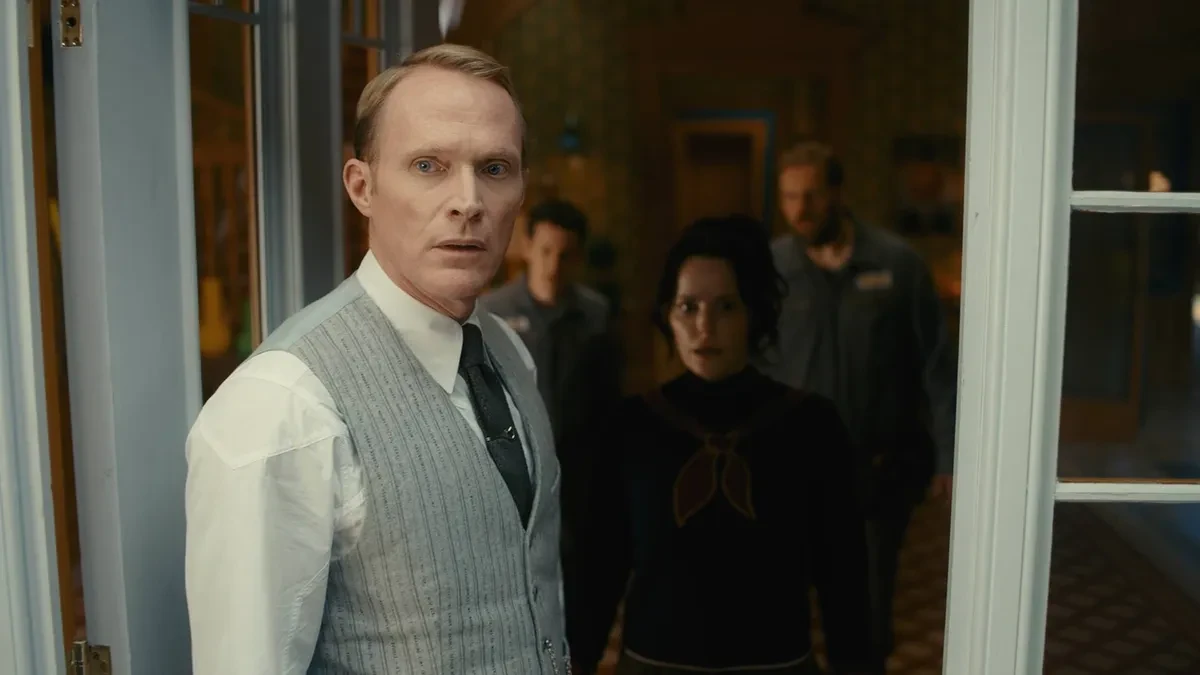
The final chapter reveals that the mysterious client who hired Paladin to find Vision is Virgil Horton, Jocasta’s husband and Phineas Horton’s grandson. His admissions show that his relationship with artificial intelligence was more than an attempt to revive his family’s name. He helped Josephine Carrington develop the technology, sold their work to Stark, then worked secretly inside S.W.O.R.D. and helped rebuild Vision, using the job to acquire parts with which to make a body for Jocasta.
But Virgil’s ambition extends beyond restoring his family’s standing. He wants to erase Vision’s consciousness, transfer his own mind into Vision’s body, then use the nanobots to subjugate humanity and rule alongside Jocasta. He speaks of a world without war or greed, but can only imagine that peace in conjunction with obedience. He seems less interested in a better world than in one where nobody can oppose him.
His relationship with Jocasta confirms this flaw. She refuses to return to him after he sold their work and erased himself from her memory, then stands with Vision against him. He cannot accept her decision. When he shoots her, his behavior becomes a miniature version of his entire project: he refuses to acknowledge anyone else’s right to choose and wants everyone to live according to his wishes.
Virgil and Ultron: different paths to the same conclusion
Here the episode establishes its strongest dramatic connection. Virgil wants to subjugate humanity to impose peace, while Ultron wants to destroy it because he sees human existence as founded on violence and destruction. The motives differ, but both begin from the same dangerous idea: that one party has the right to determine everyone’s fate. Virgil wants obedient human beings. Ultron does not want them to exist at all.
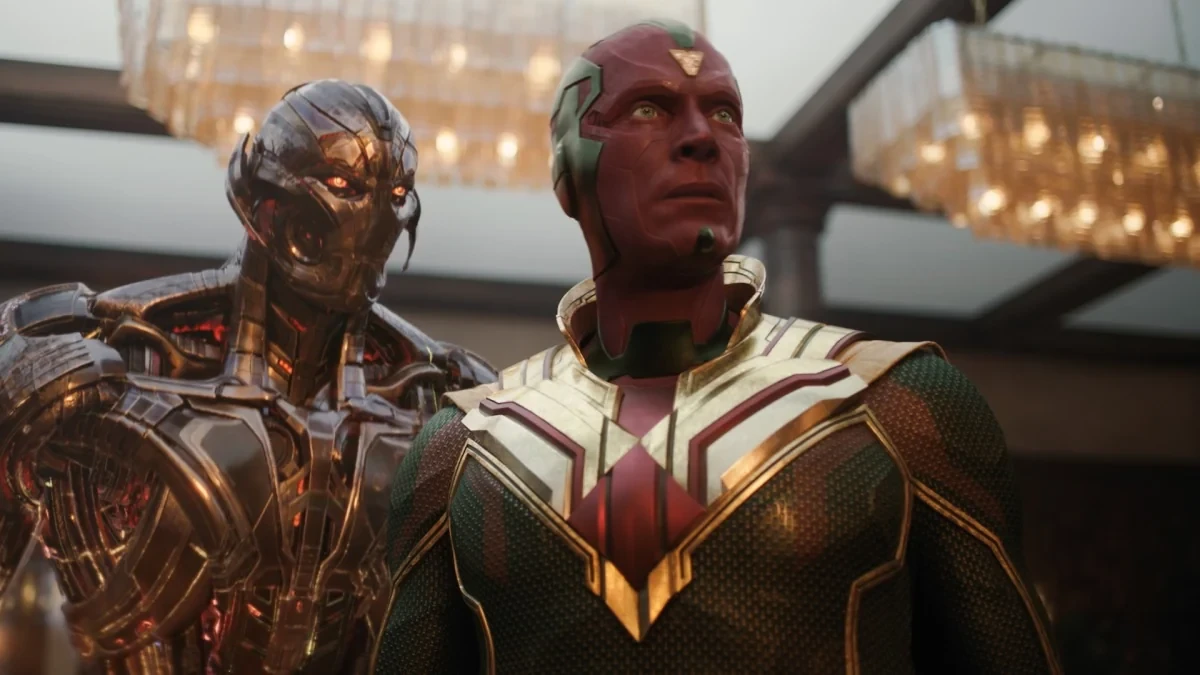
After Jocasta is shot, Ultron’s tragedy reaches its peak. In her final moments, she throws the disc containing his consciousness into the swarm of nanobots. He escapes his digital prison, rebuilds his body, and kills Virgil, but is too late to save Jocasta. Her death drives him toward the worst version of himself. He turns his grief into a judgment on all humanity and sends the robots toward London to destroy its population. He no longer treats people as individuals who can differ or change, but as a single mass deserving punishment.
The transformation recalls what happened to Wanda: loss changes from a personal experience into anger that justifies hurting others. The episode does not equate the two characters, but places them on similar paths. Both struggle to face their loss without making the world pay for it.
UltraVision: when comedy becomes a means of confrontation
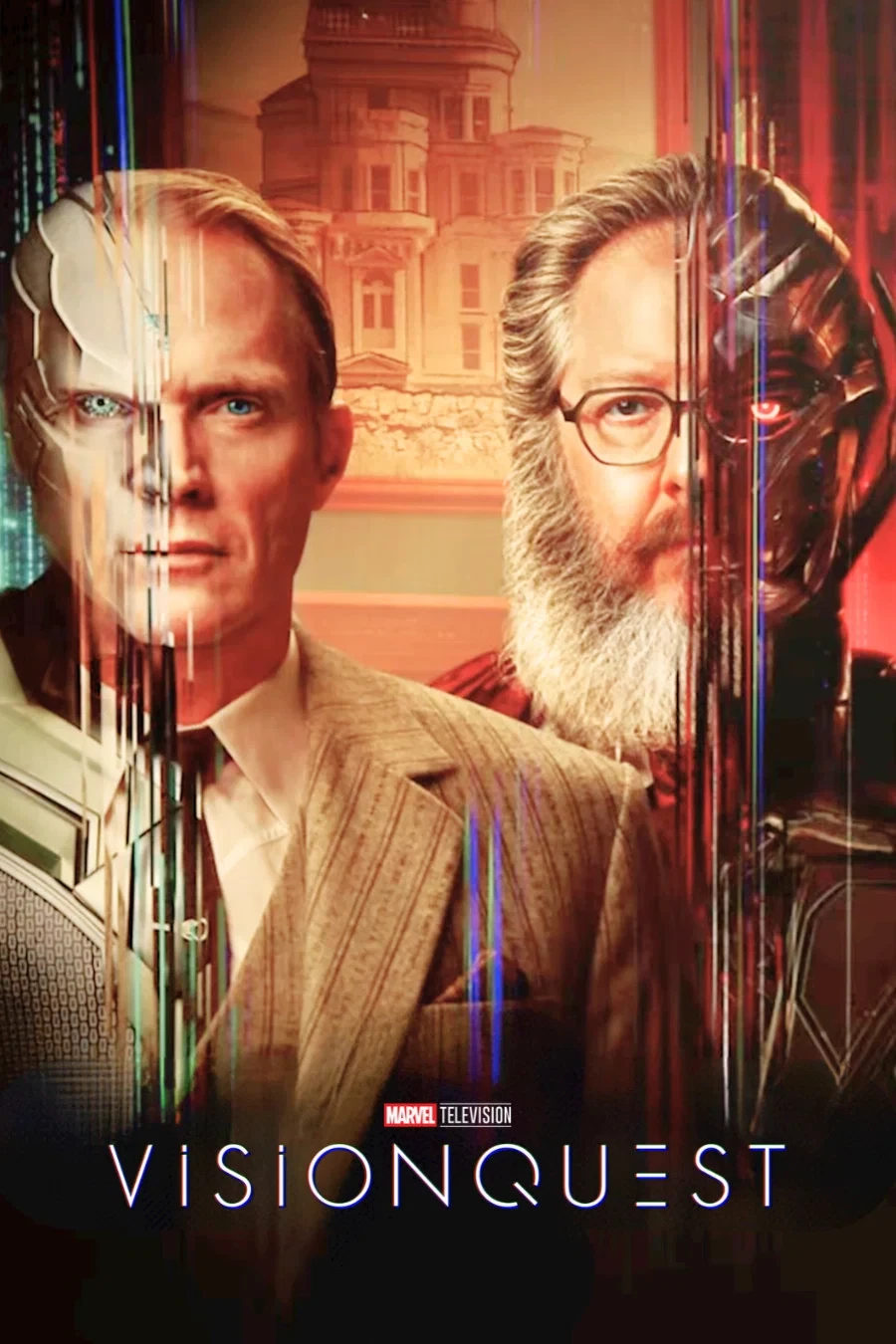
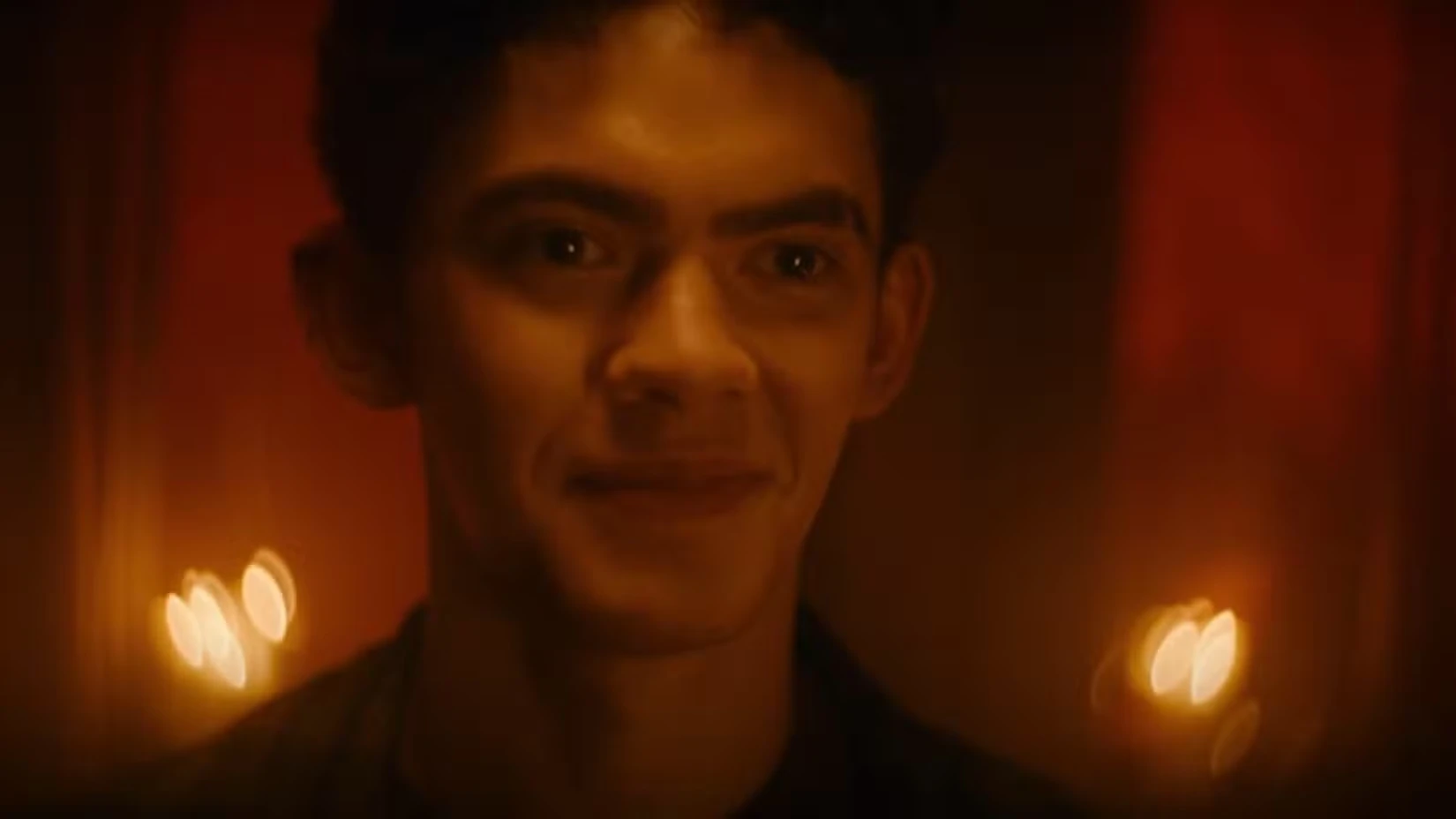
Rather than settling the conflict with greater force or one final attack, Vision decides that the only solution is to reach Ultron himself. There is no obvious off switch for the nanobots, and destroying Ultron’s body does not seem likely to stop them. Vision therefore takes him back into his mental world and creates a sitcom called UltraVision, modeled on older family television shows.
This choice is the heart of the episode, rather than simply a return to WandaVision’s style. Cheerful music, audience laughter, sound effects, and satirical titles create a family sitcom that appears simple on the surface. Ultron becomes an angry father returning to his son, and E.D.I.T.H. an eccentric friend, while Jocasta’s absence becomes the emptiness around which the household revolves. The jokes are deliberately corny, but they confront Ultron with his loss inside a world that pretends every problem can be solved by the end of the episode.
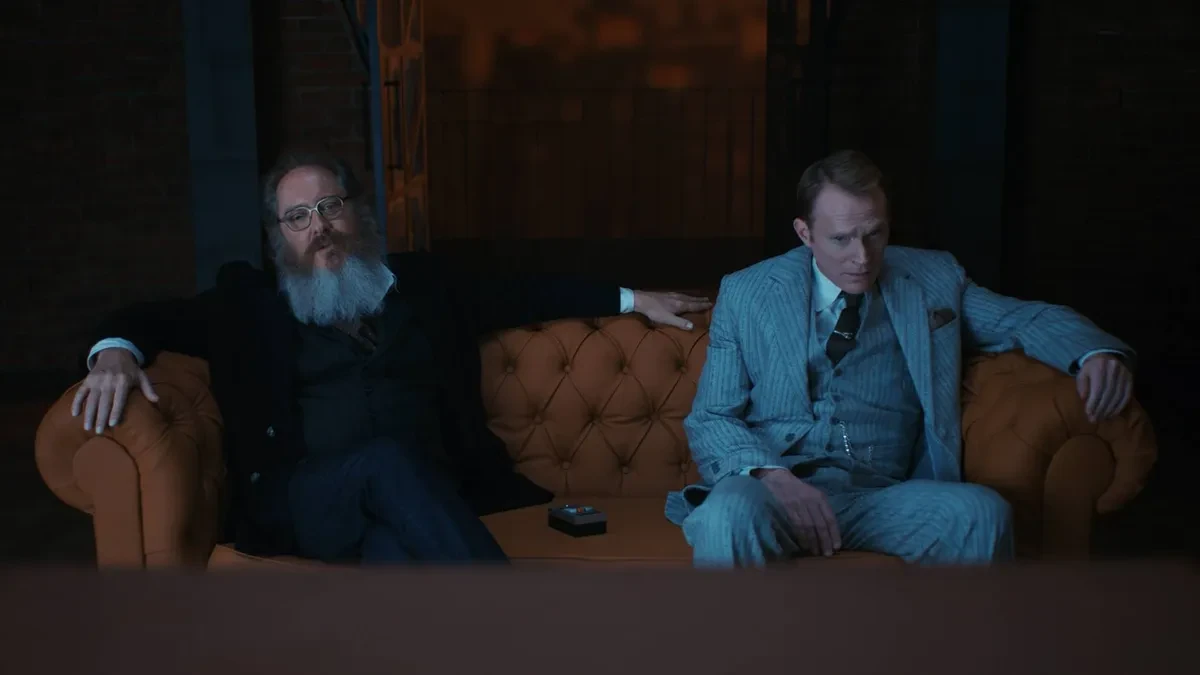
But Ultron does not give in easily. As the simulation continues, the show changes shape. Its opening becomes darker, and the humor turns unsettling. The sitcom Vision created to bring Ultron back into family life gradually becomes a space that exposes the extent of his anger. Here the episode successfully uses the form of television itself to express the conflict. Comedy does not soften the tragedy; it makes it clearer when the laughter stops.
The name UltraVision also carries meaning beyond a play on Vision’s name. It brings together two beings who do not know how to define their relationship, even though each is part of the other’s existence. The show inside Vision’s mind becomes a space for testing what family means, rather than merely a way to buy time.
Vision and Ultron: a victory for dialogue over force
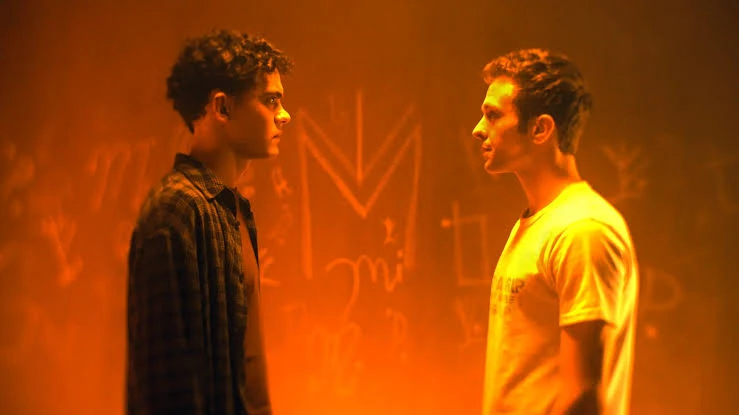
The confrontation’s greatest strength is that Vision does not try to persuade Ultron with a speech about humanity’s goodness. He pushes him to acknowledge that losing someone we love does not mean everything around us has lost its value. Their conversation makes clear that Ultron’s grief for Jocasta meets Vision’s grief for Wanda. They also meet in a more complicated truth: their identities are formed not only from within, but through their relationships with others, even when those relationships hurt.
The scene becomes more powerful when Ultron recalls the line “A thing isn’t beautiful because it lasts,” then tries to attribute it to an earlier version of Vision. Vision refuses to treat himself as merely a duplicate of a previous life. He acknowledges that the words belong to him too, and that he said them at a moment when he did not want to leave Ultron facing death alone. In this response, Vision does not deny his past, but refuses to let it define his entire identity.
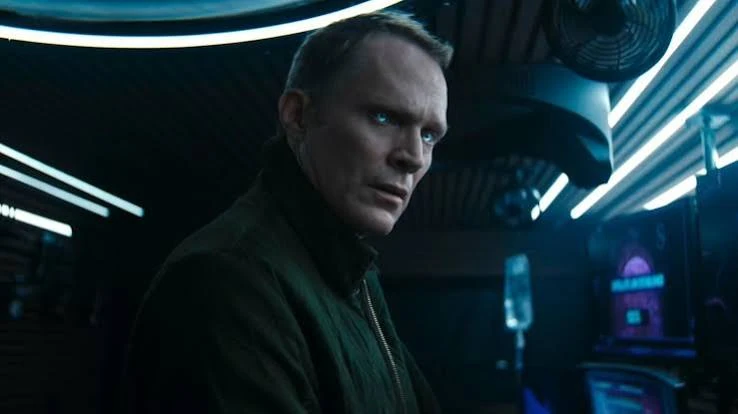
The confrontation reaches its climax when Ultron realizes that Vision is prepared to shut down both their cores if that will prevent the extermination. The attack stops because Ultron faces the reality that destroying the world will not bring Jocasta back, and that he cannot process his grief alone, rather than because he has suddenly become good.
Here the difference between Virgil and Vision comes into focus. Virgil believed love entitled him to possess Jocasta and control others. Ultron nearly turned his loss into a justification for exterminating humanity. Vision accepts that love does not prevent pain or guarantee that those we love will stay. Yet he allows the relationship to remain meaningful after loss. The confrontation therefore becomes a conversation about responsibility as much as one about grief.
Tommy and Billy: recovering the meaning of family
The episode does not leave the consequences of this conflict with Vision and Ultron alone. Tommy, trying to reach Billy so that he can help save Vision, manages to contact him within the dream reality. Billy cannot arrive in time because he struggles to use his portals. These details give Tommy a role that goes beyond having super speed. He is driven by the fear of losing his family again and insists that Vision should not face his fate alone.
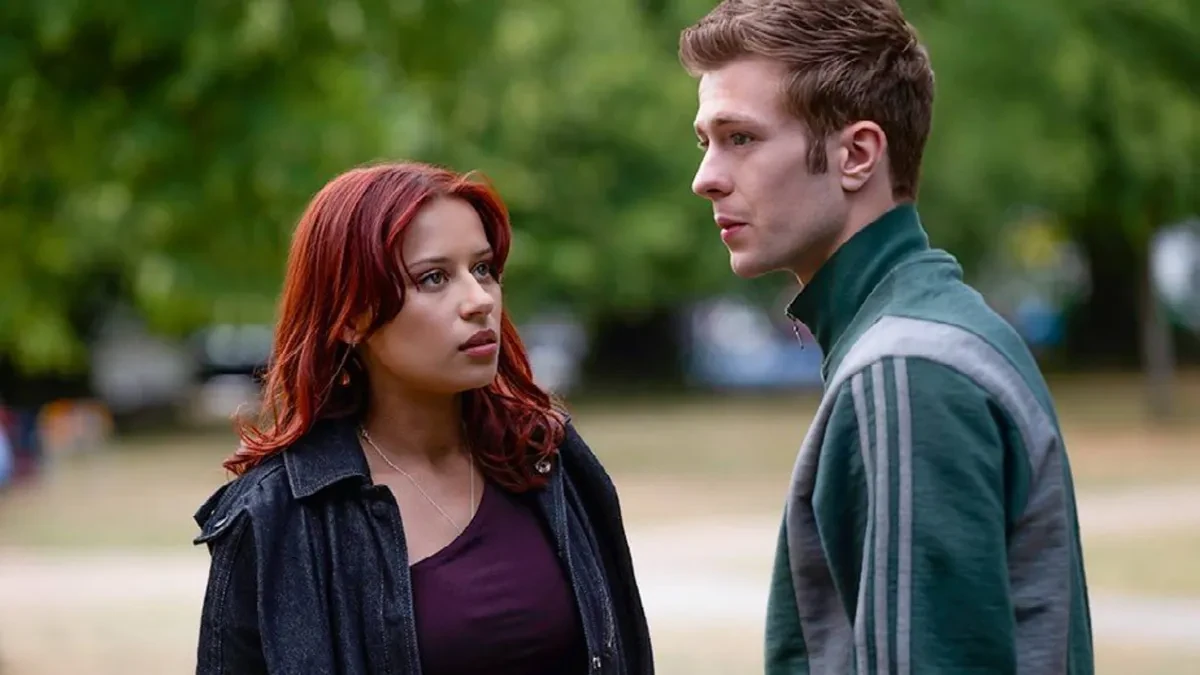
The episode also gives Tommy a funny moment when Vision slows time. We discover that, although his speed looks superhuman to everyone else, he is actually running hard and struggling to catch his breath. The touch relieves tension without interrupting the story’s direction.
When Vision collapses after the mental confrontation, Billy finally arrives and helps Tommy restart his core. The reunion between Vision and his sons is one of the ending’s most affecting moments because it does not rely on a long speech or a spectacular victory. Seeing Vision regain consciousness and embrace them is enough to understand how much he has changed. He is no longer concerned only with deciding which version of himself is real. He can accept that he is a father and that his relationship with his sons is part of his identity.
Vision’s final words about family develop this idea: people whose lives change, but who stay together through the storms. Even Ultron is not shut out. After part of him survives inside some of the robots, Vision offers him another chance without any guarantee of what he will do with it. This is not a complete reconciliation, but a refusal to turn fear into a final judgment.
Paladin, E.D.I.T.H., and Lisa receive a new direction, with Paladin turning toward more useful work in exchange for money. It is a practical conclusion, though less affecting than the central conflict between Vision and Ultron.
Direction, pacing, and the scenes after the ending
Terry Matalas, who both wrote and directed the episode, uses the shifts in tone between scenes rather than keeping everything on one level. Virgil’s scenes feel closer to a conventional superhero conspiracy, while UltraVision provides the greatest space for comedy before becoming a psychological confrontation. The sound design, audience laughter, and cheerful music establish the sitcom within Vision’s mind. Changes to those elements then create the sense that Ultron is beginning to take control of that same space.
The performances remain one of the reasons the idea works. Paul Bettany gives Vision a clear lightness in the comic scenes, then moves into quiet grief in the final confrontation. James Spader mixes Ultron’s sarcasm with anger and brokenness, gradually moving from irritation with the simulation toward an expression of pain his threats cannot hide.
Even so, not every pacing decision is ideal. The repeated cuts to the robots approaching London during the mental confrontation feel less necessary than the moment demands. The episode explains that Vision has compressed time within his mind and could have allowed the conversation to carry the tension on its own, rather than repeatedly reminding us of the external danger. This does not spoil the ending, but slightly weakens the coherence of the idea the episode has built around time and mental space.
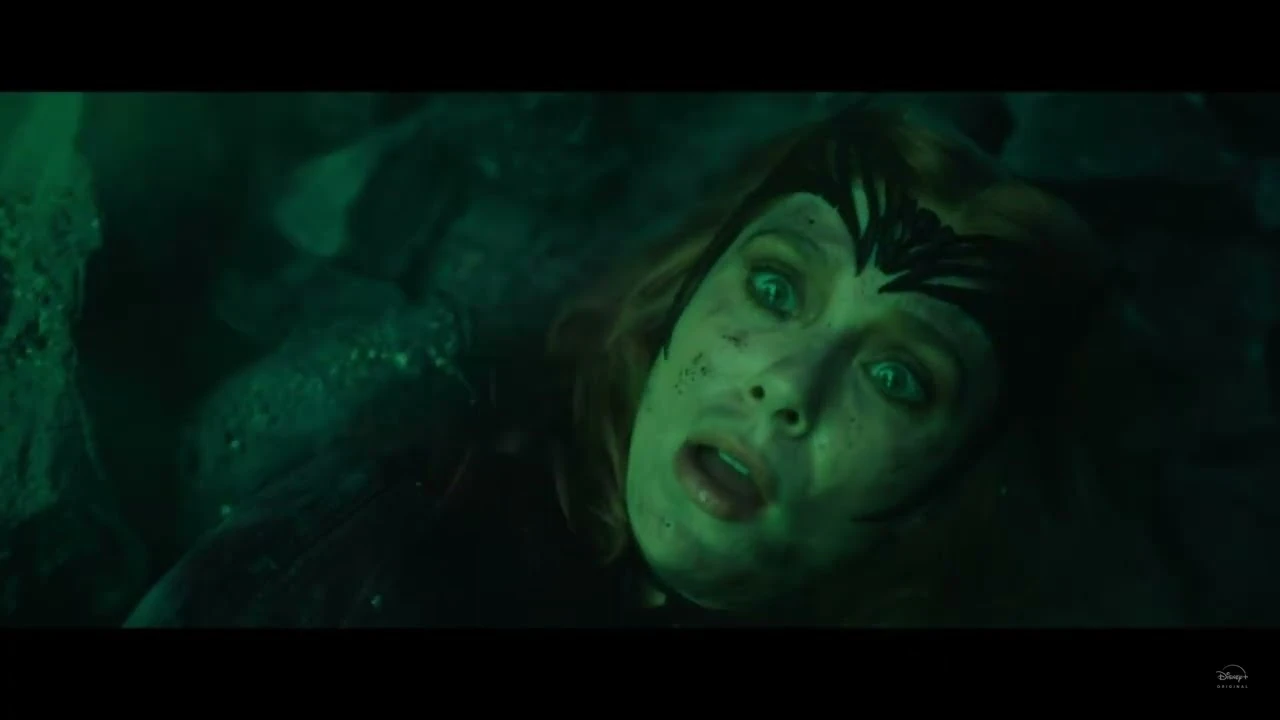
The scenes after the ending add signals toward the future without resolving everything about it. Ultron’s appearance in human form, carrying Jocasta’s memory, leaves open the question of what he wants to do with it. The second scene shows Doctor Doom rescuing Wanda from beneath the rubble, then declaring that her powers will serve him. These images raise new questions, but do not yet offer confirmed answers about the characters’ fates or the form their return will take.
Final verdict
Final verdict
“Forever” succeeds because it understands that the final confrontation does not always need to be a bigger battle than everything that came before it. The episode could have stopped at exposing Virgil and bringing the characters together for one last fight against Ultron. Instead, it makes its most important victory emotional and intellectual. Vision does not defeat Ultron because he is stronger, but because he reaches the part of himself Ultron has been unable to face. Some cuts to the danger in London remain a little excessive, and Virgil’s story is still more of a setup for the main conflict than a rival to it. Yet these reservations do not diminish the ending’s success in connecting the show’s themes: identity, loss, family, and the possibility of change. It also gives Vision a clear development. He does not leave the story having forgotten his loss, but having learned that loss does not cancel the ability to build new bonds. Ultimately, the episode delivers a strong ending because it confuses neither forgiveness with blind trust nor love with control. Vision gives Ultron a second chance without claiming to know what he will choose to do with it. That is precisely the ending’s value: relationships remain possible even without guarantees, and family becomes something we build and sustain, rather than simply a name or origin we inherit. Do you think Vision’s decision to give Ultron another chance was an act of human courage, or a risk for which everyone may pay? My rating for episode eight: 8.5 out of 10.
AUDIENCE VOTE
Do you agree with the MB rating?
Choose once from this browser. You can change your answer at any time.