There is a strange paradox in Charlie Chaplin.
Someone who has never watched one of his films in full can recognise him.
The hat.
The moustache.
The cane.
The oversized shoes.
The walk.
An image that needed only seconds to be understood, then years to become one of cinema's most enduring figures.
The very success that made the Little Tramp understandable to millions, however, made the man behind him harder to see.
The child who emerged from London's poverty became a global star. The star became a director and producer who controlled his films. The director who had worked for so long without dialogue began using his voice on public issues, until his opinions, life and films became entangled in the press and politics.
One question remained that the hat could not answer:
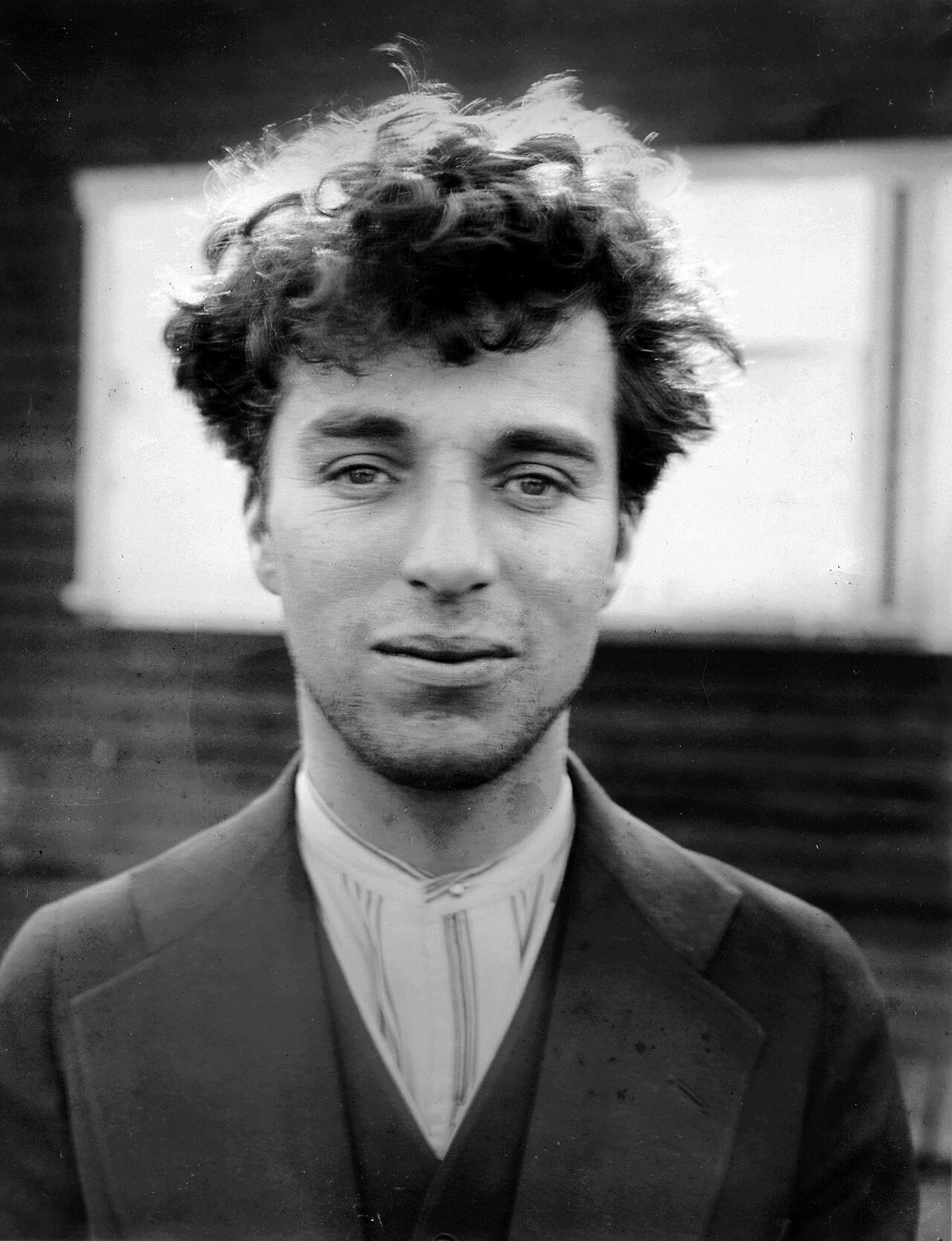
Who was Charlie Chaplin when there was no camera in front of him?
The answer is not simple.
Perhaps there is no single answer at all.
When a Character Becomes Bigger Than Its Creator
In the 2021 documentary The Real Charlie Chaplin, directors Peter Middleton and James Spinney used archival material, recordings and family interviews to pursue something more elusive than film history: the man behind the character.
One of the most revealing observations comes from his daughter Jane Chaplin, who said she had grown up with the icon without knowing the man himself. The film also includes his children's recollections of a commanding father who worked constantly, with family life revolving, in different ways, around his rhythm and work.
An important boundary must be drawn here.
A son's or daughter's testimony tells us how they experienced their relationship with their father.
It does not give us permission to say:
"Psychologically, Chaplin was this or that."
Or:
"He behaved that way because of a childhood complex."
We do not know.
Turning family memories quickly into a diagnosis is precisely the kind of shortcut this special avoids.
It is more honest to say that his image within the home did not match the beloved Tramp known to the public.
This makes more sense than it might initially seem.
The Tramp was a designed character.
A human being is not.
The Man Who Could Control a Film… but Not How His Children Saw Him
In the earlier parts, we saw how much Chaplin relied on control.
He needed time to repeat a shot.
He arranged an actor's movements.
Adjusted the distance.
Changed the rhythm.
Filmed again until he found the result he wanted.
Within a film, he could decide exactly when someone entered the frame, fell down or turned their head.
Private life has no editing process that precise.
The contradiction emerges in the later family material.
Home movies filmed by Oona Chaplin in Switzerland show family moments, a child or father laughing and playing, while some children's testimony carries more complicated memories of a man who could be distant, imposing and preoccupied with work. Later documentaries such as Charlie Chaplin: The Forgotten Years and family archive material used testimony from Geraldine, Michael, Eugene and others to present this period from inside the home, rather than through the studio image alone.
There is no reason to choose one image and erase the other.
The father in the home movies may genuinely have been playful.
The father one child remembers as distant or difficult may also have existed.
A person can be both.
Private Life Is Not a Footnote… but It Is Not Another Film to Review
Chaplin married four times.
His romantic life included aspects that still prompt debate when his biography is read today, particularly the large age differences in some relationships.
His second wife, Lita Grey, was still a teenager when the relationship that led to marriage began. They had two children before divorcing in 1927. His final marriage to Oona O'Neill took place in 1943, when Oona was eighteen and Chaplin was in his mid fifties. It lasted until his death, and they had eight children.
These are biographical facts.
We do not need a headline such as "Chaplin's dark side" to mention them.
Equally, we should not remove them to preserve the image of an artist we love.
Trying to understand the man does not mean defending him, nor does it mean searching for as many scandals as possible.
The problem begins when we treat a biography as a trial aimed at a final verdict:
Was he a good man or a bad one?
The question itself is impoverished compared with what we know.
What matters here is recognising that the person who created a character capable of inspiring sympathy was not himself a character carefully written to win our sympathy.
Life has no screenwriter to remove its contradictions.
Then Came Oona… and a Life That Finally Settled Far from Hollywood
In 1952, Chaplin's American period ended in the way we saw in the previous part.
He left the United States for Europe on a journey connected with a screening of Limelight, then faced the crisis over his return permit. Afterwards, he decided to settle in Switzerland with his family.
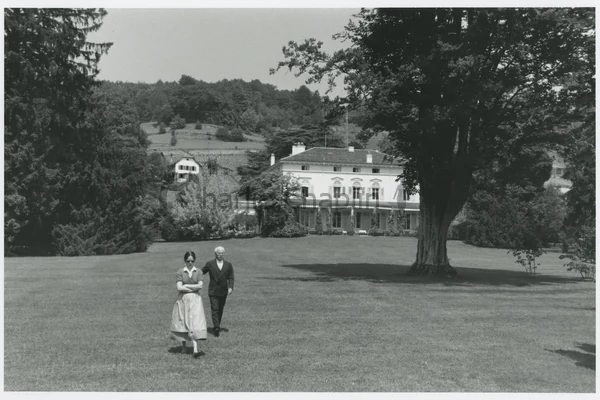
They chose Manoir de Ban in Corsier-sur-Vevey, overlooking Lake Geneva.
Chaplin lived there for the rest of his life with Oona and their children. They had eight children together, and these years became the longest and most settled family period of his life.
Ironically, a move that might look from the outside like the end of an artistic life was not the end of work.
He had moved away from Hollywood.
Not away from cinema.
The Man Who Filmed Less… but Never Stopped Working
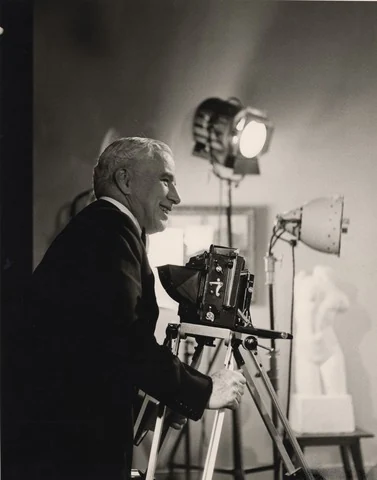
After leaving the United States, Chaplin made A King in New York in 1957, then directed his last feature, A Countess from Hong Kong, in the 1960s, starring Marlon Brando and Sophia Loren. Chaplin himself appeared briefly.
His output of new films declined considerably, however.
Measured only by the number of films, his final decades might look like a gradual retirement.
That is not the whole picture.
In Switzerland, Chaplin repeatedly returned to his earlier films.
He composed and recorded new music for many of his silent works, including The Kid, The Circus, A Dog's Life, The Pilgrim and The Idle Class, among others. This process of composing and recording new scores continued from the late 1950s into the early 1970s.
This is crucial to understanding him as a filmmaker.
The Chaplin who resisted dialogue for years did not see his silent films as museum pieces that must remain untouched.
He returned to them through sound.
But in the same way he had approached it since City Lights:
Not to explain the image.
To shape its rhythm.
Music became another way of exercising directorial control decades after filming had ended.
He Even Edited His Memories
In Switzerland, Chaplin also wrote My Autobiography, published in the 1960s.
An autobiography is inherently curious when discussing someone whose professional life was built almost entirely around controlling the image.
Writing memory is another form of editing.
What do you put first?
What do you omit?
Which event deserves a page?
Which relationship do you reduce to a line?
Memoirs do not give us "the real Chaplin" without a mediator.
They give us Chaplin telling Chaplin's story.
That does not make them worthless.
Quite the opposite.
They remain one voice among many, however: his films, archive, press coverage, documents, wives, children, friends and opponents.
Each sees the man from a different angle.
Perhaps searching for a single, definitive version of him was a mistake from the beginning.
1972: When the Man Returned and the Legend Arrived Before Him
Twenty years after leaving the United States, Chaplin returned in 1972.
This time he did not come back to defend himself before a committee.
Nor to launch a new film.
He returned to be honoured.
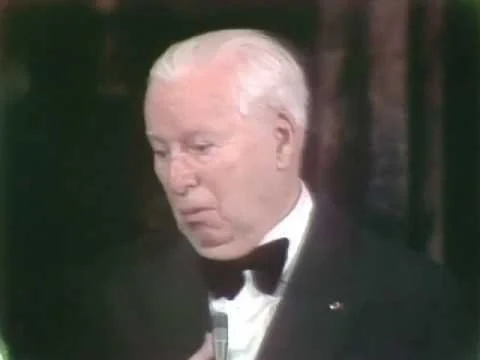
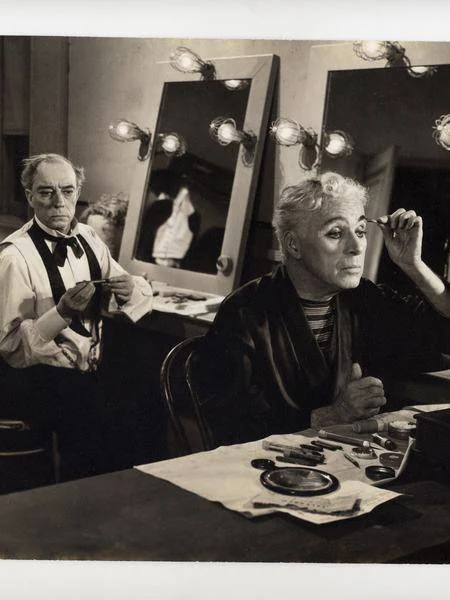
At the 44th Academy Awards in April 1972, Chaplin received an Honorary Award recognising his influence in making cinema an essential art form of the twentieth century.
It was his first return to the United States in twenty years.
The moment itself almost seems written for a film.
A man who had left amid hostility and controversy returns, elderly, to a stage representing the country's most celebrated film institution.
The audience stands.
Then keeps standing.
The moment became famous for the lengthy applause that greeted him, and the return became one of the most celebrated moments in the ceremony's history.
The point is not to measure the applause in minutes.
It is Chaplin's changed position within American memory.
In 1952, the public question concerned whether his return was wanted.
In 1972, he was presented on stage as part of the art history he had helped to shape.
The same person.
Time had reassembled the image.
Another Irony: A Film Twenty Years Old Took Him Back to the Oscars
The story of Limelight adds a beautiful layer to this return.
The film was produced and shown in New York in 1952, but was not shown in Los Angeles at the time, making it ineligible for the Oscars under the rules of that period.
When it finally screened there in 1972, it became eligible.
At the 1973 ceremony, Chaplin, Raymond Rasch and Larry Russell won the Oscar for Original Dramatic Score for the film.
A film closely associated with his departure from the United States thus returned twenty years later to bring him an award there.
This historical irony needs no added drama.
It is already there.
From a Child in the Workhouse to Sir Charles Chaplin
The British New Year Honours list for 1975 included the name:
Charles Spencer Chaplin: Film Actor and Producer
Among those appointed Knight Commander of the Order of the British Empire, KBE.
From then on, he was Sir Charles Chaplin.
It would be easy to turn this into a ready, perfect ending:
The poor child became a knight.
But the film is not over yet.
An honour does not erase what preceded it.
It does not erase poverty.
Or complicated relationships.
Or controversy.
Or accusations.
Or decisions with which the reader may disagree.
It simply adds another layer to a man whose life had become full of conflicting images.
At Home… Work Remained Until the End
As he grew older, movement became slower.
Music and writing remained part of life, however.
Chaplin worked at the piano and tried out melodies at home in Switzerland, continuing to rework his film music for many years. Even at eighty six and eighty seven, he spoke of the connection between life and work.
This takes us, in a strange way, back to the beginning of the entire special.
In part one, work was a way for a poor child to survive.
At the end, for a man with money, fame and honours, it had become something else:
A way of existing.
He no longer needed to perform in order to eat.
He still needed to create.
The Man Departed… the Body Kept Moving on Screen
Charlie Chaplin died at home in Switzerland on 25 December 1977, aged eighty eight.
Here, the question of legacy matters more than a list of awards.
Awards are tied to institutions and a particular time.
A film tests itself every time someone new watches it.
What, then, remains?
More than the Tramp's image.
A set of cinematic ideas we have followed across these five parts.
That the body can be a language.
That a wide frame is no less expressive than a close shot when movement carries the information.
That blocking can create the joke before editing does.
That the timing between two steps can matter more than dialogue.
That production is not separate from art, because whoever controls the time controls the possibility of trying.
That sound need not be used simply because technology allows it.
That an artist who controls his image within a film may discover that his image outside it cannot be directed in the same way.
The Tramp Was Not Chaplin… but He Was His Purest Invention
At the beginning, we asked:
How did cinema's most famous wanderer emerge from a life that had known poverty?
Then we watched Chaplin win control of his films.
We saw him resist speech.
Then use it.
Then pay the price of entering public debate with his own voice.
Now, having reached the man behind the character, it becomes clear that our original question needed adjusting.
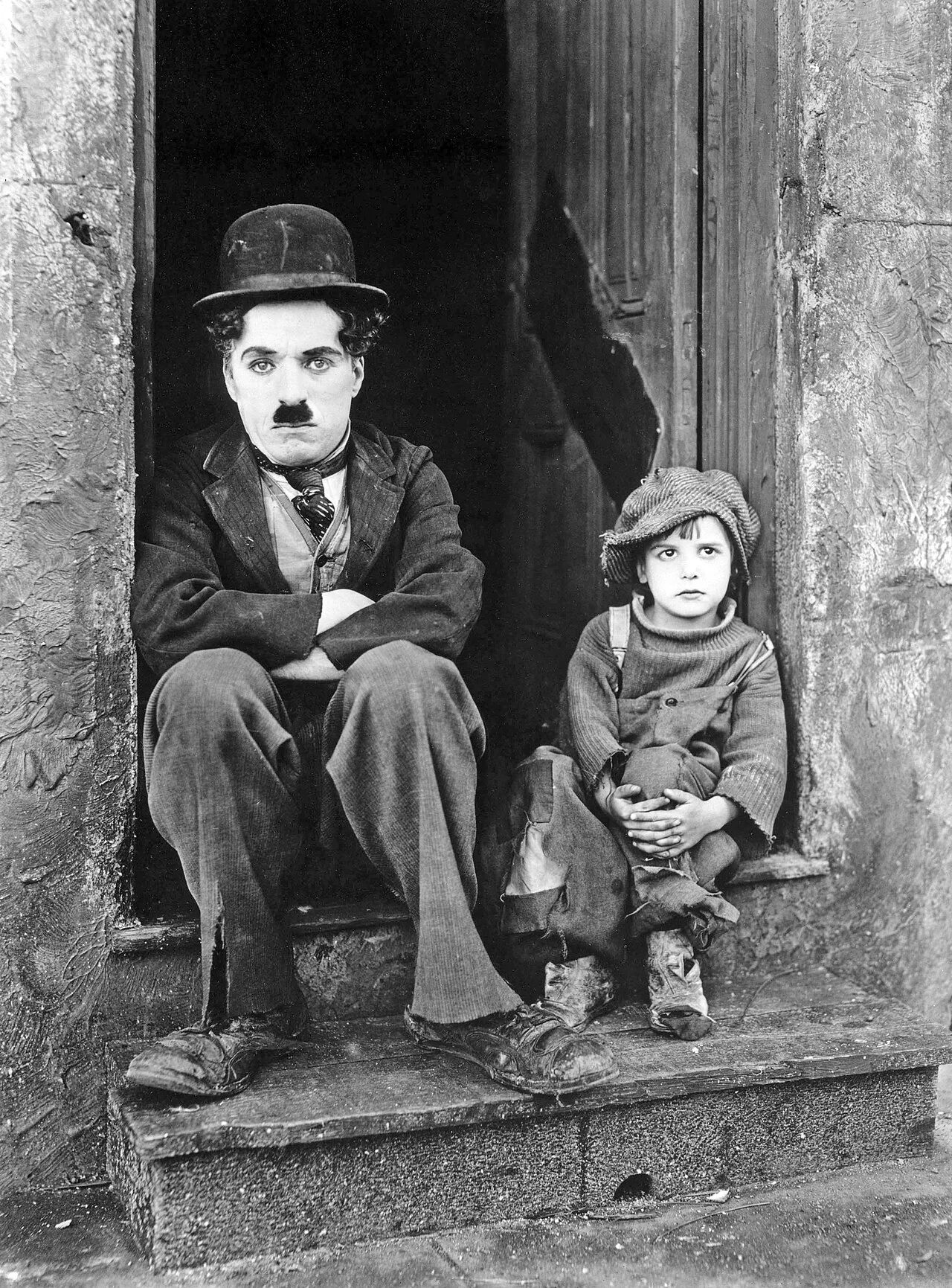
The Tramp was not simply Charlie Chaplin.
If he had been, we would not have needed five parts to separate the two.
The Tramp was a construction.
A mixture of memory, theatre, movement, clothes, timing and observation.
A character designed to be recognised immediately.
The man who made him was messier.
More contradictory.
Less easily reduced to a simple image.
Must We Love the Person for the Art to Matter?
Perhaps this is the most tempting question at the end of a great artist's biography.
It is not the question on which I want this special to end.
We do not need to turn Chaplin into a saint to understand his impact on cinema.
Nor do we need to turn his mistakes and complicated relationships into a means of erasing his films.
Both exist.
Art does not make its creator perfect, and the creator's imperfections do not make the history they shaped disappear.
What is required is harder than choosing between glorification and erasure.
We need to look closely.
To see the man as far as the facts allow.
To see the films through what is actually on screen.
Without using either to hide the other.
Perhaps That Is Why the Tramp Remains
There is an image with which we can end the story.
Not Chaplin at the Oscars.
Nor the British knight.
Nor the elderly man at home in Switzerland.
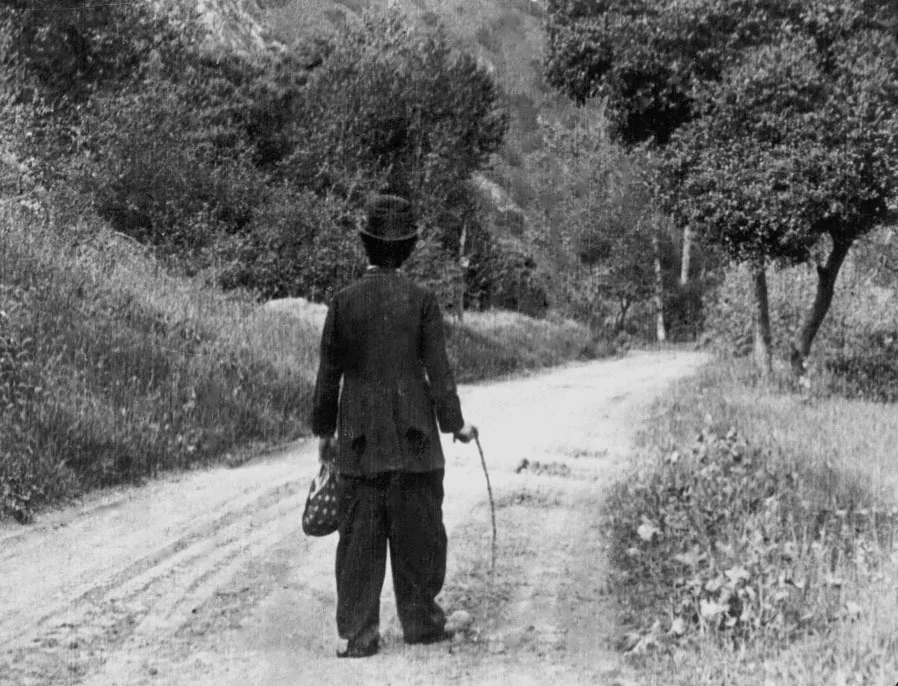
The little man with whom we began.
His hat on his head.
His cane in his hand.
His shoes larger than his feet.
Walking away from the camera.
The Tramp does not tell us where he will go.
Nor explain what he feels.
Everything is in the walk.
His body recedes, then recovers its rhythm, as though he will continue along the road whatever happens.
This is why the invention outgrew its creator.
Charlie Chaplin died in 1977.
The little man within the frame still moves whenever the film begins again.
Our story of Chaplin ends as it began:
Not with a sentence he spoke.
But with a movement that images alone can preserve.
About this series
This special traces Charlie Chaplin’s cinematic origins, artistic independence, relationship with sound, public conflict, and legacy.
All parts of this series are now published.
All Cinema Journal articles