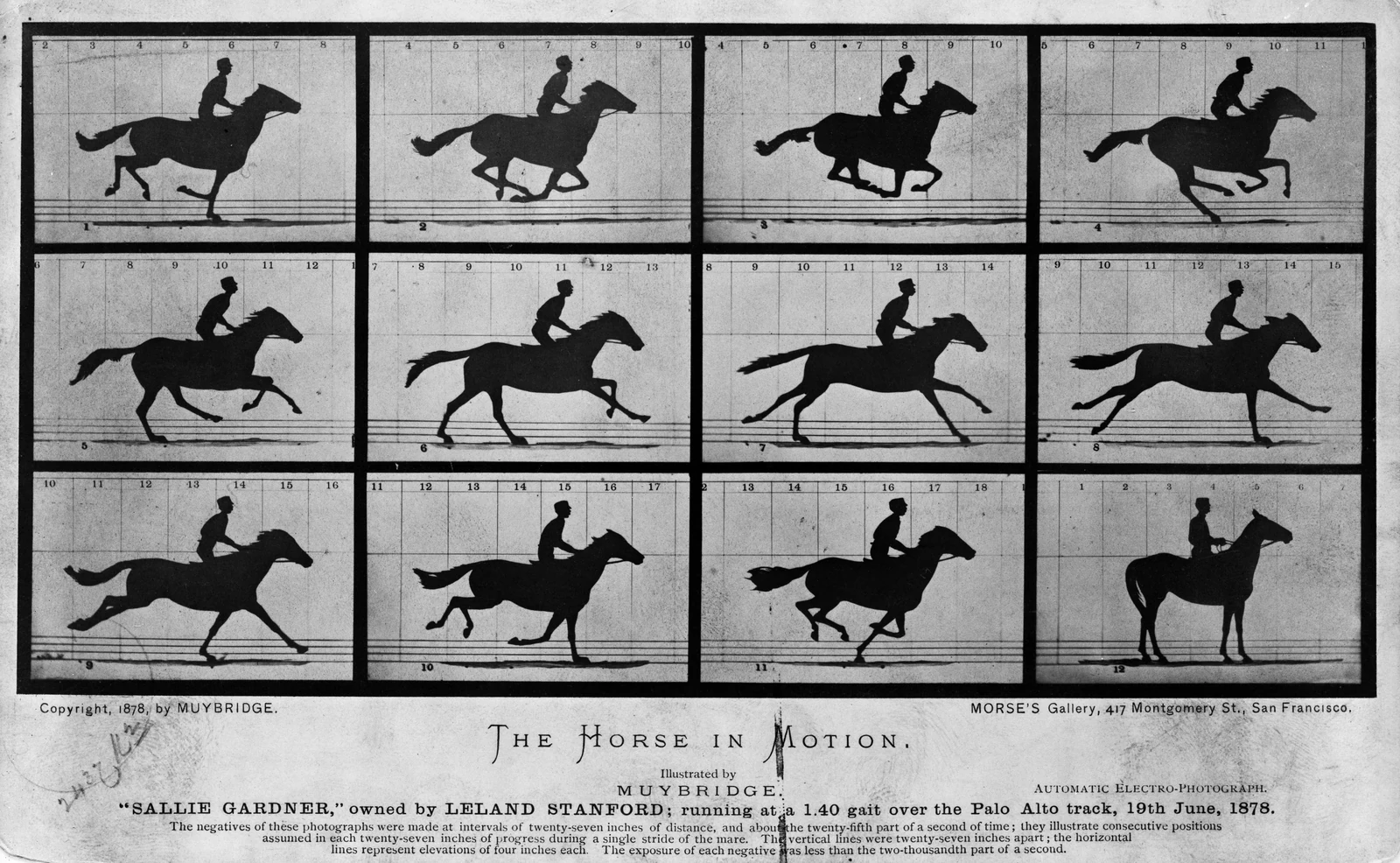
Cinema rests on a simple paradox: the cinematic image does not actually move. What we experience as continuous motion begins as a sequence of separate images, each freezing a moment slightly different from the one before. When those images are shown in succession at the appropriate speed, we no longer experience them as independent pictures. We see someone walking, a train passing, a hand rising, a face turning.
The old English expression motion pictures is therefore more precise than it may initially seem. Before cinema could become screenwriting, acting, directing, and editing, it first had to solve a more basic problem: how do we capture the movement happening before our eyes in a sequence of pictures, then release it again?
That technical question would eventually give rise to much larger artistic ones. Not only: how do we record an image? But: which image do we want to record?
Before cinema, the problem was time
People knew optical projection long before cinema. Magic lanterns displayed pictures, while optical toys such as the zoetrope created a sense of movement from sequences of still drawings. But seeing an illusion of movement is one thing; recording real movement in the world and showing it again is another.
During the nineteenth century, photography gradually became capable of capturing shorter moments. Eadweard Muybridge, Étienne-Jules Marey, and others began using sequential photographs to study movement itself. Many of these experiments sought to analyse movement scientifically, yet they helped approach the idea that would become central to cinema: if enough successive stages of an action could be recorded, they could be reassembled before the eye.
A crucial material problem remained. You could take a limited number of pictures on glass plates, but that would not provide a practical medium for carrying hundreds or thousands of successive images rapidly through a machine.
Cinema needed something else: a light-sensitive surface that was flexible, long, and able to move through both camera and projector. Advances in chemistry and manufacturing were no longer separate from art. They became part of what made the art possible in the first place.
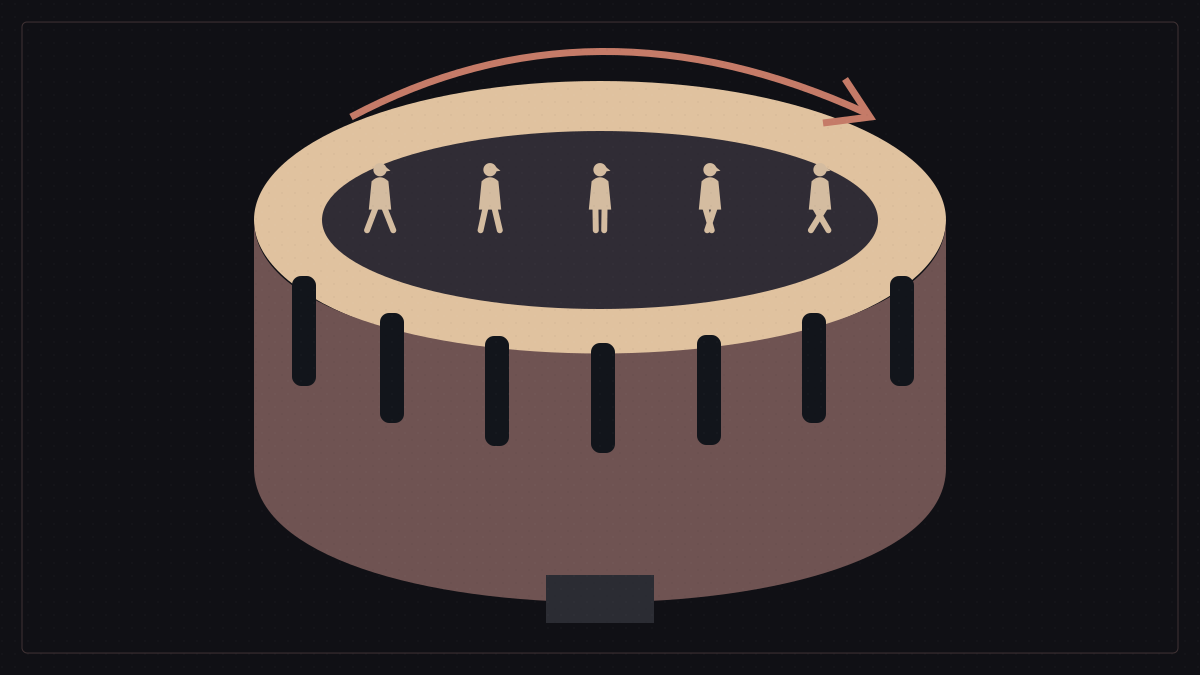
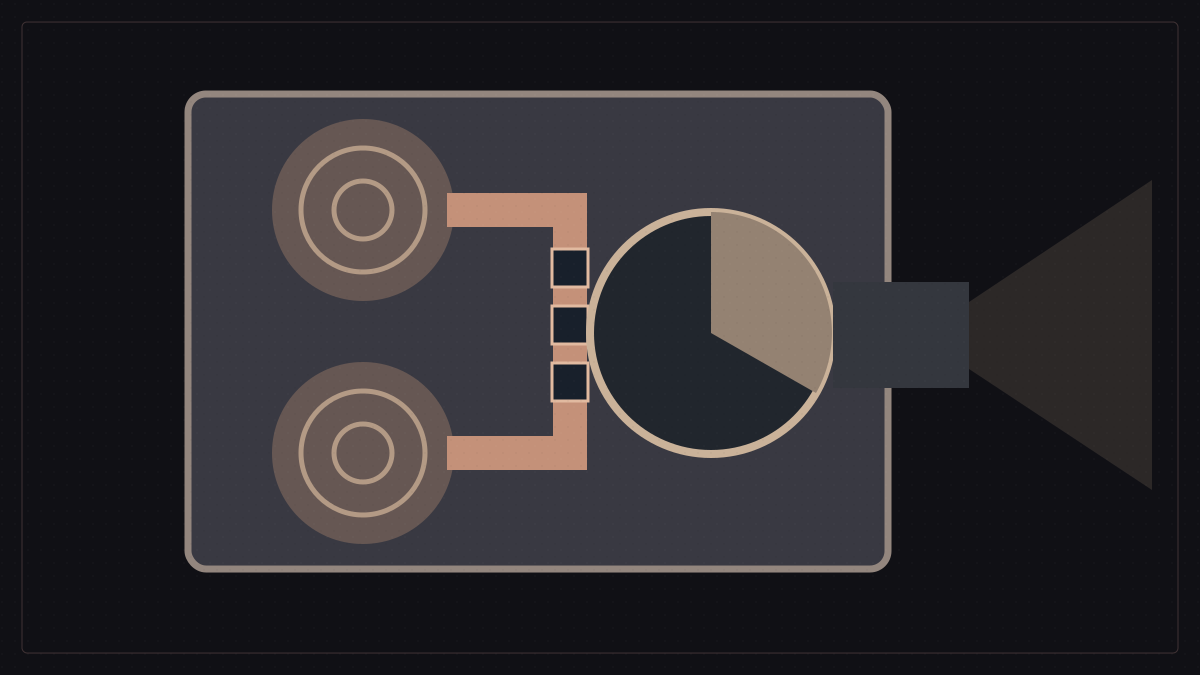
The flexible strip that freed the image
The arrival of roll film and flexible photographic materials in the 1880s was a decisive step. Eastman’s roll film systems helped remove a major technical obstacle to recording sequences of pictures. Glass had imposed clear practical limits on how long a sequence could be photographed and shown.
Today, that shift may sound mechanical, but it changed the nature of the image. A photograph no longer had to be an isolated instant. It could become a moment within time. One frame followed another, then another. As the strip travelled through the mechanism, the camera preserved not only a person’s appearance, but the way that appearance changed over time.
Photography was approaching something neither painting nor an individual photograph could achieve in the same way: recording visible time.
Cinema was not invented in a single moment
It is tempting to tell cinema’s history as though one person woke up one morning and invented it. The history of moving pictures is messier—and more interesting. In October 1888, the Frenchman Louis Le Prince used a single-lens camera he had built in Leeds to record a brief scene of family members moving through a garden in Roundhay. The recording is the oldest known surviving film, a more precise formulation than simply calling it “the first film in history.”
In the United States, Thomas Edison’s laboratory was working along another path. William Kennedy Laurie Dickson played a central role in developing the Kinetograph camera and the Kinetoscope for individual viewing. Flexible film became part of a mechanical system that could record a sequence of pictures and pass them before a viewer. A Kinetoscope prototype was demonstrated in 1891, with more practical versions following in subsequent years.
Auguste and Louis Lumière then introduced the Cinématographe, a relatively compact device combining filming, printing, and projection. Their paid Paris screening on 28 December 1895 became one of the best-known dates associated with the birth of cinema as a public experience.
Even here, we must be careful with “first.” Paid screenings of moving pictures projected onto a screen preceded the Lumières’ Paris show, including the Lathams’ New York screenings in May 1895. The Cinématographe’s importance does not depend on a legend that it was “the first device ever.” Its real achievement was providing a practical, successful system for filming and projection, helping turn moving pictures into an experience shared by an audience gathered before a screen.
Something fundamental was changing. Moving pictures were no longer simply an engineering achievement. There was now an audience watching them. Once that audience existed, the image began to require decisions.
First the world was recorded; then it began to be shaped
The early camera was astonishing simply because it could record movement: someone walking, workers leaving a factory, a train entering a station, a street coming alive before the lens. But once recording movement became possible, the technical question was no longer enough.
If the camera could film a person, where should we film them from? If an entire space lay before us, what should enter the picture and what should remain outside it? If two people moved through a scene, which one should attract our eye?
These questions did not emerge fully formed in a single day. But they reveal the transformation that matters to this series: technology made the image possible, and art began discovering what could be done with that possibility.
Almost every technical transformation in cinema would repeat the same pattern.
Black and white was not initially a stylistic choice
When we see a modern film shot in black and white, we immediately assume an aesthetic decision lies behind it. In the beginning, things were different. The available photographic recording processes could not simply give filmmakers the world’s colours as the eye sees them. But filmmakers did not wait long before trying to bring colour into the image.
This is where a frequently oversimplified history begins.
Colour in cinema did not begin with a single film.
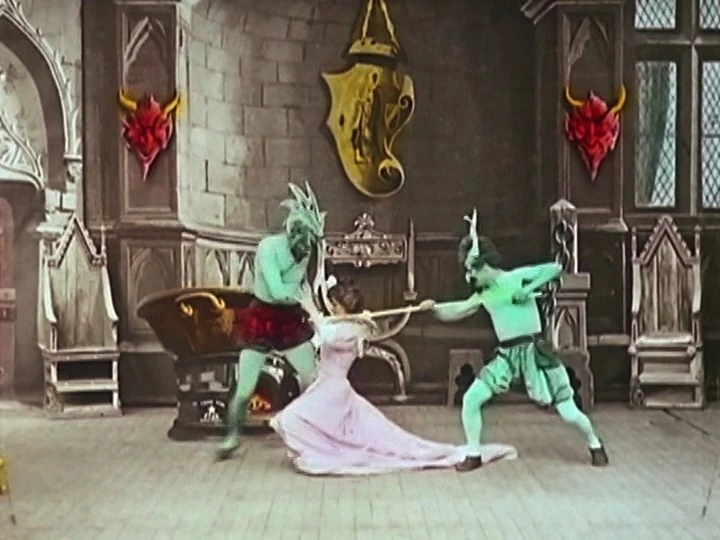
In early films, colour could be applied by hand to areas of every frame. Stencil processes followed, alongside tinting, which gave the image an overall colour, and toning, which chemically changed the colour of its silver image. These are different ways of adding colour to film, rather than one process called “a colour film.”
Colour served a purpose beyond decoration. Blue could make a scene read as night; a warm colour could suggest fire or heat; a particular colour could distinguish one event or mood from another.
Even before cameras could record colour photographically in the ways that later became familiar, filmmakers were beginning to understand an idea that remains with us: colour is more than a property of objects.
Colour is a decision within the image.
Then colour became part of the recording process
After hand colouring and chemical colour treatment came numerous attempts to record and reproduce colour photographically. The path was not straightforward. Founded in 1915, Technicolor went through several two-colour systems before arriving at its celebrated three-colour process. Some early methods required special projection equipment; others faced technical or economic difficulties. Gradually, processes developed that could incorporate colour into the film print more practically.
In 1932, Technicolor introduced its three-colour camera, recording colour information on three separate film strips and recombining it during printing. Becky Sharp followed in 1935 as the first complete feature photographed in three-strip Technicolor.
Calling The Wizard of Oz (1939) “the first colour film” is therefore simply incorrect. Its historical and visual value has no need of that claim. It arrived when colour could take on a particularly clear dramatic role, using the transition from sepia-toned Kansas to the saturated colours of Oz as part of the experience of entering another world.
The same pattern appears again. Technology first solves a problem: how do we obtain colour? Then comes the more important cinematic question:
What will we do with it?
The third dimension is older than its modern waves
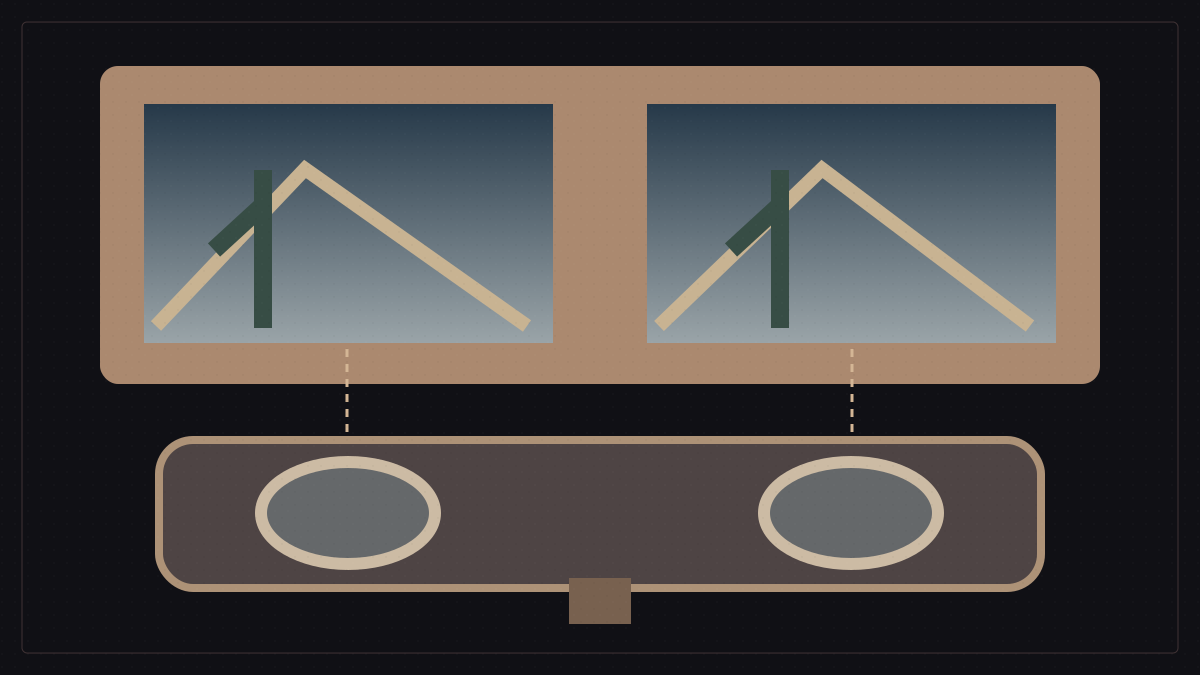
The same applies to three-dimensional cinema. Giving each eye a slightly different picture to create a sense of depth predates cinema itself. Stereographs were a popular nineteenth-century viewing medium.
With moving pictures came experiments combining motion and stereoscopic vision. The history of 3D did not develop in a straight line. It passed through experiments and successive commercial waves. There were early experiments in cinema’s first decades, sound films in 3D during the 1930s, and later features and experiments preceding Hollywood’s familiar 1950s boom.
The technology then receded from the industry’s centre and returned several times, eventually in modern digital forms. The interesting point is not choosing one year and declaring it “the birth of 3D.” It is noticing how the industry kept returning to the same question:
Can an image give viewers a stronger sense of being inside a space?
The answer changed as cameras, projection methods, costs, and the practical possibilities of viewing changed.
When the image became more than a strip of film
For more than a century, cinema was so closely associated with photographic film that “film” came to mean both the medium and the artwork. But the digital transition did not happen suddenly, nor did it begin with the appearance of a single digital camera.
The Academy of Motion Picture Arts and Sciences describes the digital transition as occurring in stages. Digital technologies entered sound, effects, editing, processing, and post-production at different times, then gradually reached cinematography, distribution, and projection.
This matters because film and digital were never two worlds separated by a switch. For a long time, a production could be shot on film, scanned into digital files for processing and colour work, then returned to film for projection. Tools such as the ARRILASER and ARRISCAN helped build these bridges in the late 1990s and early 2000s.
As digital cinema cameras developed during the new millennium, digital capture itself began entering productions that traditionally relied on 35mm. The arrival of ARRI ALEXA in 2010 was an important milestone. The Academy described the ALEXA family as among the first digital cameras widely adopted by cinematographers, alongside significant developments from RED, Sony, and Panavision.
Even here, it would be a mistake to turn history into a contest:
Film versus digital.
The more useful question is: what became possible when the medium changed?
Technology does not make the image on its own
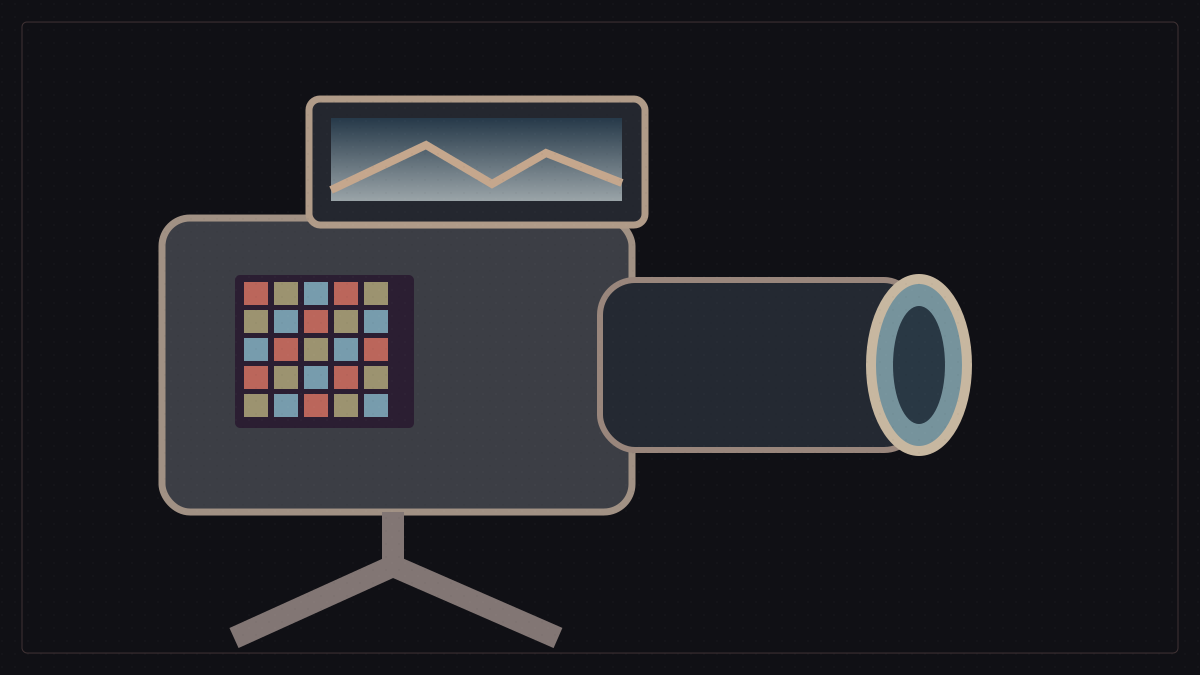
Digital cameras did not eliminate lighting. Colour did not eliminate black and white. 3D did not make two-dimensional images obsolete. Film stock did not lose its value simply because sensors appeared. Technology changes the range of choices available to the image-maker.
Every medium brings limits and possibilities. Its response to light differs; the scope for processing changes; the speed at which footage can be viewed changes; colour grading and post-production possibilities expand. Sometimes an image that was extremely difficult or expensive in an earlier era becomes easier to achieve.
But the tool does not know why a scene should be dark. It does not know whether red should appear now or ten minutes later. It does not know whether the viewer should feel close to a character or overwhelmed by their presence.
These are human decisions. Cinematography’s history is therefore more than a succession of machines replaced by newer machines. It is the history of an expanding distance between what a camera can record and what a filmmaker can choose.
When the achievement was simply obtaining a moving image, recording life was enough to feel miraculous. But as motion became recordable, colour became shapeable, depth became an illusion, and images became open to increasingly complex processing, a new question emerged:
If all these possibilities are available to us…
How do we decide what the image itself should look like?
From inventing movement to creating meaning
This is where “the language of the cinematic image” truly begins. The camera is no longer simply a box preserving what stands before it. It becomes a means of choosing. It can reveal one thing and conceal another; place someone in the centre or push them towards the edge; make a space feel open or claustrophobic; guide our eye to a face while another event unfolds in the background.
Before discussing light, lenses, or actors’ movement, however, there is one rectangle we must understand:
The frame.
Cinema learned how to record movement. The next question is:
How did it learn to organise what we see within the image?
To be continued — Part two: How Is the Cinematic Frame Built?
About this series
This series begins with the origins of moving pictures, then explores framing, light, lenses, composition, and the choices that give an image meaning.
All parts of this series are now published.
All Cinema Journal articles