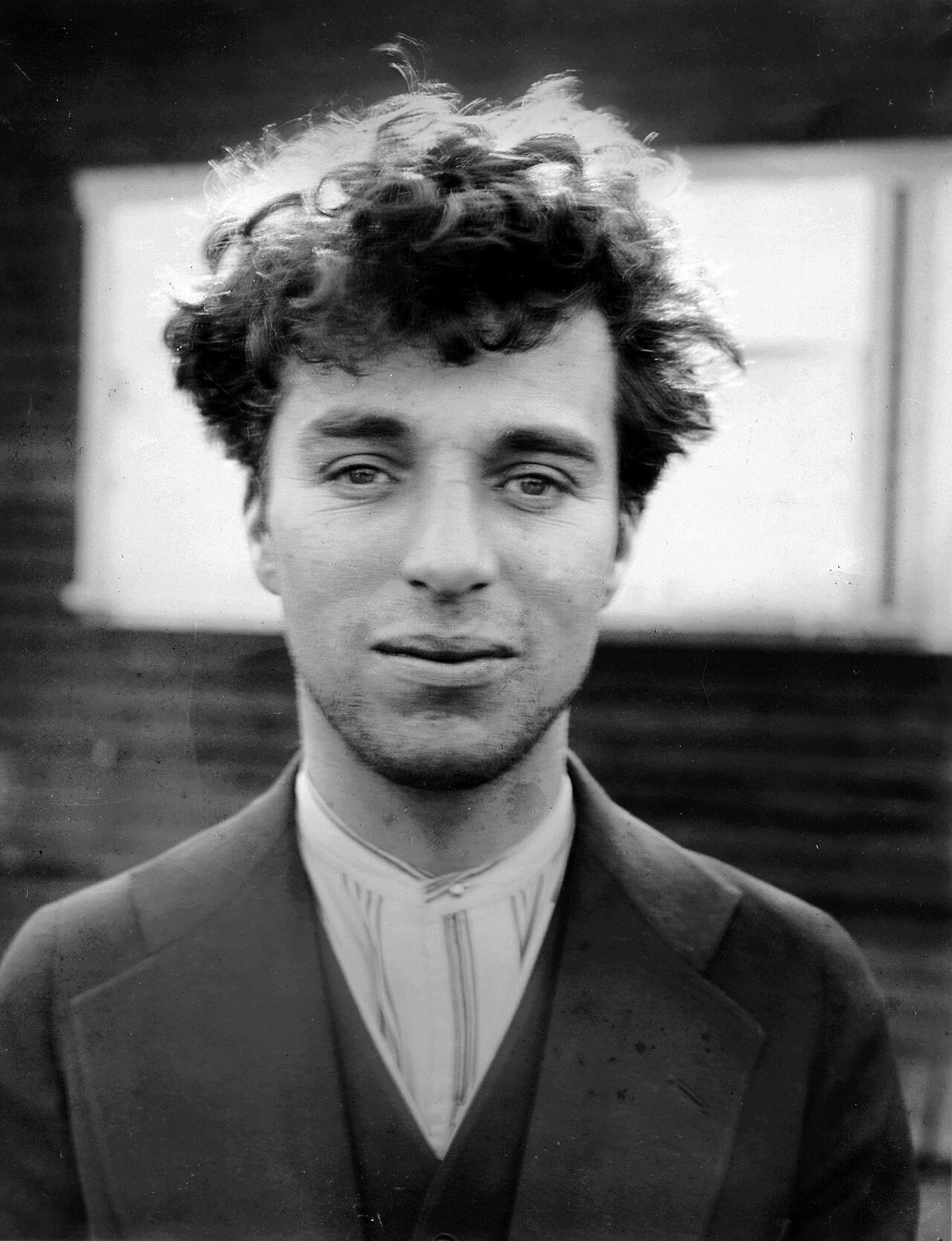
At the end of the first stage of Charlie Chaplin’s film career, the problem facing him looked like the best one an actor could have: the audience wanted more. The Tramp had been born and the character had caught on quickly. His face, hat, cane and walk were recognisable even before a title card announced his name. Success, however, placed him in a contradiction that would define the next phase.
The studio wanted more films. Chaplin wanted more time. The industry saw a star whose comedies could be turned out rapidly, while he was beginning to discover that the comedy he sought could not always be made at that speed. A shot needed trials; a movement might work once and fail ten times. The distance between an actor and a chair could change a gag. An entrance a second early or late could make or destroy the rhythm.
The struggle of the following years would therefore be about more than a higher salary or a move between companies. It was a struggle for control of the film itself.
Keystone was not the problem—the pace was
At Keystone, Chaplin learned how film production worked, discovered the Tramp and soon began directing. The rapid pace of short comedy suited an industry that constantly needed new material for cinemas. It could serve an actor working through chases, tumbles and quick situations, but Chaplin was gradually moving elsewhere.
He no longer asked only, ‘Where is the gag?’ He also asked what happens to the character before and after it. That distinction matters: a joke may take seconds, but a character whose fate matters to viewers needs space, time and experimentation.
When his Keystone contract ended, he moved to Essanay Film Manufacturing Company in 1915. His salary was $1,250 a week, with a $10,000 signing bonus, but the artistic gain mattered more: a somewhat slower pace gave him room to try things.
Money began to serve an artistic purpose. It could not make a film good by itself. What Chaplin effectively bought was something more valuable to his way of working: time.
Essanay: the Tramp grows from within
Essanay was more than a stop between Keystone and Mutual. It was where the Tramp began to grow beyond a funny oddball. Archival accounts describe Chaplin spending longer on each film, trying more ideas, and building richer plots and characters than the frantic Keystone schedule allowed.
The change is clear in The Tramp (1915). The character does not merely stumble through amusing situations. The comedy can end on a different feeling. Audiences can laugh at him and then feel for him. Sadness no longer has to oppose laughter; emotion can strengthen the next gag because the figure before us is a person, not a gag machine.
Time thus becomes part of his style. When a director must think primarily about how many films to deliver, the shortest route to a laugh becomes tempting. Given room to experiment, Chaplin can ask what happens if the laugh comes later, if silence precedes it, or if the story refuses the expected ending. Essanay gave those questions a shape.
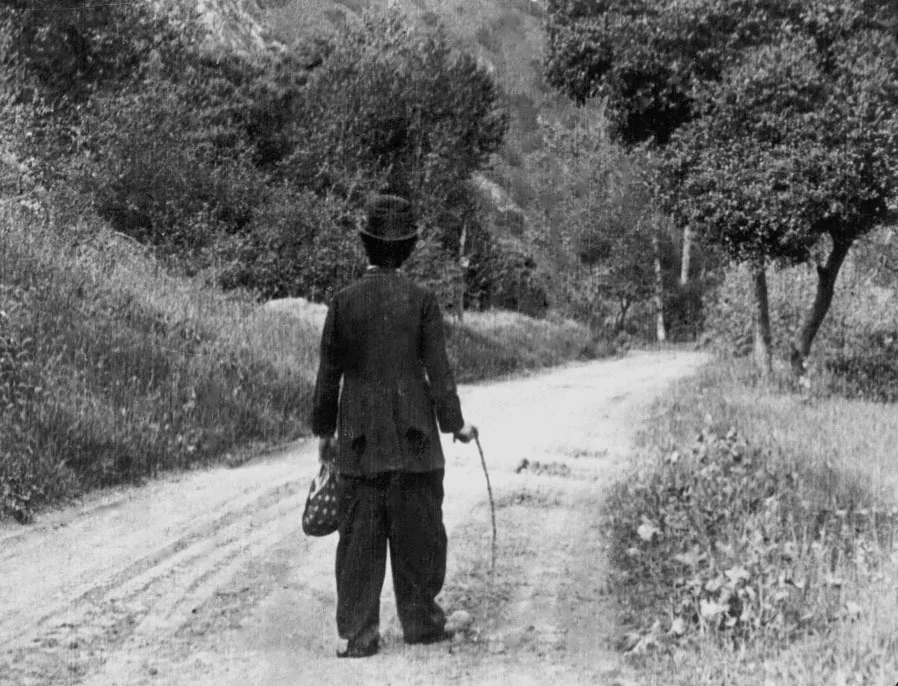
The factory wanted a product; Chaplin found a film as he made it
The word Manufacturing in Essanay’s name matters. Cinema had become an industry, and industry favoured scripts, schedules, filming, delivery and then the next picture. Chaplin’s method was heading in the opposite direction. His disagreements concerned a company writer’s ready-made scenario, viewing work prints and handling the negative.
These are not simply stories about an awkward artist. They are the beginnings of a production philosophy. Chaplin did not want to receive a finished idea and execute it. He wanted to discover it while working. That required room for attempts that might fail.
Physical comedy makes the difference plain. A script can say, ‘The man trips over a chair.’ Does he fall immediately? Try to stay upright? Notice that others have seen him? Pretend he meant to do it? Does the chair remain in frame so the audience spots the danger first? Those decisions live beyond the sentence on the page. They arise from experimenting before the camera.
Chaplin increasingly needed a production system that served his method rather than a method squeezed to fit the system.
Mutual: money becomes freedom
In 1916 Chaplin entered a larger phase with Mutual Film Corporation. Mutual created Lone Star Corporation for his films, paid him $10,000 a week and a $150,000 signing bonus, and commissioned twelve two-reel comedies. The series ultimately took about eighteen months instead of being completed on an automatic annual schedule.
Those sums can easily turn this into a story about the world’s richest star, but the more important point is the studio, working space and time Mutual provided.
Chaplin approached the model he had been seeking. He was no longer simply an actor arriving to play a scene: the idea, the performance, the actors’ movements and the camera’s placement all revolved around his sense of rhythm.
A scene could be filmed repeatedly until it found its form. Production control became a tool of direction.
Why does the camera look simple while the acting is complex?
Much of Chaplin’s work in this period can look simple if we search for dazzling camera moves and intricate angles. The camera is often still; the lighting is practical; close-ups are not the foundation. Calling this poor direction, though, confuses complexity with effectiveness.
Cinematographer Rollie Totheroh, whose long association with Chaplin developed in this period, placed the camera to give performers room. Archival accounts show Chaplin changing movement and acting between takes much more often than he changed camera positions. That choice fits comedy built from bodies interacting with other bodies and with a place.
Too many cuts can remove the evidence. In a continuous shot, we know the fall happened before us. When we see an actor and an approaching danger together, we know what the character does not. That gives us time to anticipate.
Anticipation makes the rhythm.
In comedy, the body’s place can matter more than a face
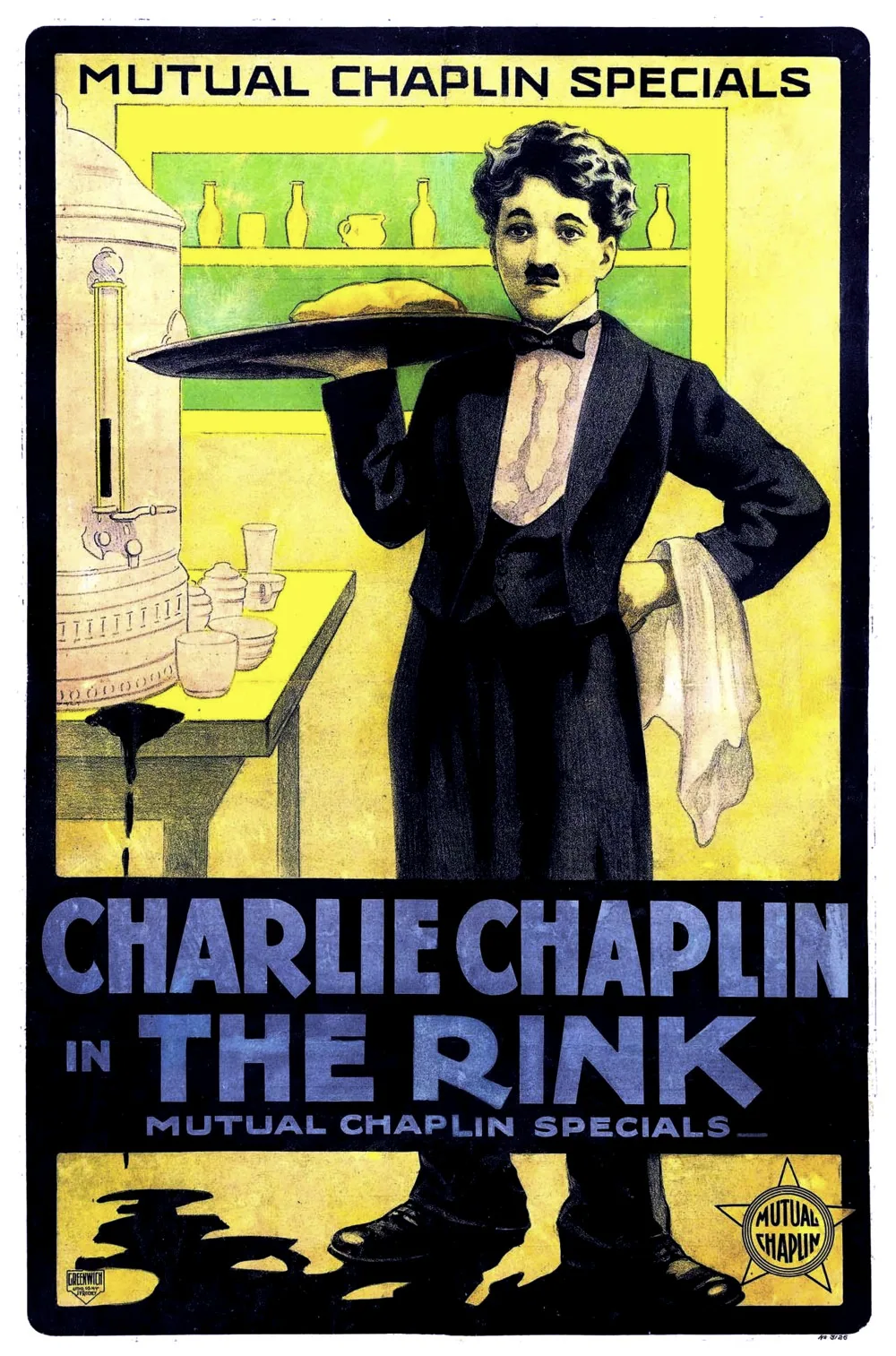
The Rink shows this particularly well. In a composition Chaplin later discussed, the Tramp leaves chaos behind on the skating floor and then becomes a tiny figure deep in the frame, sitting as if nothing has happened.
A close-up would show his expression, but it would lose the larger joke: we need to see at once the wreckage he caused and his pretended innocence. Distance itself is funny. Chaplin understood that a long shot can sometimes give an action more force than a close-up.
The frame was not designed to look beautiful apart from the action. It was a playing space. The door matters because someone will come through it. The chair matters because a body will encounter it.
Another performer’s position can produce a misunderstanding, and the space between two people is not dead space. It is the time a gag needs to reach its conclusion.
Blocking before it became a classroom term
Blocking means arranging performers’ positions and movements within a scene. In Chaplin’s films it is hard to separate blocking from the comedy itself. With an everyday object he asked not simply what it does, but how many different ways a body can use it.
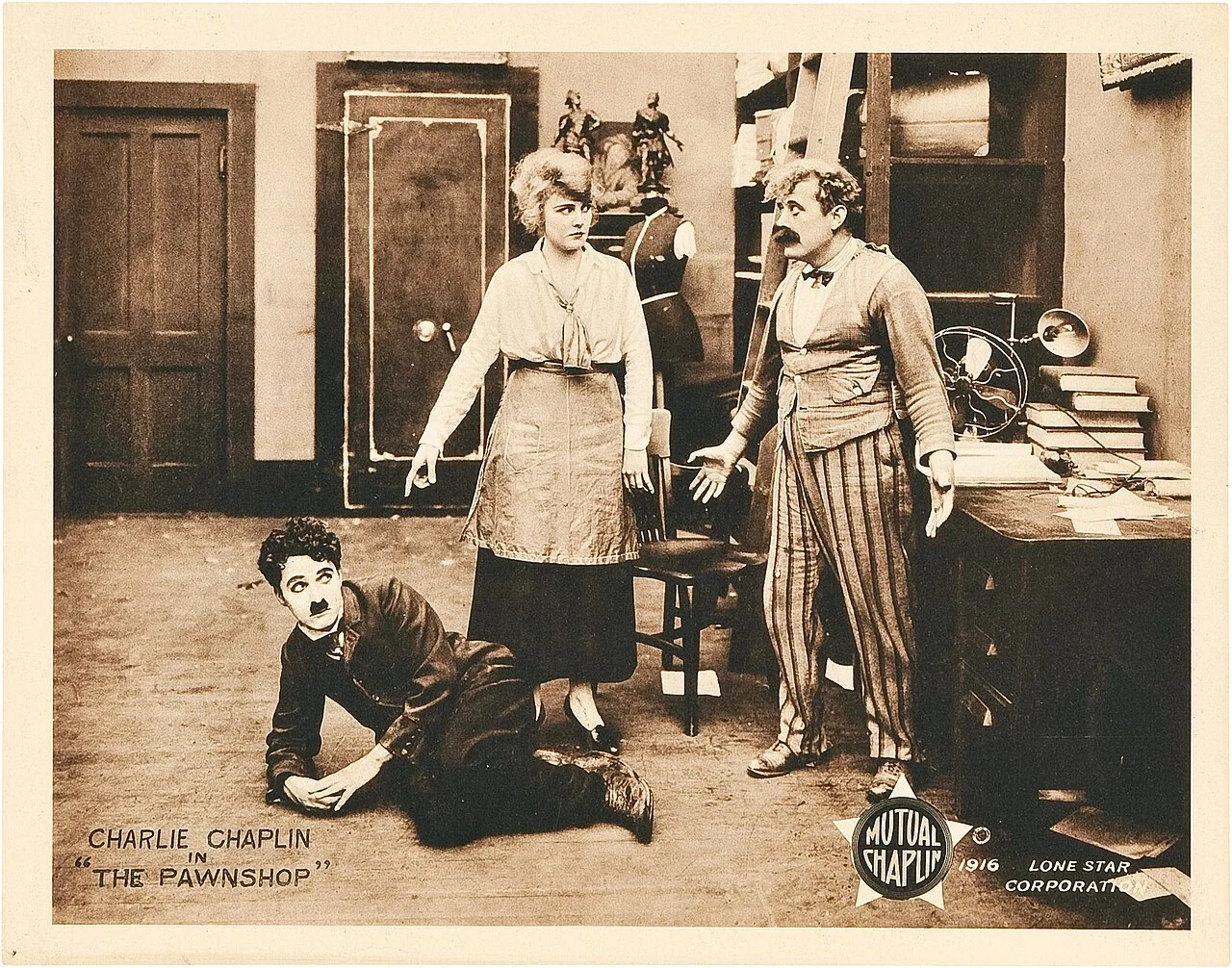
In The Pawnshop (1916), a customer brings an alarm clock to be valued. Chaplin treats it like a patient undergoing examination and then like a machine to dismantle. The same object produces a chain of comic changes. No chase or explosion is required: a new relationship between actor and object makes the joke. The body changes the tool’s meaning, and the tool imposes new movements on the body.
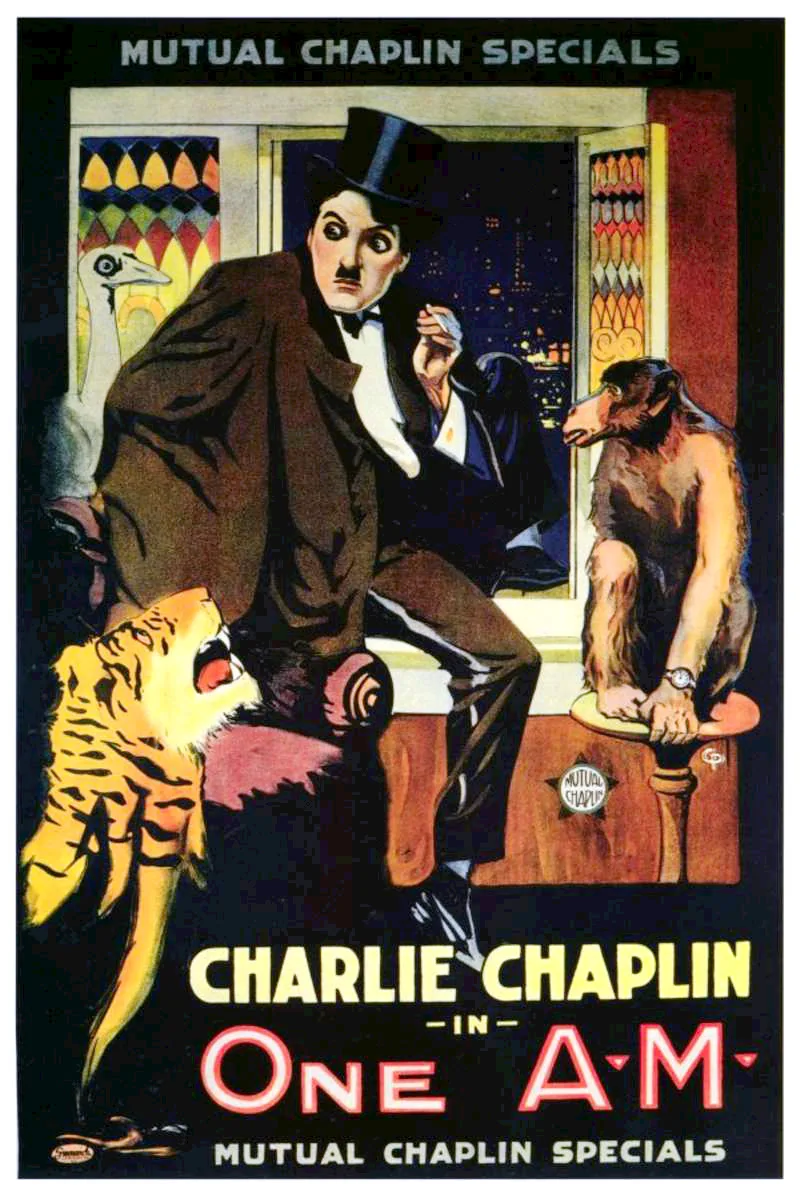
One A.M. pushes that idea further. Alone for almost the entire film, Chaplin turns the house, furniture, stairs and bed into opponents. It is a test of one performer’s ability to draw a sequence of conflicts from one space.
The furniture is effectively a second actor—perhaps the stronger one in the scene.
The director who performed everyone’s part
Chaplin’s control extended beyond his own acting. During the Mutual years he developed a highly unusual directing method: he performed movements for other actors himself, demonstrating gestures, the timing of a glance and small details of a performance.
Crew accounts and surviving footage show scenes being tried repeatedly, with ideas changing on set when a better course emerged before the camera. Acting, directing and writing were not entirely separate stages. A physical pose could suggest a movement; the movement reveal a problem; the problem generate another idea; and the scene would be filmed again.
That is why time was essential. Chaplin did not simply film what had already been written. He used filming as a way to write.
The edit begins before the editing room
His editing can be understood through the same method. Editing does not always mean frequent cuts. Sometimes the crucial decision is not to cut. If viewers need to see a gag begin, develop and pay off in the same space, a premature cut weakens it.
Chaplin arranges action to guide our attention. A performer begins on the left, something happens on the right, the character notices late and the two movements converge. The cut is not the sole source of rhythm. Blocking creates an edit within the shot.
Control of acting before filming therefore becomes part of editing after it. Precise movement reduces the need to rescue a gag with cuts. Chaplin often wants us to see, to wait, and then to experience the payoff where the body has prepared it.
A studio of his own
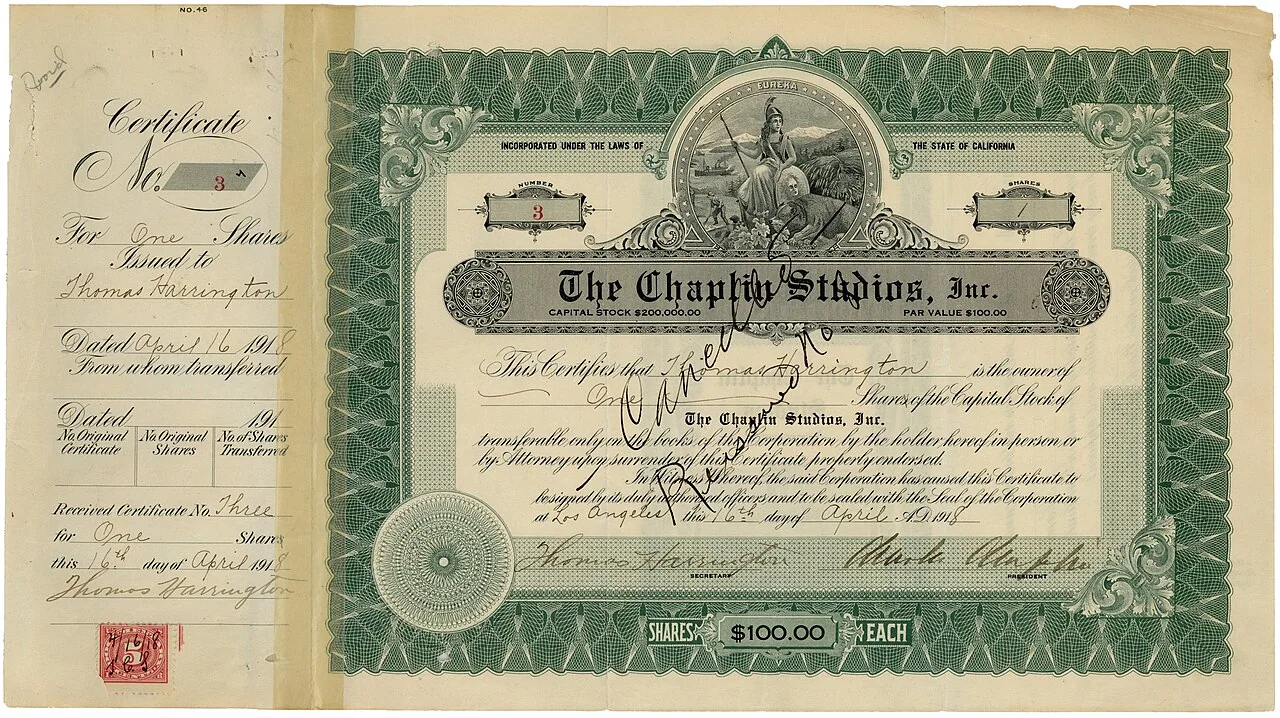
When Chaplin’s Mutual contract ended in 1917, the next move followed naturally. He became an independent producer, began building a studio on La Brea Avenue in Hollywood and entered a distribution agreement with First National Exhibitors’ Circuit in early 1918. A Dog’s Life was the first film of this phase.
The structure around him had changed step by step. At Keystone he worked in someone else’s factory; at Essanay he had more room within it; at Mutual a studio was dedicated to his pictures. Now he had a place of production of his own.
This was practical, not merely a rise in status. Sets could be built for his needs; a scene revisited; an idea altered; an unsuccessful take discarded. A film could take the time it required—or at least far more than had been possible at the beginning.
The Kid: time lets the story grow
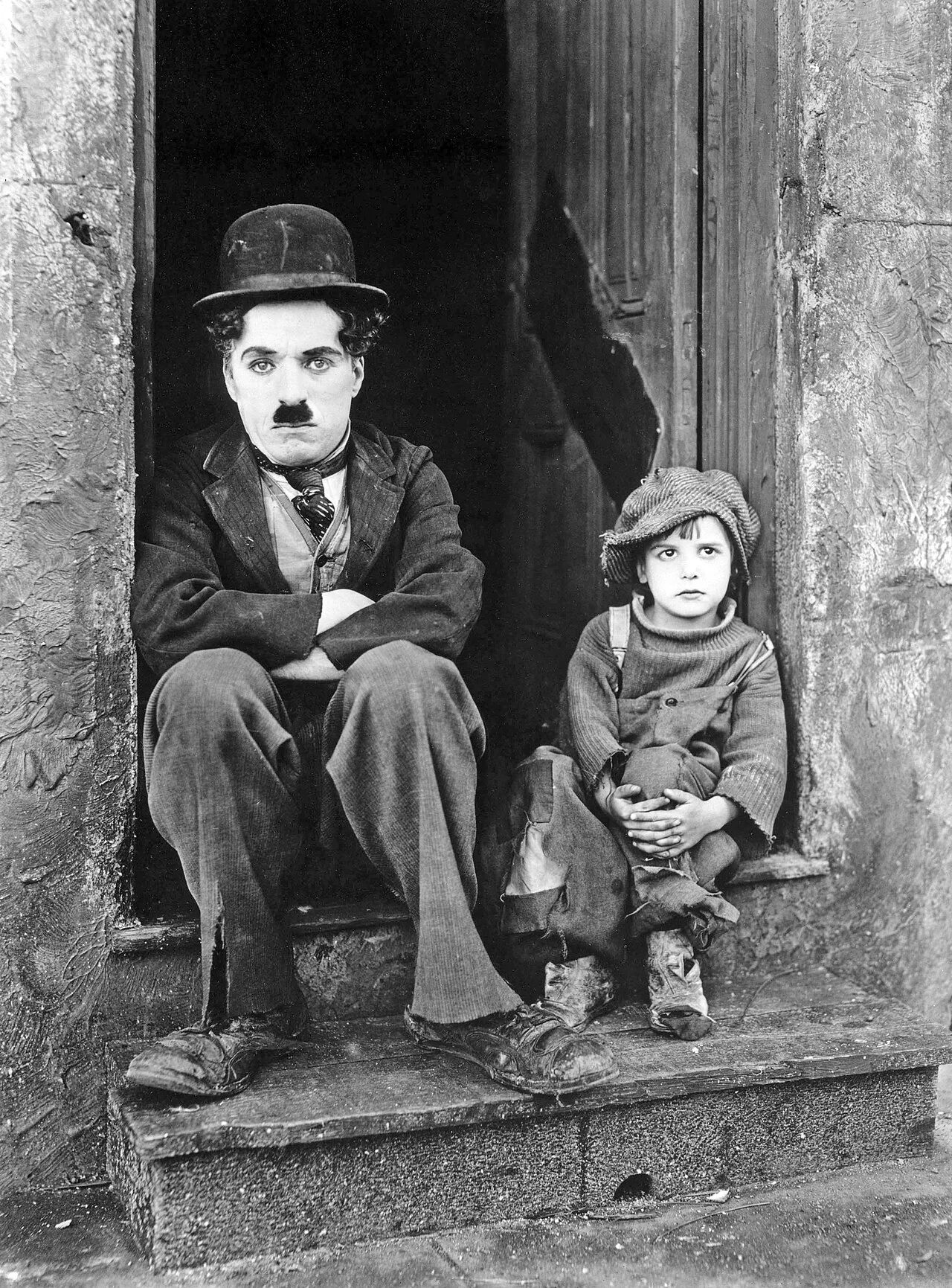
That freedom led to The Kid in 1921. Produced under his obligations to First National, its six reels marked a striking increase in scale compared with the shorts that had made his name. The point here is not to retell the film’s story but to see the distance Chaplin had travelled.
A man who only a few years earlier had made brief comedies under intense industrial pressure could now keep the Tramp within a longer story and develop the relationship between comedy and feeling across more room.
The principle behind that change had been growing all along: to control the rhythm, Chaplin had to control the time in which the rhythm was made. Independence was a production structure with a visible result on the screen, not merely a romantic slogan about artistic freedom.
United Artists: the missing final link
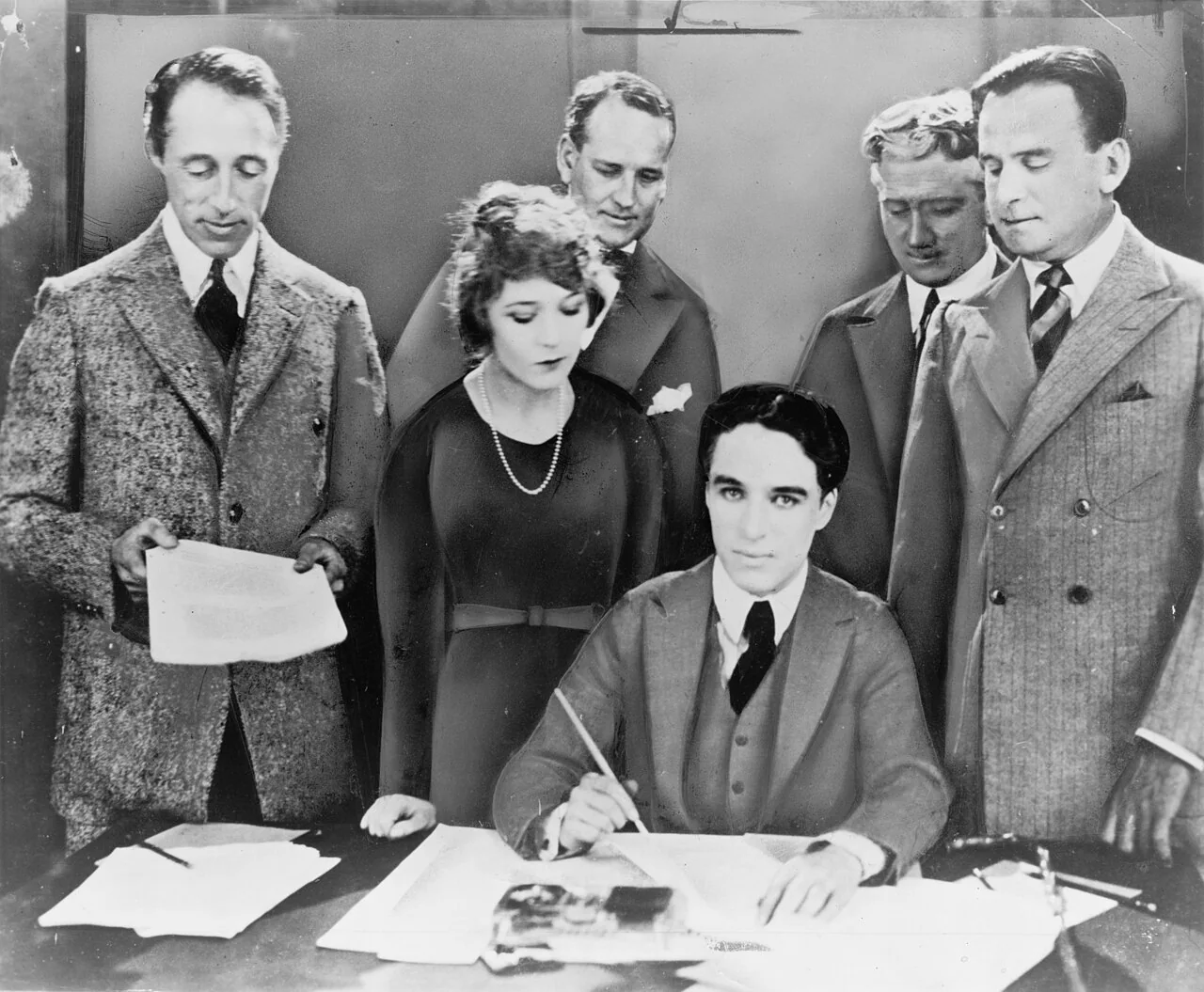
One link was still missing. You could produce your film and own a studio, but what happened after the film was finished? Cinema also depended on distribution, theatres and the route between a picture and its audience. The biggest stars were beginning to grasp the power held by whoever controlled that route. On 5 February 1919, Chaplin, Mary Pickford, Douglas Fairbanks and D. W. Griffith signed an agreement to establish United Artists Corporation.
The name can mislead: United Artists was not simply another studio making their films. Its basic model was a distribution company through which artists retained control of their production activities and supplied completed pictures for release. They also bore responsibility for financing their own productions; they were no longer salaried stars working for a company that owned their films.
The industrial step completed a line of thought: first Chaplin sought control over his performance, then the scene, the film and production. Now he wanted a say in the path the film took after it was completed.
When production becomes part of cinematic language
The most important result is that production had become part of cinematic language. We often separate art—acting, framing, editing and rhythm—from production—money, time, contracts, studios and distribution. Chaplin’s path shows how deeply they affected each other.
With more time, he changed how scenes were developed. More room for experimentation sharpened performances. Studio control allowed rebuilding and reshooting. As a producer he was less bound by an outside schedule. United Artists extended the logic: he sought a say not only in what appeared within the frame but also in the structure that carried the frame to a screen.
His rise cannot be reduced to ‘he became famous and rich.’ More precisely, he used the power of fame to buy something money alone cannot create: the freedom to try. That freedom became visible in the films themselves.
He owned almost everything—then cinema changed
By the 1920s a once unlikely change had occurred. The boy who entered cinema as a hired performer could write, direct, act and produce in his own studio, while taking part in a company that gave him and his partners an independent route to distribution. The Tramp, the rhythm and much of the time needed to experiment were now his to shape.
Yet complete control in cinema is an illusion. An artist can control a studio without controlling the entire industry. Just when Chaplin had achieved extraordinary freedom to make films his way, cinema was preparing to change its rules. The screen on which he had built a language of seeing without speech was acquiring a voice.
For the first time the answer was not simply a better contract, more time or a more accommodating studio. What happens to an artist who built one of the world’s best-known characters from body and silence when the industry decides that its future will speak? That is where part three begins.
About this series
This special traces Charlie Chaplin’s cinematic origins, artistic independence, relationship with sound, public conflict, and legacy.
All parts of this series are now published.
All Cinema Journal articles