
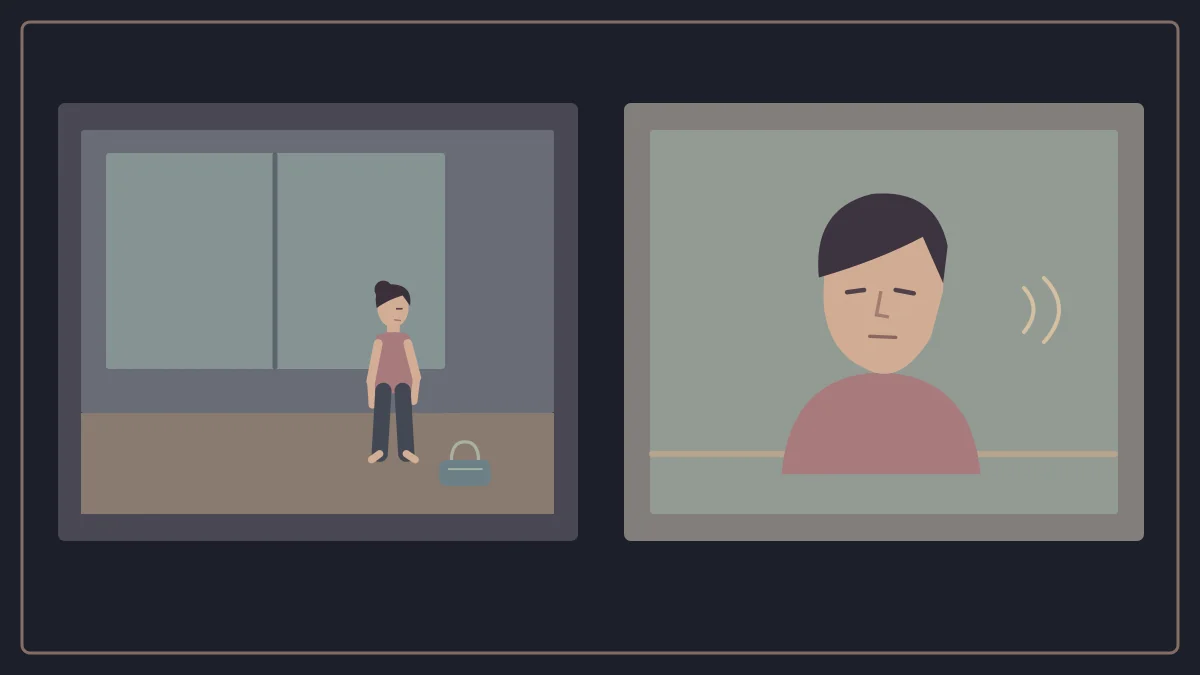
In a rehearsal studio with most of its lights switched off, a dancer stands before a large mirror. She repeats a movement she has practised for a long time, but stumbles before completing it. The music stops. She looks at her reflection for a few moments, then picks up her bag and leaves.
That is the scene.
One director might approach it as a moment of defeat. The camera stays far away, showing the empty space around the dancer and retaining the sound of her tired footsteps as she leaves. We might feel that the dream she has been pursuing has slipped further away.
Another director, however, might see something different in the same moment.
Perhaps this woman has spent years trying to prove herself to others, until she lost touch with the dancing she loved. When the music stops, leaving is not an admission of defeat but a decision to free herself from pressure she no longer wishes to bear.
This director might keep the camera close, giving us time to notice her breathing settle, then let her leave without sad music imposing a particular interpretation.
The event has not changed: an unsuccessful attempt, a pause, then a departure.
The meaning we take away has changed, however, because each treatment begins with a different question.
Does stopping mean giving up? Or can courage sometimes lie in recognising when it is time to stop?
This difference leads us to one of the most important aspects of film direction: artistic vision.
A director needs more than the knowledge of how to film a scene. They also need to discover what is worth exploring, how they understand the characters they portray and what position their story takes towards the world in which it unfolds.
This is where the contours of an artistic identity begin to emerge.
What Is a Director's Artistic Vision?
When we hear the expression "artistic vision", we may immediately imagine beautiful images, distinctive colours or unusual camera movement.
These elements concern the way a film appears on screen, while artistic vision extends beyond its visual form.
We can understand it as the director's conception of the story and its meaning, the characters and their surroundings, and the experience they want to create for the viewer.
It influences how the screenplay is read, what should be shown or withheld, which situations deserve emphasis, and the performance, rhythm and relationships that develop within the film.
Suppose we have a story about someone returning, after a long absence, to a place where they spent their childhood.
One director might be interested in memory, and in how the places we retain in our minds differ from those we find when we return.
Another might be interested in our relationship with the past, seeing the return as an opportunity to understand why we left in the first place rather than an attempt to recover what we lost.
A third might approach the story from a social perspective, focusing on the changes that have affected the place and its residents during those years away.
The basic story is the same, but the viewpoint changes the questions being asked and, consequently, the dramatic and visual decisions.
Having an artistic vision does not mean a director must deliver an explicit message or moral lesson.
Their vision might instead be built around doubt, contradiction or a question to which they have no definitive answer.
A viewer might finish the film feeling more sympathy for a character whose actions they disagree with, or more aware of the complexity of a situation that initially seemed straightforward.
In either case, artistic vision can give the story depth without requiring a character to stand before the camera and explain its intended meaning.
Why Is Wanting to Make a Beautiful Film Not Enough?
It is natural for a beginning director to want to shoot attractive images.
They may like dim lighting, cool colours, night scenes or long camera movements. They may feel that these choices express their personality because they resemble films that have influenced them.
Admiring a visual form does not automatically give it a dramatic function, however.
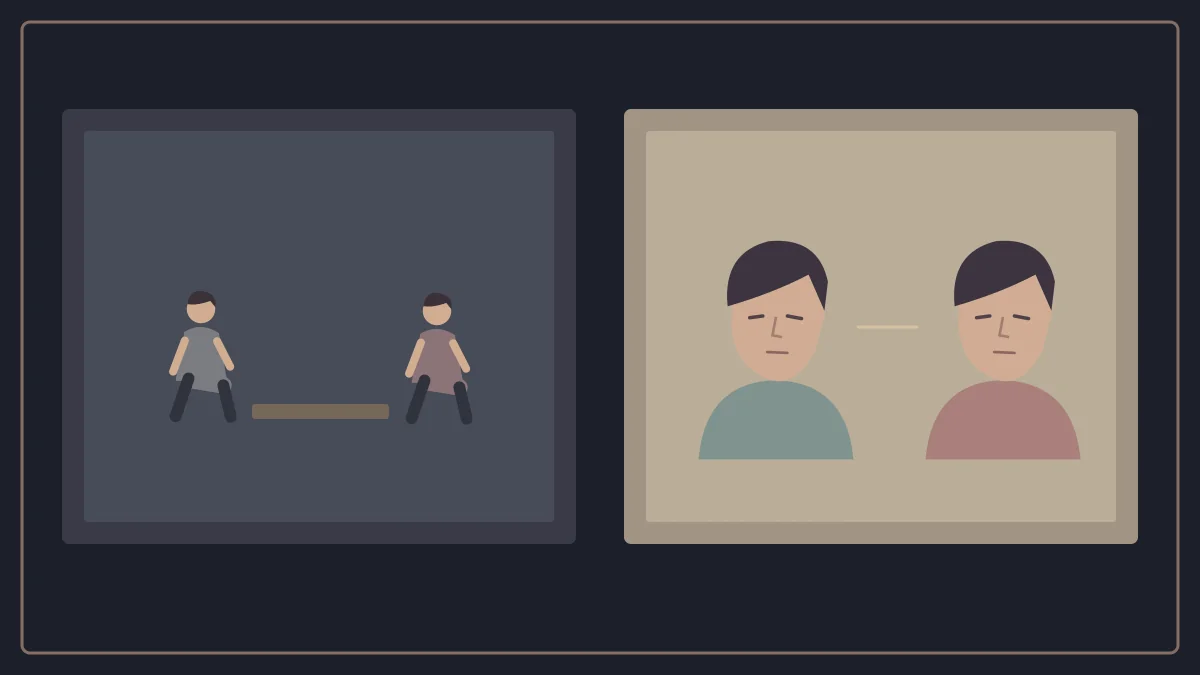
Imagine filming a reconciliation between two characters after a long conflict.
You might choose dark lighting because it looks cinematic, keep the camera far away because you like wide compositions, then add sad music that gives the scene a tragic tone.
Each of these choices could be appropriate in particular circumstances.
But what if the reconciliation is a sincere moment of relief after years of misunderstanding? What if the most important thing in the scene is a small change in the way one character looks at the other?
Insisting on a sombre appearance might obstruct the meaning the story needs to convey.
Here we can see the difference between artistic vision and visual style.
Artistic vision helps you determine what you want to express; style is the set of choices that shapes how you express it.
Their relationship is not rigid. You may discover a new meaning while trying a particular way of filming, or find that an unexpected visual choice opens another way of understanding a character.
The problem begins when technique becomes an objective separate from the film.
A long take has no fixed directorial value simply because it is difficult to execute, and an ordinary image is not weak because it lacks complexity.
A choice that clearly serves the story may be more powerful than dozens of visual flourishes that add nothing to it.
The Question That Concerns You Matters More Than the Message You Want to Declare
How does a director discover subjects worth making films about?
It can begin with noticing what repeatedly arouses their curiosity.
Perhaps you are drawn to characters afraid of change, complicated family relationships or people trying to defend their dreams in circumstances that do not support them.
You may find yourself interested in stories about fear of failure, the need to belong or the price people pay for hiding their true selves from others.
These subjects are very broad, however.
Words such as love, fear, loneliness and freedom do not, by themselves, tell us what you want to explore within a film.
You could make dozens of films about loneliness, each differing in story, characters and meaning.
What matters more is the specific question that interests you within the subject.
If loneliness interests you, you might ask: why can some people talk to everyone yet struggle to admit their feelings to those closest to them?
If you are interested in fear of failure, you might ask: when does the desire to succeed become a force that prevents someone from enjoying what they love?
If family relationships concern you, your question might be: can we love people whose understanding of life differs fundamentally from ours?
These questions open up dramatic possibilities.
They do not impose a ready answer on the characters, but give you room to observe their actions and discover the contradictions they live with.
It is therefore useful to distinguish between the subject, the question and the position the film takes.
The subject might be ambition. The question: what happens when success becomes more important than the life we are trying to build? The position that emerges through the story might be that people sometimes need to redefine success rather than pursue the image others have set for them.
This position should not, however, be delivered to the audience through explicit dialogue.
It can emerge through a character's choices, what they gain or lose, and the way we experience their journey.
Remember that a director does not need a definitive answer before beginning work. Their uncertainty about a particular question may be the very reason they want to make the film.
How Does Your Vision Become a Directorial Decision?
Let us return to the dancer stumbling in the rehearsal studio.
Suppose the question that concerns you is this: is continuing to pursue an old dream a sign of strength, or can it sometimes become a form of fear of change?
This question does not, by itself, determine where to put the camera, but it gives you a criterion for weighing different choices.
If you want viewers to feel that the character is trapped by her own expectations, you might give the mirror a prominent place in the composition. Not as a symbol with a fixed meaning, but because it allows you to show the woman's relationship with her image of herself.
You might focus on the repetition of the same movement, allowing viewers to notice how much effort she expends without achieving the desired result.
If your main interest is the moment when she begins to free herself from pressure, however, the music stopping may become more important than the stumble itself.
The woman stops moving, and we hear her breathing in the empty studio. There is no major physical transformation, but the rhythm changes, and the stillness becomes an opportunity to see her beyond her constant pursuit of perfection.
The director might stay with the scene without cutting, or move to a small detail that reveals a change in her behaviour.
There is no rule here that stillness means liberation or camera movement means disturbance.
These are possibilities that need testing within the dramatic context.
The same applies to performance. Instead of asking the actor to display sadness or relief directly, the director can discuss what has changed in the character's attitude towards herself and what action might reveal it without exaggeration.
When reviewing the scene in the edit, the director may discover that the moment of reflection before the mirror needs more time, or that leaving the studio quickly makes the decision seem more impulsive than intended.
In this way, artistic vision remains present throughout the filmmaking process.
It is not a beautiful sentence in a project document, but a conception that helps you test whether the many choices are moving towards the meaning you are developing.
If, during production, you discover that the scene reveals something more complex than you imagined, there is nothing wrong with developing the vision itself.
A film is not simply the mechanical execution of an idea completed in advance. It is also a process of discovery.

Does Every Director Have a Style of Their Own?
When we discuss a director's artistic identity, we often think of filmmakers whose work we can recognise through the camerawork, rhythm or design of their scenes.
Recurring traits do not mean that every film should use the same visual choices, however, or that a director needs to invent a formal trademark the audience can immediately recognise.
Let us consider two different examples from cinema.
In Tokyo Story, directed by Yasujirō Ozu, there is a strong interest in family life, relationships between generations and the quiet changes those relationships undergo over time.
Much of the film's visual treatment uses calm compositions and relatively low, static camera positions, while everyday details and small character movements acquire dramatic importance.
This style can be read as a way of allowing viewers to observe emotional distances within the family without constantly amplifying events.
In The Grand Budapest Hotel, directed by Wes Anderson, we find a very different world in the organisation of the image, colours and rhythm.
Precise geometric compositions and richly detailed designs are prominent elements of the film's visual identity, while its story interweaves ideas about friendship, loyalty, memory and a world gradually changing and disappearing.
The two styles may seem very far apart.
The value of either does not lie in one director using a static camera while the other likes precise compositions and distinctive colours.
What matters more is the relationship between form and story.
The quiet distance we feel in some of Ozu's scenes is more than an exercise in keeping the camera still, just as the carefully designed world of Anderson is more than a collection of symmetrical images to copy.
Despite the differences between the two films, both illustrate how visual treatment can become part of the way we understand the story's world and its characters.
If a beginning director tried to copy the visual appearance of either without understanding the story they wanted to tell, the resulting images might resemble them in form without carrying the same meaning.
This brings us to an essential point: an artistic signature develops when your choices begin to express a specific, honest way of understanding stories, rather than when you deliberately try to look different.
Why Can Imitating Your Favourite Director Be Both Useful and Dangerous?
Being influenced by other directors is a natural part of learning.
Watching a particular film may reveal a new way of handling silence, actors' movements or the relationship between characters and space.
Imitating a technique in a learning exercise can be a useful way to understand how it works.
There is a difference, however, between studying a director's style to understand it and turning it into a template for all your projects.
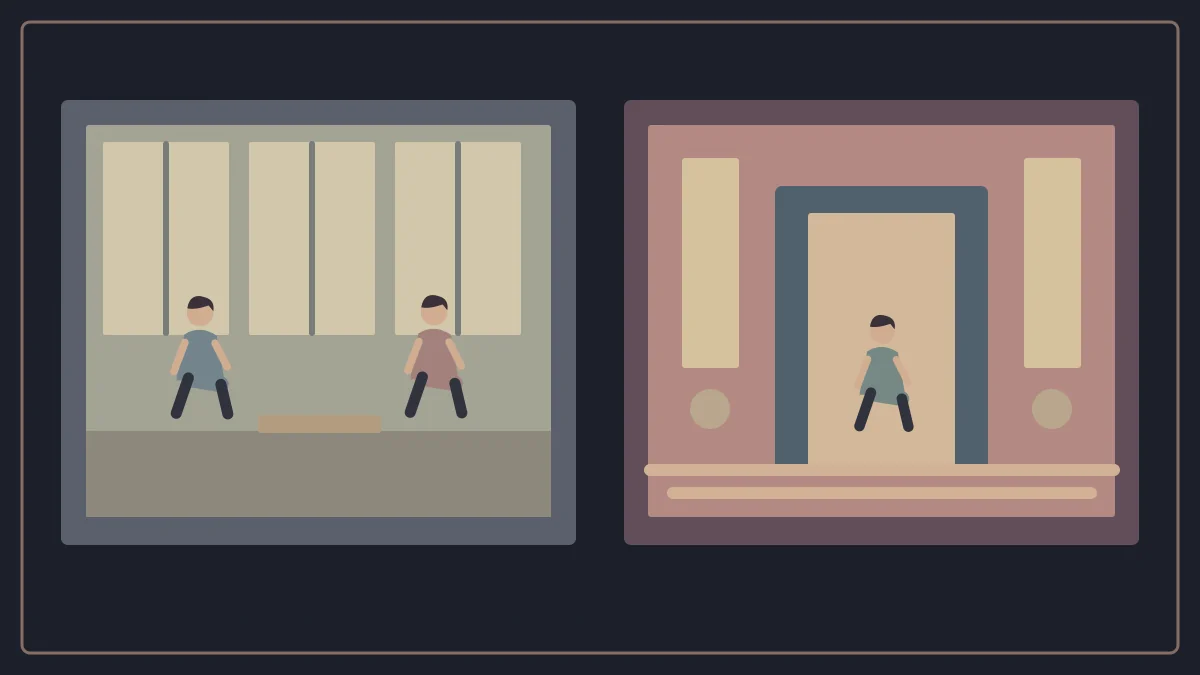
Suppose you love dialogue scenes filmed in long takes without cuts.
You can try filming a scene this way to understand the difficulty of organising actors' movements and shifting attention within the image.
You may discover that a long take lets actors maintain the continuity of a performance, but sometimes reduces your flexibility to change the rhythm or rearrange moments in the edit.
This is useful practical knowledge.
If you then decide to shoot every dialogue scene in your films in a long take because your favourite director does, however, the technique has become a constraint rather than a tool.
One story may require moving closer to a character's face at a particular moment. Another scene may require withholding information or moving between reactions in a way the same treatment does not serve.
A director developing an artistic identity does not abandon the influence of others, but learns to test what they admired in others' work under different conditions.
Over time, they begin to recognise choices that suit their way of telling stories, and others that look attractive but do not serve what they want to say.
This does not mean they must avoid familiar approaches simply because someone has used them before.
Originality does not require inventing a new cinematic language in every film. It can emerge through combining familiar tools to create an experience with a character of its own.
You Do Not Need to Turn Your Personal Life into a Film
One possible way to discover your artistic vision is to think about experiences and situations that have left a mark on you.
It might be a conversation you have never forgotten, an interaction you witnessed between two people, a relationship you did not understand at the time, or a decision that later made you wonder what would have happened had you chosen differently.
These experiences may contain the seeds of cinematic stories.
They are not a prerequisite for creativity, however, and should not be treated as material that must be transferred literally to the screen.
A director is not required to reveal their private life to create an honest work.
They can begin with a general human observation, a piece of news, an imagined character or a text written by someone else.
They may become interested in a situation they have not lived through because they want to understand the people who experience it.
Observation, research, imagination and empathy become important tools here.
If you want to make a film about someone forced to choose between family and career ambitions, you do not have to have experienced the same dilemma.
You do need to try to understand the character's motives and the pressures they face, rather than reducing them to a stereotype that confirms your existing opinion.
While developing the story, you may discover that the character you thought selfish has complex reasons for their behaviour, or that the person who initially seemed a victim also bears some responsibility for the conflict.
These discoveries can deepen your vision because they push you to look beyond the limits of your immediate experience.
When drawing inspiration from real people's lives, their privacy and rights should be respected, and personal details or sensitive events should not be presented in ways that could harm them.
Adapting a real experience into a drama may also require changing characters, circumstances and events, while taking care not to misrepresent real people or use their stories without appropriate consideration of rights.
Artistic vision is not permission to turn other people into instruments for proving our ideas.
It involves responsibility in how we choose to look at them and represent them on screen.
Your Vision Does Not Mean Repeating the Same Story Forever
A director may discover a lasting interest in relationships between parents and children.
Does that mean all their films must take place in a family home, or have children rebelling against their parents as protagonists?
Not necessarily.
The same human question can appear in different film genres.
The relationship between authority and freedom, for instance, could underpin a family drama, a science fiction film about a society under surveillance, or a comedy about someone trying to escape rigid rules imposed by others.
A difference in genre does not eliminate a shared intellectual interest.
The subjects that concern you may change over the years, and your approach to them may develop as you gain experience or reconsider ideas you once believed.
Some directors even discover aspects of their artistic identity through projects they did not initially expect to find appealing.
It is therefore better to approach artistic vision as a developing direction rather than a closed identity to defend throughout life.
If you find yourself drawn to portraying human relationships quietly, that should not stop you from trying a film built on action and tension. This new genre might reveal another side of your interest in characters.
If you prefer realistic stories, trying science fiction may help you express a human question that would be difficult to explore in the same way within a realistic world.
What matters is that searching for your own signature does not become a reason to repeat choices unconsciously.
A mature artistic identity appears not only in what you know how to do, but also in your willingness to reconsider it when a film needs a different solution.
Does the Vision Belong to the Director Alone?
Despite the importance of a director's artistic identity, we should not forget that a film is a collective work.
A director may arrive with a clear conception of the project, but it develops through collaboration with the writer, actors, cinematographer, production designer, editor and other specialists.
If an artistic vision is worth turning into a film, it should be clear enough for the team to understand and flexible enough to welcome suggestions that serve it.
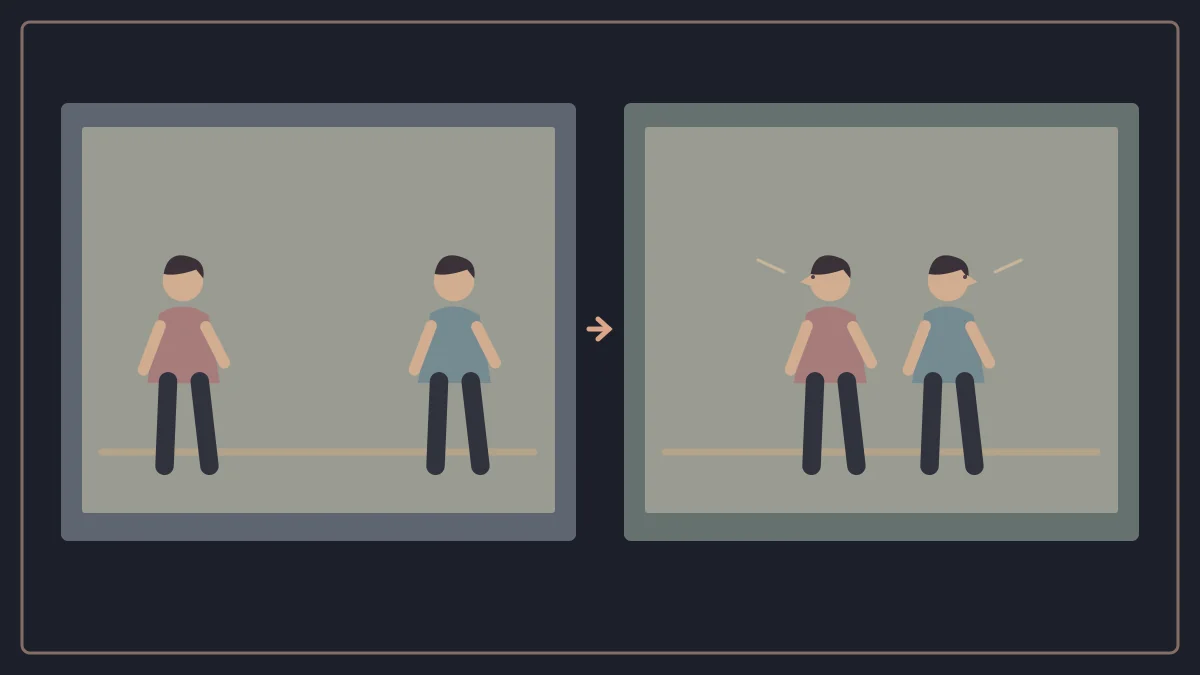
Suppose a director is working on a story about a character who has difficulty communicating with others.
They may initially imagine scenes built around large distances between characters within the frame.
During rehearsals, however, the actors discover that the tension feels more truthful when the two people stand physically close while each avoids the other's gaze.
This solution does not necessarily contradict the original vision. It may achieve the same meaning more powerfully.
The director may discuss with the cinematographer how to preserve that relationship within the image, then discover in the edit that keeping both characters together at certain moments creates tension that separate shots do not.
The vision thus develops from an individual idea into a shared experience.
This does not diminish the director's role, but reveals the creative leadership it requires.
The aim is not to claim every good idea as their own, but to understand its effect on the film and work with others to choose what serves the story.
One of the hardest tests may be letting go of a solution they personally love because another produces a better result.
Practical Exercise: One Page to Discover Your First Vision
Now that you can distinguish artistic vision from visual style, you can begin identifying some of the subjects and questions that concern you.
You do not need to shoot a whole film or write a long screenplay.
One page in a notebook is enough. Treat it as a starting point that can change, rather than a final document defining your identity forever.
First: Which Stories Stay with You?
Choose three stories or situations you still remember clearly.
They may come from films, novels or everyday situations you have witnessed or imagined. They do not have to be painful personal experiences or secrets you wish to reveal.
Beside each situation, write down exactly what interested you.
If you choose a story about someone leaving a successful career, do not simply write that you like stories about change.
Perhaps what concerns you is the fear of losing your identity when you give up something you have spent years building.
This idea is more specific and can become the basis for a dramatic question.
Second: Turn Your Interest into a Question
Choose one of the three subjects, then try to phrase it as a question that allows more than one answer.
Instead of writing "I want to make a film about freedom", you might ask: can someone be free if they spend their whole life seeking other people's approval?
Instead of "I want a film about success", you might ask: what happens when someone achieves the dream they have been chasing, then discovers they no longer want it?
The aim is not to find a complicated philosophical phrase, but a question that makes you want to discover how characters facing this problem behave.
Third: Imagine a Scene That Reveals the Question
Return to the dancer in the rehearsal studio, or invent a simple situation of your own.
Identify what the character wants and what prevents them from getting it, then choose a moment when they are forced to decide.
Next, think about how you want to present that moment.
If your interest is fear of failure, you might focus on the character's hesitation before trying again.
If you are interested in their relationship with other people's expectations, consider how those expectations might be present in the scene: through an earlier situation we know about, another person or a detail with meaning within the story.
Do not choose the image's form before understanding what you want to test dramatically.
Fourth: Compare Two Different Choices
Imagine filming the first moment so that stopping appears to be defeat. Then rethink it so that stopping becomes a conscious decision to break free.
What would you change in the performance, shot duration or order of information?
Would the scene need different dialogue, or could the meaning be achieved through behaviour, image and sound?
Write a short explanation of each choice.
Then ask yourself: which treatment is closer to the question I want to explore? Am I choosing it because it serves the story, or because it resembles the style of a film I loved?
That final question matters because it helps distinguish other people's influence on your taste from choices beginning to emerge through your own understanding of the subject.
Keep the page at the end of the exercise so you can return to it after completing several projects.
You may later discover that your questions have changed, or that a subject you initially overlooked has become more prominent in your work.
This is a natural part of developing an artistic identity.

How Do You Know Your Signature Is Beginning to Emerge?
There is no particular moment after which you can announce that you possess a unique directing style.
Searching early for a distinguishing trademark may be less useful than attending to the quality of your choices themselves.
As you gain experience, however, you may begin to notice certain tendencies.
You might discover an attraction to characters who hide their feelings, or situations in which small actions change relationships. You might prefer stories that leave room for interpretation, or find contradictory characters more interesting than those who are easy to judge.
You may notice yourself returning to certain questions despite working on different stories.
These observations alone do not prove that a complete signature exists, but they help you understand your interests and develop them consciously.
It is useful to revisit your earlier work after some time, looking beyond visual similarities to the decisions you made when facing similar dramatic problems.
How did you portray a character who was not telling the truth? How did you film a moment of failure? Did you give characters you disagree with a chance for us to understand their motives?
The answers may reveal something about how you look at people and stories.
Do not turn these observations into rules you must follow in every film, however.
Your vision may change, and a new project may require moving away from choices that previously worked.
An artistic signature is not a set of tricks you keep to prove you are different. It is a trace that gradually develops through how you think, the questions you ask and the decisions you make when creating a story.
Before Searching for Your Style, Discover What Is Worth Telling
Let us remember the dancer standing alone in the rehearsal studio.
Her stumble may seem too small an event to sustain a whole film. Once we begin asking about her relationship with success, fear and the expectations she imposes on herself, however, that small movement becomes a dramatic possibility.
We might see a woman who has lost an opportunity she had been waiting for, someone discovering that her life is governed by standards she did not choose, or a person trying to understand whether truly loving something requires continuing at any cost.
No single answer imposes itself on all these possibilities.
The question you choose to explore will influence the character, scene, rhythm and use of image and sound.
With every new project, you will become better able to distinguish an idea that briefly impresses you from a story you genuinely want to spend a long time understanding and making.
This may require revising some assumptions, or admitting that a question you thought settled has become more complicated than expected.
This is not a problem to hide, but one of the things that gives an artwork life.
A director discovers their artistic identity through more than observing themselves: through the films they try to make, the characters they learn to understand and the choices they reconsider as their experience deepens.
Ultimately, the clearest sign that your vision is beginning to form may be that you no longer ask only how to make a scene look distinctive. You also ask why you want to film this particular scene and what you wish to discover through it.
When you find a question worth your attention, stories will begin to emerge from places you did not expect.
Here our first step in discovering the world of direction ends, and the next journey begins: how do we find a cinematic idea that can grow into a story worth telling?
About this series
A journey from understanding the director’s work and making a first decision to working with story, images and actors, then preparing, filming, editing and making a short film.
Further parts will be linked as they are published.
All Cinema Journal articles