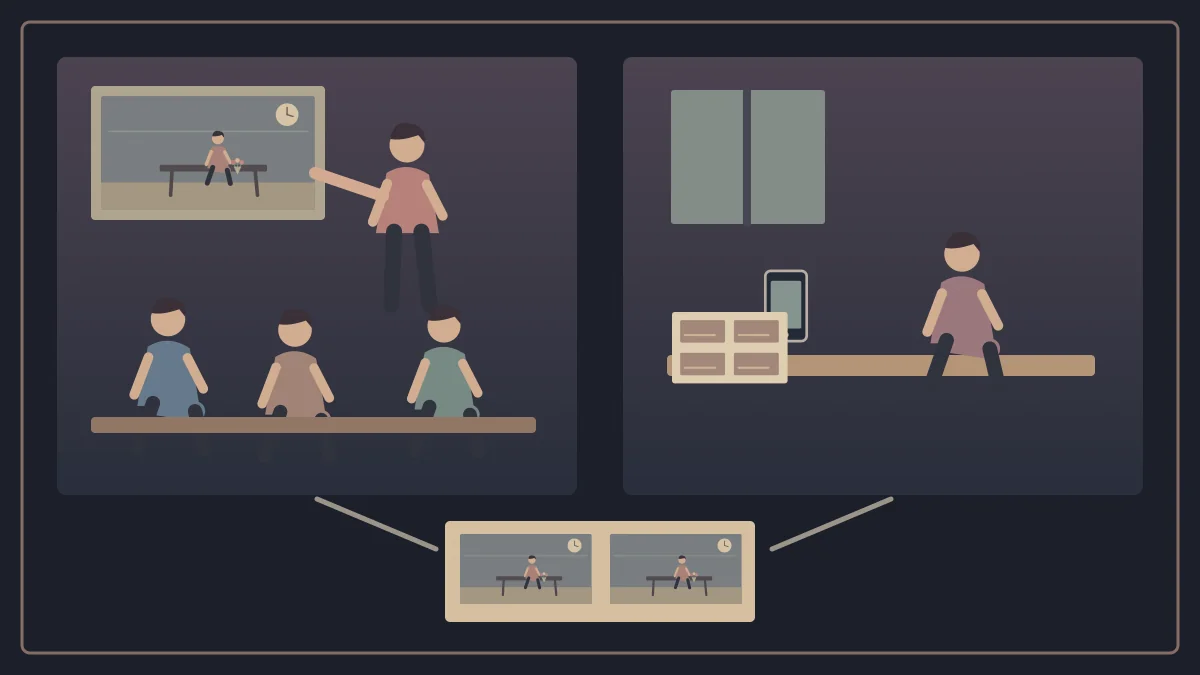
Imagine two young men deciding to film the same scene.
The first studies directing at a film school and has access to a professional camera, a fully equipped studio and classmates willing to participate. The second learns independently, filming on his phone in an ordinary room with a friend’s help.
The scene is simple: someone sits in an almost empty waiting area, holding a bouquet and checking their watch occasionally. Minutes pass, then they leave the flowers on the seat and walk away.
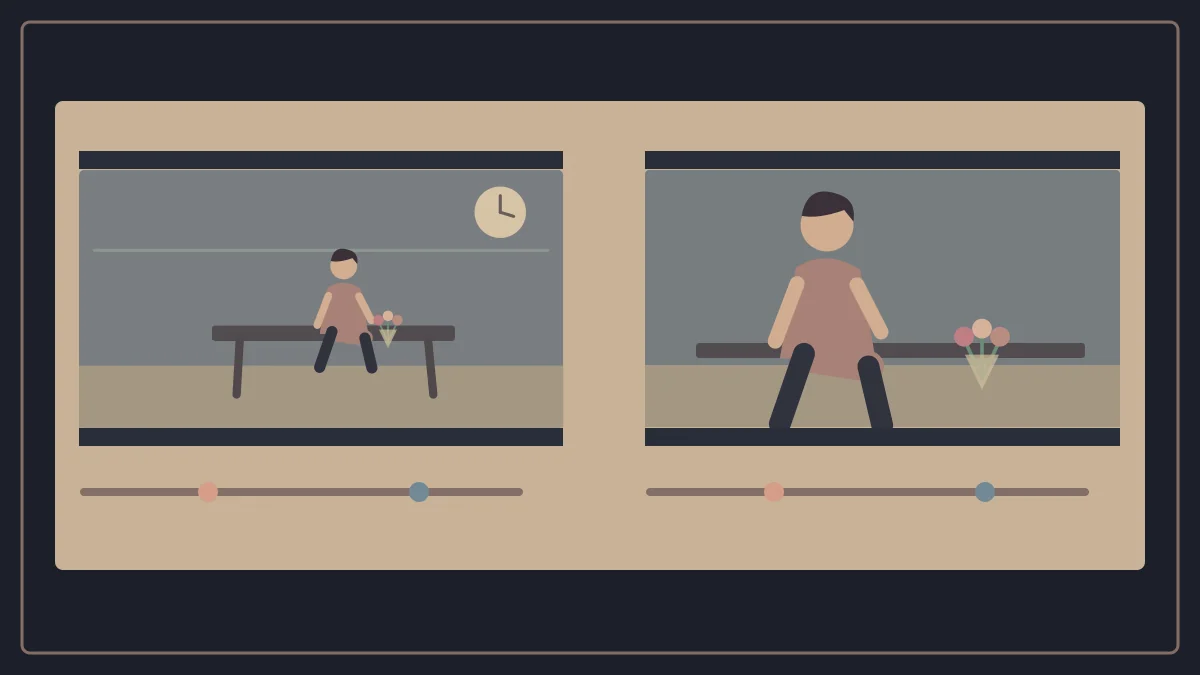
When both finish filming, the first student’s version looks more accomplished technically. The image is clear, the lighting balanced and the sound clean, but the scene conveys little sense of waiting or disappointment. The second learner’s version has technical problems, yet he chooses to remain on the character’s face after the flowers are put aside, giving the viewer time to notice the hesitation before leaving.
Does that mean independent learning is better than film school?
Of course not.
The first student might discover the scene’s weakness during a critique with a teacher and film it again more effectively. The second might struggle to improve his next attempt because he does not understand the causes of certain problems or how to address them.
This hypothetical example does not establish either route’s superiority. It reveals a question more important than comparing a university certificate with a camera at home:
What environment actually helps you understand directing, practise its decisions, discover your mistakes and return to make a better scene?
What does studying film direction mean?
The expression sounds familiar: studying directing.
But what does someone who wants to become a director study?
Operating a camera? Reading a screenplay? Directing actors? Managing a film set?
All these areas relate to directing, but learning them does not necessarily mean mastering directing itself.
Someone can know lens types, shot sizes and editing principles, yet struggle to decide how to film a simple scene. Another person may have extensive knowledge of cinema history without knowing how to turn a dramatic idea into a convincing performance on camera.
The problem is not the information, but the ability to use it.
Let us return to the waiting scene.
A student who learns what a close shot is may know how to position the camera for a clear image of the character’s face. But the directorial choice begins with a question: do we actually need to move closer to the face now? What changes if we stay farther away and see the character alone in the space?
If the aim is to make the viewer feel the length of the wait, the shot’s duration may matter more than its size. If the intention is to emphasise the moment the person loses hope, the timing of the cut to their face may be more powerful.
This reveals the difference between learning a tool and learning to make a decision.
A good film education does more than explain how to execute a particular shot. It trains you to understand the problem that shot is meant to solve, compare available alternatives and assess the final result.
This learning requires three connected elements: knowledge that explains how cinema works, experience that lets you use that knowledge and review that helps you discover what succeeded and what needs changing.
Whether you find them inside a school or outside one, these are the foundations to seek.
What does a good film school offer?
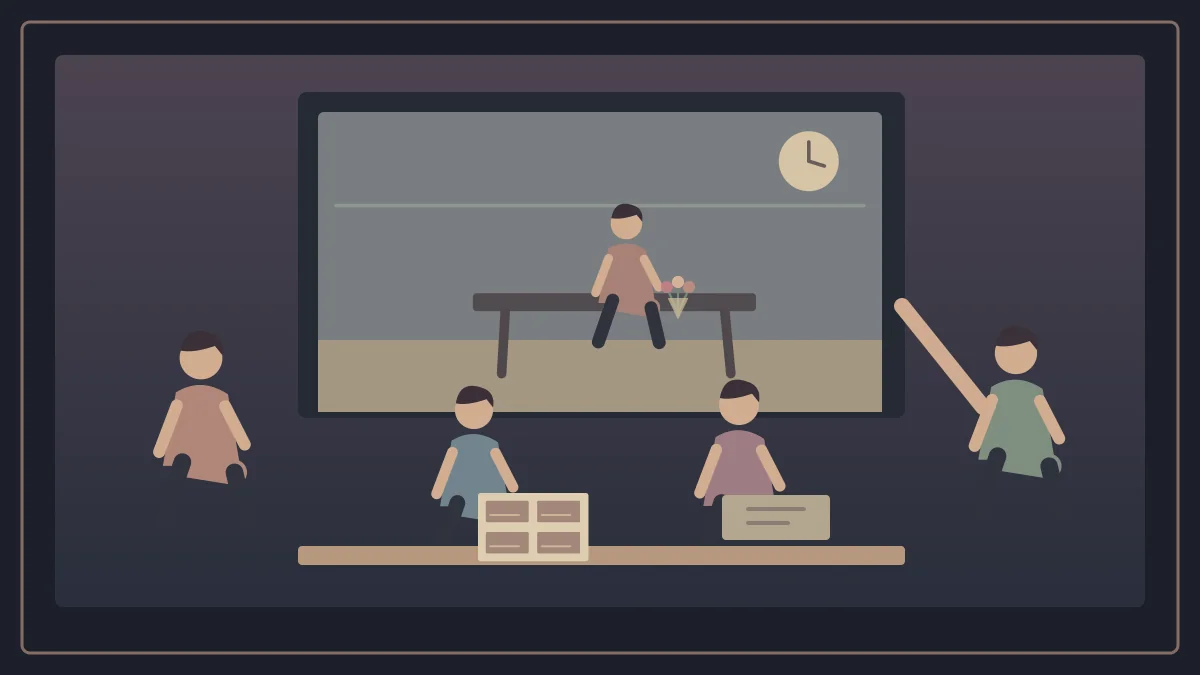
Studying within an organised film institution offers advantages that can sometimes be difficult to create when learning alone.
The first is a curriculum that develops progressively.
Instead of moving randomly between a lesson on lighting, another on visual effects and a third on screenwriting, you can study concepts in an order that helps you understand their connections.
You encounter the foundations of story, image, sound and editing, then apply this knowledge to projects progressing from simple exercises to more complex work.
But a curriculum alone is not enough. One of good education’s most valuable elements is someone able to recognise your mistakes and discuss them with you.
Imagine showing the waiting scene to a teacher, convinced that keeping the camera on the character for a long time made it affecting.
The teacher might ask: what did you want the viewer to feel during that time?
You answer that you wanted them to feel loneliness.
Then comes the harder question: what changes within the scene while the shot continues? Does that duration allow the viewer to notice something new, or merely prolong a wait we already understand?
You may discover that the shot is long not because it serves the story, but because you liked its composition and did not want to cut away.
This discussion helps you reconsider your choices instead of defending them simply because they are yours.
A school also offers opportunities to work with people learning different specialisms. Within one project, you might collaborate with someone interested in cinematography, someone studying sound and another person focused on editing, discovering different ways of thinking within a team.
You may find that your vision for the scene improves when you listen to a suggestion you would never have considered yourself.
Other important benefits include access to equipment, locations and facilities difficult to obtain alone, together with opportunities to repeat experiments in an environment that allows learning and mistakes.
Their true value, however, lies not in their presence at the institution, but in how much time you actually have to use them and the projects they help you complete.
A school with advanced equipment but too few opportunities for students to make films may offer less than its advertising suggests.
When might film school be the wrong choice?
Not every programme called “filmmaking” teaches directing in the same way.
There is a difference between a programme focused on cinema history, theory and film analysis, one offering substantial practical production and another combining both.
Theoretical study has real value. It broadens knowledge and understanding of artistic movements, approaches and the contexts in which cinematic language developed.
But someone wanting to learn directing in practice also needs repeated opportunities to make scenes, work with actors and decide under real constraints, then watch and discuss the results.
You should therefore not choose a film institution solely for its name or the studios shown in its promotional material.
Before joining a programme, it helps to understand the projects students undertake, how much they actually participate in directing them and whether they receive detailed reviews of their work.
The teachers’ backgrounds matter too. Professional filmmaking experience is valuable, as are research and teaching experience, but their expertise should match the skills the programme promises to teach.
A teacher specialising in film analysis may be excellent at explaining the history of visual language without necessarily being the best person, alone, to train you in running rehearsals or addressing filming problems.
Consider the cost, duration and opportunities available after studying as well, without assuming that a qualification automatically leads to working as a director.
A qualification may help in various educational and professional paths, and an institution can support connections, placements and collaboration. But it cannot replace the work you make or the experience gained while making it.
The best programme for you is not necessarily the most famous or expensive. It is the one offering learning suited to your needs and real opportunities to practise and develop.
Can you learn directing on your own?
Yes. You can begin outside academic institutions and develop important skills through individual study, practice and participation in projects.
But independent learning does not mean dispensing with organised knowledge or treating directing as a talent requiring no study.
This route demands considerable discipline. You take responsibility for choosing what to learn, ordering the subjects, identifying projects suited to your level and finding people who can offer useful feedback.
Its greatest advantage is flexibility.
You can choose a specific subject, work on it until you understand it and move to another according to your project’s needs. If you discover difficulty working with performance, you can devote extra time to studying and practising it without waiting for its scheduled place in a curriculum.
You can also begin with basic resources and gradually learn which tools and techniques you need.
But this freedom has an obvious danger: study can easily become a continuous consumption of information without application.
You might spend hours watching explanations of composition or camera movement and feel you have made great progress because the terminology now seems familiar.
Then, when you attempt a scene, you discover that you do not know which choices suit the story.
Theoretical knowledge can create a sense of understanding, but the real test comes when you must choose between possible solutions.
The question during independent study should therefore not be: how many lessons did I watch this week?
A better question is: what skill did I try to use, what happened when I tried it and what will I change next time?
If a school provides a curriculum, a teacher and classmates, you can build alternatives to those elements while learning independently.
You need a clear plan of subjects, regular small projects, people who join your experiments or offer honest feedback and references that help you interpret the problems you encounter.
With these elements, independent learning becomes more than watching lessons at home. It becomes a real training process that you organise yourself.
Books and video lessons: how do you use them without getting lost?
There is extensive educational material about cinema, from specialist books to lectures, video lessons and scene analysis.
But the abundance of resources can make beginning more confusing.
One resource may explain the importance of planning every shot precisely, while another demonstrates the benefits of improvisation and flexibility. You might find one director favouring lengthy rehearsals and another preferring to preserve the spontaneity of the actors’ first encounter.
Is one right and the other wrong?
Not necessarily.
Working methods differ according to the story, actors, available resources and the style the director wants to achieve.
The purpose of study is not to collect recipes and apply them unchanged. It is to understand the circumstances that make each method suitable or unsuitable.
Suppose you read an explanation of visual planning before filming.
You can gain more from it by choosing a short scene, sketching a simple sequence of images and attempting to film it.
Afterwards, you may discover that planning saved time but did not anticipate a movement the actor made that gave the scene a stronger meaning.
The lesson is neither that planning is bad nor that improvisation is always better. You learn that preparation gives you a clear vision, while attention during filming allows you to adjust it when a stronger solution emerges.
Nor should everything in an older book be treated as an accurate account of contemporary equipment or procedures. Artistic principles can remain useful for many years while filming, editing and working methods change.
The best way to use references is to give each study session a specific goal, then find an opportunity to test what you have learned before immediately moving to the next subject.
What do you learn on a real film set?
Some knowledge is difficult to acquire from books alone, particularly how people work together to make a film.
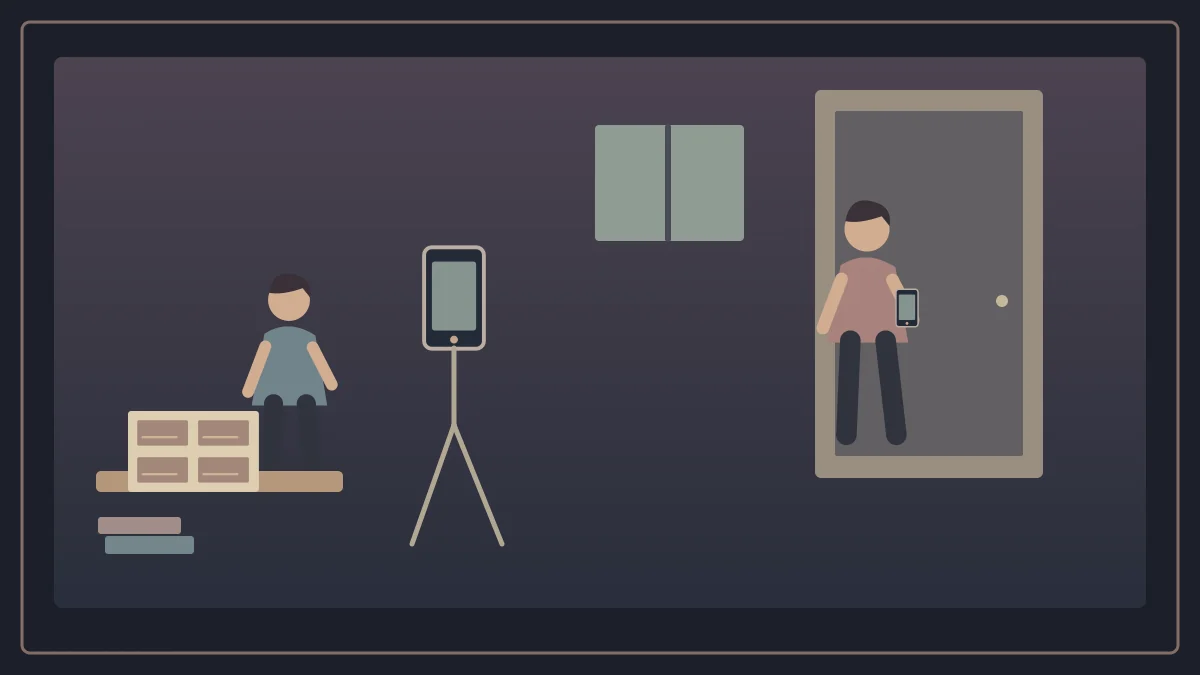
On a set, you discover that a scene lasting one minute on screen may need extensive preparation, and that a small change in camera position can affect lighting, sound, actors’ movements and the available time.
You also learn the importance of punctuality, clear instructions, respect for other people’s responsibilities and handling problems without holding up the entire team.
There may be opportunities to learn through placements or participation in small productions, depending on the project and its working conditions.
But an essential distinction matters: working on a set does not automatically make you a director.
You might learn a great deal about organising the day, preparing equipment and coordinating departments without making a single directorial decision.
Treat set experience as part of your education, rather than a guaranteed route or a complete substitute for making your own work.
Observe how a problem becomes a decision. Why is a scene’s filming order changed? How does the crew handle unexpected noise? What effect do production adjustments have on the creative work?
When there is an appropriate opportunity to ask questions or help, stay within your responsibilities and do not interrupt filming. A workplace is not a classroom that can pause whenever you wish. The crew’s safety and respect for the production’s privacy come first.
Then use what you have learned in your independent experiments.
Being on set may teach you the importance of preparation, but you will not fully grasp its effect on your decisions until you plan your own scene, begin filming and encounter the unexpected.
Is combining the routes better?
You do not have to choose between organised study and independent learning as though they were opposing worlds.
You might study at a film institution while continuing to make independent experiments outside its projects. You might learn alone for a time, then attend a specialist workshop addressing a particular weakness.
Or working with a crew may offer practical knowledge that you then return to study, seeking the artistic reasons behind what you observed.
These routes can complement one another.
A good school offers an organised environment, but cannot make your creative decisions for you. Independent learning offers considerable freedom, but needs discipline and review. Working on set reveals professional realities, but does not replace leading a scene yourself.
If you cannot join a specialist institution now, you do not have to postpone learning. If a good study opportunity suits your circumstances, there is no reason to reject it simply because some directors succeeded outside academia.
Choose according to your needs, resources and the education available to you, rather than trying to imitate a famous director’s life.
A practical programme: one month to begin learning direction
You can try an organised approach to learning across four weeks, whether you study within an institution or independently.
This is not a course promising mastery of directing in a month. It is an initial experiment to help you discover a suitable learning method, make a small scene and understand what to develop next.
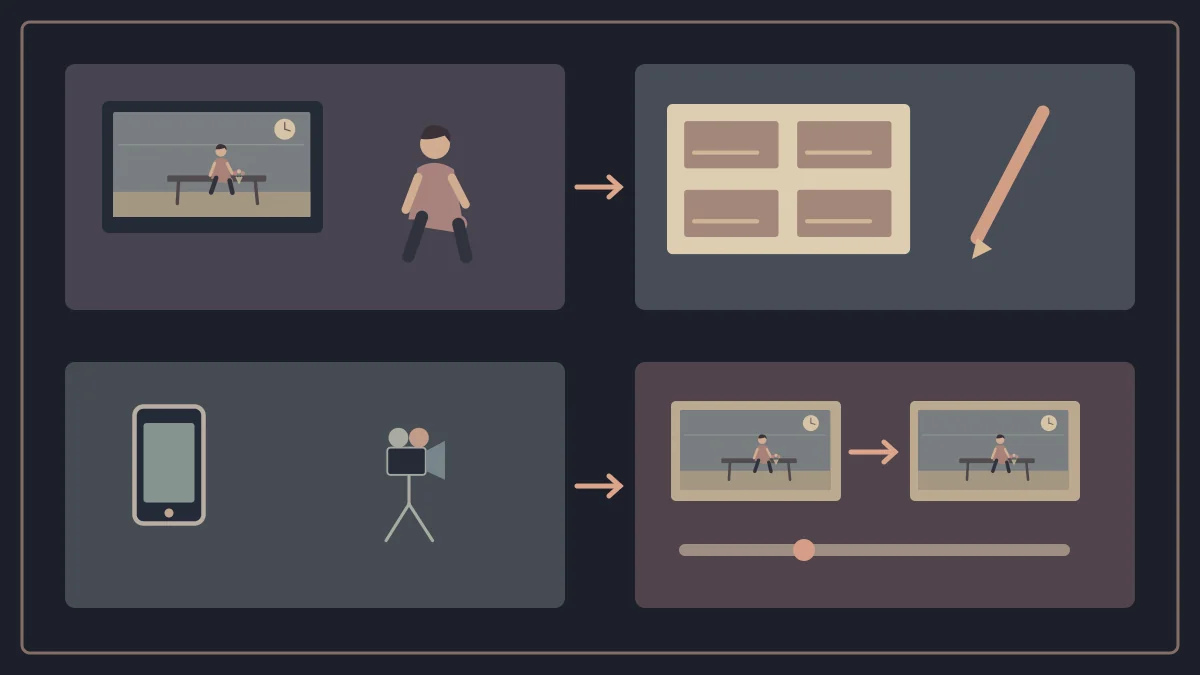
Week one: watch and understand
Choose three short scenes from films you can watch legally, focusing each time on one directorial question.
It might concern when an important piece of information appears, how a character is introduced or the effect of a long silence in a dialogue scene.
Watch the scene first without taking notes, then try to identify the choice responsible for its principal effect.
You do not yet need to analyse every shot size or editing detail. We will devote a separate lesson to that. For now, begin connecting what you felt with a clear, observable choice.
By the end of the week, keep short notes on the three scenes and identify one directorial decision you want to try yourself.
Week two: turn knowledge into a plan
Write a small dramatic situation that can be filmed in less than a minute.
For example: someone prepares to leave, then receives a message that makes them reconsider.
Decide what the viewer should know about this change of mind and what you would prefer to keep unknown at first.
Then put two different versions of the scene on paper.
One might focus on the character’s behaviour before the message arrives. The other might begin with its arrival and gradually reveal what happened.
Your drawings do not have to be beautiful, and you do not need complicated technical terms. The aim is to recognise how a different order of information changes the viewer’s experience.
Week three: film the scene
Use a phone or available camera, choose a suitable, safe location and involve someone willing to participate if you need an actor.
Film according to one of the two versions you prepared, then watch the recorded material and check that the basic image and sound are clear.
Assemble the shots in editing software suited to your resources, even if your skills with it are limited.
Do not try to hide a weak story behind effects or music. Focus on whether the events make sense and whether the viewer understands the character’s change of mind.
If a shot does not work, try to understand the problem before filming it again.
Week four: show it, listen and try again
Show your version to two or three people who did not help make the scene, asking them to watch without any explanation beforehand.
Ask what they understood, when they grasped why the character changed their mind and whether anything remained unclear.
Remember that different reactions do not necessarily mean failure. The aim is not to force every viewer to feel the same thing.
But if viewers were meant to understand why the character acted and none could recognise the reason, the information may not have been presented clearly.
Choose one specific adjustment based on the feedback, try implementing it or rearranging the shots, and compare the versions.
At the month’s end, you will have a short scene and a complete experience encompassing learning, planning, execution, review and revision.
The result may not be perfect, but it will teach you more about your present abilities than watching lessons alone.
How do you measure progress without misleading yourself?
It is easy to measure progress by the books you have read, the viewing hours you have completed or the qualifications you have earned.
Those indicators alone, however, do not reveal how much your directing skills have developed.
It is better to return to your projects and examine whether you can solve problems you could not previously address.
Can you now define a scene’s purpose before filming it? Can you explain a particular choice beyond saying that it looks beautiful? Can you identify a clear problem in the filmed version and propose a specific adjustment?
Your answers may be incomplete at first. That is natural.
Distinguish useful observations from broad personal judgments as well.
If someone says your scene is “not beautiful,” you may not know what to change. If they say they did not understand why the character left, that sound obscured an important line or that a cut between shots confused them, you have a problem you can examine.
This does not mean every viewer’s opinion is always correct. It gives you information to test rather than a final judgment on your work.
Whenever you learn a new skill, try to observe its effect in a small project. Real progress appears when your decisions become more conscious and their results move closer to your intentions, even while much remains to develop.
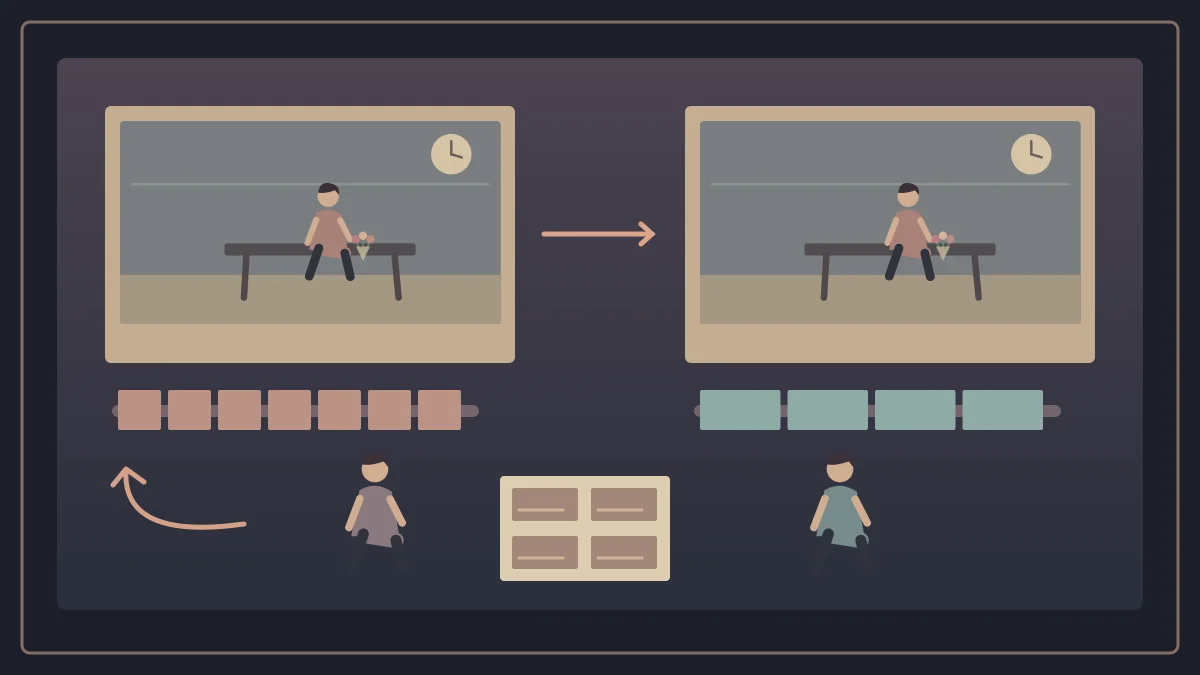
Seek learning that makes a difference, rather than the shortest route
After this comparison, you may still want a direct answer: should I go to film school or learn alone?
The answer depends on what the school offers, what you can provide yourself and the kind of practice you will undertake in either case.
A programme offering progressive teaching, real projects, useful feedback and collaboration may be an important investment in your development. If that route is unavailable, you can build an independent education, provided you do more than collect information and postpone filming indefinitely.
Even if you choose organised study, you must keep learning beyond the classroom. The film you want to make will raise questions for which no curriculum has a ready answer.
Remember the two young men who filmed the waiting scene.
The first may return to his teacher and discover that accomplished lighting was not enough to convey the intended feeling. The second may show his version to a group interested in cinema and learn that delaying an essential piece of information made it more confusing than it should have been.
On their next attempt, both may better understand what they are doing.
The reason will not be that one has a qualification and the other does not. It will be that they used feedback and turned it into new decisions.
Studying direction does not end when you leave the lecture hall, nor begin only when you buy a camera. It advances whenever you can explain a choice, test it and learn from the result.
In the next part, we will begin training the eye itself: how do we watch films through a director’s eyes and discover the cinematic decisions behind the scenes we love?
About this series
A journey from understanding the director’s work and making a first decision to working with story, images and actors, then preparing, filming, editing and making a short film.
Further parts will be linked as they are published.
All Cinema Journal articles