
A small tag bearing the word “Sold” has been attached to an old piano in a musical instrument shop.
At that moment, a woman who visits the shop every Thursday walks in. She approaches the piano and sits down as usual, but stops when she notices the tag.
The shopkeeper tells her that the buyer will collect the instrument tomorrow morning.
She looks at the keys, then lifts a hand before returning it to her lap.
She has not played this piano for years, despite visiting it regularly.
The shopkeeper asks whether she would like to try it one last time before it is taken away.
She does not answer.
This fictional scene continues the situation we introduced in the previous part, when we met a woman who visits a music shop without playing.
But something important has changed.
She can no longer repeat her familiar visit indefinitely. The piano she has kept hesitating in front of will disappear from the shop, and she now has a decision to make.
Will she play before it leaves, or walk away as she has every other time?
We do not yet know why she stopped playing or what this instrument means to her, but we now have a situation that can develop.
There is a character, a possible desire, a new circumstance putting pressure on her, and a choice waiting to be made.
This is where the real difference begins between having an intriguing idea and building a story whose events we can experience.
An Idea Raises a Question; a Story Makes Something Happen
In part six, we learned that ideas can come from observation, personal experience, research, contradiction, or a question beginning with “What if?”
But finding an appealing seed is only the beginning.
Imagine writing the following sentence in your ideas notebook:
“A woman visits a musical instrument shop every week and sits at a piano without playing it.”
This sentence sparks curiosity. It might make us wonder why she keeps repeating this behavior.
But if we watched her enter, sit down, and leave, then saw that situation repeated five times without the circumstances changing or anything new being revealed, we might feel that the film was repeating an image rather than developing a story.
The reason is not that the event is small or lacks action and excitement.
Quiet stories can be deeply affecting, and an entire film can be built around seemingly simple everyday details.
The problem arises when nothing moves the situation forward or makes us reconsider what we know about the character.
It therefore helps to distinguish between three related things.
The subject is the human territory or general idea we want to explore. Here, it might be the fear of returning to something we once loved, a person’s relationship with their talent, or the effect of passing years on their self-image.
The idea seed is the observation or possibility that caught our interest: a woman sits at a piano but does not play.
The story begins to take shape when we know who this woman is, what she wants to accomplish, what stands in her way, and how she will act when circumstances change.
We might decide that she gave up playing years ago and fears returning to it because she no longer trusts her ability to perform.
When she learns that the piano will be removed from the shop, she faces a possibility she has not previously had to confront: finally testing herself or allowing the opportunity to pass.
This is not the only way to build a story, and having a character, a goal, and an obstacle does not automatically make a film good.
These elements do, however, offer a practical starting point. They take us from wondering what an image means to following a human being trying to deal with a problem.
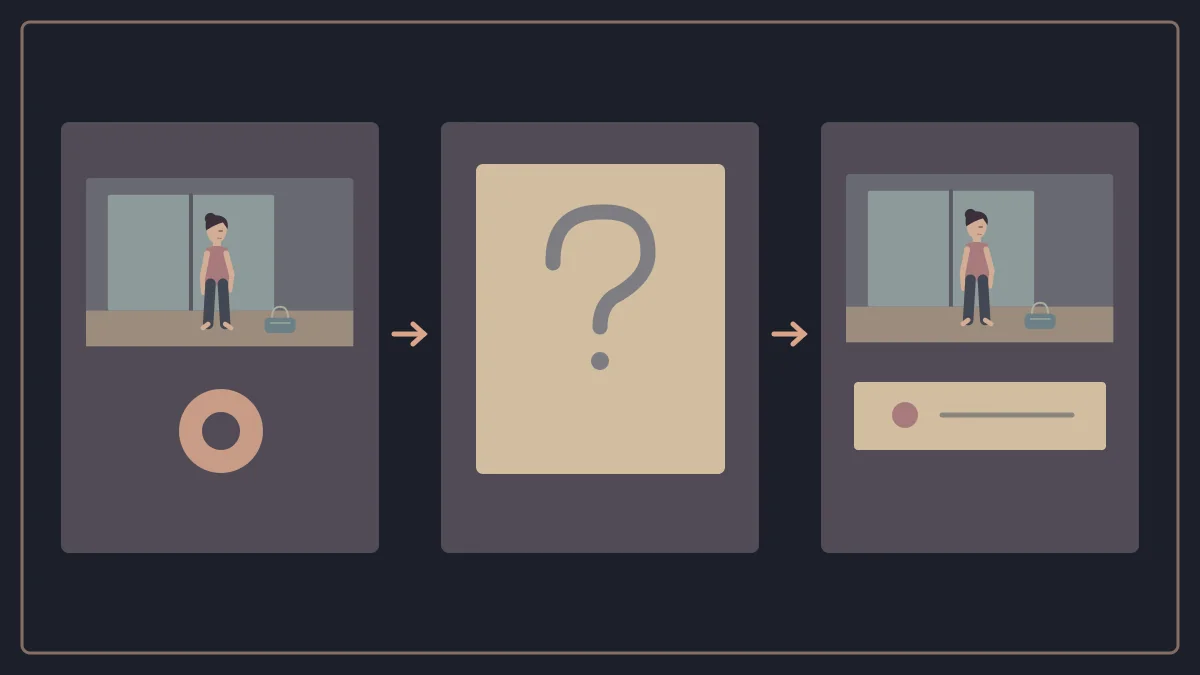
Whose Experience Will the Story Follow?
If your idea concerns someone who discovers a secret, a city where the rules of life change, or a family facing an unexpected situation, there is a question worth considering:
Which character will allow us to experience this world?
The character does not have to be a brave hero or someone we like and agree with. Nor does the entire film have to be confined to one character; some works follow several characters and dramatic threads.
But having a clear human point of connection helps us understand what the story means.
Suppose your idea revolves around a citywide power outage.
You could film the dark streets, buildings whose systems have stopped working, and the confusion among residents.
That might be visually exciting, but it does not yet define the human experience the film wants to offer.
What if we followed a care worker responsible for several patients in a building that has lost its main power supply?
Or someone who has lived in isolation for years and now has to ask their neighbors for help for the first time?
Or a child who sees the blackout as an opportunity to discover a different side of their relationship with their family?
The larger event is the same, but choosing a character changes the nature of the story.
In the first possibility, we might become interested in responsibility and difficult decisions; in the second, isolation and trust; and in the third, family relationships when the devices that usually occupy everyone disappear.
This does not mean you must establish every character trait and detail of their history at the outset.
At this stage, it is enough to know why following this particular person could be interesting within the idea you have chosen.
You can ask: what makes this event different for this person in particular?
If the power outage changes nothing important in the character’s life, you may need to look for another character or discover a connection between the event and their life that was not initially apparent.
If it forces them to confront a situation they cannot ignore, however, you may have found a beginning with more room to develop.
In part eight, we will learn how to build characters in greater depth and how their outward traits differ from their desires, needs, and internal contradictions.
For now, it is enough to remember that a story does not become human simply because a person appears in the image.
It becomes more particular when events have consequences for that person’s life and decisions.
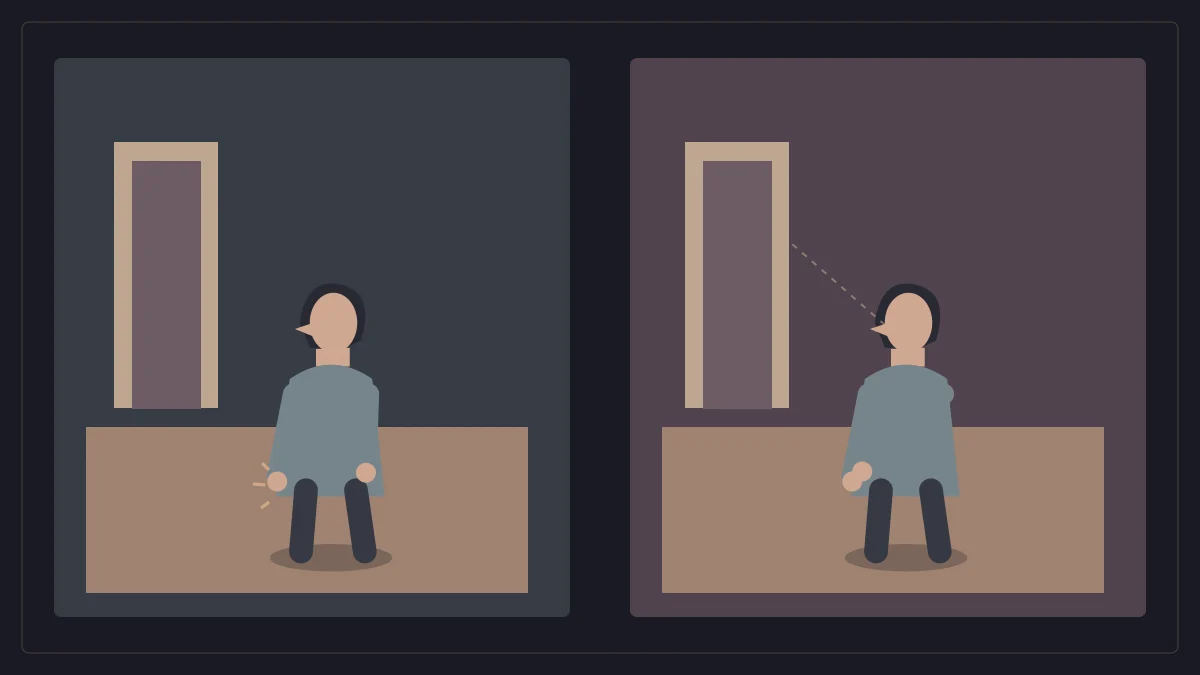
What Does the Character Want, and Why Should We Care?
Let us imagine that the woman who visits the instrument shop is named Leila.
She played the piano when she was young but spent many years away from music. Recently, she began visiting the shop where she once practiced, yet she cannot bring herself to play the piece whose opening she still remembers.
This background gives us information about the character, but it is not enough to build a story on its own.
We need to know what she will try to do now.
We can define a simple goal: Leila wants to play the piece on the old piano before it is taken away from the shop.
This goal is not enormous, but it is understandable and easy to follow.
We know what she is trying to accomplish and can notice whether she is moving closer to it or further away.
But why does it matter to her?
Perhaps Leila fears that she has lost her ability to play and that hearing her performance now would force her to face a truth she does not want to acknowledge.
Her outward goal, playing a piece of music, is then connected to a more complex internal question: can she accept herself even if she no longer possesses the skill she once took pride in?
Here, we should distinguish between what the character wants to do and what they may need to understand or change within themselves.
A character might want to win a competition but need to learn to accept defeat. They might want to restore a relationship that has ended but need to recognize that the other person no longer wants to return.
The character does not have to be aware of this need, and the film does not have to provide a clear answer to it.
Nor does a story have to turn every desire into a moral lesson.
Understanding the possible distance between what the character pursues and what they may discover during the attempt gives the filmmaker room to build a story that goes beyond simply completing a task.
In Leila’s case, the story might end with a successful performance, a faltering attempt, or even a conscious decision not to play.
Each possibility can carry a different meaning, provided it grows from her experience and the circumstances she has encountered rather than being an ending imposed by the writer merely to create a surprise.
An Obstacle Forces the Character to Act
Suppose we wrote the following version of the story:
Leila enters the shop and learns that the piano will be taken away the next day. She decides to play, sits at the keys, performs her piece flawlessly, and leaves happy.
This could be a visually beautiful moment, but on its own it does not offer a rich dramatic journey.
The character wanted something and achieved it without facing a difficulty that revealed much about her.
What if the situation changed?
Leila decides to play but stops when she notices someone else in the shop. Afraid they will hear her attempt, she starts inventing reasons to postpone playing for a few more minutes.
Then the shopkeeper tells her that closing time is approaching.
She now faces an obstacle that prevents her from easily achieving what she wants.
What is striking is that this obstacle does not come from a villain trying to hurt her. It comes from her own fear of hearing her mistakes in front of other people.
The obstacle could also be external: the shopkeeper might refuse to let her play because the instrument is being prepared for transport, or the keys might need repairs.
Difficulties should not be added simply to make the story more complicated, however.
If the power suddenly fails, a fire breaks out in the shop, and someone from the past arrives with a dangerous secret, the story might become a string of contrived events without a clear dramatic necessity connecting them.
A useful obstacle tests the character’s desire and forces them to take a position that reveals something about them.
In Leila’s story, the presence of a single listener might be enough to push her toward the choice she has avoided for years.
This is much smaller than a major incident, but it is directly connected to what she fears.
This is where the relationship between character and obstacle becomes important.
A problem that seems simple to one person may be extremely difficult for another.
A professional pianist might feel no embarrassment about trying a piano in front of strangers. Leila, who has spent years away from music and feared returning to it, may see the attempt as a test of her self-image.
The strength of an obstacle is therefore measured not only by its outward scale but by its effect on the character and what they are trying to reach.
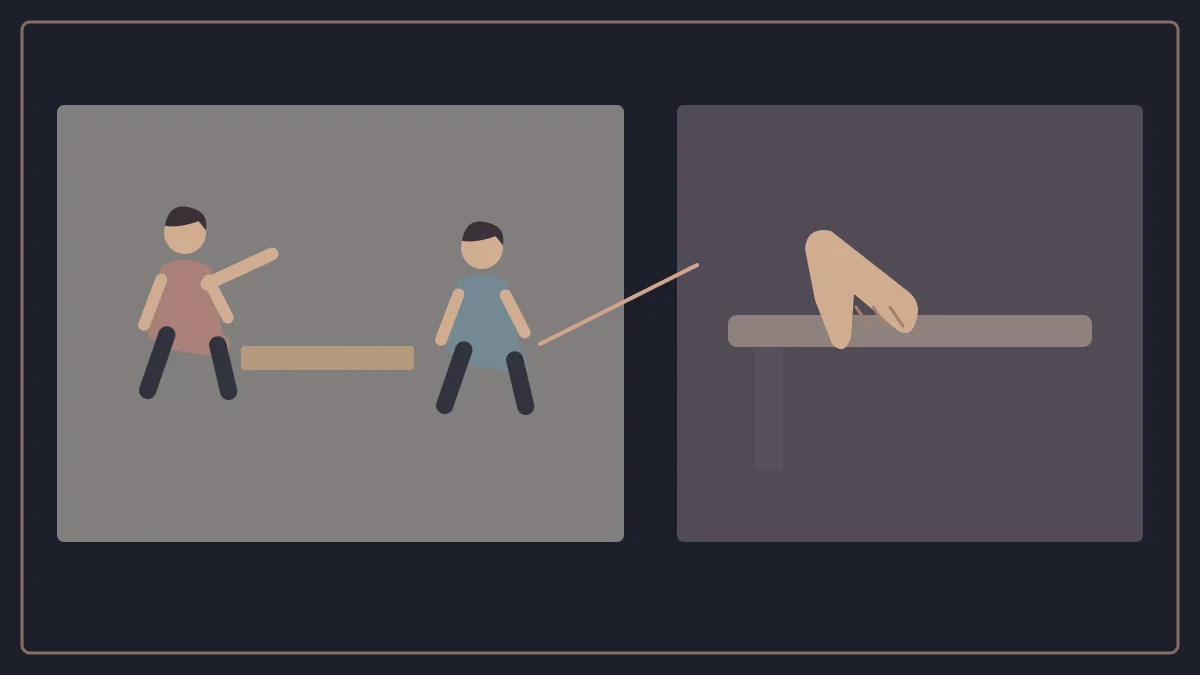
What Could the Character Lose?
Another element helps us care about what happens: understanding what might change if the character succeeds or fails.
What a character might gain or lose, and why it matters to them, is called dramatic stakes.
The stakes might involve life or safety, a romantic relationship, a professional future, or a secret the character is afraid of revealing.
They do not always require a major catastrophe.
In Leila’s story, she might lose nothing material if she leaves the shop without playing.
The piano does not belong to her. Her life will continue, and most people will never know that she backed away from the attempt.
But she will know that she allowed fear to make the decision for her once again.
This possibility can carry emotional weight if the story allows us to understand how much music matters to her and how her relationship with it has become bound up with fear of failure.
If we know nothing about that relationship, however, her hesitation might seem excessive, and we may not understand why we should care whether she plays.
It is therefore not enough to tell the audience that something is important.
We have to build circumstances that allow them to understand its importance.
We might see Leila easily remembering the beginning of the piece but stopping at the harder passage, closely watching another pianist’s fingers in a way that reveals her knowledge of music, or discover that she has kept an old score for years despite no longer playing.
These details are only possibilities. We should choose what serves the story without weighing it down with excessive explanation.
A single well-placed detail may convey information the story needs, while too much explanation can make a moment feel heavy-handed and contrived.
The important thing is for the stakes to remain connected to the action we are following.
We care about the piece not simply because it is technically difficult, but because attempting to play it means something to the character.
How Do Separate Events Become a Connected Story?
You can write dozens of exciting events without ending up with a coherent story.
Imagine Leila entering the shop, discovering that the piano has been sold, receiving a phone call, meeting an old friend, seeing it start to rain, and deciding to go home.
These events might contain filmable images and situations, but they are not necessarily connected.
Why did each thing happen after the previous one? What changed as a result of each event?
Here we reach one of the most important tools in dramatic thinking: the relationship between cause and effect.
In many stories, it is not enough for one event to happen and another to follow. Events become more connected when one creates a new situation that forces the character to act.
Let us return to the piano story.
Leila learns that the instrument has been sold, so she realizes that her opportunity to play it will soon disappear.
She decides to try playing, but someone else’s presence in the shop makes her hesitate.
She tries to wait until they leave, and as a result closing time draws nearer.
When the shopkeeper asks her to leave, she must choose between continuing to postpone the attempt and trying to play in front of him.
These events are not complicated, but they are connected.
Each situation grows out of something that preceded it or the character’s response to it, leading to new pressure or a different decision.
This does not mean every film must rely on strict causal progression. Some works are built on contemplation, experimentation, or poetic and thematic connections, and may use time and events in unconventional ways.
For someone beginning to learn how to build dramatic stories, however, thinking about the relationship between actions and their consequences is a very useful tool.
If you remove an event from your story and nothing that follows changes, you may need to reconsider its function.
It might be a detail that does not serve the central direction, or you might need to connect it to a decision that makes its presence important.
It is best not to worry yet about the number of scenes or dividing the film into particular dramatic acts.
We are still testing the story’s initial logic: does something drive the characters to act, and do their actions affect what happens next?
Change: Why Should the Story Not End Exactly Where It Began?
If we watch Leila enter the shop afraid to play and then leave with precisely the same fear, we might wonder what the journey we followed has added.
The character does not have to achieve their goal. Nor must they become morally better or overcome every problem they face.
It is useful, however, to ask what the experience has changed.
The change might be external, such as losing an opportunity, forming a relationship, or making a decision that cannot easily be reversed.
It might be internal, as the character’s view of themselves or other people changes.
They might fail to learn and repeat their mistake, yet that failure itself can reveal a new meaning about their nature or the world they inhabit.
Suppose Leila finally decides to play in front of the shopkeeper.
She begins the piece but plays a wrong note.
She pauses for a moment.
In the past, she might have immediately closed the piano lid and left, ashamed that someone had heard her stumble.
This time, however, she keeps her hand above the keys, returns to the beginning of the passage, and tries again.
She does not have to finish the piece perfectly. The shopkeeper does not have to stand up and applaud, and we do not need an audience celebrating her return to music.
This small attempt may be enough to show that something inside her has changed.
She is no longer testing herself against the expectation of a perfect performance. She is ready to listen to her playing as it is now.
This is one possible change, not a compulsory ending.
We could choose a different treatment in which Leila refuses to play because she discovers that her desire to recover the past is preventing her from enjoying her present life.
That choice would require different preparation and events that make it understandable and affecting.
A convincing change does not come from attaching a moral lesson to the character at the end. It comes from the final decision feeling like a consequence of what they have experienced.
This gives the story a sense of arriving somewhere meaningful, even if some questions remain unanswered.
What Can We Learn from Billy Elliot?
We can observe the relationship between desire, obstacle, and change in Billy Elliot.
The story follows a boy who discovers an interest in dance while his desire faces assumptions and pressures from the social and family environment around him.
The central idea is not simply “a boy who likes dancing.”
The dramatic strength of the situation comes from this interest becoming something he actively pursues and develops while facing circumstances that make it harder to achieve than it initially seems.
Dance therefore becomes more than an activity the boy enjoys. It becomes connected to his choices, his relationship with his family, and the way he sees his future.
From a directing perspective, this construction gives the filmmaker opportunities to express character through action.
Movement, practice, hesitation, determination, and the reactions of people around the boy are not merely additions surrounding the dialogue. They are tools through which we can see desire and the resistance it encounters.
The important thing is to understand how the film turns a personal interest into a story with consequences, rather than extracting a formula that says every story must concern a dream rejected by society.
A story might follow someone who does not know what they want, a person trying to free themselves from a desire that has become harmful, or several characters who interpret the same event differently.
The question worth keeping is this: what makes the character’s desire matter to their behavior, and how do the circumstances around them put that desire to the test?
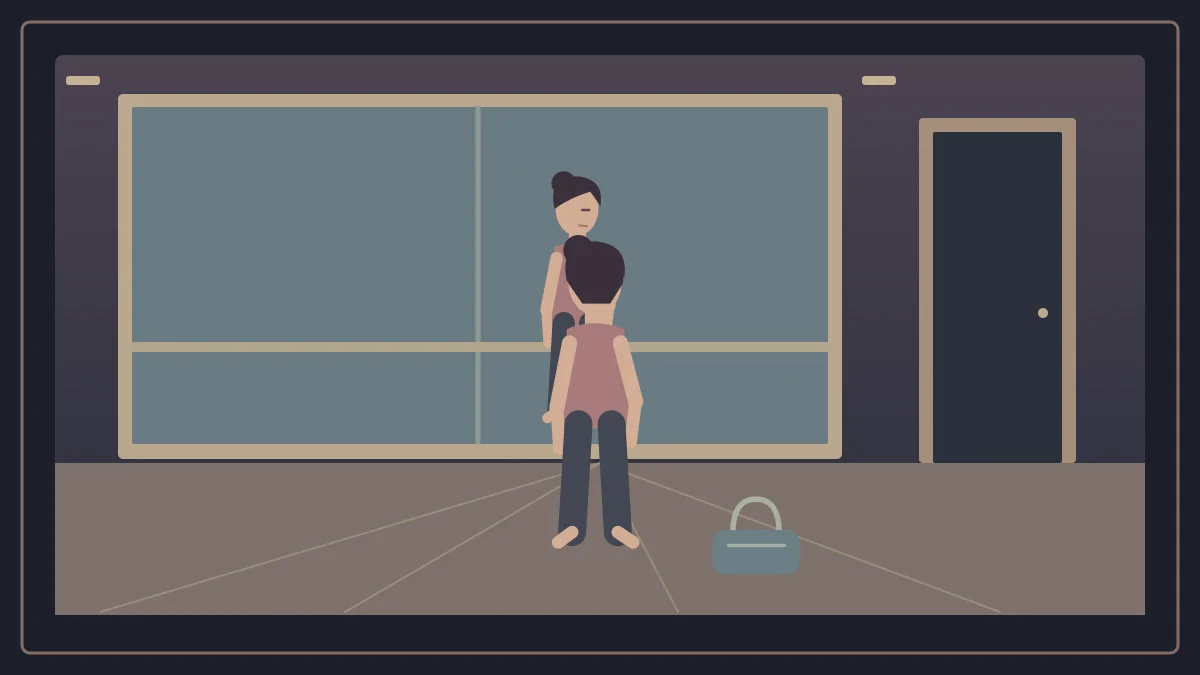
Why Does This Particular Story Matter?
You may identify a character, a goal, an obstacle, and a possible ending, only to discover that the idea still feels cold.
Everything is there on paper, yet you do not feel a compelling reason to make the film.
The problem may be that the elements were added mechanically.
You chose a goal because you learned that a character needs one, introduced an obstacle because it is important to drama, and created a change so that the character would not remain the same.
But these elements do not become affecting simply by existing.
They need a relationship that gives the story its particular character.
Imagine that Leila fears playing because she always wants to be better than everyone else.
That is one possibility.
But what if her fear comes from being unable to accept that her abilities have changed over the years?
The question becomes slightly different.
The story is no longer only about wanting to excel. It is about a person’s relationship with their former self and their ability to accept the difference between what they can do now and what they could once do.
This meaning can affect how we build the character, the details of the situation, and the ending.
Alternatively, the piano could be connected to an old relationship Leila has been unable to move beyond, turning the story into an exploration of loss and memory.
None of these possibilities is automatically better than the others.
The best is the one the writer and director can develop honestly and clearly within the world they are creating.
It therefore helps to test the idea with another question: if the character succeeds or fails, what will we have understood about the person or the situation they experienced?
You do not need an enormous philosophical answer or a ready-made message to deliver to the audience.
Having a meaning you want to explore does, however, help you choose events that serve the story rather than adding exciting situations disconnected from its core.
Testing an Idea Before Turning It into a Screenplay
Before writing dialogue and dividing the action into scenes, try expressing your story in a short paragraph.
The paragraph does not need to contain everything that will happen or reveal every surprise, but it should clarify the core experience you want to build.
We could write the piano story like this:
“After years away from music, Leila has begun visiting an old shop and sitting at the piano she practiced on in her youth, without daring to play. When she learns that the instrument has been sold and will be taken away the following day, she decides to play it one last time. But fear of discovering that she has lost her skill makes her postpone the attempt until her remaining time in the shop is running out. Faced with leaving or playing in front of a listener, she must confront the question she has long avoided: can she accept her music even if it is no longer what it once was?”
This paragraph is not a finished screenplay, but it gives us an initial premise.
We know the character we will accompany, what she wants to do, what makes it difficult for her, and why her decision might lead to an important change.
It also opens up questions that will need further development.
Is this situation enough for a short film? What information about Leila’s life do we need to reveal? How can her fear be shown through clear behavior rather than dialogue that explains everything?
These questions do not mean the idea has failed.
They indicate that we now have material we can work on instead of simply an appealing image with no sense of where it will lead.
Practical Exercise: Turn One Seed into a Story Paragraph
Return to the exercise you completed in part six and choose one of the three idea seeds you wrote down.
Do not look for the strangest one. Choose an idea in which you can imagine a person being affected, and that makes you want to know what might happen to them.
First, write a sentence describing the character and their situation.
Then identify something the character wants to do, making it clear to the reader what they are pursuing.
Next, add an obstacle connected to that goal rather than a random incident.
Try to imagine an important decision the character might have to make and what could change in their life or understanding of themselves as a result.
You can now write a paragraph of roughly one hundred to one hundred and fifty words that includes these elements naturally, without dividing them into technical headings.
When you finish, read the paragraph as though someone else were proposing it to you as a film idea.
Can you identify whom you are following, what they want, and what prevents them from achieving it? Is there an outcome or possibility of change that makes the story interesting to follow?
Then try one additional test.
Change only the obstacle, keeping the character and the goal.
If the character wants to recover something they have lost, what if another person stands in the way? What if the obstacle is their own fear of confronting the past?
Notice how the direction of the story changes in each case.
The aim is not to choose the largest or most exciting obstacle, but the one that makes the character’s behavior and the meaning of the experience clearer.
At the end of the exercise, keep two versions of the paragraph and compare them.
Which version gives the character more opportunities to make decisions that reveal their nature? Which makes you truly want to know what will happen?
If you can answer these two questions, you have taken an important step from generating an idea to testing its dramatic possibilities.
Do not worry if some details remain unknown.
We have not yet reached the stage of building characters in full, designing conflict, or structuring scenes.
All we want now is a clear foundation you can develop, rather than writing many pages without knowing the story you are trying to tell.
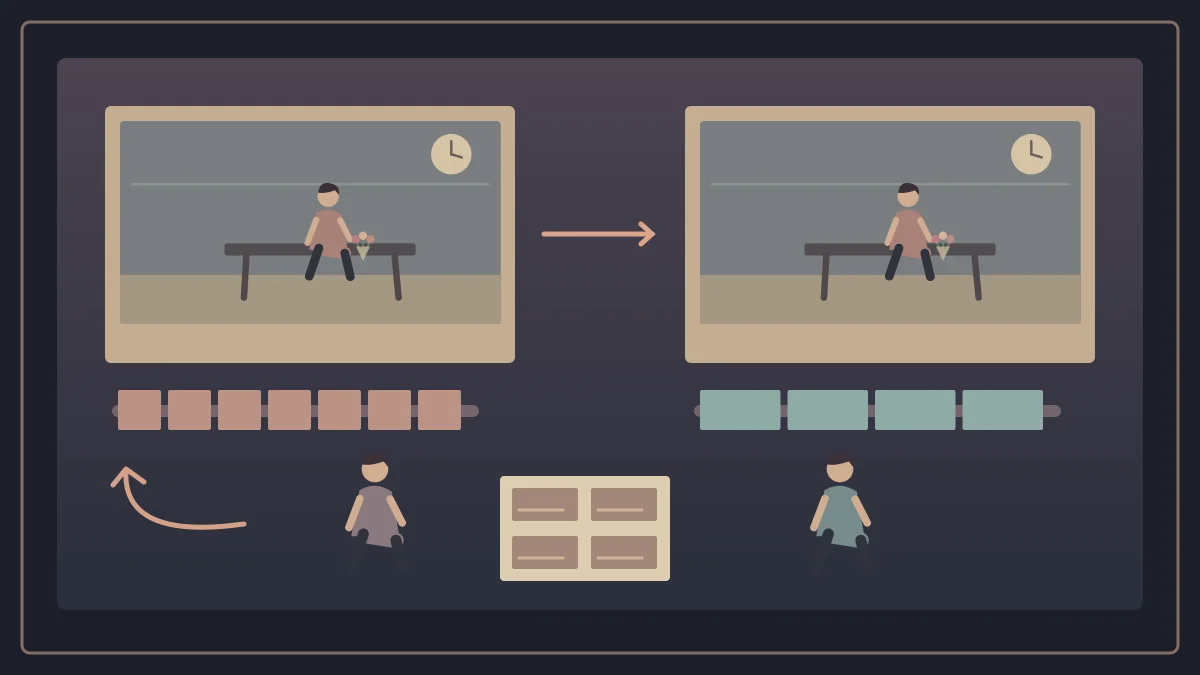
A Story Begins When a Choice Has Meaning
At the end of the day, the musical instrument shop empties of customers.
The shopkeeper stands near the door, ready to close, while Leila sits at the piano one last time.
She can leave.
No one will stop her, and no one will blame her for not playing.
But she knows the instrument will not be in its usual place when she returns next week.
She looks at the keys, raises her hands, and begins.
The first notes emerge hesitantly, and she stops at a passage she no longer remembers well.
For a moment, it seems she will retreat as usual.
But she returns to the beginning of the piece.
This ending may be simple, and it might need more development when we begin writing the film itself.
Even so, it reveals what we have added to the original idea.
We are no longer merely following a mysterious woman sitting at a piano. We are following someone who wants to renew her relationship with something she loved but fears testing her ability, and who then faces one last opportunity to make a decision.
The image has become a situation, the situation has become a desire, and the desire has become an attempt that meets resistance. The decision then becomes a consequence of what the character has experienced.
This does not mean every story must follow the same direction or reach an ending that gives us a sense of victory.
A good story does, however, give us a reason to care about what happens and allows the characters’ choices to change our understanding of them and the world they inhabit.
An idea makes us wonder what might happen. A story makes us care about whom it will happen to and the price they might pay when they decide to act.
In part eight, we will move closer to the human being at the heart of the story: how is a cinematic character built, and what do they really want?

About this series
A journey from understanding the director’s work and making a first decision to working with story, images and actors, then preparing, filming, editing and making a short film.
Further parts will be linked as they are published.
View the series in orderAll Cinema Journal articles