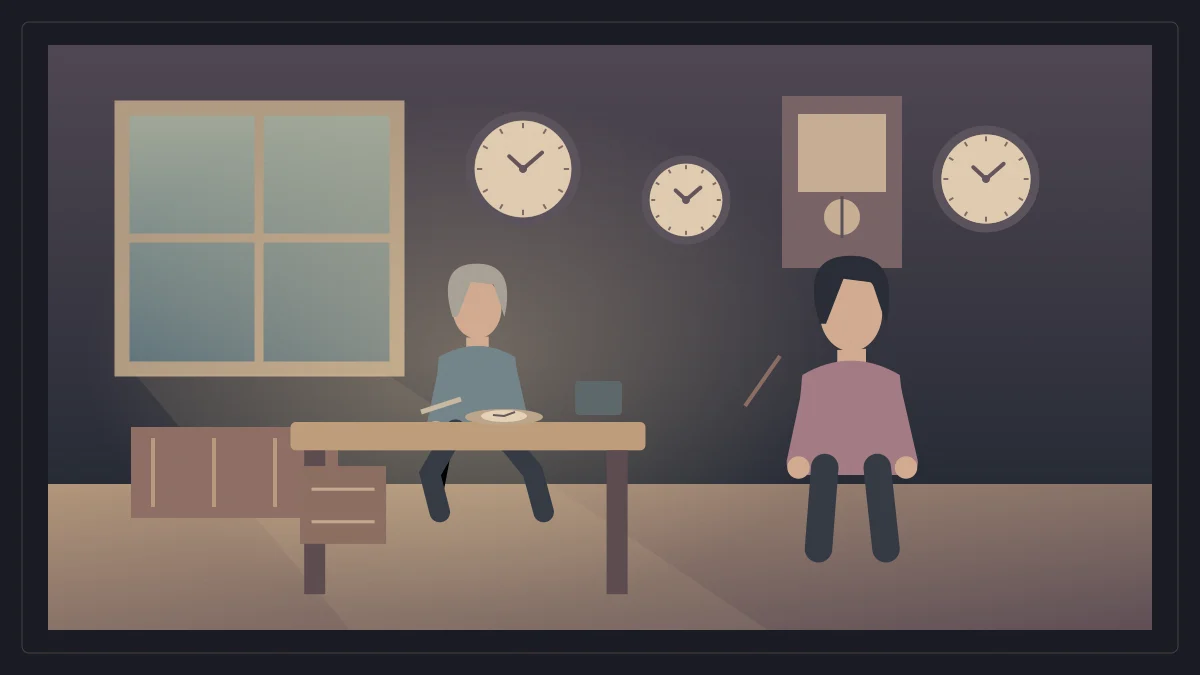
Imagine that you are on a film set with only a little time left to finish the day’s final scene.
An actor stands at a table, preparing to read a letter that will change her character’s path. The cinematographer suggests adjusting the camera position because the light through the window is changing. At the same time, the sound recordist asks for a noisy ventilation unit to be switched off. The assistant director reminds everyone that the available filming time is almost over.
Then the actor asks a seemingly simple question: should I read the letter immediately, or hesitate before opening it?
Preparations pause for a moment. Each earlier suggestion concerns a real aspect of making the scene, but this last question touches the heart of what the film wants to say.
If the character opens the letter straight away, she may seem ready to face the truth. If she stares at it before touching it, we may sense that she fears what she will discover. If she decides not to open it at all, refusing knowledge may become the scene’s most important event.
Who is responsible for choosing the direction that serves the story?
Here we see the director’s role. It is not because they know more about recording than the sound recordist, or more about lighting than the cinematographer, but because they are responsible for bringing these elements together within a coherent dramatic vision.
A director does not need to do everyone’s work, but must understand how everyone’s work affects the film they are making.
To understand this responsibility, we must look beyond the familiar image of a director behind a monitor and see a film as a long chain of decisions that begins with reading the screenplay and does not necessarily end on the final day of filming.
The director turns the text into a cinematic experience
Let us begin with another imagined scene.
A young woman enters the small watch repair workshop where her father has worked for years. She tells him she has accepted a job in a distant city and will leave in a few days. He does not look up from the watch he is repairing and says only, ‘I wish you well.’
That is the written event. The scene could end there, but the director needs to understand things the words alone do not reveal.
Is the father happy for his daughter but unable to express his feelings? Is he angry that she will leave the work he has spent his life doing? Does he feel she is abandoning him, or pretend not to care so that he will not stop her from leaving?
The same line can carry these different meanings. Asking the actor to deliver it a certain way is not enough before the director understands the relationship between the characters.
Their first creative responsibility is interpreting the dramatic material, in collaboration with the writer when the project’s circumstances allow it.
They try to understand what each character wants, what prevents them from achieving it and how their relationships change through the events. Above all, they ask what the scene does within the film: does it reveal new information, change a character’s position or move a relationship from one state to another?
If the scene concerns a father unable to express his love, silence may become essential to the story. If it concerns a conflict between generations with different ideas of the future, his response to the news may carry another meaning.
This is where the written screenplay begins turning into a directorial treatment: a conception of how events and characters will become images, sounds and performances within the film.
This does not mean every director must write the screenplay themselves. A director may work with someone else’s script, help develop it or take on material that is largely complete. Their involvement in writing varies with the project and its creative agreements.
Understanding and interpreting the text remain essential, because the director will later face dozens of choices they cannot resolve without knowing what the scene needs to achieve.
What happens before the camera starts recording?
It is easy to imagine that directing begins when the actors arrive on set and everyone prepares to film. In fact, a large part of the work happens before that moment.
After understanding the screenplay and defining the film’s overall approach, the director begins working with specialists to turn ideas into a workable plan.
In the watch workshop scene, for example, choosing the location is not simply finding a room with a table and some tools.
If the father clings to the past, a workshop filled with old clocks, photographs and used tools may help reveal his relationship with the place. If the story focuses on his isolation, empty space around his worktable may be more appropriate than abundant detail.
The director discusses these choices with the production designer and their team, who consider how to build and prepare the setting visually and practically. The designer may suggest elements the director had not considered that reveal something important about the character.
At the same time, collaboration with the cinematographer begins.
What kind of lighting suits the film’s world? Should the workshop seem lit by dim natural light, or should it contain practical light sources? How can we film the two characters so that we feel their relationship without turning the composition into a visual display?
The director does not choose every lamp or carry out all the technical arrangements. They discuss the visual goal, while the cinematographer contributes expertise in finding suitable methods and achieving the result with the camera and lighting crews.
Another responsibility appears in casting.
Two actors might both be able to play the same role, but one gives the character a quiet, reserved presence while the other makes their inner tension more visible. The choice is about more than talent: it concerns how well the performance suits the character and the world the film wants to present.
Rehearsals follow, offering a chance to discover relationships, movement and rhythm before filming. They may reveal that a solution which seemed right while reading the screenplay does not work as well when actors perform it in the space.
This process does not necessarily follow a rigid sequence. Discovering a new location may change the conception of a scene, an audition may reveal another side of a character, or budget limits may require a revised plan.
The director must preserve the essential meaning through these changes, rather than cling to every detail they first imagined.

Director and producer: who leads the film, and who makes it possible?
One of the most important distinctions to understand early is the difference between creative leadership and production responsibility.
A director may dream of a scene with hundreds of people in a vast setting, filmed over several days. Making it requires funding, locations, equipment, workers, permits and many arrangements that cannot be ignored.
This is where the producer comes in.
The producer helps develop the project and provide the resources needed to complete it, taking responsibility for or supervising funding, organisation, contracts and production decisions, alongside other specialist roles depending on the work’s scale and nature.
The producer may also be strongly involved in creative decisions, especially during development and the selection of the screenplay, director and other key elements.
It is therefore misleading to reduce their relationship to a producer concerned with money and a director concerned with art, as though they worked in separate worlds.
Artistic decisions affect cost, and production decisions can change the film’s final form.
Suppose the watch workshop scene was planned for a real location crowded with old tools, but its cost has risen beyond the available budget.
The production team may suggest moving to a cheaper location. The director then needs to identify what is indispensable: perhaps the father’s relationship with his worktable is essential, while the frontage or the number of surrounding clocks can change.
The production designer may offer an alternative that preserves the intended feeling, the cinematographer may find a way to use the new space, and the production team can review the change’s effect on time and budget.
The result is not necessarily an artistic loss. Sometimes a constraint leads to a simpler, clearer solution.
That does not automatically make every compromise good. Some constraints do weaken the work. The task is to distinguish an element that can be removed from a detail whose absence changes the scene’s essence.
Nor does a director have absolute authority over every decision in every production. The limits of their responsibilities and their right to approve the final version depend on contracts, the production structure and the project’s nature.
The director leads artistic choices within a production system, rather than working apart from the people who carry its other responsibilities.
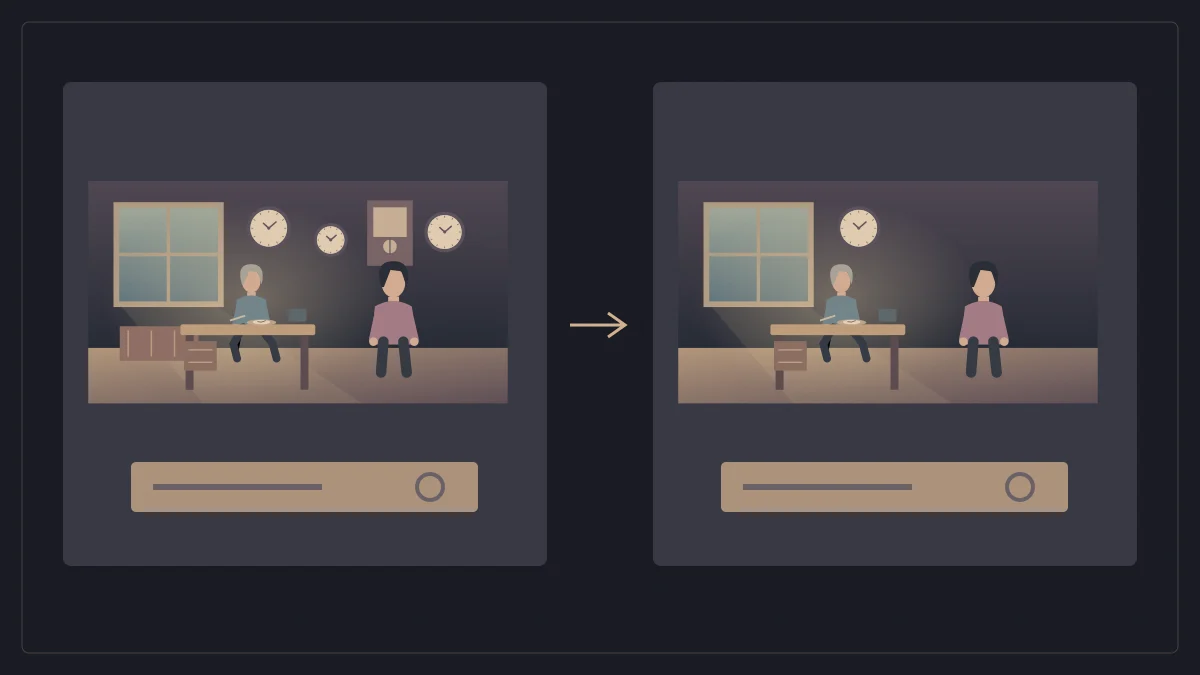
On set: what is the director actually watching?
When filming begins, the vision discussed during preparation faces a real test.
The actor may be perfectly suited to the role, the setting carefully prepared and the lighting beautiful, yet the scene does not create the intended feeling.
Suppose the actor playing the father in the watch workshop delivers his line quietly, then looks up at his daughter and smiles.
Technically, the shot may be entirely sound. The audio is clear, the composition balanced and the movement performed on schedule.
But if the intention is that the father cannot face his emotions, a direct smile may make the scene too explicit and deprive the viewer of discovering the tension themselves.
The director needs to assess the performance dramatically, rather than only technically.
Does what the actor did fit the character? Has the relationship between father and daughter changed as intended? Has the performance made the scene too direct? Is another response potentially more truthful?
The director might discuss this with the actor and suggest another attempt: the father keeps working, but stops moving the repair tool for a brief moment when he hears that she is leaving.
This small movement can carry a different meaning from a smile or a direct look.
But the director does not watch the performance separately from the shot’s other elements.
The camera position may prevent us from seeing the hand stop. The cinematographer may need to adjust the composition to show it. The script supervisor may notice that the tool has moved between takes, requiring attention when the shots are assembled.
Meanwhile, the assistant director coordinates the workflow, preparations and time, allowing the director to focus on the essential creative elements.
These jobs are not smaller versions of the director’s job.
The assistant director does not replace the director in interpreting the scene. The cinematographer is more than someone carrying out camera instructions. The script supervisor does not alone decide which performance works best dramatically.
Each discipline has its expertise and responsibility. When they work together well, the director can focus on what matters to the story rather than constantly attending to every organisational detail.
We will later devote a separate part to the film crew and the distribution of responsibilities on set.
Leadership does not mean having every idea
A beginner may imagine that a strong director arrives on set having decided everything, then rejects any suggestion that does not match the original plan.
Good preparation does not mean shutting out discovery.
An actor may see something in the character that the director missed. The cinematographer may notice that the space allows a more expressive composition than the one previously drawn. The sound recordist might suggest retaining a particular environmental sound because it gives the scene another feeling.
What matters is not who made the suggestion, but how well it suits the film.
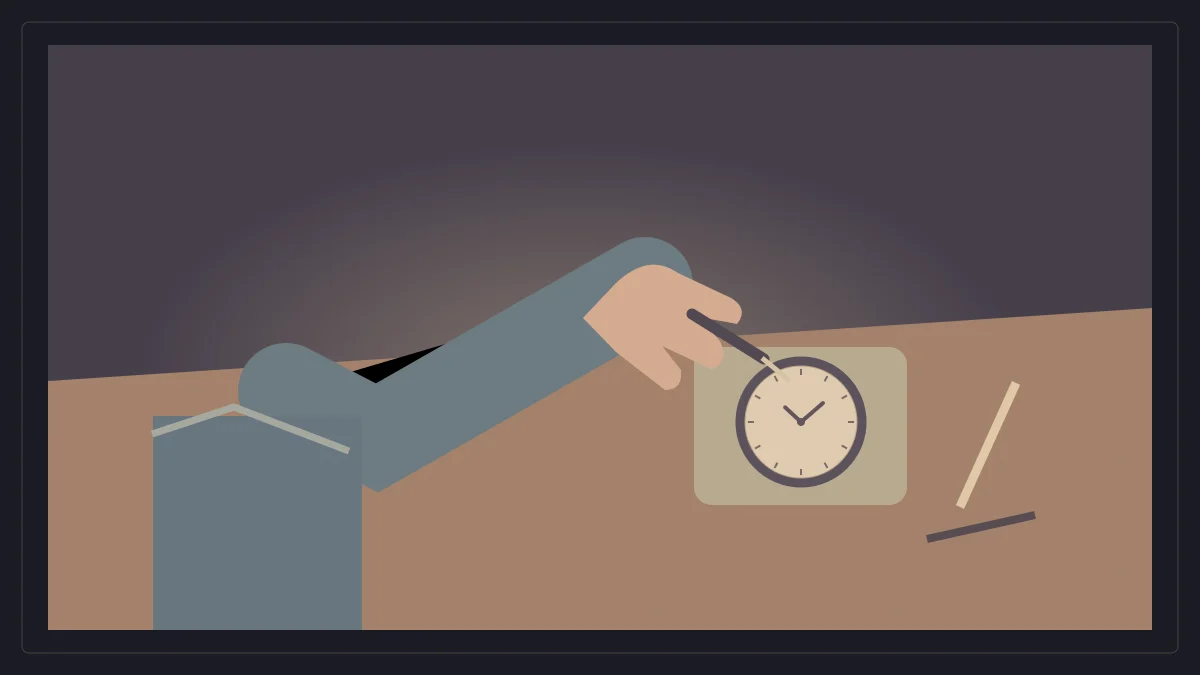
Let us return to the watch workshop.
In the first approach, the director may have wanted the father to look at his daughter after hearing that she is leaving. But the actor suggests avoiding her gaze altogether, as though he fears his resistance will collapse if their eyes meet.
The director can try both possibilities.
If the second makes the relationship more complex and serves the character, there is no artistic reason to reject it simply because it was absent from the original plan.
A suggestion can also be appealing in the moment but conflict with the character’s development across the film. The director then needs to explain why they are retaining the first choice.
Listening does not mean indecision, and decisiveness does not mean arrogance.
A director who does not know what they want may leave the team facing a series of contradictory changes. One who refuses to listen may lose contributions that could improve the work.
Clear communication is therefore essential.
Instead of saying only, ‘I want the scene to be sadder,’ the director can explain the relationship they want to bring out: the father does not want to stop his daughter leaving, but does not know how to tell her he will miss her.
That information helps the actor understand the direction of the performance, helps the cinematographer discuss how the relationship appears within the frame and gives the rest of the team a shared understanding of the intention.
The clearer the goal, the more useful suggestions become and the easier they are to assess.
There are also boundaries that creativity does not justify crossing. Working under pressure does not justify putting actors or crew members at risk, nor make humiliation an acceptable way to get a better performance.
The director is responsible for their professional decisions and how they collaborate with others, including respecting boundaries and following appropriate safety arrangements.
Does the director’s work end with ‘That’s a wrap’?
Suppose we have finished filming the watch workshop scene and have several takes with different angles and performances.
Is the scene complete?
Not yet.
In the editing room, a new stage of shaping the story begins.
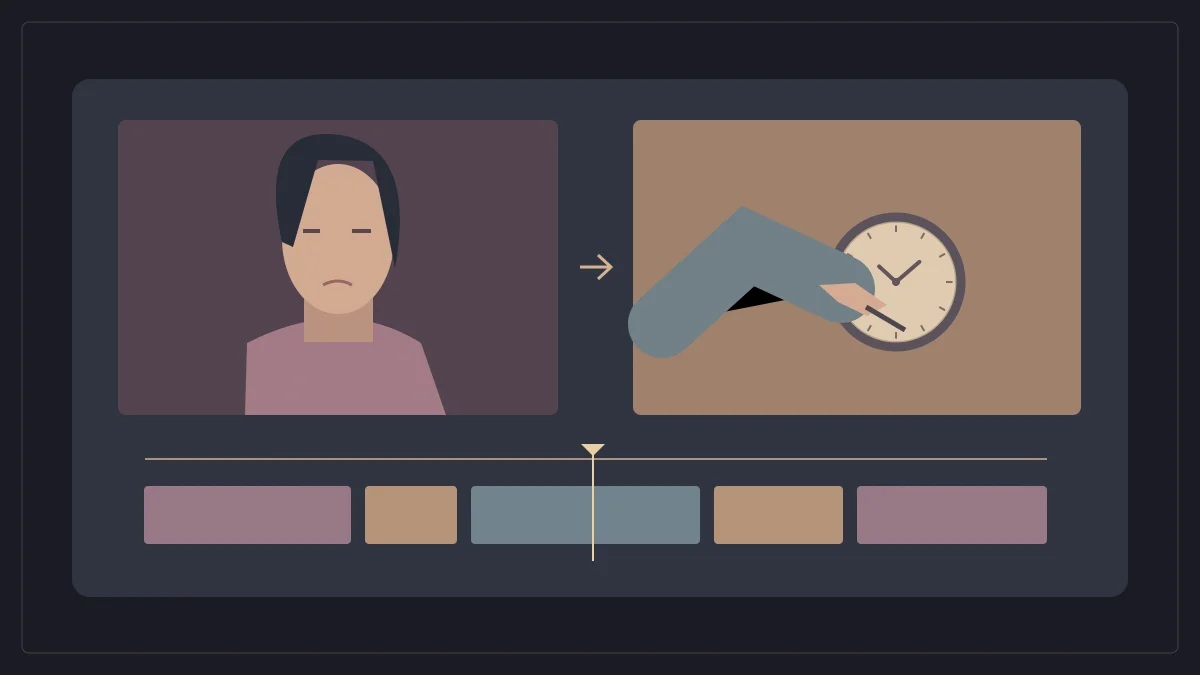
We may discover that staying on the daughter’s face as she hears her father’s reply makes us feel her disappointment. Cutting to his hand, now stopped, may reveal another side of the situation: the news affected him despite his efforts to hide it.
Holding the shot for a few more seconds may have more impact than quickly moving to the next scene.
The editor contributes expertise in building the sequence, choosing cut points and shaping rhythm, while the director discusses how these choices serve the story and the overall vision.
It is misleading to imagine an editor mechanically assembling shots according to fixed instructions. Editing itself involves important narrative and creative decisions.
The first cut may reveal problems that were not clear during filming. The scene may not need every shot filmed for it. A quieter performance may work better when seen within the film’s entire sequence.
Sound, music, sound mixing, colour grading and other finishing stages follow.
In the workshop scene, for example, the surrounding clocks’ ticking can change how we experience the silence between the characters. Gradually lowering that sound at a particular moment could be a dramatic choice, if it fits the film’s world and sound design.
The director discusses these decisions with specialists rather than necessarily carrying out the details themselves.
Their degree of supervision and authority over the final version also varies between projects. We should not assume every director always has the right to approve the film’s final form without production or contractual involvement.
Their creative responsibility nevertheless extends to considering how image, sound, performance and editing work together, rather than concentrating on filming alone.
Why does the director’s work differ from one film to another?
One director may make a short film with three other people, helping write the screenplay, operate the camera and edit. Another may work on a large production with specialist departments and hundreds of participants.
In the first case, the director must carry out many tasks with limited means. In the second, the network of collaboration and coordination expands, and responsibilities become more specialised.
A larger team does not make the director responsible for every technical process, just as a smaller team does not turn all the jobs into one.
If the director operates the camera, they are also carrying out a camera role. If they edit, they are practising another craft alongside directing.
Understanding this distinction matters, because a director may need the basics of several disciplines without becoming a professional specialist in all of them.
The most important skill is not doing everything, but knowing what the film needs and how to achieve it with the available means.
This also applies to different kinds of production. Working methods and detailed responsibilities may change between a narrative feature, an independent short, a documentary or a project that uses extensive visual effects.
There is no single organisational chart that fits every film. Different job titles should not be confused simply because they contain the word ‘director’.
What unites these experiences is the need to lead the work’s artistic meaning and make decisions that account for story, performance, image, sound and available resources.
Practical exercise: who makes the decision?
After understanding the basic differences between crew responsibilities, we can try the kind of thinking a director needs before the camera begins recording.
Imagine this scene:
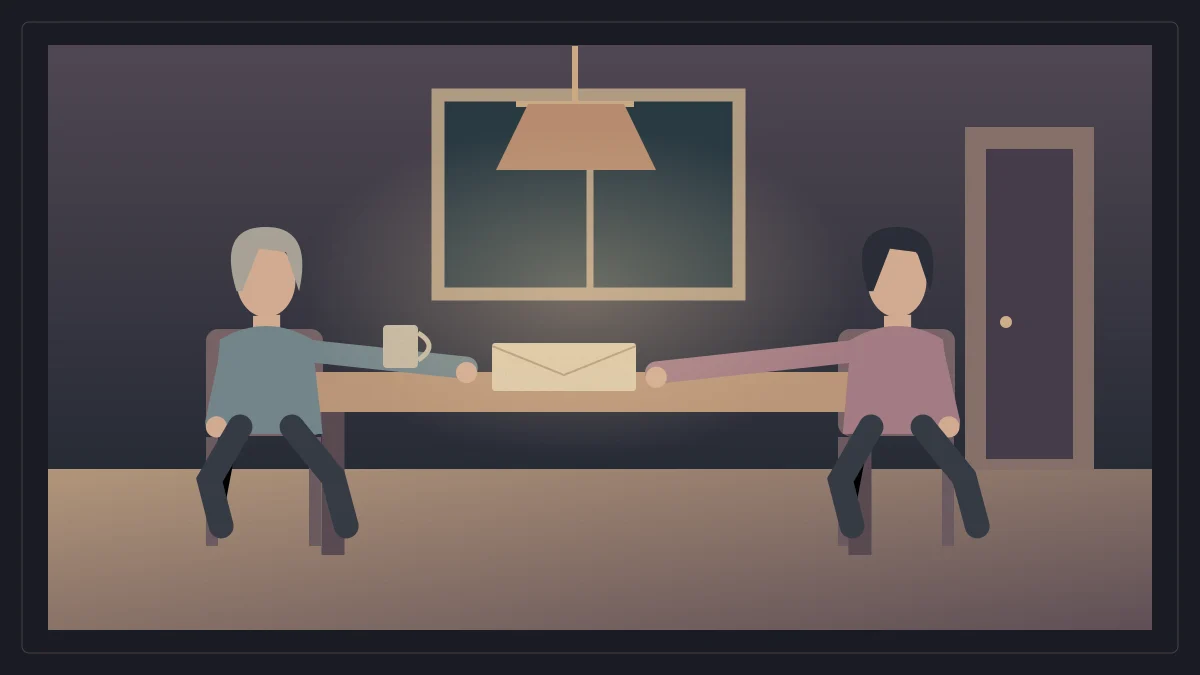
Two people sit in a café after closing. One places an envelope on the table and says, ‘This is the last thing I can offer you.’ The other does not open it, but pushes it away and looks towards the door.
This is an imagined scene, which can be used to practise separating the decisions that overlap when making a film.
Begin by reading the situation, then distinguish four levels of thinking.
The script decision: What is the relationship between the characters? What does the person offering the envelope want? Are they trying to end a dispute, buy the other person’s silence or help them through a crisis? These questions concern understanding the dramatic material and what needs clarification or development.
The performance decision: Why did the other person not open the envelope? Do they reject its contents, fear knowing them or want to show that they no longer care? How can the actor express this position through a clear action rather than a general emotion?
The image decision: Do we see the envelope’s contents or leave them unknown? Do we need to show the giver’s face at the moment of rejection, or does keeping the camera on the person refusing it serve the meaning better?
The sound decision: Do the café appliances remain audible during the dialogue? Could a door closing in the background help convey the end of the meeting? Or would reducing the environmental sounds allow more attention to the silence between the characters?
Ask which people you need to work with to realise these decisions.
If you want the place to seem deserted, discuss it with the design and lighting teams. If environmental sound is important, agree on this with the sound specialists. If you want to try two different performances, discuss it with the actors.
Finally, imagine that there is time to film only one treatment of the scene.
Which choices are most essential to understanding the story? What can you remove without weakening its central moment?
The exercise is not intended to produce one model answer, but to reveal the difference between an artistic choice that shapes a scene’s effect, a specialist task that helps realise it and a production constraint that needs to be addressed.
You can write your answers on a single sheet without equipment or filming. If you want to try the scene in practice, choose a safe place and willing participants, then compare what you imagined with what actually appeared.
About this series
A journey from understanding the director’s work and making a first decision to working with story, images and actors, then preparing, filming, editing and making a short film.
Further parts will be linked as they are published.
All Cinema Journal articles