
Ten minutes before a photography exhibition opens, Nadine notices that one of the large frames is empty.
She approaches and discovers that her sister Reem has removed the photograph that was hanging inside it.
The photograph is central to the exhibition, and Nadine has chosen it as her featured work. It is a personal image she took of her sister during an emotional moment, and Reem agreed to its display several weeks ago.
But she has changed her mind.
Reem says calmly, “I thought I could bear seeing it in front of everyone, but I don't want that now.”
Nadine tries to persuade her that the photograph matters, and that the exhibition will lose part of its meaning without it.
Reem refuses.
At that moment, the exhibition organizer enters to tell them that guests have begun arriving and the doors will open in minutes.
Nadine stands before the empty frame, with her sister beside her waiting for an answer.
Will she rearrange the exhibition and leave the photograph out? Will she try to find a replacement? What does her attachment to this photograph mean when its subject objects to its display?
This is a hypothetical example, but it gives us a clear dramatic situation.
There is a desire, a force opposing it, and pressure that makes postponing a decision difficult. More importantly, Nadine cannot get what she wants as planned without dealing with another person's wishes and their right to decide which images of them are displayed.
Dramatic conflict begins at this moment: when fulfilling a desire is no longer straightforward, and a character must act in the face of meaningful resistance.
What is dramatic conflict, really?
The word “conflict” may make us imagine a violent argument, a confrontation between a hero and an adversary, or a battle from which one side emerges victorious.
But dramatic conflict is much broader than that.
We can understand it as a situation that arises when a character pursues a goal while facing a force, circumstance or another desire that opposes what they are trying to do.
This opposition may come from another person, the surrounding environment, a social system, or a belief within the character.
Imagine a man trying to reach the hospital before his child is born, but a storm has closed the road.
Here we have a clear goal and an external obstacle.
Or we may have a woman who wants to apologize to her friend but fears admitting her mistake because she has become used to considering an apology a sign of weakness.
In this case, the character does not need an adversary to prevent her from speaking. The main resistance comes from within.
Conflict can become more complex when different forces overlap.
The woman may want to apologize while her friend refuses to listen, and she herself fears that the apology will become a confrontation exposing other matters.
Reaching the goal now involves more than one problem.
But the presence of obstacles alone is not enough to create affecting drama.
If someone tries to open a locked door, then finds the key in their pocket and opens it without anything changing, what we have watched may simply be a practical step within a larger scene.
But if someone behind the door is waiting for help, time is running out, and the character discovers that a previous decision caused them to lose the key, the problem may carry a different weight.
The obstacle is now connected to an important goal, failure has a possible consequence, and the character may bear some responsibility for the predicament they have reached.
Conflict is therefore measured by the relationship between obstacles and what a character is trying to achieve, rather than by the number of obstacles.
What is the difference between an obstacle, a problem and conflict?
It is useful to distinguish three things that may seem similar when we begin learning writing and directing.
A problem is a situation that needs to be addressed, whether or not it is directly connected to a character's desire.
An obstacle is something that prevents a character from achieving their goal in the expected way.
Dramatic conflict emerges when confronting that resistance becomes part of a character's actions and choices, and the outcome of the confrontation matters within the story.
Let us return to the exhibition.
If the power goes out before it opens, this is a practical problem within the fictional world.
It may become an obstacle for Nadine because she wants to welcome guests and display her photographs.
But the kind of conflict that may arise depends on how she handles the situation.
Does she decide to postpone the opening? Does she try to present the exhibition differently? Does she disagree with the organizer, who believes postponement is better?
A technical problem can become a sequence of decisions with consequences.
Reem's refusal to display her photograph, however, is an obstacle of a different kind.
Nadine cannot treat it as a broken device that needs repair. There is another person with a legitimate wish, and a situation that requires respect for her choice.
This objection may reveal that Nadine has become so attached to her exhibition's success that she no longer sees the photograph in the same way as its subject.
In the first case, the story may concern an artist's ability to adapt to an unexpected problem.
In the second, it may become a story about the relationship between artistic ambition and respect for other people's privacy.
This is what makes choosing the obstacle so important.
An obstacle does more than delay a character: it may change the kind of story we tell.
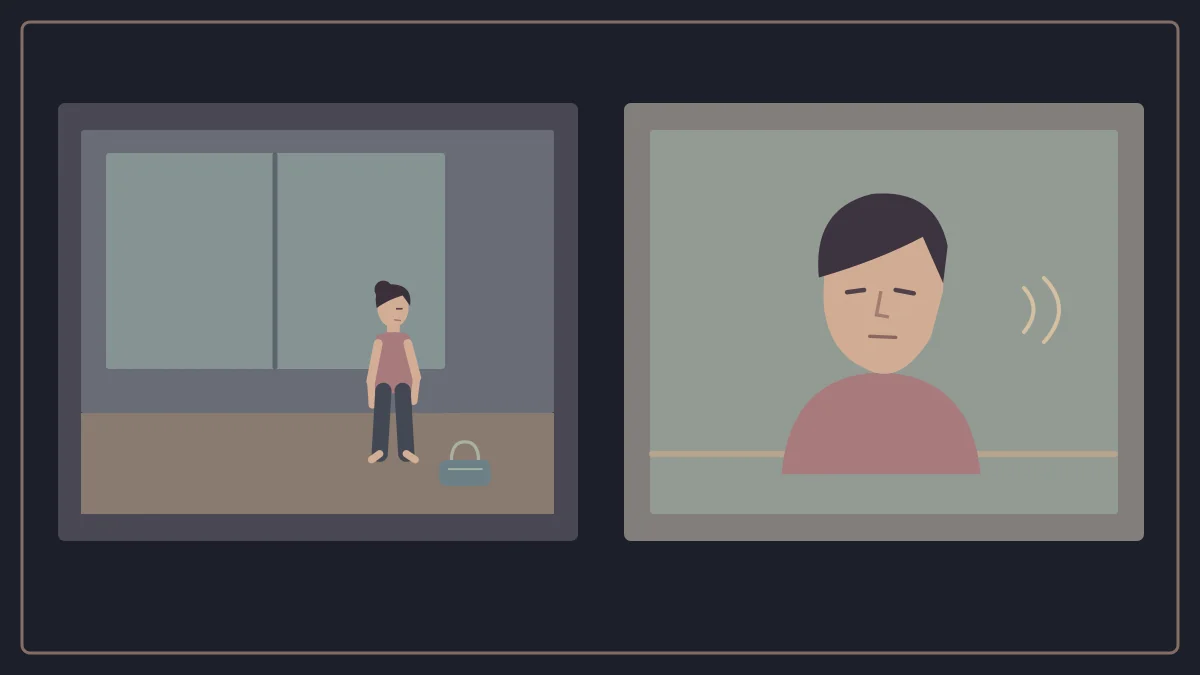
Does conflict need a villain?
Not necessarily.
A film may depend on an adversary who deliberately seeks to harm the protagonist or prevent them from achieving a goal, but a villain is not a requirement for every dramatic story.
Sometimes conflict arises between two people who each have an understandable reason for what they want.
In the exhibition example, Nadine wants to present an artwork whose importance she believes in, while Reem wants to protect an aspect of her private life that she no longer wishes to display to others.
We can understand Nadine's enthusiasm for the photograph without making Reem's objection illegitimate.
Recognizing Reem's right to refuse actually gives Nadine a more serious test.
The problem is how to handle the clash between her artistic desire and another person's boundaries, rather than how to defeat her sister.
If we made Reem a villain deliberately sabotaging the exhibition out of jealousy alone, the nature of the conflict would change.
Nadine's goal might become resisting someone who wants to hurt her, rather than confronting the possibility that her ambition has led her to disregard the wishes of someone close to her.
Each approach may suit a different story, but they will not produce the same meaning.
We should therefore avoid assuming that someone who opposes the protagonist is wrong simply because we follow events from the protagonist's perspective.
That person may be right, possess part of the truth, or fear losing something whose importance the protagonist does not yet understand.
The real adversary may be a difference in priorities rather than either side's bad intentions.
The better we understand what the other person wants, the more dialogue becomes something beyond an exchange of orders and objections.
Each line can be an attempt to achieve a goal, and each refusal may push the other person to change their approach to the situation.
How does Jaws use more than one source of conflict?
We can see opposing forces overlap in Jaws, released in 1975 and directed by Steven Spielberg.
One of the story's problems begins when the residents of Amity Island face the danger of a shark attacking swimmers.
Police chief Martin Brody wants to protect people and believes the beaches must be closed to swimming.
But Mayor Larry Vaughn opposes this decision because of concerns about the tourist season on which the town's economy depends.
Here we have more than one level of conflict.
There is an external danger represented by the shark, an obvious source of threat.
There is also a clash between Brody's wish to protect people and the mayor's fear of the economic consequences of closing the beaches.
Brody also lacks the power to carry out everything he considers right without facing pressures connected to his professional responsibility and his place within the community.
If closing the beaches were a decision he could make and implement immediately without opposition, an important part of the film's dramatic construction would be different.
The mayor's presence adds more than a character who argues with the protagonist: it makes the response to danger more complicated.
The problem shifts from knowing that a threat exists to trying to act amid resistance, pressure and possible consequences.
For the director, this overlap allows tension to be created even when the shark does not appear in the frame.
Anxiety can arise from Brody watching the beach, or from people going about their lives normally while the viewer knows that the danger remains.
A dramatic threat does not need to appear at every moment to remain effective: it is enough to understand how it obstructs the characters' goals and influences their decisions.
This is an important point when learning directing, because a seemingly quiet scene may carry intense conflict if we understand what someone is trying to achieve and what might happen if they fail.
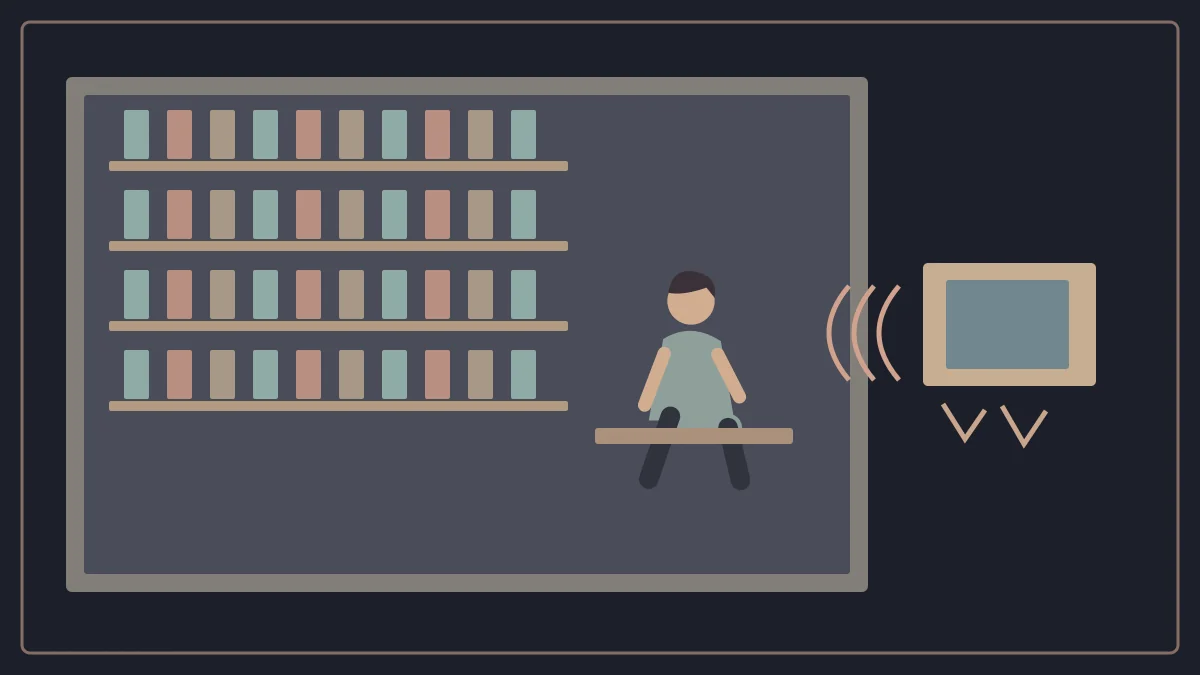
External conflict: when the world resists you
Some obstacles come from circumstances that a character cannot directly control.
They may involve a storm, a long distance, limited resources, an institutional procedure, or a deadline that cannot easily be changed.
In a film about a sea voyage, the weather may become a central obstacle.
In a story about someone trying to deliver a document before an office closes, time may become a source of pressure.
In a story about a scientist trying to complete an experiment, resistance may arise from the limits of available knowledge, equipment or resources.
These are examples of conflict involving circumstances outside a character, but the mere presence of a circumstance does not make it dramatic.
If someone's car breaks down when they are not going anywhere important, the breakdown may simply be a passing event.
But if they are trying to reach a meeting that will determine the future of a relationship, the breakdown affects their goal.
The more important question becomes: how will they act?
Will they seek another means of transport? Call the person waiting for them? Decide to return? Will their way of handling the problem reveal something about their character?
An external obstacle can reveal qualities that do not appear in ordinary circumstances.
A person who seems calm when everything goes to plan may lose the ability to think when their only means of achieving their goal breaks down.
The opposite may also happen, revealing an unexpected capacity to adapt and make decisions.
But we should be careful about using external circumstances as an easy way to delay a character whenever we need to extend a story.
If the car breaks down, then the phone stops working, then a storm appears, then the road closes, without a convincing connection between these events, the viewer may feel that the writer is inventing difficulties rather than developing the situation.
It is better for each obstacle to have a clear function, and for its consequences to connect to what the character is trying to do or has previously chosen.
Internal conflict: when you want two things that do not easily fit together
Not everything that obstructs a person exists outside them.
A character may want to achieve a goal while fearing the consequences of reaching it.
They may also have two conflicting desires, so that fulfilling one threatens the other.
Someone may want to leave home and live independently, but fear losing their relationship with their family.
A woman may want to admit a truth she has concealed for years, but not want to lose the trust of someone she loves.
In these cases, the main confrontation may be internal.
But how do we turn this conflict into cinematic material?
It is not enough to write in the screenplay description, “The character feels a profound inner contradiction.”
We must look for a situation that makes this contradiction affect their behavior.
Suppose a woman has decided to accept a job in a distant city. She has packed her bag and bought a travel ticket, but her mother asks her to stay for an important family occasion.
The decision may be negotiable, but the woman hesitates because she fears that leaving will permanently change the relationship.
The conflict may appear through repeated attempts to reassure her mother, postponing a final departure date, or hiding the ticket even though she has already made her decision.
These actions do not automatically tell us everything she feels, but they let us notice the distance between her desire to leave and her fear of its consequences.
The story may choose to make the matter clearer through dialogue, or preserve some ambiguity while we gradually discover its causes.
What matters is that internal conflict has consequences for actions.
A character who thinks about a problem without that thought affecting anything may need a different treatment for the viewer to feel the importance of what they are experiencing.
Still, we should not reduce every quiet film to a sequence of visible decisions. Some works approach memory, anxiety and hesitation through contemplative and experimental means, and may make the inability to act itself the subject of the story.
Even in these cases, however, the director needs to understand the experience being offered to the viewer, and how stillness, repetition or silence gains meaning within the film.
A character does not face an obstacle only once
When writing dramatic conflict, we may fall into a common mistake: placing an obstacle before a character, then having them repeatedly try to overcome it in the same way.
They ask for something, and the request is refused.
They ask again, and it is refused once more.
They raise their voice and repeat the request until something happens that allows them to get what they want.
Repetition can work when deliberate and dramatically or comically effective, but becomes weak when the nature of the confrontation does not change.
Let us consider Nadine's situation inside the photography exhibition again.
Reem refuses to display her photograph.
Nadine begins by trying to persuade her, explaining the photograph's importance to the exhibition.
But Reem repeats her refusal.
Something in Nadine's response now needs to change if the story is to move forward.
She may try to understand why her sister has withdrawn her earlier agreement. When she realizes that the refusal is final, she begins looking for an alternative that preserves the exhibition's idea without using the photograph.
She might consider changing the arrangement of the works, replacing the photograph with another, or deliberately leaving the space empty if that serves the exhibition's concept.
Each choice opens a different possibility.
But what if Nadine is deeply afraid that her other work will seem weak?
She may find herself unable to decide because she believes the whole exhibition depends on one photograph.
The external conflict involving Reem's objection is now connected to an internal problem involving Nadine's confidence in her work.
This reveals the value of following changes in the methods a character uses.
What matters is that the character must reconsider their approach, and perhaps the goal itself, rather than face a bigger problem every time.
A character becomes more interesting when the question is not only “Will they succeed?” but also “What will they do when their first approach fails?”
When does pressure become dramatic escalation?
You may think that escalating conflict means constantly increasing the scale of events.
You begin with a small problem, add a bigger one, then reach a huge crisis.
But dramatic escalation does not always depend on raising the level of external danger.
Sometimes a situation becomes more tense because the number of available options decreases.
At the beginning of the exhibition scene, Nadine can discuss the matter with Reem, contact the organizer, or look for another photograph.
But the approaching opening time reduces the time available for each attempt.
Then the organizer arrives and asks whether the empty space is part of the final design.
Nadine may now have to make an immediate decision about the arrangement of the photographs instead of continuing to persuade her sister.
We have not needed to introduce a sudden accident or a violent argument.
The situation has changed because postponement has become harder, and Nadine is closer to a moment when she must bear the consequence of her choice.
Conflict can also escalate when new information becomes clear.
Perhaps Nadine discovers that Reem has not objected because she dislikes appearing before people in general, but because she feels that this private moment does not represent the image she wants to present of herself.
This discovery may lead Nadine to reconsider the meaning she had given the photograph.
The question no longer concerns only a frame's position within an exhibition, but an artist's relationship with the person she photographs.
This is an example of escalation that changes our understanding of a situation instead of adding a random problem.
It is important that escalation does not become a mechanical process imposing more tension every minute.
Some stories may need a quiet moment that allows a character to think, or a scene that reveals a new relationship before returning to the main confrontation.
Rhythm and the distribution of these moments are subjects we will discuss later, but the practical principle here is that every change in pressure should serve a function within the story.
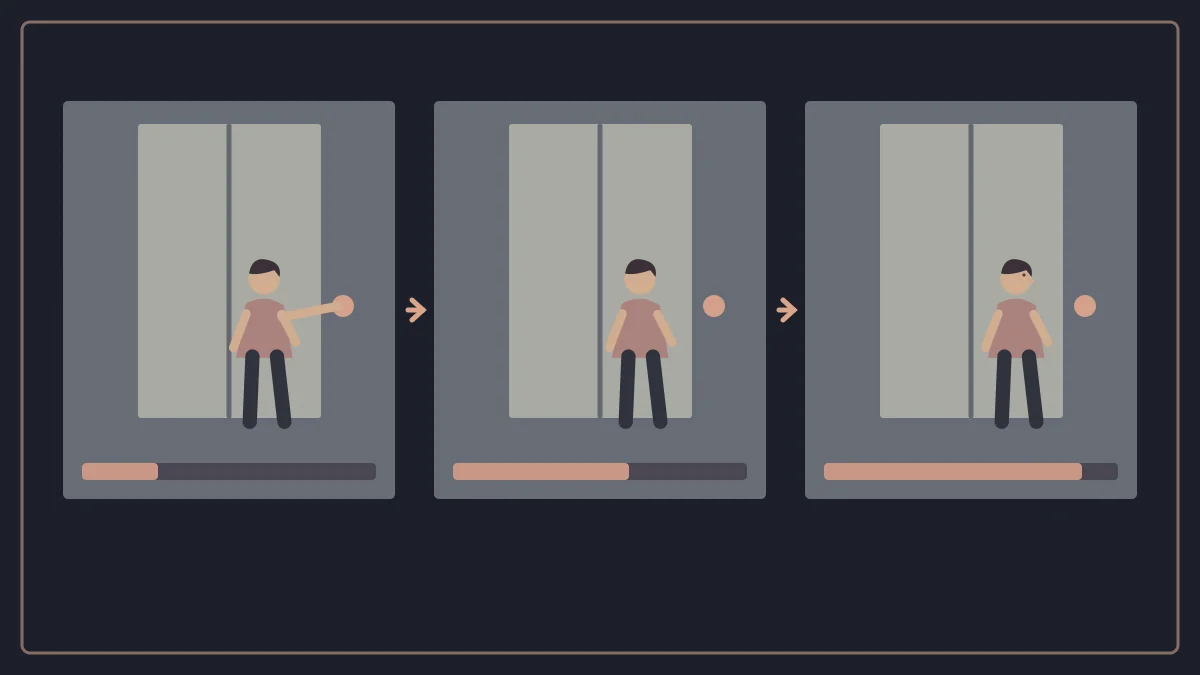
Can a silent scene carry conflict?
Certainly.
Some situations become more affecting precisely because people cannot easily express what they want.
Imagine two people sitting at a dining table.
One wants to apologize for something they did long ago, but fears the apology will reopen an unresolved disagreement.
The other knows that their companion wants to say something, but refuses to help them begin the conversation.
No one raises their voice, and no argument breaks out.
One tries to begin a sentence, then stops. The other continues eating, but slows their movements whenever their companion tries to speak.
The scene can carry conflict even though there is very little dialogue.
Each character is trying to achieve something different.
The first wants to reach an apology without direct confrontation, while the second may want a clear admission rather than hints.
Hesitation, silence or avoiding eye contact may reveal this mutual resistance.
But these actions have no fixed meanings outside their context.
Silence may mean refusal, thought, sadness or an inability to find words, so the director needs to understand what each person wants before deciding how to present the scene.
If the audience knows something about the earlier disagreement, a small movement such as moving a plate away from the middle of the table may carry a different significance than it would without any context.
This is where the connection between conflict and directing becomes apparent.
Tension is created by what characters try to achieve through their words or by withholding them, rather than by the number of words they say.
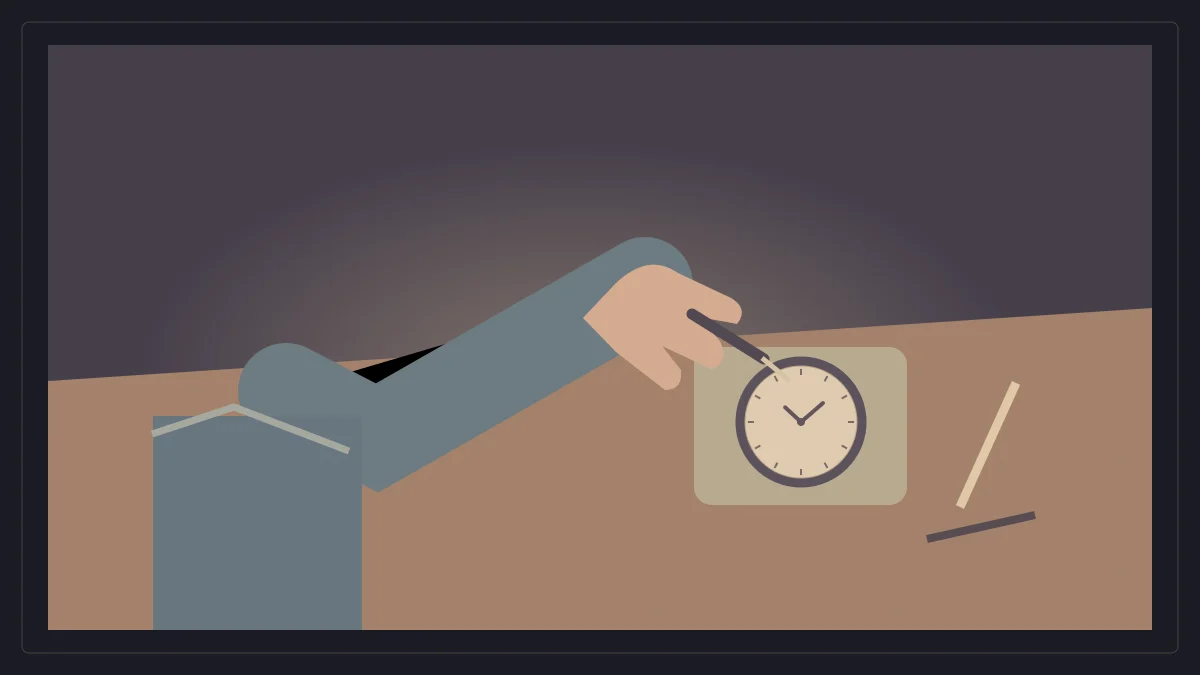
Mistakes that weaken dramatic conflict
You may have a good idea and interesting characters, then find that the conflict within the film does not feel convincing.
Sometimes the problem lies in how obstacles have been designed, rather than in their absence.
One mistake is to introduce an obstacle without a clear connection to what came before, then make it disappear as soon as it has served its purpose.
For example, the protagonist's car breaks down only because the writer wants to prevent them from arriving, then is suddenly repaired when they need to move to the next event.
Coincidences can exist in stories as they do in life, but constantly relying on them to create and resolve problems may weaken the viewer's sense that the characters' actions and decisions matter.
Another mistake occurs when the protagonist could overcome an obstacle with an obvious, simple solution, but the script makes them ignore it without a reason.
If the character can make a phone call that ends a misunderstanding, the need to keep the disagreement going is not enough reason to prevent the call.
There may be convincing reasons to avoid it, such as fear of admitting something, lack of trust or not having the correct information. But these reasons need to be established within the story.
Another mistake is making the opposing person a villain without motives simply because we need someone to prevent the protagonist from achieving a goal.
That may suit some film genres, but it is not the default solution for every story.
The less obvious mistake is placing obstacles that do not affect the character.
The protagonist may face ten problems but emerge from all of them in the same way, without a change in their plan, understanding or relationships with others.
There may be many events, but the dramatic experience remains limited if the confrontations reveal nothing new or do not take the story in a different direction.
When reviewing each obstacle, we should therefore ask: what has it added to the situation, and what decision has it forced the character to make?
If we cannot find a clear answer, the obstacle may need to be redesigned or removed.
Practical exercise: the same story with two different obstacles
Now we will try the central skill of this lesson.
We will keep the character and the goal, changing only the obstacle to see how it affects the nature of the conflict.
Imagine a character named Hind who wants to return an old sketchbook to her friend before he leaves the city.
Hind believes the sketchbook matters to him, and that handing it over will provide an opportunity to repair their strained relationship.
This is the basic situation.
First version: an external obstacle
Hind arrives at the travel terminal and discovers that her usual entrance is closed, so she must use another entrance far away before the departure time.
Her goal has become finding a way to arrive in time.
She may look for an alternative route or try to call her friend to ask him to wait.
Here the conflict focuses on facing a practical circumstance and limited time.
Second version: a human obstacle
Hind arrives at the terminal with plenty of time and finds her friend waiting.
But when she offers him the sketchbook, he refuses to take it.
He tells her that keeping it for years was part of their disagreement, and that he does not want to return to that period.
Hind's basic goal has not changed: she still wants to return the sketchbook and repair the relationship.
But the obstacle now involves another person's wishes and the meaning each of them gives the sketchbook.
Hind may now need to choose between insisting on returning it, acknowledging the cause of the disagreement, or respecting her friend's refusal even if she does not obtain the reconciliation she wanted.
Notice that neither version needs large events.
Yet the nature of the story has changed.
In the first, we may feel urgency and wait for Hind to succeed in arriving before departure.
In the second, our interest may focus on the relationship between the characters and whether Hind understands what actually upset her friend.
Your task: choose a short idea of your own, and give a character a fixed goal. Then write two different situations: in the first, the character faces an external obstacle; in the second, the obstacle involves another person or hesitation within the character.
Try to give each situation at least one action the character takes to confront the obstacle, and a consequence that leads them to consider a new step.
Then compare the two versions: which reveals a different side of the character? Which relates more closely to the question your story seeks to explore? How has the kind of scene you imagine filming changed?
Do not seek an answer declaring internal conflict better than external conflict, or confrontation between two characters more affecting than resistance to circumstances.
Each kind can serve a particular story, and one story may combine several kinds.
The aim is to learn to choose an obstacle for what it adds to the story, rather than simply because you need to delay the character.
When choosing becomes harder than reaching the goal
Let us return to the exhibition.
The guests have arrived, and voices are growing louder behind the doors.
Nadine is still standing before the frame from which her sister's photograph was removed.
She is no longer trying to persuade Reem to reverse her decision.
She turns to the organizer and asks for a few minutes to adjust the arrangement of the photographs.
Then she carries the empty frame away from the wall and begins moving another photograph into its place.
This solution may not match her original vision, and she may feel that the exhibition has lost something she considered essential.
But her decision reveals that she has begun to think differently.
The exhibition's success no longer means executing her original plan whatever happens, but finding a form for the work that respects the people who participated in it.
The story can end here, or the relationship between the sisters may later develop in another direction.
What matters is that the obstacle has served more than the function of delaying the exhibition's opening.
It has placed Nadine before a choice that revealed her relationship with her art and her sister, and made her act differently from what she had planned.
This is the essence of dramatic conflict that we want to learn.
Obstacles do not gain their value solely from their difficulty or from the number of people standing against the protagonist.
They become an effective part of the story when they make desires collide, lead characters to seek solutions, and force them to deal with the consequences of their choices.
Conflict may be loud or quiet, visible in direct confrontation or hidden within a hesitation that the person experiencing it cannot express.
But the director should keep asking: what does this character want to achieve now, what makes reaching it difficult, and what will their response to this difficulty reveal?
Dramatic conflict concerns more than what prevents a character from reaching a goal: it concerns what we discover about them as they try to reach it.
In part ten, we will move from understanding conflict to designing it within a specific cinematic unit: how do you build a scene with a beginning, development and a turning point?

About this series
A journey from understanding the director’s work and making a first decision to working with story, images and actors, then preparing, filming, editing and making a short film.
Further parts will be linked as they are published.
View the series in orderAll Cinema Journal articles