
At a quarter past six in the evening, Mazen stands behind a hotel reception desk.
A guest raises his voice over a mistake in his room reservation. Mazen listens calmly, checks the details and finds a solution without losing his smile.
The guest thanks him and leaves.
At that moment, Mazen’s phone vibrates with a message from his younger sister:
“Don’t be late. My show starts at seven, and you promised you would come.”
He looks at the clock, then types: “Of course. I’ll be there.”
Before he puts the phone in his pocket, a colleague approaches and asks him to stay an extra hour because an emergency prevents him from finishing his shift.
Mazen hesitates briefly.
Then he smiles and replies: “Don’t worry. I’ll take care of it.”
His colleague leaves reassured, while Mazen looks again at his sister’s message.
He knows the theater is half an hour from the hotel and that he cannot keep both promises.
Yet he has not told either person the truth.
This scene is hypothetical, but it reveals something important about character.
We could describe Mazen as helpful and kind, capable of handling difficult situations. But these traits alone do not explain why he agreed to a request he knows will disappoint someone he loves.
Is he afraid his colleague will be angry? Does he feel his value depends on his ability to help others? Or has he become accustomed to postponing difficult conversations until problems grow worse?
We do not have a final answer yet, but we can now see a difference between the image Mazen presents of himself and the way he behaves.
This is where building a film character begins: with what we discover when they must make a decision, beyond what we say about them.
A character is more than a list of written traits
Suppose you begin writing a new character and give him the following description:
“Mazen, 32, a hotel receptionist. Calm, intelligent, sociable, helpful, loves his family and dislikes problems.”
This description gives us initial information, but it is not enough to understand the person we will see in the film.
Words such as “intelligent,” “calm” and “helpful” do not tell us how Mazen uses his intelligence, what makes him lose his calm, or when his wish to help becomes a problem.
Two people may be extremely helpful, but one helps because he enjoys it while the other does so because he fears rejection if he refuses.
From the outside, they may look similar in many situations.
But when someone asks them for help they cannot responsibly provide, they may behave very differently.
The first might decline clearly, while the second agrees and tries to deal with the consequences later.
This difference lets us begin to understand the two characters rather than merely describe them.
It is therefore useful to distinguish between static characterization and dynamic characterization.
Static characterization explains who a character is through information: their age, occupation, appearance, and some traits and habits.
Dynamic characterization explores what drives them: what do they want? What do they fear? How do they pursue their goal? What do they do when things do not go as expected?
This does not mean that basic information has no value.
A character’s occupation, age, circumstances and relationships can deeply affect behavior, but their dramatic value appears when we understand how they shape actions.
Knowing that Mazen works at a hotel reception desk matters when we see him able to calm an angry guest but unable to say “no” to a colleague asking a favor.
His occupation has become a way to reveal a contradiction in his character, beyond a fact placed in his introduction.
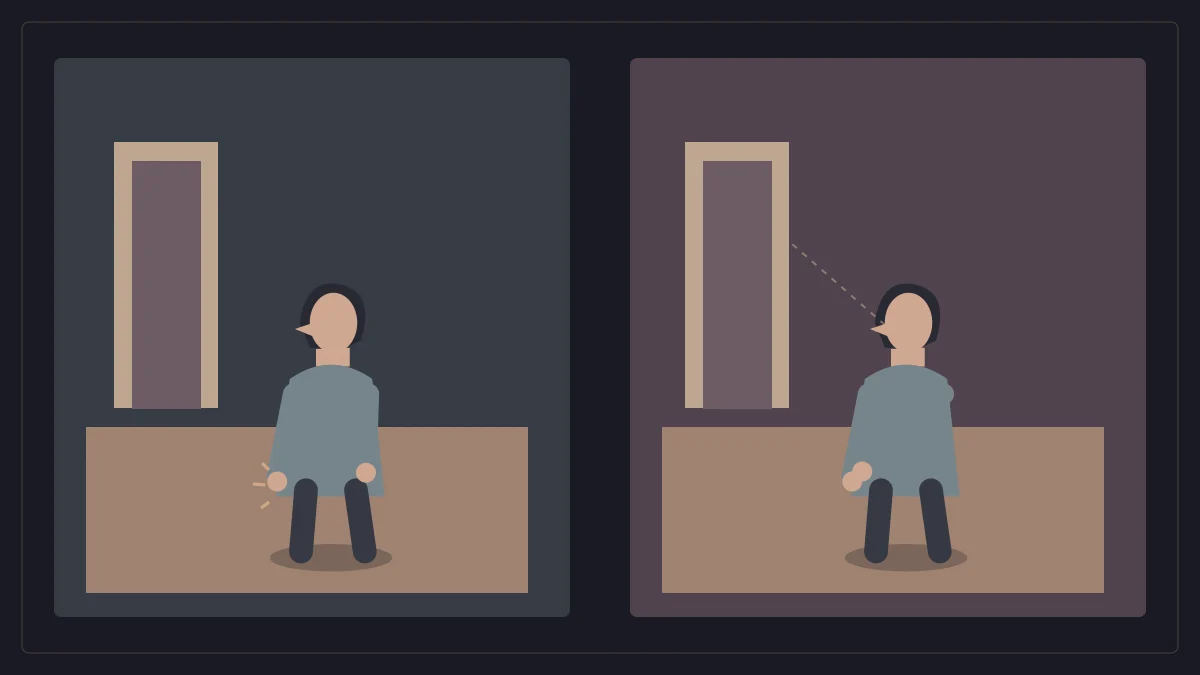
What does a character want, and what do they really need?
In the previous part, we learned that building a story requires understanding what a character is trying to achieve and why achieving it matters to them.
When building the character themselves, however, we need to explore the nature of their desires more deeply.
What a person wants is not necessarily what they need.
We can distinguish here between an external goal (Want) and an inner need (Need), remembering that this distinction helps us understand many characters but is not a rule every film must follow.
The external goal is what a character seeks to achieve and can express, or what we can observe through their actions.
A person might want to get a job, restore a relationship, win a competition or reach a place before a deadline.
An inner need might involve changing how the character thinks, recognizing a truth they avoid, or moving beyond a belief that makes them act against their interests.
Let us return to Mazen.
His immediate goal that evening is to reach his sister’s show on time.
But we can imagine a broader goal affecting his decisions: to remain someone everybody can rely on, without making anyone feel abandoned.
This goal seems positive because it involves helping others and taking responsibility.
But what happens when he becomes unable to refuse any request?
A possible inner need emerges: learning to set clear boundaries and recognizing that an honest refusal does not necessarily mean letting people down.
The irony is that by trying not to disappoint anyone, Mazen may end up disappointing the person whose show he promised to attend.
This does not mean we have discovered a psychological diagnosis for the character or can explain all his actions in one sentence.
It is a dramatic idea that the writer and director can develop and test.
During the work, we might discover that Mazen’s problem is not fear of rejection, but a feeling of debt toward a colleague who helped him through an earlier crisis.
That possibility would change our understanding of the same decision.
The point is to explore a logical connection between what a character wants, what they believe and what they choose when their desires conflict, rather than attaching an inner need to them as a label.
A mistaken belief can be stronger than direct fear
Sometimes what prevents a character from acting is a belief about themselves or the world, rather than a lack of courage or ability.
A person may believe that asking for help shows weakness and therefore try to solve every problem alone.
Another character may believe that success has no value unless everyone acknowledges it, remaining dissatisfied no matter what they achieve.
Mazen might believe that saying “no” to someone who needs him means he is no longer a good friend or a dependable colleague.
This belief may explain behavior repeated in different situations.
He does not refuse colleagues’ requests even when exhausted, avoids admitting that he cannot keep his promises, and may prefer taking on another problem to telling others his actual limits.
But the belief should not become an explanatory sentence inserted into the dialogue.
If Mazen tells his sister, “I can’t refuse people’s requests because I believe my worth depends on their approval,” we have revealed everything in a direct and artificial way.
It is often better to let the viewer notice a pattern of behavior, then gradually reveal what is necessary to understand its causes.
We might see him apologize to someone he has not wronged, keep dealing with a guest’s problem after his responsibility has ended, or say he does not mind staying at work while his glances at the clock reveal that he wants to leave.
These actions alone do not prove a particular psychological belief, but give the viewer material to interpret within the story.
A belief that restricts a character does not always have to be entirely wrong.
Helping others is an important human value, and Mazen may have gained confidence through his ability to take responsibility.
The problem emerges when he applies this value indiscriminately, even in situations that require a different decision.
The character then becomes more complex than simply a kind person who needs to learn selfishness or a weak person who must become strong.
He is trying to preserve a value he believes in, but has not yet learned how to deal with its limits.
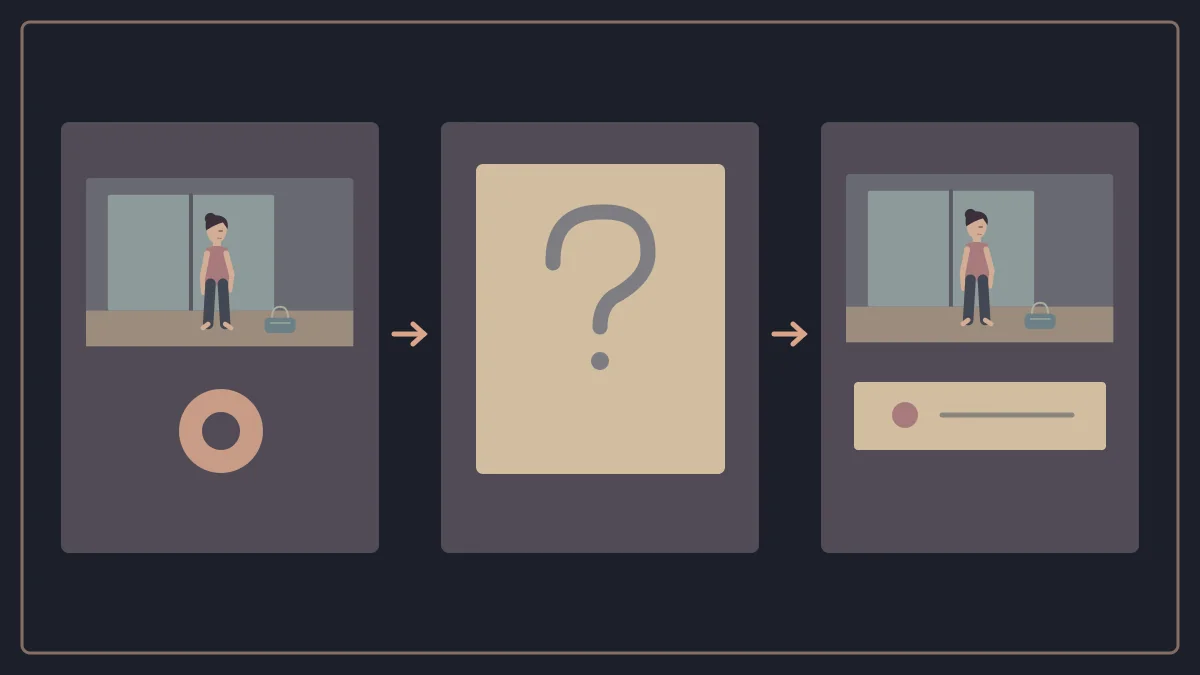
Contradictions make a character human, rather than a collection of conflicting traits
When writing a character, you may be tempted to give them one clear defining trait so the audience can understand them easily.
They might be brave or cowardly, generous or miserly, honest or dishonest.
These qualities can provide starting points, but become limiting when the character behaves the same way in every situation.
A person may be brave at work but hesitant in their private relationships, generous to strangers but fiercely protective of their own possessions, or able to defend others while unable to stand up for themselves.
Contradiction here does not mean the character has been written illogically.
It may instead arise from differences in what they consider important in each situation.
Consider Mazen.
When he faced the angry guest, he was confident and calm because the problem fell within an area he could understand and handle.
But when his colleague asked him to stay an extra hour, the decision involved his relationships with others and his view of himself.
We can therefore explain the difference between these situations without saying that the character has suddenly changed.
There is, however, a difference between a convincing contradiction and arbitrary behavior.
If Mazen is determined to help everyone in one scene, then harshly refuses to help his sister in the next without any context to explain it, the viewer may feel that the writer is changing his behavior simply to serve the plot.
But if we know that he feels helpless when faced with his family's needs, or is hiding a particular problem from them, the behavior may become part of a contradiction we can understand, even if we do not sympathize with him.
A complex character is not someone who constantly does the unexpected, but someone with several motives that may clash when circumstances become more difficult.
We should not turn this idea into a requirement that every character have a terrible secret or a tragic past.
It may be enough for someone to be confident in their opinions but easily affected by the feelings of those close to them, or to want independence while fearing separation from the environment they know.
Human contradictions do not have to be large or exceptional, and the simplest can be the most useful to a story.
The past explains a character, but should not swallow the present
Some writers may spend a long time preparing character files.
They record details of childhood, schools, previous relationships, eating habits, likes and dislikes, until each character has enough history for an entire novel.
This approach may help some writers and directors discover aspects of their characters.
But having many details does not automatically make a character deeper.
The more important question is: which details from the past actually affect the character's decisions within the story?
Suppose we learn that Mazen had to carry many responsibilities within his family when he was younger, and that others became accustomed to relying on him.
This may help explain his current tendency to agree to everyone's requests.
But this background does not necessarily need a long scene explaining his childhood, or dialogue in which he explicitly tells us that the past made him this way.
It may be enough to see his family members always turning to him, or to hear a remark revealing that they take his ability to solve problems for granted.
The story may not need to reveal this past at all if present actions give the viewer a sufficient understanding of the character.
Not every habit, fear or contradiction needs to be explained through an incident long ago.
When dealing with a character's background, a director can usefully ask: does this information help us understand an important decision in the film, or is it merely an extra detail that does not affect our experience?
Some information can remain outside the presented script if it helps the writer or actor develop a coherent understanding.
But it should not become a burden that constantly stops the film to explain things the audience does not need.
The past gains its dramatic value when we notice its effect on the present.
A character changes according to who is standing in front of them
You may think you understand a character when you see them alone, then discover a different side when they interact with someone else.
Relationships give us an opportunity to understand how people see themselves, how they behave when they need something from others, and what they are afraid to reveal to them.
Let us place Mazen opposite three different characters.
With the angry guest, he acts as a professional employee who knows his responsibilities and remains calm.
With his colleague, he becomes someone afraid of seeming uncooperative, even when he has other commitments.
With his sister, he may be a loving brother who wants to make her happy, but avoids admitting that he has failed to keep his promise.
These different behaviors can belong to the same person.
The difference between the relationships makes each side visible in a particular situation.
Supporting characters can reveal these aspects without becoming mere tools that explain the protagonist to us.
Mazen's colleague must have his own reasons for asking for help, and his sister should not exist solely to be disappointed and push him toward change.
Each character can see the situation differently and act according to their own needs.
Perhaps the colleague has helped Mazen before and therefore feels entitled to ask the same favor. His sister may have become used to his absence from important occasions and treat his new promise cautiously rather than with complete trust.
These details change the nature of the relationships and make the decisions more complicated.
But we do not need to add a complete history for every supporting character to achieve this.
It is enough to treat them as a person with a perspective and a motive, rather than merely an obstacle or a way of conveying information.
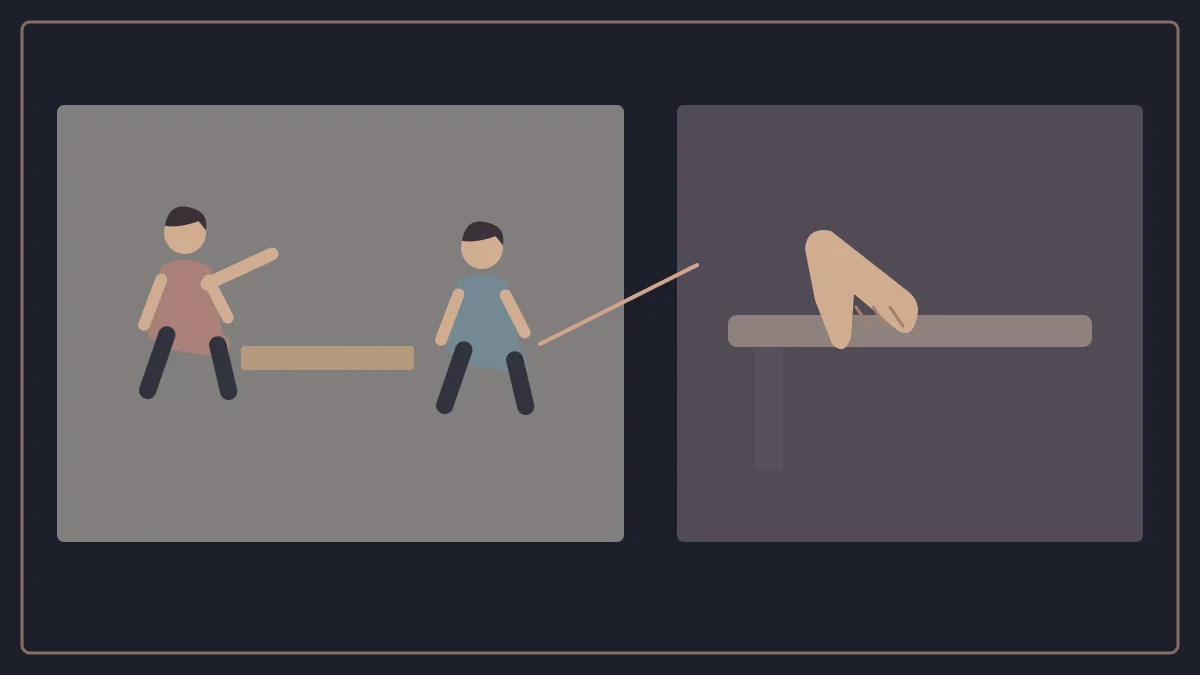
What does Remy's character in Ratatouille reveal?
We can see the relationship between traits, desires and contradictions in Ratatouille, released in 2007.
The film introduces Remy, a rat with exceptional senses of smell and taste who dreams of becoming a chef, even though the world of human kitchens does not welcome rats.
But describing Remy as “a clever rat who loves food” would not explain what makes him an interesting dramatic character.
He does not approach food in the same way as most members of his group.
While the others see food primarily as a means of survival, Remy is interested in flavors and how to combine them, finding in cooking a space for expression and invention.
His exceptional sense of smell thus becomes more than a physical trait: it is an ability that affects his view of the world.
This ability also gives him a role within his group, since he can help identify safe food, but it does not necessarily fulfill the dream he is pursuing.
An important contradiction emerges here.
Remy belongs to a family he cares about, but has an ambition that does not easily fit its expectations or its idea of where he should live.
He wants to cook, but fulfilling that desire may require him to approach a world that poses a danger to him.
Understanding the character through his dream alone is therefore not enough.
We also need to understand his relationship with his family, the ability that distinguishes him, and what makes it difficult to use that ability in the direction he wants.
In cinematic terms, this construction allows the character to be introduced through actions.
The way Remy responds to smells, ingredients and food helps us understand his interest, while his relationship with the group reveals the difference between what is expected of him and what he hopes to achieve.
The film does not have to settle for a line telling us that he is different from the other rats; that difference becomes part of his behavior and his interaction with the world.
This is the idea we can draw on when building our own characters: a trait becomes more important when it affects a character's desire, decisions and relationships, rather than remaining a fact written in a file.
How does a director make a character clear on camera?
Everything we have discussed so far concerns understanding the character on paper.
But when the director begins preparation, another problem emerges: how can the viewer sense the character's qualities and motives without receiving a direct explanation?
Cinema does not give us access to a character's thoughts in quite the same way as a written novel.
Films can use internal dialogue, voiceover or other expressive means, but these are not the only options.
Performance, behavior, environment, relationships, image and sound can all carry information about a character.
Let us return to Mazen.
To show his tendency to please others, we could settle for a colleague saying, “Mazen never turns down anyone's request.”
But we could also build a situation that allows the viewer to notice this quality.
His colleague asks him to stay an extra hour. Mazen looks at his sister's message and tries to speak, but stops when the colleague begins explaining his problem.
The colleague asks, “Does that work for you?”
Mazen agrees, then hides the phone before the other man sees it.
These actions may reveal more than simply announcing that he is a helpful person.
We see the distance between what he wants to do and what he chooses to say.
The director might hold on his face for a moment after the colleague leaves, allowing us to notice a change in his behavior when he is alone.
Or the director may prefer to show the phone and the employee within the same composition, keeping both conflicting commitments present for the viewer.
There is no single solution that must be used, and the shot should not be chosen before understanding what the scene needs to communicate.
What matters is that the director knows what to reveal about the character and what should remain unresolved at this stage.
Nor should the director assume that one facial expression has a fixed psychological meaning.
Looking at the ground may be associated with shyness in one situation, but reflect thought, fatigue or an attempt to conceal a reaction in another.
The actor does not need to turn every inner feeling into a visible, exaggerated movement.
In a particular context, continuing an ordinary action despite hearing important news may be more expressive than suddenly stopping and crying.
We will discuss working with actors and the tools for directing performance in detail at a later stage. For now, the most important thing is learning to turn abstract qualities into behaviors that can be observed and interpreted within the story.

How can you avoid a stereotypical character?
It is easy to begin building characters from familiar images.
The domineering manager, the kind employee everyone exploits, the rebellious teenager, and the brilliant scientist who cannot communicate with others.
These images may be quickly understood, but become thin when the character remains confined to a single quality.
Imagine making Mazen someone who is always kind, never gets angry, and makes mistakes only because he helps others too much.
That may seem suitable at first, but prevents us from discovering other sides of his character.
What if Mazen expects everyone to appreciate him in return? What if he feels angry when others refuse to sacrifice for him in the same way?
This possibility may make him more complex by revealing that helping others can be mixed with a need for recognition or appreciation.
But we should not add these qualities arbitrarily simply to make the character less ideal.
Every new aspect needs a place within the story's logic, and actions that make its presence understandable.
Building a character who differs from a stereotype also does not require constantly surprising the audience with the opposite of what they expect.
The manager may indeed be strict, but have reasonable professional grounds for their decisions. A shy person may say little without hiding a terrible secret. The hero may be brave in most situations and remain brave when tested, while we discover the price they pay for that courage.
Originality does not mean turning every trait upside down.
It means giving a character enough specificity for their behavior to arise from a particular person within a particular world.
Must a character always change?
Many stories concern characters who change as a result of their experiences.
A person may begin selfish and learn to consider others, or begin afraid of confrontation and become able to stand up for themselves.
The path along which a character's understanding or behavior changes throughout a story is known as a Character Arc.
But not every film needs its protagonist to undergo a clear, positive transformation.
A character may hold on to a fundamental value despite the pressures around them, with their real impact falling on other people or the world they inhabit.
A character may also refuse to learn from mistakes, making their difficulties worse or moving toward a tragic outcome.
In some works, our aim is to understand the character rather than watch a radical change in their personality.
What matters most is that the relationship between the experience and its outcome is understandable within the dramatic construction.
If Mazen begins the story unable to turn down requests and ends it able to say “no” to everyone without hesitation, the transformation may seem abrupt unless we see what led him to reconsider his behavior.
But if he encounters situations that reveal the consequences of his conflicting promises, then tries to make a different decision, even without complete success, the change may become more convincing.
We might choose another ending in which he repeats the same mistake but finally begins to recognize what he is doing.
This is a smaller outcome, but may suit a particular story.
We should not decide the size of the transformation before understanding the character and the subject we want to explore.
Practical exercise: build a character from one decision
In this exercise, we will not write a long biography for a fictional character, and we will not need actors or filming equipment.
The aim is to test your ability to distinguish between a trait, a goal, a need and a contradiction through a small situation.
Begin by imagining a character who works in a used bookshop.
Choose a name and a clear trait, such as precision at work, a tendency to help others, or carefulness with money.
Then write a specific goal the character wants to achieve during one situation.
For example, she may want to close the shop on time because she has an important meeting ahead.
Next, add a simple obstacle: a customer enters minutes before closing and asks her to look for an old book that may take a long time to find.
Now, instead of writing that she is “kind,” “selfish” or “hesitant,” decide how she behaves.
Does she apologize to the customer and ask him to return tomorrow? Does she agree to help, then begin looking at the clock? Does she seek a compromise? Or does she use the situation to avoid the meeting she was preparing for in the first place?
Each response may reveal a different aspect of the character.
Choose one action, then write a few lines about what the character wants in this situation, what she fears or tries to avoid, and what her action reveals about her priorities.
Next, try changing one element: what if the customer is someone she has known for years, rather than a stranger?
Will the character behave in the same way?
If her response changes, try to explain why without adding a long story from the past.
Perhaps she feels an obligation toward him, fears disappointing him, or wants to avoid talking to him.
The aim here is to discover how relationships between characters can reveal motives that general traits alone do not show.
At the end of the exercise, keep three short sentences describing your character:
• What does she want to achieve now?
• What influences her choice without her necessarily admitting it?
• What action will allow the viewer to notice this contradiction?
If you can answer these questions through a clear situation, you have the beginning of a character who can be developed dramatically, rather than a description that could fit dozens of others.

When a character becomes more than a definition
Let us return to the hotel reception desk.
Mazen's colleague has left, and the desk is quiet after the guest's problem has been resolved.
Mazen opens his phone and reads a new message from his sister:
“Are you nearly here?”
He looks at the clock, then at the list of tasks he must finish before leaving the hotel.
He begins typing a reply saying that he will not be able to attend.
But he deletes the words.
He raises his head toward the office door his colleague left through, as though considering following him and explaining that he cannot stay.
Then he looks at the phone again.
The director may choose to end the scene here, before we know what Mazen will decide.
Even so, we now understand far more about him than a profile describing him as a calm, helpful employee who loves his family could have told us.
We have seen his ability to deal with others, his difficulty admitting his limits, and his attempt to protect two conflicting images of himself: the person who never lets his colleagues down, and the brother who keeps his promises.
We may interpret his behavior differently.
We may sympathize because he does not want to hurt anyone's feelings, or feel angry because he prefers making dishonest promises to facing others with the truth.
This difference does not mean that the character has failed.
It may instead indicate that he has become complex enough for us to discuss his actions rather than simply describe him.
A film character does not need to be likable, ideal or extremely unusual to be worth following.
They need motives we can understand, choices we can observe, and details that make them a person with their own way of dealing with the world.
We do not truly get to know a character when we know every fact about them, but when we see what they choose at the moment they cannot have everything they want.
In the next part, we will move to the test that reveals these choices more clearly: dramatic conflict, and why obstacles become an essential part of the story.
About this series
A journey from understanding the director’s work and making a first decision to working with story, images and actors, then preparing, filming, editing and making a short film.
Further parts will be linked as they are published.
View the series in orderAll Cinema Journal articles