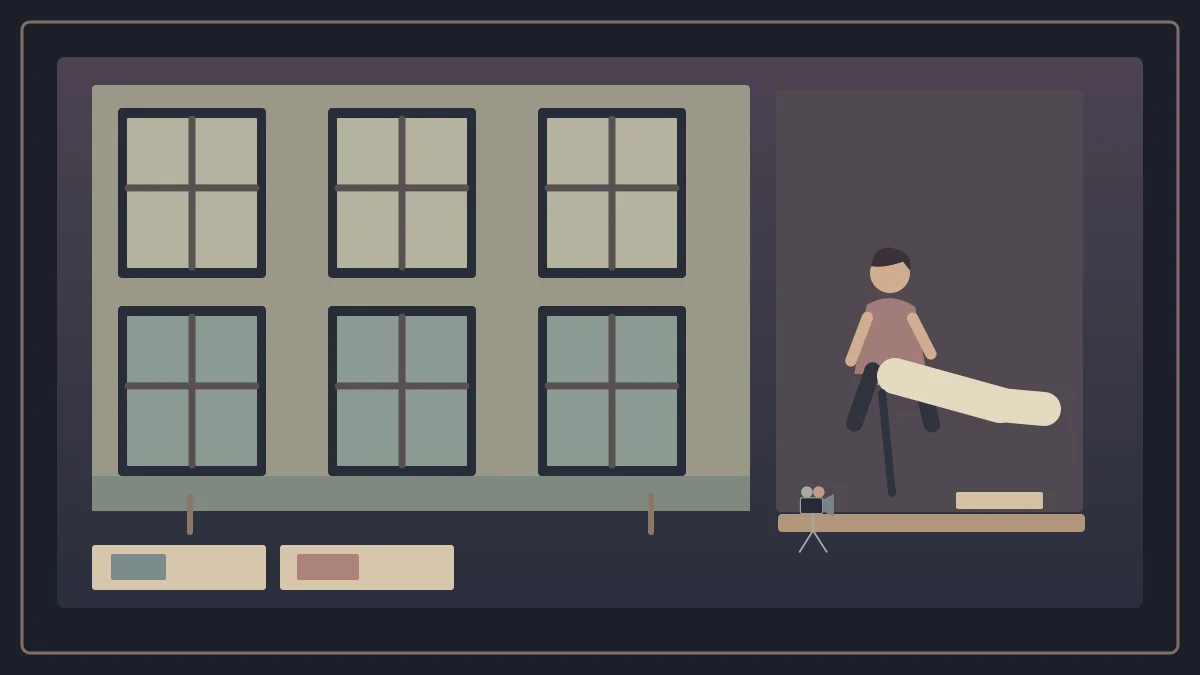
In the opening minutes of Alfred Hitchcock’s Rear Window, the blinds of an apartment gradually rise, revealing a courtyard surrounded by other apartments’ windows. The camera moves through the setting, offering glimpses of its residents’ lives before introducing a man seated in his apartment with his leg in a cast.
We then see a broken still camera, photographs and small details that help us infer his occupation and the circumstances that may have caused his injury.
No lengthy conversation needs to explain who he is or why he cannot leave. The images have begun supplying information, leaving us to connect it.
For a spectator, this may be an engaging opening that introduces the film’s world and arouses curiosity about its character.
Someone learning to direct can ask further questions.
Why do we discover the courtyard before the man living in the apartment? Why do we learn about his character through the objects around him? What would change if the film began with dialogue explaining his profession and injury instead of this visual tour?
These questions do not make the scene less enjoyable. They open a different way of understanding it.
Watching through a director’s eyes does not mean ceasing to feel what happens on screen. It means learning to look for the choices that helped create that feeling.
First viewing: let the film do what it was made to do
It may sound strange, but the first step in studying a film scene is not to analyse it from the opening moment.
Watch it as any spectator would.
Let the story engage your attention, the characters arouse your curiosity and the tension grow, without stopping every few seconds to inspect the camera position or count the shots.
Films are not made for viewers to pause at every cut. They are designed to offer a continuous experience in which information and emotions develop over time.
If you begin by identifying shot sizes and camera movements, you may lose the very feeling you need to study.
Imagine a scene in which someone enters a dark house. A faint movement is heard in an adjoining room, and the character stops before approaching the door.
You may feel tension and wait for what happens next. You may find yourself staring at the door even though the camera has not moved closer to it.
That response is your first important piece of information.
You now know the scene directed your attention towards a particular place and made you anticipate a possible event.
The question of how it achieved that comes later.
After this first viewing, recall the moments that affected you clearly. When did you feel tension? When did your understanding of a character change? Did you expect something to happen only to be surprised by a different direction?
You do not need a lengthy analysis. An honest impression of the experience is enough.
Most importantly, do not assume yours is the only possible response. Someone else may feel differently because viewers do not bring identical experiences and expectations to a film.
These differences do not invalidate your impression. They remind you that cinematic effects can be interpreted and discussed without reducing them to a fixed psychological outcome.
Second viewing: when did we learn what we know?
Now return to the same scene with a new question:
How did the film organise the information reaching you?
This is one of the most useful ways to train a director’s eye. It encourages you to think of a scene as an experience built gradually, rather than a collection of separate images.
Every scene gives the spectator certain information and may withhold other information until later.
Sometimes we know more than a character and await their discovery. Sometimes we know as much as they do and share their uncertainty. We may know less and try to interpret their behaviour until its cause becomes clear.
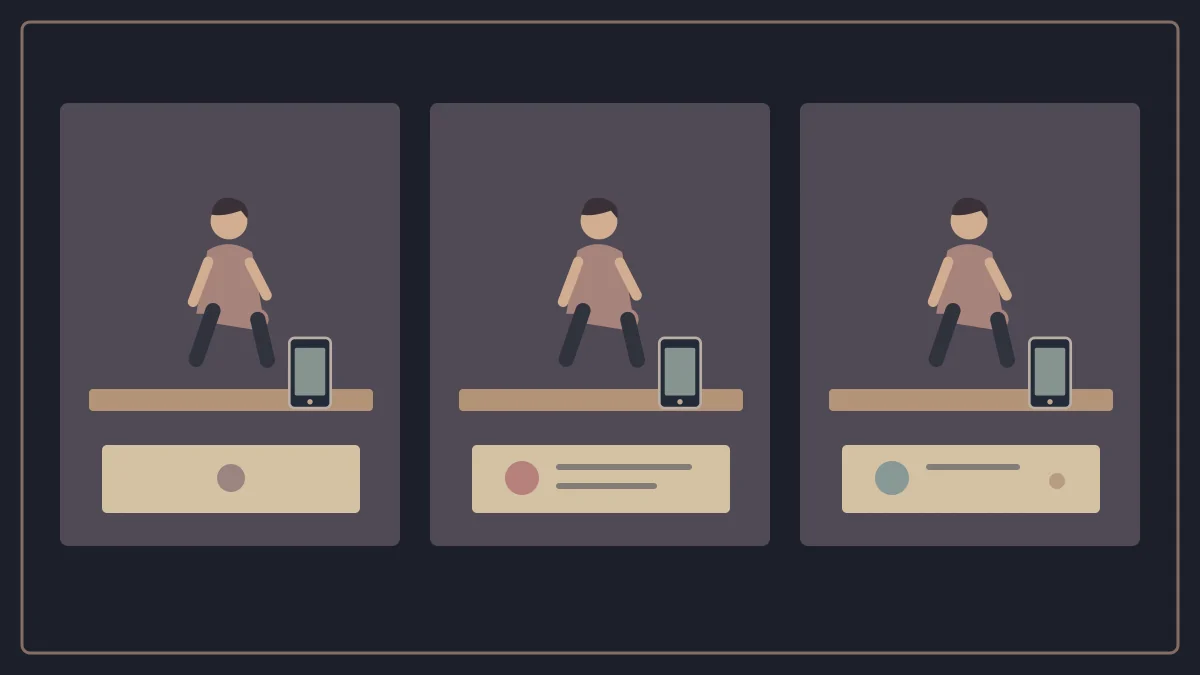
Imagine a hypothetical scene: a man sits at a dining table with his family and receives a phone call. He looks at the screen, rejects it and tries to continue the conversation naturally.
If the caller’s name is hidden, the viewer may wonder who called.
If the name appears and we know the caller is someone whose relationship with the man he wants to conceal, our attention may shift to the possibility of the secret being exposed.
In a third version, we might see the name but know nothing of their relationship, leaving the information open to several interpretations.
The dramatic situation is similar, but the spectator’s knowledge changes the nature of the expectation.
As you learn to observe this process, you will notice that important directorial decisions concern not only visual beauty, but when information arrives.
During the second viewing, ask: what question is the scene posing now? When does it answer? Does new information make us reinterpret something we saw moments earlier?
Do not seek a definitive answer for every shot. Follow how your understanding changes from the scene’s beginning to its end.
Rear Window’s opening: how do details tell a story?
Let us return to Rear Window’s opening, a clear example we can discuss without revealing later developments.
First, we see the courtyard and surrounding apartments, discovering the setting and daily activities behind its windows.
Then we see the man living in the apartment and notice his injury. The tools and photographs around him reveal further information about his character and profession.
These observations can be verified simply by watching the opening.
But what do we infer from them?
Introducing the courtyard before the character may make the setting itself central to the film’s experience. We are discovering not just an injured man, but a world he can observe from his window.
We might read the broken camera and photographs as signs of a professional life built around photography, perhaps suggesting the work preceding his injury.
These inferences rest on visible details, but differ from what we directly observe.
Here an important skill emerges: distinguishing information the film clearly presents from the meaning you draw from it.
Saying that the character sits with his leg in a cast describes something visible.
Saying that he feels trapped in his apartment interprets his condition. You can support that reading through his relationship with the setting, limited movement and what we know of his circumstances.
Saying the director definitely intended every viewer to feel this asserts an intention you cannot prove from the image alone.
A more precise analysis would say that this arrangement of images lets us understand the character and his surroundings before dialogue explains them directly.
The distinction between description, interpretation and assumption becomes essential as your directing education develops.
A director needs to read an image clearly, while recognising that it can allow several meanings. Success does not always depend on imposing one interpretation on every viewer.
Ask not only where the camera is, but where your attention goes
When beginners analyse films, they may quickly focus on camera angles, lens types and shot sizes.
These elements matter, and we will study them closely in later parts.
Before learning their names, however, observe something simpler: where do your eyes go during the scene?
An image may contain many people and objects, but your attention is not distributed equally among them.
Someone’s sudden movement may catch your eye. A silent face may remain in the foreground while another character speaks behind it. You might focus on a closed door because the film has made you expect someone to enter.
This guidance may come from movement within the frame, lighting differences, a character’s position, sound or the shot’s relationship with the preceding image.
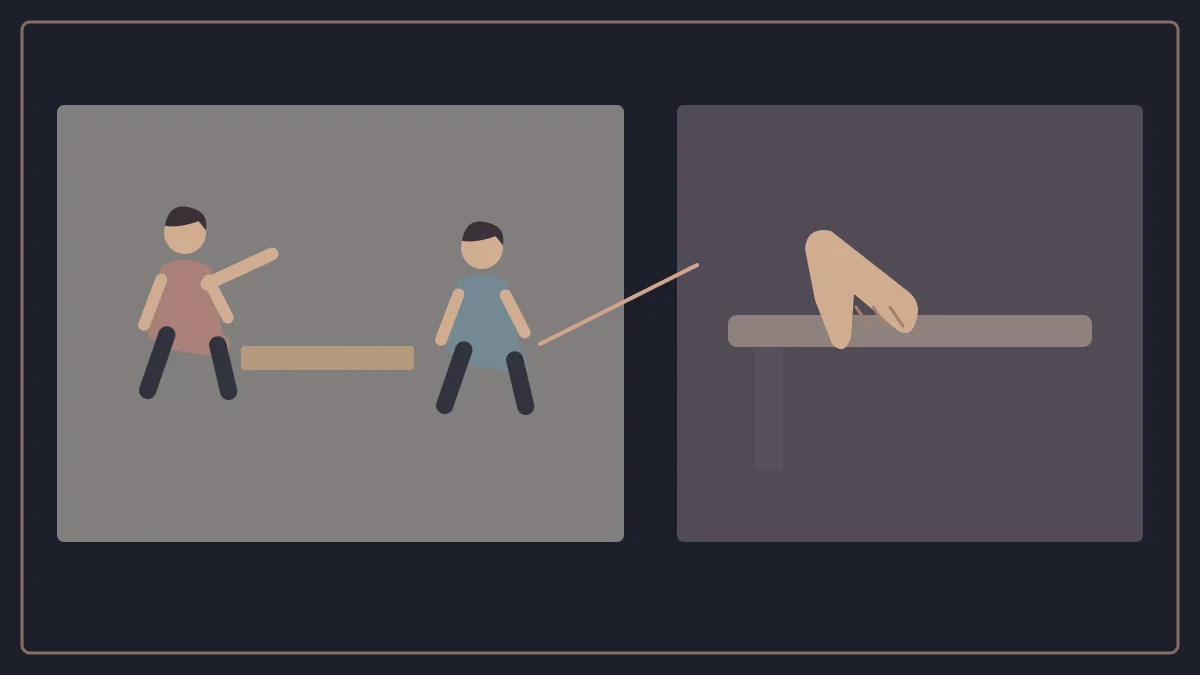
Imagine two people talking in an office.
One speaks enthusiastically while the other listens silently, pressing their fingers against the chair’s edge.
If the scene shows only the speaker, we may focus on the information being delivered. Seeing the listener at the right moment may make us wonder what lies behind their silence.
This does not mean showing the listener is always better. Another context might require withholding the reaction or keeping both characters in one image.
Observe what makes you notice a particular detail, then consider its relationship with what the scene is trying to communicate.
Try pausing a chosen scene at one moment and looking at the still image for a few seconds.
What attracts your attention first? What do you notice next? Do important elements emerge only after looking longer?
Then play the scene with movement and sound, noting whether the order of your attention changes.
This small experiment reveals the difference between an image you can contemplate freely and a cinematic shot whose duration and transition to the next image are determined by the film.
Time is part of meaning
What a shot shows matters, but so does how long we can watch it.
Some images need time for their details to register, while others communicate quickly. A film may prolong a moment to make us await a development that has not yet happened.
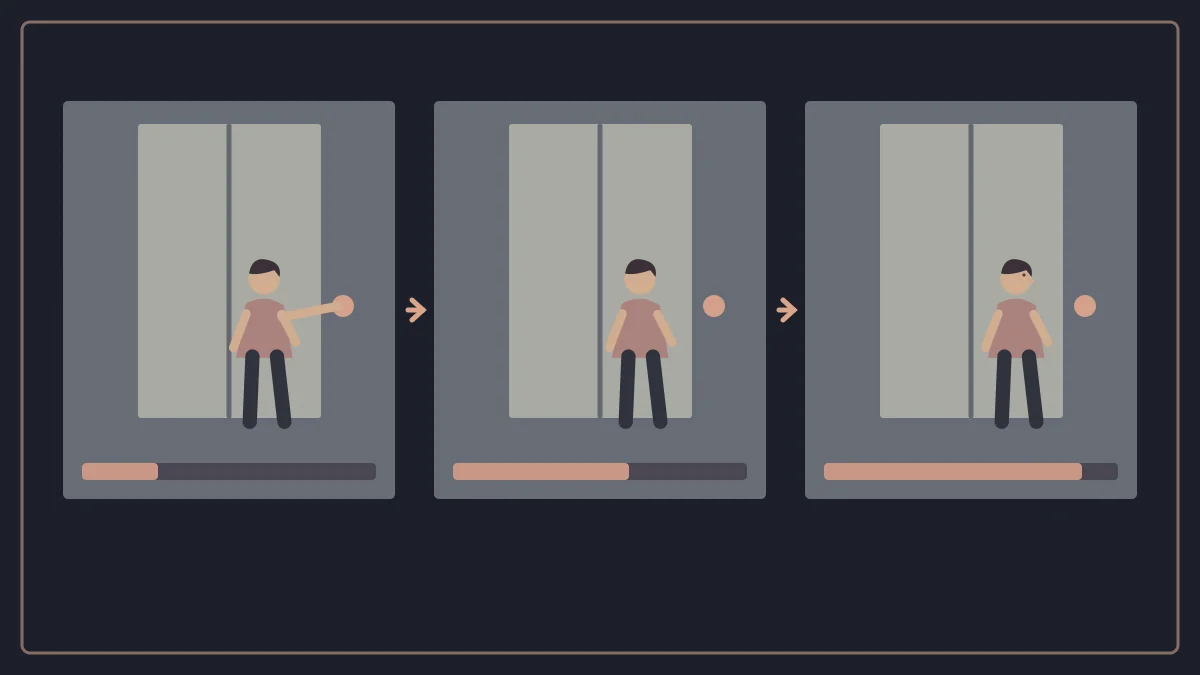
Imagine a woman standing before a closed lift.
She presses the button and waits.
If the film quickly cuts to the doors opening, we may regard this action as merely a step towards the next scene.
If the camera stays longer and the woman begins looking towards the corridor, our feeling may change. We might expect someone to appear or sense something unusual about the wait.
If time continues without adding development, tension or meaning, the viewer may become bored rather than expectant.
There is no magical duration that automatically makes a shot affecting.
What matters is the relationship between the image’s contents, the viewer’s expectations and what changes over time.
When watching as a director, identify when you felt the image had given you enough information. Then notice whether the film continued beyond that point and why doing so might be useful.
Extra seconds may let you notice a reaction or increase anxiety as you await something that does not happen. They may be less effective if nothing develops that deserves attention.
This observation will later help you understand rhythm and editing, without needing to memorise advanced technical rules now.
Sometimes sound leads the scene before the image
A common mistake in visual analysis is treating a film as images accompanied by sound, rather than an experience in which image and sound work together to guide attention.
We may hear something outside the frame and wait to see it. Dialogue may deliver information while a listener’s expression reveals disbelief.
A setting may look entirely ordinary, yet a repeated background sound makes it uncomfortable.
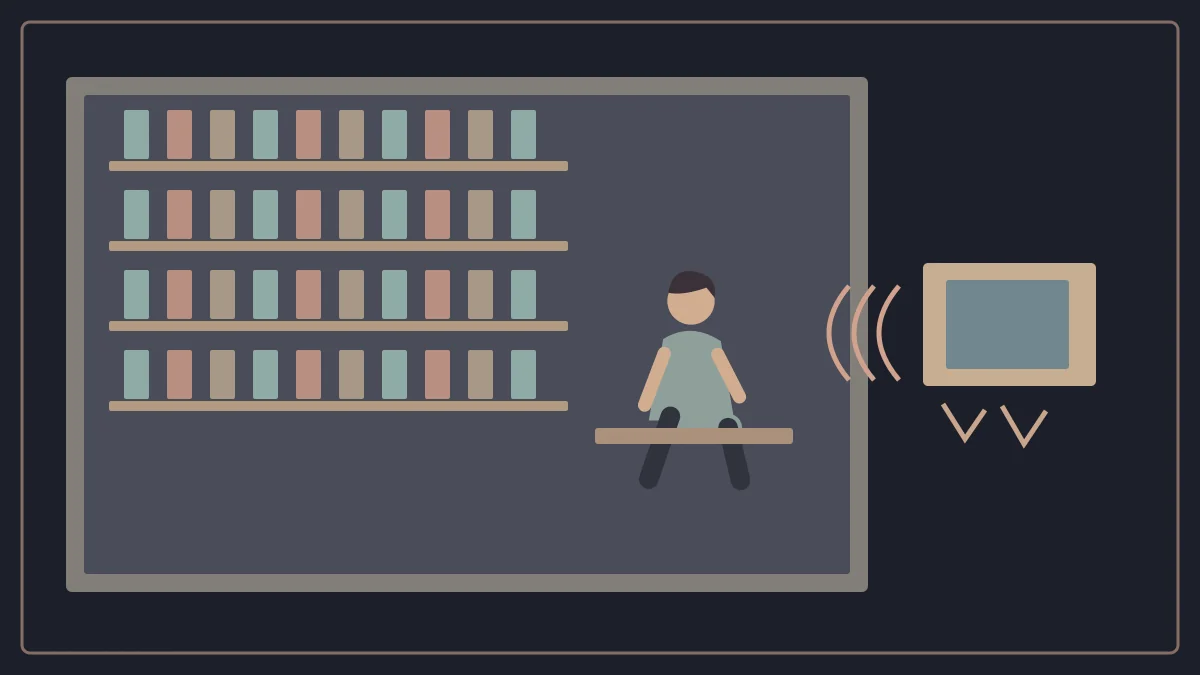
Imagine a short scene: someone sits alone in a library as it closes.
Their eyes move between the shelves. Nothing unusual happens on camera, but we hear a book fall somewhere outside the image.
The sound may shift our attention from the character’s face to unseen space, making us anticipate something entering the frame.
Sound has done more than decorate the scene. It has supplied information and created a new question.
If the scene instead began with loud music establishing a frightening atmosphere immediately, the unseen sound might work differently because our expectations were already directed.
A director can handle these possibilities in many ways. Analytical viewing should discover sound’s role in what we understand and anticipate, rather than declare one option universally better.
For practice, choose a scene that does not rely entirely on dialogue. Watch it normally, then again with particular attention to what you hear.
Which sounds come from visible things, and which from space outside the frame? Does a sound precede its source appearing, or do we see an action before hearing it?
If appropriate, try watching a short passage without sound to discover what the story loses in its absence.
This does not replace watching the complete work in its original form. It is a temporary exercise for understanding how its elements relate.
Learn to observe the actor who is not speaking
Spectators sometimes focus on whoever has the dialogue while the most important information may be on the listener’s face.
An actor does not stop performing when the words end. Attention to another person, hesitation before looking at them or preoccupation with something else may reveal an internal change.
There is a difference between noticing an expression and knowing precisely what the character feels.
Imagine someone receiving good news among colleagues. Everyone smiles and begins congratulating them, but they hesitate briefly before joining the smiles.
Are they happy, anxious or concealing a different response?
The answer depends on context, what we already know of the character, the actor’s performance and how the moment is presented.
The film might hold their face long enough for us to notice the delay or quickly cut elsewhere, leaving less opportunity to read it.
Ask when your understanding of the character changed. Did it come from a line, a small behaviour or an unexpected reaction?
Do not reduce every emotion to a specific gesture. Lowering the head does not always mean sadness, nor does a smile always mean happiness.
An actor may use the same behaviour for different meanings, depending on the character’s desires and relationships.
This is one reason watching through a director’s eyes is more complicated than recognising shot sizes.
An image’s meaning comes not from its form alone, but from its connection with character, story, sound and time.
How do you distinguish real analysis from a forced interpretation?
As your interest in analytical viewing grows, you may seek a hidden meaning behind every colour, movement or detail in the frame.
You may begin assigning a symbol to every visual choice even when the scene offers insufficient support.
This calls for caution.
Not everything on screen is a symbol, nor does every camera movement announce a particular psychological meaning. A possible reading is not necessarily the filmmakers’ only intention.
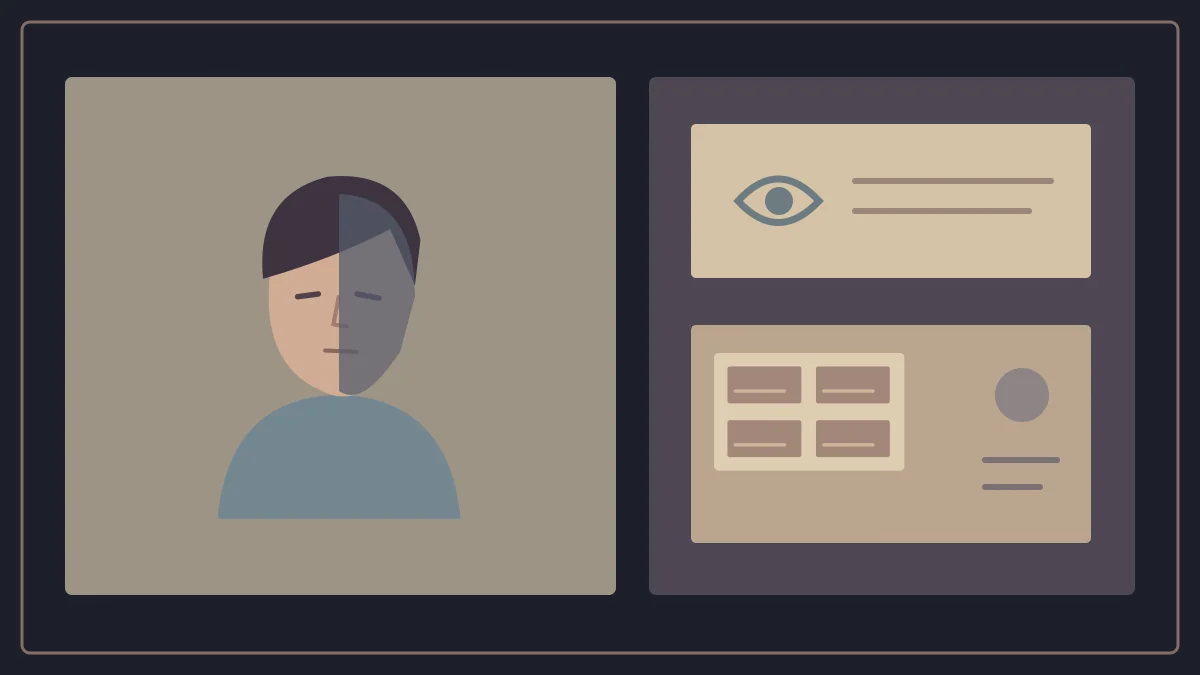
Imagine a character beside a window, with light falling on half their face.
We can observe the contrast between light and shadow and consider its effect on how we see the character.
But we cannot automatically conclude that they struggle between good and evil simply because one half is lit and the other dark.
The film’s context may support that interpretation. Alternatively, the choice may relate to the setting, light sources or the overall visual atmosphere.
Good analysis connects an observation with other details in the scene and film.
When considering an interpretation, ask three questions: what did I actually see, what meaning did I infer and which details support that inference?
If the evidence is insufficient, retain the idea as a possibility instead of presenting it as a certainty.
It is natural not to explain every choice. You may notice an effect without knowing all the means used to achieve it.
That is not a failure of analysis. It is somewhere new learning can begin.
Watch the scene as though you would rebuild it
Another useful approach is imagining what the filmmaker might have needed before the shots on screen were ready.
The aim is not to claim knowledge of what actually happened behind the scenes.
Treat the scene as a directing problem and imagine possible solutions.
If two characters talk while walking through a narrow corridor, ask how their relationship can remain spatially clear. Do we need both faces together, or would focusing on one better suit the action?
Then observe the film’s actual choice and compare it with the possibilities you imagined.
The solution may be simpler than you expected while serving a clear dramatic purpose. Your alternative might give the scene a different meaning without necessarily improving it.
Such comparison develops your ability to see choices instead of treating the finished version as the only possible form of the scene.
Remember that films are made under circumstances not all visible on screen. Budget, time, location, performances and different departments’ decisions can influence the result.
Do not turn every difference between your idea and the finished version into a verdict that the director made a mistake.
Ask instead: what does the existing choice achieve? What might the alternative achieve? What could we lose by changing the execution?
Watching becomes practice in decision making, rather than an imaginary competition with the filmmakers.
A practical exercise: three moments that reveal how a scene is made
Now that you have encountered analytical viewing, try it yourself.
Choose a short scene from a film you have already watched, preferably between two and four minutes long and available to you through a legitimate source.
It need not be famous or full of action. A simple conversation, a discovery or a silent scene built around a character’s behaviour will work.
Watch it once without stopping. Afterwards, write one sentence describing the most important feeling or question it left you with.
Watch again and choose three specific moments.
The first moment: when did your knowledge change?
A significant object might appear, someone might be discovered behind a door or a reaction might reveal something unexpected. Record what information reached you and how it changed your understanding.
The second moment: when did your attention shift?
Find a movement, sound or cut that made you focus on something previously unnoticed. Identify what you actually saw or heard, then explain why you think it caught your attention.
The third moment: when did your feeling about a character change?
It might be a silence, a glance or a small performance choice. Describe the change in your understanding and whether it depended on behaviour alone or on how the film presented it.
You do not need advanced terminology. Use clear language to describe what happened and its effect on you.
After making notes, choose one moment and imagine directing it differently.
What if the information appeared earlier, the camera remained on the character longer or a particular background sound were absent?
You do not have to execute every alternative. Choose one change and consider its possible effect.
Finally, watch the entire scene again without stopping.
Are you more aware of how those three moments were built? Does the scene remain affecting in the same way, or has understanding the tools helped you notice a different feeling?
Keep your notes. You will return to them when you study the image, shot planning and editing more deeply.

When does viewing become excessive analysis?
Learning from films matters, but there is another danger: turning every viewing into exhausting dissection.
You do not need to stop every film dozens of times, report on all its shots or search for a technical mistake whenever the camera angle changes.
Doing this constantly may undermine your ability to receive a film as a complete artistic experience.
Distinguish watching for pleasure from viewing devoted to study.
You can watch a whole film without continuous analysis, then return to a scene that intrigued you. Some works may reward visual study, while others engage you through performance, writing or rhythm.
You do not have to learn everything from one film.
Technical knowledge should not make you mistake complexity for quality. A simple static shot may be more suitable than an extended camera movement. Rapid cutting can serve one scene and weaken another.
The measure is not how much technical effort you can identify, but the relationship between a choice and what the film offers.
Watching through a director’s eyes should develop observation and interpretation, rather than become a constant search for evidence that you know more about cinema than other people.
When the way you see films changes
You may return to a scene you loved years ago and discover that what moved you was not the dialogue you memorised, but the moment a character stopped speaking.
On a second viewing, you may notice important information visible from the beginning while the film directed your attention elsewhere until you were ready to discover it.
You may become as interested in what remains outside the frame as in what appears within it.
These small discoveries mean your relationship with the image is changing.
You no longer merely receive the result. You can ask how it was formed.
Knowledge does not end with recognising a technique. Its real value emerges when you explain what it added to the story, what alternatives were possible and how a similar idea could serve a scene of your own.
This brings us to the essential difference between watching a film and analysing its construction.
The first viewing tells you what you felt. The second helps you understand some contributing reasons. Directorial thinking begins when you use that knowledge to imagine a new choice serving another story.
Let us return once more to Rear Window’s window.
On a first viewing, you might see a courtyard, apartments and an injured man surrounded by photographic equipment.
On a second, you may notice how those details were ordered to introduce the world and character without direct explanation.
Most importantly, leave with a question useful for your own work: if you wanted to introduce a new character, what objects and actions could reveal who they are before they speak?
When you can ask that question, films become more than works you enjoy watching. They also become experiences through which you learn to make your own.
In the next part, we will move from studying other people’s choices to discovering yours: how does a director’s artistic vision develop, and what makes their way of telling a story distinctive?
About this series
A journey from understanding the director’s work and making a first decision to working with story, images and actors, then preparing, filming, editing and making a short film.
Further parts will be linked as they are published.
All Cinema Journal articles