
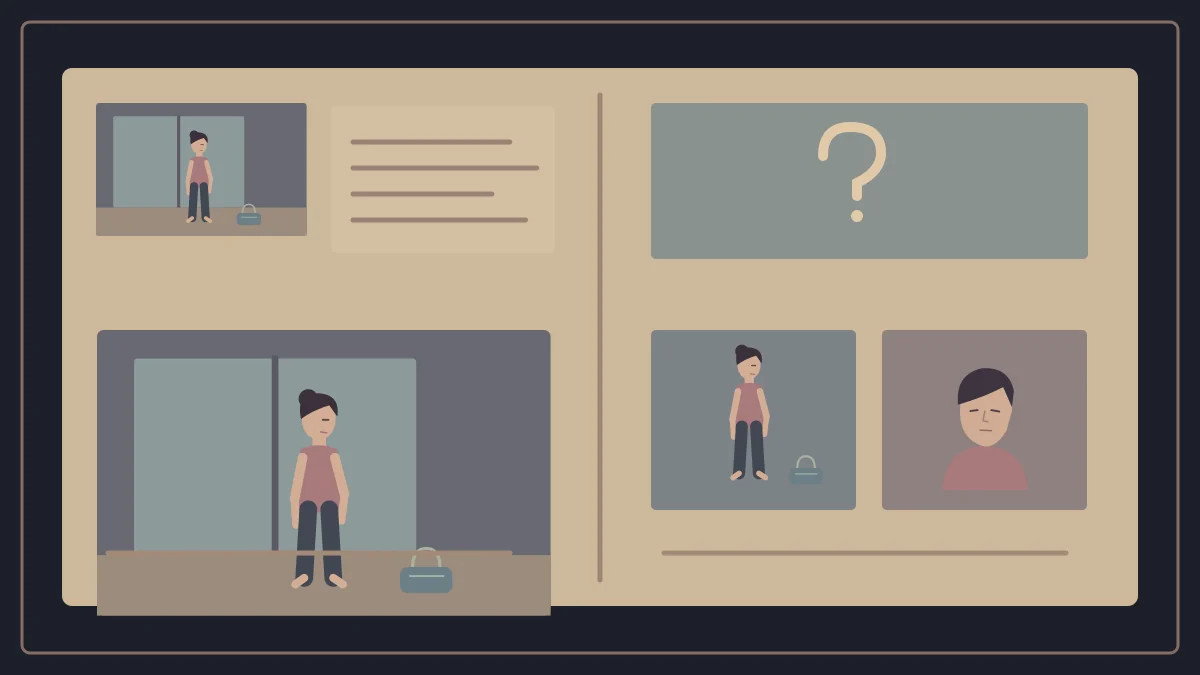
A woman enters a small musical instrument shop every Thursday. She goes straight to an old piano in a corner and sits in front of it for a few minutes.
She opens the lid and places her fingers over the keys, but does not play.
Then she closes the piano and leaves.
The following Thursday, she returns and repeats the same behavior.
This is a hypothetical situation, but it can serve as the starting point for a film idea. We know almost nothing about the woman, her relationship with the piano, or why she keeps returning without playing.
Perhaps she was a pianist who lost confidence in her ability to perform. Perhaps she is waiting for someone who used to visit her in the shop. A memory may connect her to this particular instrument, or there may be an entirely different reason we have not yet considered.
None of these possibilities is certain. They are simply directions the imagination might take.
But what made the situation interesting?
It is not that it contains an enormous event, an extraordinary character, or a secret sufficient to make a film on its own. It is that we saw a specific behavior that raised a question we cannot yet answer.
Why does the woman come to this place if she does not want to play?
That question could begin a drama, a mystery, a story about a person’s relationship with an abandoned talent, or even a comedy if the surrounding circumstances change.
Here we encounter an important skill for anyone learning to direct: noticing something small in the world, identifying what makes it different or intriguing, and imagining what might lie behind it.
Film ideas do not always begin as complete stories. Sometimes they begin with an ordinary detail that we refuse to pass without asking a question about it.
Why Do You Not Need to Wait for a Great Idea?
One belief that can hold a beginning director back is that a first film must start with an exceptional idea that nobody has ever considered.
The beginner keeps searching for an enormous surprise, an unprecedented world, or a shocking ending that will keep audiences talking.
But wanting to find something different does not mean always beginning with a huge event or an extremely complicated concept.
Consider the central idea of Bicycle Thieves, directed by Vittorio De Sica.
Within the film’s world, a bicycle becomes essential to a man’s work and his ability to support his family. When it is stolen, recovering it becomes a matter that exceeds the value of the missing object itself.
A bicycle is not a strange invention, and theft is not inherently an exceptional event.
But the object’s importance to the character, and the circumstances that make its loss a real problem, give the story its human weight.
This shows how an idea can contain dramatic possibilities without needing an elaborate exterior.
In a completely different direction, The Truman Show offers an unusual possibility: what if a person lived without knowing that the world around him was part of a television program?
Here, the idea draws its strength from an imaginative premise that changes our understanding of the character’s entire reality.
The two films differ in genre and in the worlds they present. Both, however, show that a starting point can be something familiar that acquires extraordinary importance, or an unusual possibility that invites us to imagine its consequences.
A strong central idea does not make a film succeed automatically.
You may begin with an attractive idea and discover that it cannot sustain more than one scene, that the characters are not yet clear enough, or that its execution offers little beyond the initial surprise.
It is therefore essential to distinguish between the seed of an idea and the story that can be built from it.
In this lesson, we will focus on finding seeds and testing their possibilities. Turning one into a story with a character, a goal, obstacles and development will be the subject of the next part.
Observation: Seeing What Others Have Learned to Overlook
Everyday life is full of situations that can provoke curiosity, but they often pass without our noticing.
Someone leaves halfway through a conversation. A worker changes a familiar route for no apparent reason. Two friends laugh together, then one suddenly falls silent when a particular name is mentioned.
This does not mean every movement conceals an exciting story, or that we should watch other people as though they were characters in a film.
Training your observation, however, helps you notice human behavior and details that can give a scene truth and specificity.
Imagine entering a restaurant and seeing a man order two meals, then place one in front of an empty seat.
You can record the situation as you saw it without assuming the reason.
Imagination can then begin suggesting possibilities.
Is he waiting for someone who is late? Was he accustomed to sharing a meal with someone who is no longer there? Is the other meal intended for someone who will arrive later?
The real explanation may be extremely ordinary. He may simply have ordered both meals for himself.
But a director generating ideas is not claiming to have uncovered the truth about a stranger’s life. The observation is being used as the starting point for imagined possibilities.
Two stages should remain separate here.
Observation records what happened or appeared before you. Imagination proposes what might be behind it.
If you confuse the stages, you may begin building a story on an interpretation you have treated as fact without evidence.
Keeping them separate gives you more room to think.
Observation can extend beyond people to places and objects.
You may notice an old building surrounded by modern towers, a shop that keeps operating after similar businesses have disappeared, or a large room containing only one chair.
These details can raise questions about time, memory or change without dictating a particular story.
An idea can begin with the place itself. Characters may emerge when you ask who might live there or whose life might change because of it.
The advantage is that you are not necessarily seeking an exceptional event. You are learning to see the possibilities familiar things may contain.
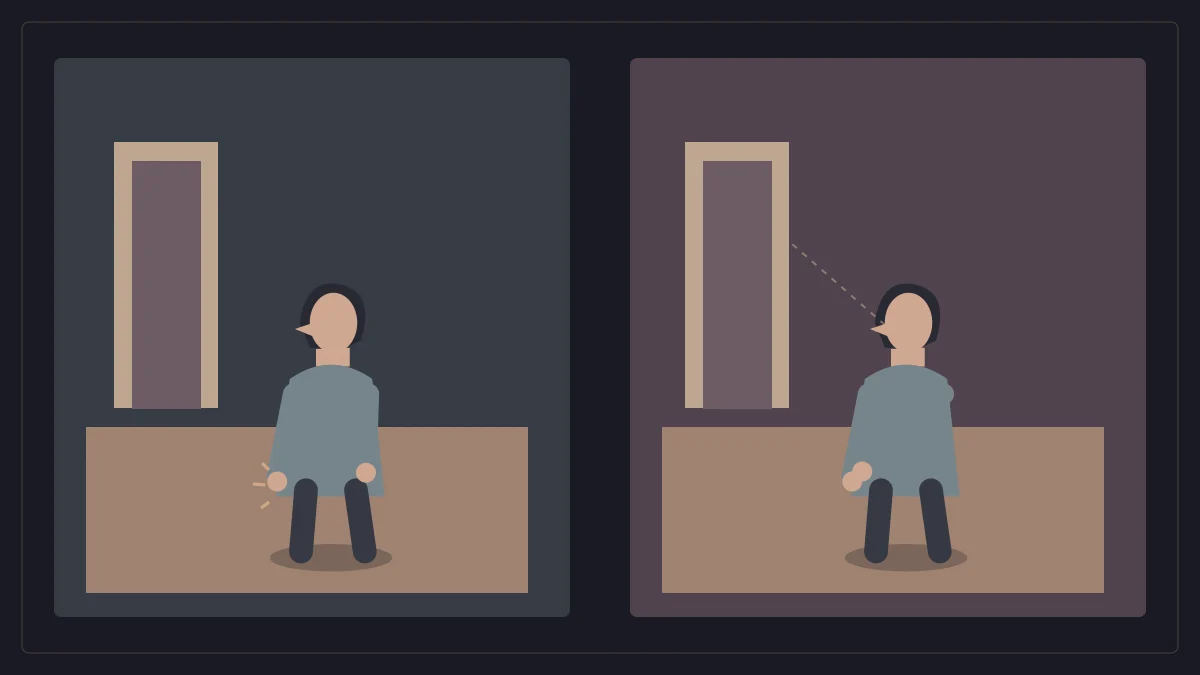
Personal Experience: Use What You Know Without Becoming Its Prisoner
A film idea can come from its creator’s own experience, but that does not require turning a life into a literal film.
You may remember a decision you regretted, a missed opportunity, or a relationship that changed for reasons you did not understand at the time.
The experience may be simpler: a small joy, an embarrassing situation, or a conversation that ended differently from what you expected.
Such memories can carry a feeling you know well, even when the events themselves are not suited to forming a story.
Imagine someone remembering a day when they canceled an important meeting because they were afraid to face another person.
The original incident may last only a few minutes and contain few events.
But the feeling it left can lead to a different question: what if avoiding confrontation became a habit that made someone lose the very things they wanted to preserve?
We now have an imaginative direction that goes beyond the original incident.
It can be transferred to another character, a different environment, or circumstances that never happened.
Instead of recreating the event exactly, you might imagine a musician refusing to go onstage before a concert they have awaited for years, or someone avoiding a message that will determine their future.
What matters is that personal experience helps you understand a feeling or contradiction, rather than becoming a boundary that prevents you from inventing an independent world.
Experiences do not have to be painful or traumatic to deserve attention.
An idea can come from happiness, wonder, a funny situation, or an unexpectedly generous human act.
Nor do you have to expose your private life to prove your work is truthful.
Art allows you to move away from reality, change it and imagine consequences that never occurred, provided the story retains its human logic.
The more you move from simply remembering what happened to asking what might have happened, the more able you become to turn experience into creative material.
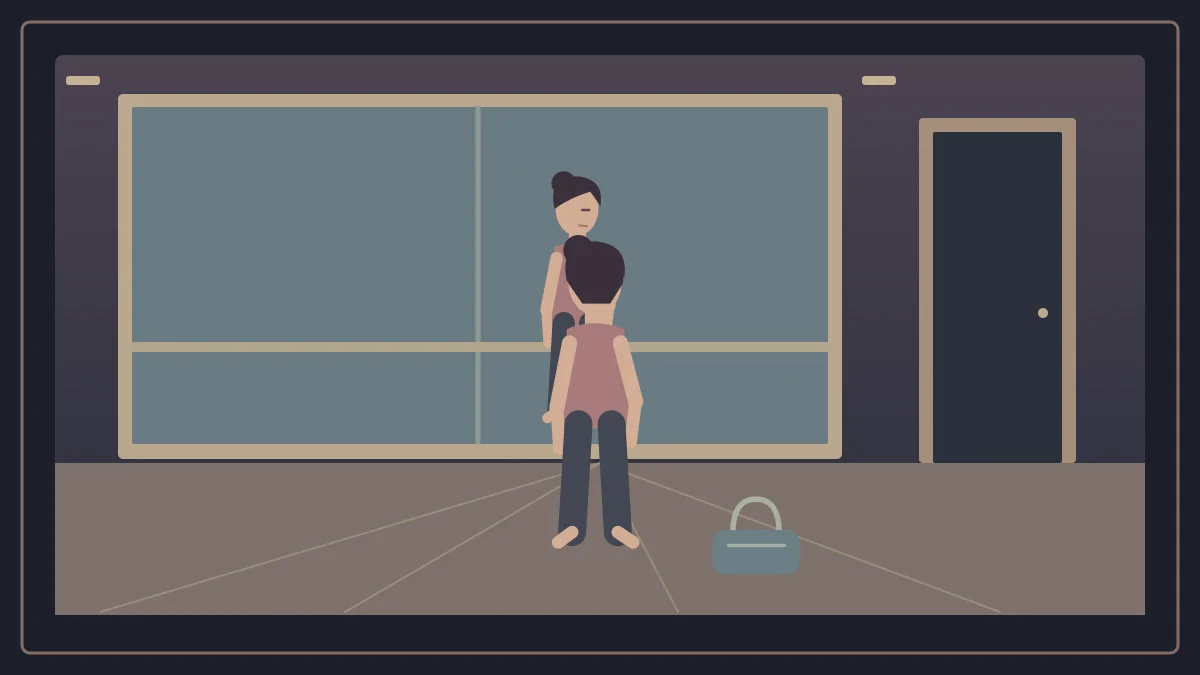
“What If?” Opens the Door to Possibilities
A simple tool for generating film ideas is a question that begins with: what if?
The phrase lets you change one element of a familiar reality, then consider what might follow.
What if someone discovered that everyone in their building knew a secret about them that they did not know themselves?
What if people were unable to lie for one day?
What if someone who hated music had to manage the last shop selling old records in their city?
Not all these possibilities will necessarily make good films, but they provide starting points to explore.
They become more useful when you move beyond the unusual twist and imagine its effect on a particular person.
If nobody could lie, what would happen to someone accustomed to protecting other people’s feelings through polite compliments? Would that person become more honest, or lose the ability to communicate with others?
The premise has now become more than an intellectual game. It has become a question about human behavior.
The same method can be used without science fiction or fantasy.
What if someone received the job offer they had awaited all their life on the very day they decided to care for a family member?
What if a person preparing to apologize discovered that the other person no longer remembered the disagreement?
In each case, something in a familiar situation changes, revealing a possibility that was not present before the question was asked.
There is a difference, however, between an intriguing question and a developed idea.
If you say, “What if a man woke up to find nobody else in the city?”, you have created a premise that provokes curiosity. You have not yet established why this man matters to us, or what will distinguish his experience from that of any other character in the same situation.
We will need these questions when we begin building the story.
For now, the aim is to learn how a premise opens the imagination, then notice which possibilities deserve to be revisited and considered more deeply.
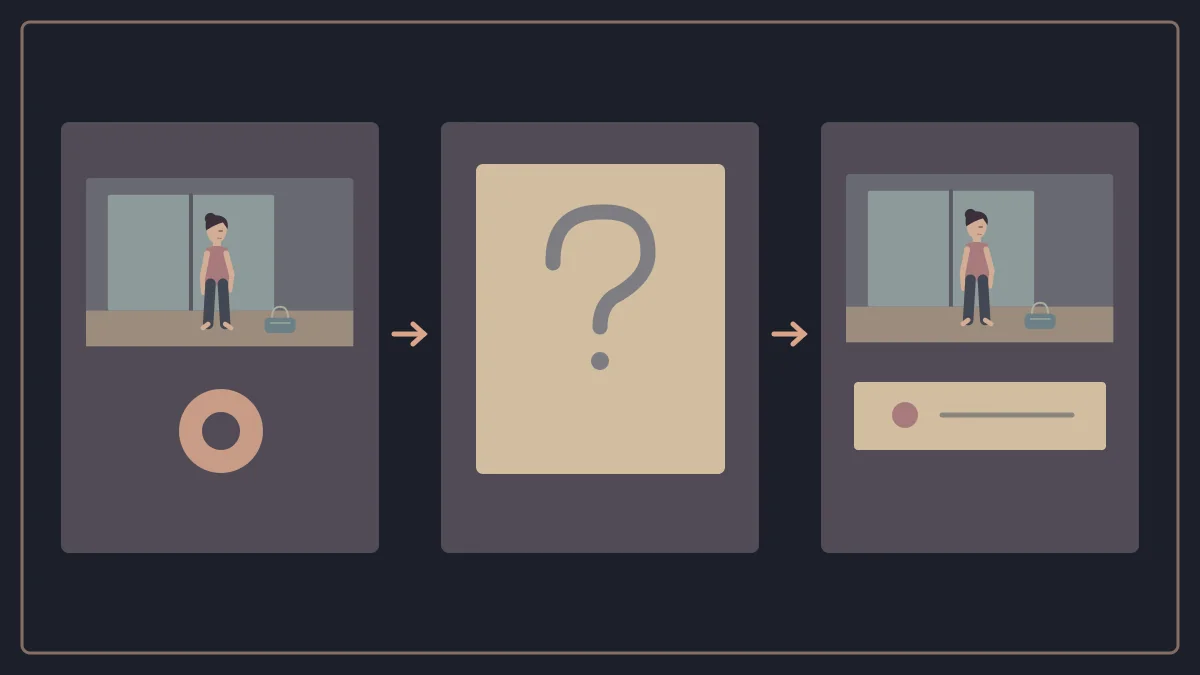
Contradiction: When Two Things We Do Not Expect Meet
Some ideas attract attention by bringing together two apparently conflicting elements.
You might imagine a doctor afraid of hospitals, someone famous for solving other people’s problems who cannot make the simplest decision about their own life, or a security guard who feels unsafe in the place they protect.
These contradictions can become the beginnings of different stories.
But a contradiction is not enough on its own.
A doctor afraid of hospitals may seem funny for a moment, but if that fear does not affect behavior and the relationship with the job, it may remain merely an amusing description.
Imagine another hypothetical situation: a woman restores old photographs but refuses to keep any photographs of herself.
There is a clear contradiction between her profession and her relationship with her own image.
The idea could become a drama about memory, a mystery, or a story about the image we create of ourselves in front of others.
Before choosing a direction, it is useful to ask: what keeps this contradiction interesting beyond the first moment?
Does it reveal an unexpected side of the character? Does it invite behavior we want to understand? Can it appear visually through actions and situations instead of remaining a striking sentence?
A good contradiction is not necessarily the strangest one. It gives us a reason to keep discovering.
It can also be extremely subtle.
Sometimes it is enough for a character to say they are happy with what they have achieved while their actions reveal a constant attempt to escape their life.
The contradiction emerges from the distance between what a character says and what they do.
The more connected it is to a person we can understand, the greater its chances of becoming dramatic material beyond the first brilliant idea.
Research: How Does Knowledge Open New Doors for Imagination?
Not every idea comes from personal life or situations we witness directly.
It might begin with a history book, a scientific report, an interview with someone whose profession we know little about, or a document revealing an aspect of life we had never imagined.
Imagine reading about people who restore old sound recordings.
The work itself may catch your attention: repeatedly listening to voices recorded many years ago and trying to rescue damaged words, sounds or pieces of music.
This might inspire an idea about the relationship between sound and memory, or about someone who spends their days preserving other people’s voices while avoiding recordings from their own past.
The example does not require claiming that a specific incident really happened. It is an imagined possibility inspired by a professional activity that can be researched.
The more you learn about your chosen field, the more details you will discover that imagination alone might never provide.
How are materials organized? What problems do the workers face? What do they consider success or failure in their profession?
The answers may provide behaviors, places, tools and relationships that give the story’s world specificity.
Research should not become the collection of information without a purpose, however.
If you begin with an idea about someone working in a sound archive, you do not have to put everything you learn about recording and restoration techniques into the screenplay.
Knowledge helps you select the right details, rather than display everything you know to the audience.
It is also important to distinguish between taking inspiration from a published news story and adapting a literary work, screenplay or treatment protected by intellectual property rights.
Drawing on a general subject or known event differs from transferring another work’s distinctive creative construction. When adapting protected material, the appropriate rights and permissions must be checked.
When drawing on real people’s lives, accuracy, privacy and the possible effects of their portrayal deserve attention. Invented incidents should not be presented as facts.
Research can be the beginning of imagination, but it does not free a filmmaker from the responsibility to deal honestly with sources.
Places and Constraints Can Help You Discover an Idea
Sometimes an idea begins with a place you want to film rather than a character or event.
You may find an old building, a room with a large window, or a workshop full of tools and feel that the place has visual and dramatic potential.
Admiring a location does not automatically mean it contains a story, however.
Instead of looking for a reason to capture beautiful images there, you can ask: what relationships can this place reveal? Who might need to remain in it or leave it? What makes it affect their behavior?
Suppose the only location available to you is an elevator in a building.
You might consider a situation in which two people who do not want to speak must share the space for a few minutes.
This could lead to a simple dramatic idea built on their tension, or to comedy arising from one person’s attempts to avoid conversation.
A limited location does not produce a good film on its own, but it shows how a practical constraint can become a tool for generating possibilities.
The same approach can be applied to the number of characters, the duration of the action, or the filming tools available.
What can you tell in one place? What can be expressed through a simple action without dialogue?
Such constraints may encourage clearer thinking because they prevent an early reliance on numerous locations, scenes and pieces of equipment.
But constraints are not an absolute virtue.
If they prevent you from realizing the idea or make it feel artificial, you may need to change them.
A useful constraint helps you discover. It does not become a rule forcing the story into a shape that does not suit it.
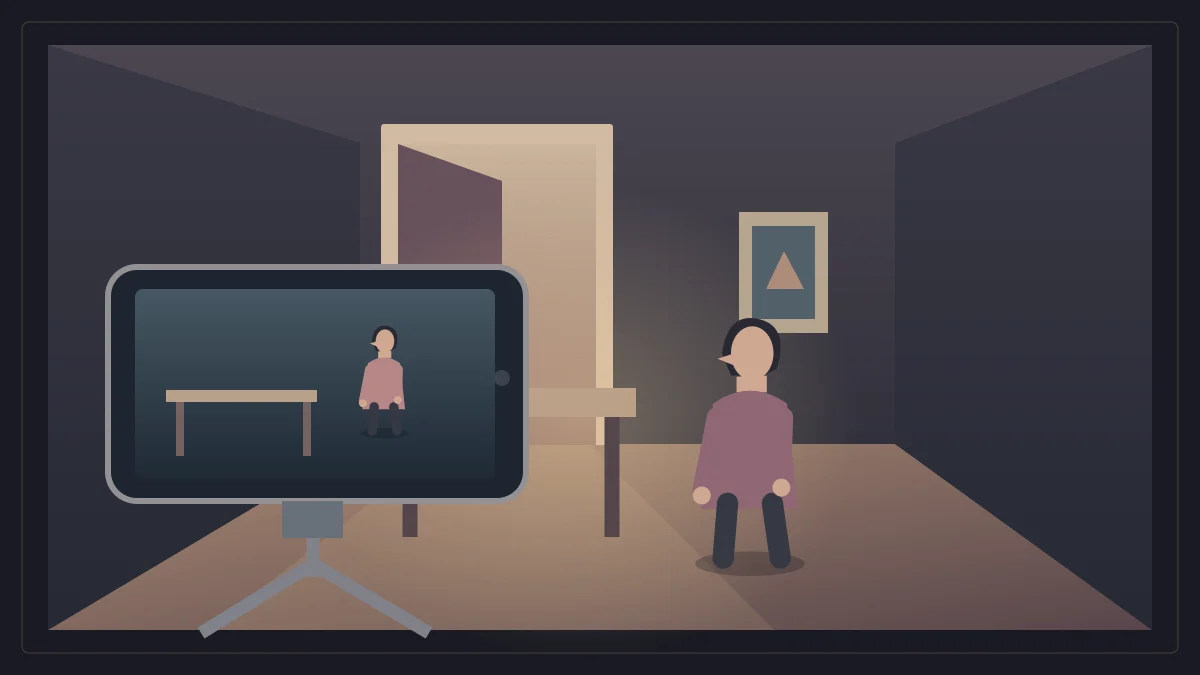
How Do You Know an Idea Is Worth Keeping?
After a period of observation and imagination, you may find yourself with dozens of ideas.
Some begin with an image, some with a question, and others with an eccentric character or an unexpected situation.
You do not have to turn all of them into films.
You can examine each seed from three angles without treating them as fixed conditions that every idea must meet in exactly the same way.
First: does the idea sustain curiosity after it has been explained?
Some possibilities may sound astonishing at first, then lose their appeal when you spend a few minutes thinking about them.
An idea that continues to raise new questions may deserve more exploration.
Let us return to the woman who visits the instrument shop without playing.
The beginning may provoke curiosity, but if we merely reveal the reason for her visits in a single sentence, there may be little left to discover.
If the reason instead opens a door to understanding a complicated relationship between the character and music, or another person, we may have material worth developing.
Second: can you imagine something happening in front of the camera?
Cinema can express abstract ideas, but turning them into a film requires finding an image, sound or action the viewer can experience.
A phrase such as “people fear change” identifies a broad subject.
Imagining a man packing to move out of his home, then rearranging objects on the shelves whenever his departure approaches, gives us behavior that can be filmed.
An abstractly written idea is not necessarily weak. It may be a suitable beginning that still needs its dramatic and visual form to develop.
Asking about visible possibilities, however, helps a director recognize whether they are imagining a cinematic experience or an idea whose means of expression remain undiscovered.
Third: do you want to spend more time with the idea?
An idea can be filmable and attractive to others without giving you enough interest to develop it.
Making a film requires review, testing and change, and developing a single project can take a long time.
It therefore helps to have questions, characters or circumstances you actually want to explore.
This does not mean a film must address something you have personally experienced or a subject that matches your beliefs. Your interest may come from wanting to understand people who disagree with you or a world you know little about.
If an idea’s possibilities are not immediately clear, you do not have to discard it.
You can keep it and return later. Its meaning may become clearer when it connects with another observation, when you discover a suitable character, or when something you read opens a new direction.
What Happens When Two Small Ideas Meet?
A useful way to generate new possibilities is to combine two observations that seem unrelated.
Imagine noting a person who refuses to use a phone, and a woman working in a place that depends entirely on digital communication.
Each observation on its own may seem limited.
What happens if the person rejecting technology has to work with the employee who relies on it in every detail of her day?
Their differences might produce comedy, a story about trust, or a situation revealing an unexpected aspect of the relationship between people and their tools.
Combining two ideas does not guarantee originality and may produce an artificial concept that serves no purpose.
But the experiment allows new connections to be discovered.
You can also combine a place and a subject, a character and a contradiction, or a real observation and an imagined premise.
You might combine an old instrument shop with someone afraid to listen to music, or a crowded place with someone trying to remain invisible to others.
What matters is testing whether the elements together create a question or situation worth exploring, rather than joining them simply because the contradiction seems strange.
This stage resembles opening several doors around an idea and looking behind each one before choosing a path.
You do not need to make a final decision immediately.
Sometimes leaving an idea for a while and returning helps you discover what it lacked, or realize that what drew you to it was not the element you initially thought important.
A Practical Exercise: Three Seeds From One Day
The exercise is not about writing a complete short film or inventing a complicated plot.
The task is to practice discovering dramatic possibilities from three different sources, then keep them as notes you can revisit later.
You only need paper and a pen, or a notes app.
First observation: something you saw.
During your day, choose a behavior or detail that caught your attention. It could be a simple movement, a place, or something unusual within an ordinary situation.
Write down only what you noticed, without assuming people’s motives or supplying an explanation you cannot verify.
Then write one question the observation raised.
Second observation: something you wondered about.
Choose a familiar situation, then change one element through a “what if?” question.
You might ask: what if someone discovered that letters they had kept for years had never reached their intended recipients?
You do not need to explain the reason or invent an ending yet. Simply record the possibility that makes you want to consider what happens next.
Third observation: a contradiction or constraint.
Choose a profession, character or place, then add an element that conflicts with what we expect.
You might imagine someone who organizes celebrations but refuses to celebrate any occasion of their own, or an employee responsible for lost property who cannot let go of objects nobody has claimed.
Write the contradiction in one sentence, then imagine a small action that could reveal it in front of the camera.
After recording the three seeds, return to them without trying to turn them into a complete screenplay.
Ask yourself: which observation raises the most questions for me? Which can I imagine as an image or visible situation? Which feels more specific instead of merely repeating a general idea I have heard many times?
Choose one and write a short paragraph containing what you saw or imagined, the question it raised, and two different directions it might take.
Do not settle the story yet.
If you choose the woman sitting at the piano without playing, you might keep one possibility connected to her fear of returning to music and another connected to someone with whom she used to play.
Each possibility leads to a different story, but we do not need to decide which is better yet.
Keep both possibilities and identify what interests you about each.
You finish the exercise with three original seeds, at least one of which deserves further thought.
An Idea Does Not Have to Be Complete Before You Begin
Days may pass without an observation that interests you. Then an idea may appear while you read something unrelated to cinema, have an ordinary conversation, or try to solve a problem in another project.
This can happen within the creative process.
Relying entirely on moments of inspiration, however, can make work intermittent because you wait for an idea instead of creating opportunities to discover one.
Regular practice in observation, imagination and research does not guarantee an excellent idea every day, but it increases the number of possibilities you can test.
Some notes may seem ordinary or incomplete. That is fine.
Not every thought must become a film, and not every observation has to be original or practical from the outset.
What matters is learning to distinguish between an idea that impresses you for a moment and one that can keep raising new questions.
Remember that ideas may also come from another person’s writing, collaboration with a writer, an actor’s suggestion, or research by a member of the crew.
A director is not required to be the sole source of every story they make.
They do need the ability to recognize material worth their attention, understand the vision and choices they can bring to it, and develop it with its creators when appropriate.
Cinematic creativity is not a competition over who had an idea first. It is a process of transformation that makes an abstract possibility into an experience other people can see and feel.

From a Small Seed to a Story Waiting to Be Discovered
Let us return to the instrument shop one final time.
The woman enters, sits at the piano, and places her fingers over the keys without playing.
The scene might begin a film, or later become a small detail within a larger story. After thinking, we may even discover that the possibility does not deserve development at all.
There is no problem with any of these outcomes.
The exercise’s success does not depend on producing a finished film. It depends on learning to see possibilities within a simple situation.
We began with an image, asked a question, and imagined different explanations.
More work remains, however.
If we choose to make a film about this woman, we will need to discover who she is, what she wants, why her relationship with the piano matters in her life, and what might change when she makes a decision she was not previously ready to make.
These questions will help us move from an attractive seed to a story capable of developing.
That is the step we will begin studying in the next part.
For now, it may be enough to look at everyday things a little differently.
You may find an idea in a place you pass regularly, a behavior you did not understand, or a question you could not answer.
Not every detail conceals a great film. Some, however, may offer a chance to see people and the world from an angle you had never considered.
Good film ideas do not always come from having astonishing answers. They may begin with noticing a small question you cannot stop thinking about.
In part seven, we will take one of these seeds and learn to develop it: how does a small idea become a story worth telling?
About this series
A journey from understanding the director’s work and making a first decision to working with story, images and actors, then preparing, filming, editing and making a short film.
Further parts will be linked as they are published.
All Cinema Journal articles