
Ten minutes before a laundry shop closes, Nour rushes in to collect a coat she borrowed from her sister.
The coat had been stained with ink, and during an earlier visit the employee assured her that he would try to remove it.
The employee brings the coat from behind the counter and spreads it out before her.
The stain is still on the left sleeve.
Nour moves closer, touches the fabric with her fingertips, and asks whether he can clean it again.
He explains that further attempts may damage the fabric and that he cannot guarantee a better result.
She looks at the clock.
Her sister will return in the morning, and Nour has promised to return the coat in the same condition in which she received it.
She opens her bag, takes out a small brooch, and tries to fasten it over the stain.
The employee watches what she is doing but does not intervene.
Nour steps back slightly to look at the coat. The stain has not disappeared; it has become more noticeable.
Her hand holding the phone trembles when a message arrives from her sister:
“Have you picked up the coat?”
Nour types, “Yes, everything is fine.”
She pauses before sending it.
She deletes the sentence, then presses the call button.
This hypothetical scene contains no huge event or violent confrontation. We have two characters, one place, a coat, and a problem that is difficult to fix in the time available.
But if we consider what has happened, we find that Nour has not left the situation in the same state in which she entered it.
At first, she was trying to collect the coat without any trace of the stain. She then tried to conceal the damage before finding herself having to consider admitting what had happened.
The scene began with a problem involving a piece of clothing and ended with a decision about honesty and taking responsibility.
This is the change we will try to understand: how do we build a scene that goes beyond presenting an event and makes something change as it happens?
A scene is more than a place where dialogue happens
When a beginning director starts thinking about scenes, they may treat them as parts of a screenplay defined by locations.
A scene in a bedroom. A scene in a restaurant. A scene inside a car.
This is useful for organizing the script and production, but does not tell us on its own what is happening dramatically.
A cinematic scene may be a unit of events occurring in a particular time and place, or connected by clear dramatic continuity, even when the presentation of space and time varies.
Dramatically, the more important question concerns more than where the scene happens: what happens within it, and why do we need to watch it?
Imagine a scene in which two people sit in a café talking about their work, the day's weather and their plans for the coming week.
The dialogue may be natural, the setting attractive, and the performance convincing.
But if the scene ends without revealing important information, deepening our understanding of a relationship, or showing a change in one character's position, we may question its function within the film.
This does not mean that every scene must contain a major surprise or a loud confrontation.
A quiet scene may introduce a new world, give us time to observe a character's behavior, or build a feeling that will matter later.
Even these scenes, however, need a clear artistic purpose.
The director does not only ask, “What are the people in this room saying?”
They also ask, “What will the viewer know or feel after leaving this room that they did not know or feel before entering it?”
Here we should distinguish between a scene and a shot.
A shot is the filmed section between starting and stopping a recording during production, or the unit of continuous imagery we watch in the film.
A scene, however, may be presented through one long shot or a sequence of shots.
The camera may remain still while the scene develops, or move constantly without any important dramatic change occurring.
The number of shots and their movement therefore do not determine the quality of a scene on their own.
Before thinking about how to film it, we should understand what is happening within it.
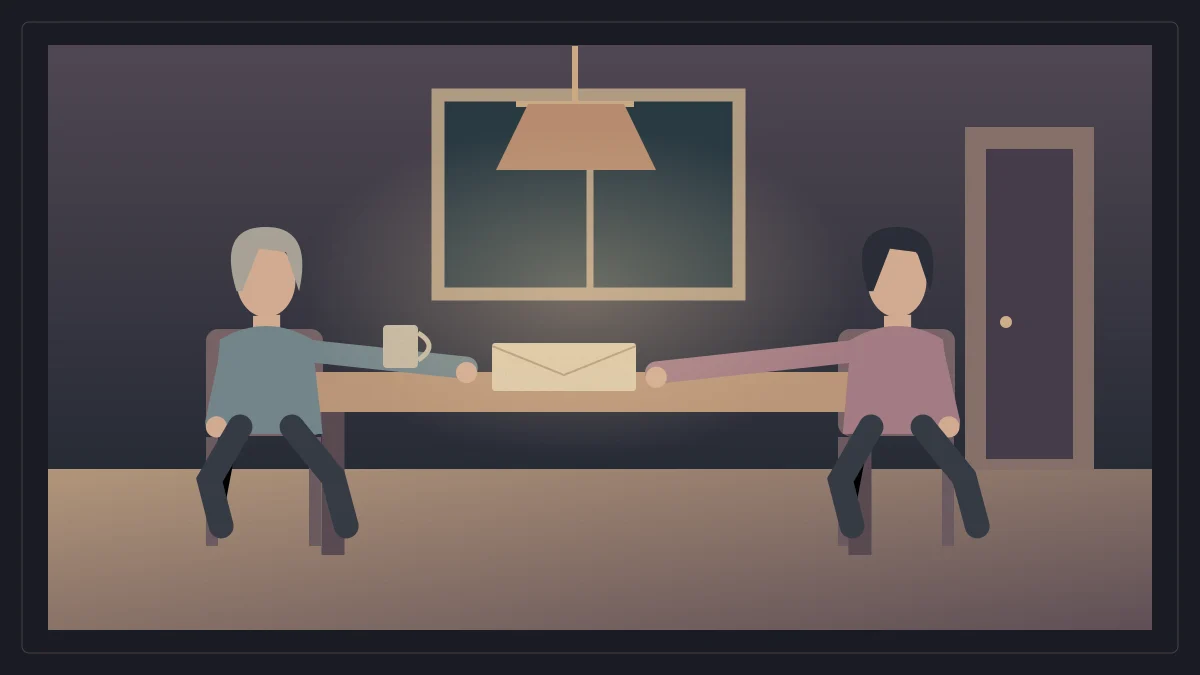
The beginning: what situation does the character enter?
To understand the change that will occur during a scene, we first need to know the situation from which it begins.
This does not necessarily mean giving a long explanation of the location or characters.
A film may begin in the middle of a conversation, after an event we have not seen, or with a moment that makes us wonder about the circumstances that led to it.
But gradually, and in the appropriate measure, we should receive the information that allows us to understand what the character is doing now.
In the laundry scene, Nour enters wanting to collect the coat after it has been cleaned.
We do not need to know the history of her relationship with her sister, or every circumstance that led her to borrow the coat.
At first, it is enough to understand what she expects from the visit.
She expects to collect a clean coat and return it to its owner.
But when the employee brings out the coat, we discover that the problem has not been solved.
This discovery changes the situation Nour expected to find and forces her to take a new step.
We can ask three questions here to help design the beginning of any scene:
What does the character want at this moment? What do they believe will happen? What information or event makes the situation worth following?
These questions are not a checklist whose answers must be inserted literally into the dialogue.
The answers can appear through actions.
We might see Nour hurry in, place the laundry receipt before the employee, and look at the clock. These details suggest that she has come to accomplish something specific rather than spend a long time there.
When the coat appears, her look at the stain may be enough to show that the result has not met her expectations.
We can begin the scene directly at that moment, without showing her entering through the door, greeting the employee or waiting while he looks for the coat.
The time we spend introducing a scene should serve our understanding of the situation, rather than simply imitate every step that might happen in reality.
Development: change the approach instead of repeating the problem
Once the obstacle becomes clear, we reach the part that gives the scene its dramatic movement.
Nour has learned that the stain is still there.
What will she do now?
If we simply have her ask the employee to remove it, have him say he cannot, then repeat the question and answer many times, the viewer may feel that the dialogue is going nowhere.
But the situation can develop if Nour's attempt changes each time.
She begins by asking for the coat to be cleaned again.
When the employee explains that this may damage the fabric, she looks for another solution: hiding the stain with a brooch.
When she discovers that the brooch makes it more obvious, she has to consider what she will tell her sister.
We have moved from trying to repair the damage to trying to conceal it, then to confronting the idea of admitting it exists.
This movement gives the scene development.
Each attempt produces a result that makes the character reconsider the next step.
This does not need to be highly complicated.
Development within a dialogue scene may involve a change in the approach one character uses to persuade the other.
They begin with a calm request, offer an explanation, then reveal information they had been concealing.
Development within a silent scene may depend on changing attempts to accomplish a simple action.
What matters is that the character does not keep behaving in the same way while we expect the viewer to feel tension rising merely because time passes.
There is a difference between deliberate repetition that reveals something new and repetition that adds no meaning.
Nour's repeated attempts to hide the stain may be affecting if they make us notice that she is becoming more flustered and that every new solution makes the problem more obvious.
But if three attempts are similar in both action and result, keeping one may be enough.
Dramatic development does not mean that something bigger must happen at every moment, but that the nature of the problem or the character's way of handling it changes.
Dramatic beats: small changes within a scene
When we begin analyzing a scene more closely, we notice that its development does not always follow one continuous, unchanging line.
We may move from hope to doubt, from an attempt at persuasion to confrontation, or from believing a problem can be solved to realizing that it requires a different decision.
We can study these transitions through the concept of the dramatic beat.
The term is used in writing, directing and acting to refer to changes within dramatic action, although the precise use varies between approaches and practices.
In our study here, we will focus on moments when a character's understanding, position or ability to achieve what they want changes in a way that affects the next action.
We should not confuse a dramatic beat with a mere pause in dialogue.
If a character falls silent for three seconds, that does not automatically mean a dramatic beat has occurred.
If the camera moves from one face to another, the transition itself does not necessarily become a change in the story.
A beat concerns what has changed within the situation, and we may need a particular image, performance or sound for the viewer to recognize that change.
Consider the laundry scene.
The first change: when Nour sees the stain, she realizes that the problem she expected to be solved remains.
The second change: when she learns that cleaning the coat again may damage it, she loses confidence in the solution she was relying on.
The third change: when the brooch fails to hide the stain, she realizes that her attempt to avoid admitting what happened has not achieved its purpose.
The final change: when her sister's message arrives, she must choose between offering dishonest reassurance and facing what happened.
Another treatment of the scene may contain fewer of these changes, and some may overlap within a single moment.
The idea is not to place four beats in every scene or space them equally across the filming time.
The aim is to know where the character's state changes and what has caused it.
If you can identify the important moments within a scene, you will be better able to understand its rhythm and what requires attention during performance, filming and editing.
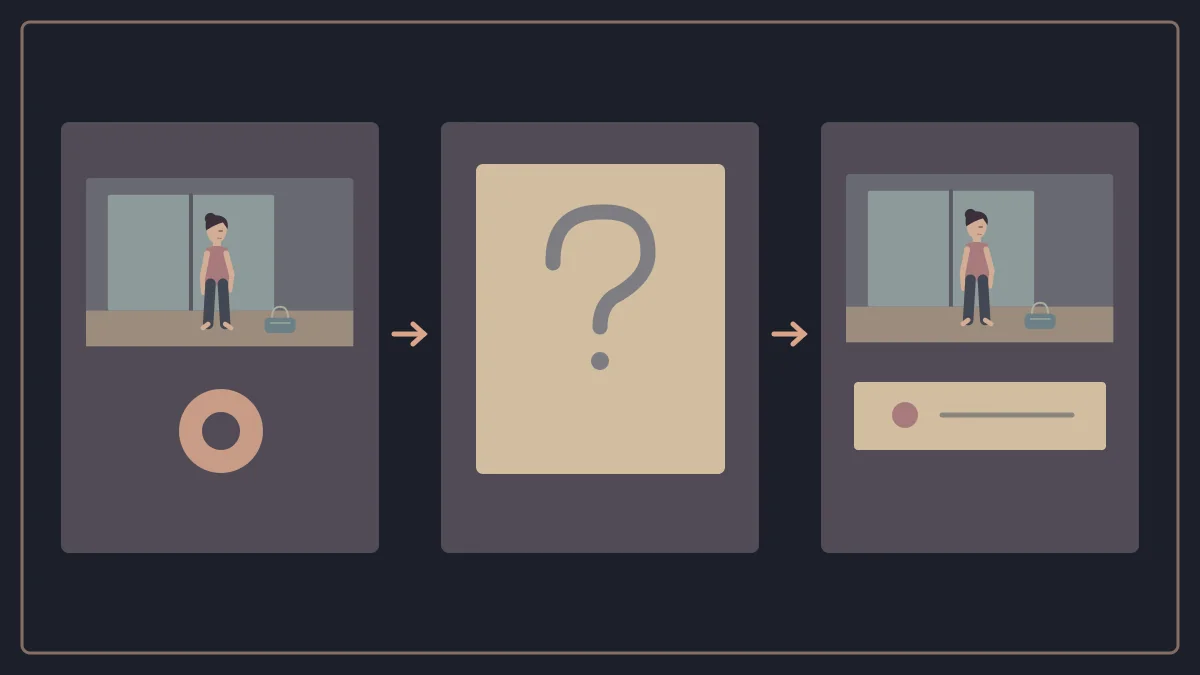
The turning point: the moment after which the situation is no longer the same
A scene may contain several small changes, but some scenes move toward a central moment that redefines the problem or the relationship between the characters.
This is the dramatic turning point.
It does not have to take the form of an astonishing revelation or a sudden accident.
It may be a quiet decision, a word that changes a relationship, or information that forces a character to reassess what they believed.
In Nour's scene, the decision to call her sister can be considered the main turning point.
She has spent the scene trying to treat or hide the stain, then ends with a different action: facing the coat's owner with the truth.
Notice that the physical problem has not disappeared.
The coat is still stained.
But Nour's relationship with the problem has changed.
At first, she behaved as though success meant returning the coat without her sister discovering what had happened.
By the end, she has become willing, at least, to open the conversation she was trying to avoid.
This is a change in the character's position, even if we do not know the outcome of the call.
It is possible to write another version that ends differently.
Perhaps Nour decides to send the dishonest message, then leaves carrying the coat.
In this case, the change is not her admission, but her movement from anxiety about lying to a conscious decision to conceal the truth.
That ending may suit a film that wants to explore the consequences of avoiding responsibility.
A turning point therefore does not have to lead the character toward a morally right choice.
What matters is that the choice is understandable within the story and changes something in the situation or in our expectations of what comes next.
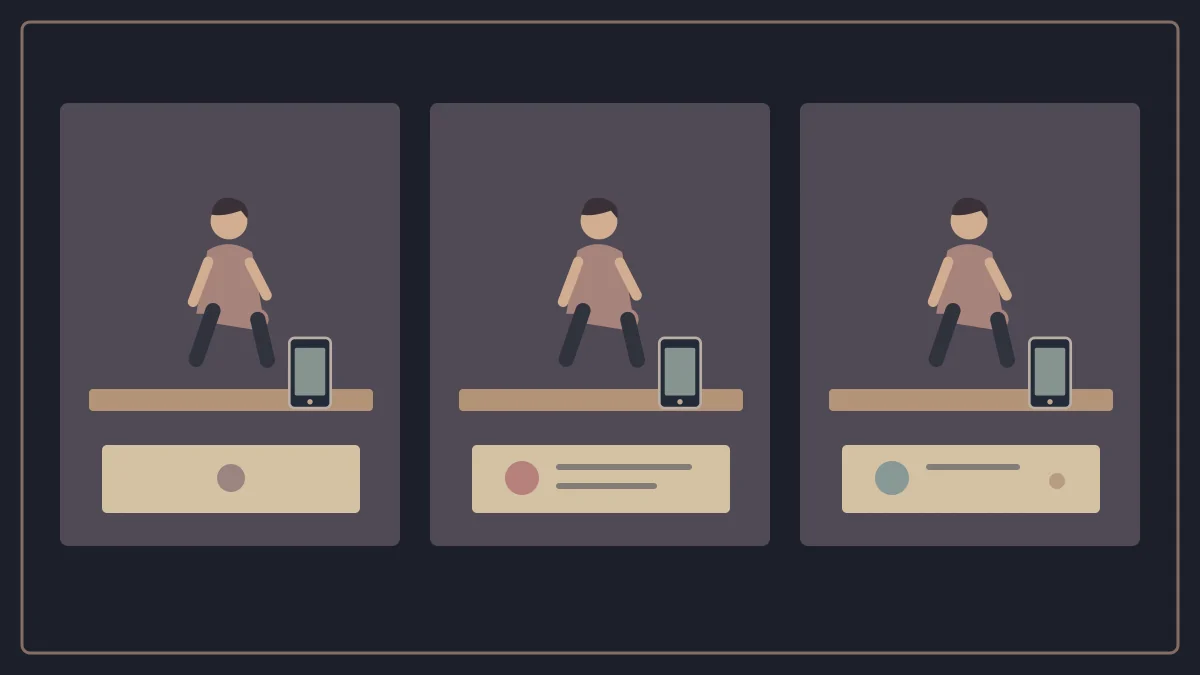
Does every scene need a beginning, a middle and an end?
It is useful to think of a scene as a movement from an initial situation to a different one.
But this does not mean that every scene must be divided into three clear, equal sections or always contain a major crisis and a final resolution.
A scene may begin in the middle of an existing problem and end before it is resolved.
A confrontation between two characters may end without agreement, while one of them has discovered information that changes their understanding of the other.
Some scenes focus on contemplation, atmosphere or providing information, and their main effect may concern what they allow us to notice rather than a major decision made before our eyes.
These choices are not inherently wrong.
But when studying a dramatic scene based on a goal and resistance, the ideas of beginning, development and change help us understand the relationship between its parts.
We can test this through a simple question:
If the character can behave at the end of the scene exactly as they would have at its beginning, was what happened between those moments necessary?
The answer does not always have to be no.
The scene may have changed the audience's knowledge rather than the character's position.
It may have revealed something about a relationship we did not previously understand.
But if nothing has changed in our understanding, expectations or the characters' situation, it is useful to reconsider why the scene exists.
We should not confuse a scene's internal construction with the structure of the entire film.
A film may contain dozens of scenes, and its structure and rhythm arise from larger relationships between those units.
We will discuss that level in the next part.
For now, the aim is to understand a scene from within before considering its place in the story's overall construction.
How does a director read a scene before filming it?
When a screenplay reaches a director, understanding the events it contains is not enough.
They may read that Nour enters the laundry shop, discovers the stain, argues with the employee, then calls her sister.
These are the visible actions.
But the director needs to understand the relationship between them.
What does Nour want from the employee at first? Does she ask for his help because she trusts his ability, or because she is trying to convince herself that the problem can still be solved?
When does she realize that hiding the stain is no longer a suitable solution?
Does that happen as soon as the brooch fails, or only when her sister's message arrives?
The answer will affect the approach to the performance.
If Nour has decided to admit what happened before the message arrives, the message may push her to carry out a decision she has already made.
If she is still prepared to lie, however, the message itself may become the moment that forces her to decide.
This is a real dramatic difference, even though the visible actions may seem similar.
The director can discuss these possibilities with the actress instead of simply asking her to look anxious, then sad, then brave.
Emotions are not separate stages to be distributed mechanically across a scene.
It is better to understand what the character is trying to do at each moment and how their response changes when an attempt fails or new information arrives.
The director's attention should also extend beyond the character we are following.
The employee in the laundry shop is more than someone who provides technical information and then disappears from the scene.
He may try to help Nour but not want to damage the coat with another uncertain attempt.
He may notice her confusion without knowing the real reason behind it.
His calm response may give her room to think, or make her silence more apparent.
These details are discussed during preparation and rehearsal with the actors; they should not become rigid instructions that kill the spontaneity of the performance.
We are still dealing here with the scene's dramatic meaning, rather than dividing it into shots or choosing lenses and camera movements.
Those tools will become more useful when we reach visual planning, once we know precisely what the viewer needs to see and understand.
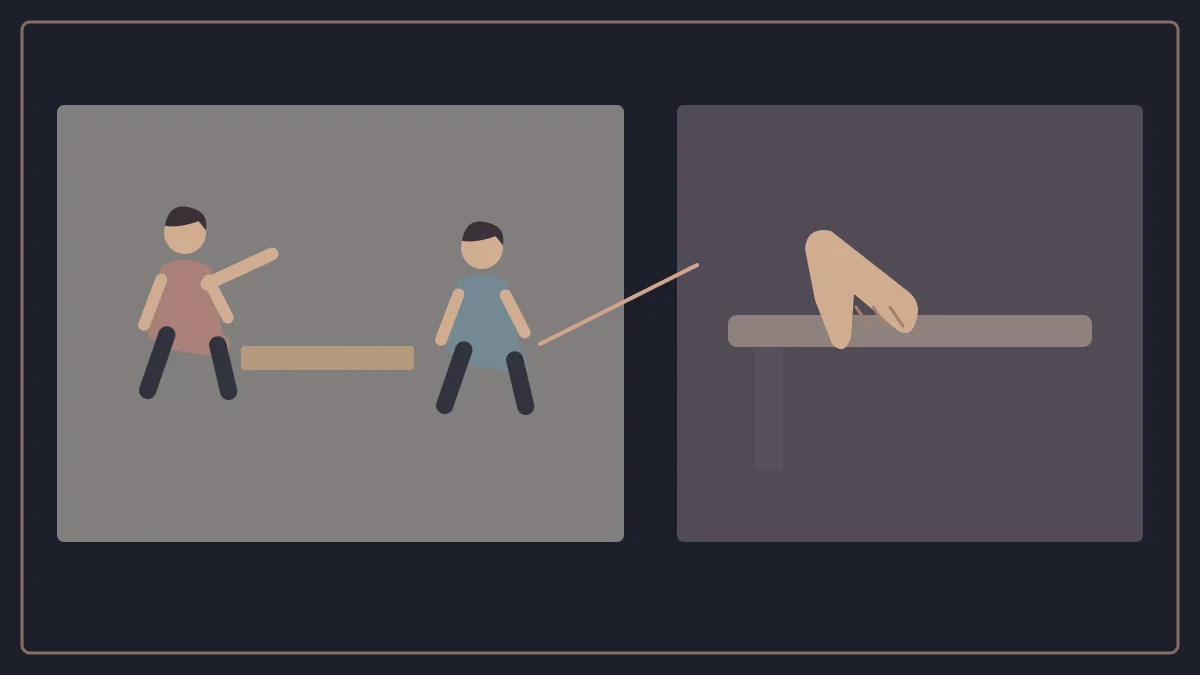
How do you recognize an unnecessary part of a scene?
While writing, you may fall in love with a line of dialogue, an actor's movement or a moment of silence you consider beautiful.
But the beauty of a detail does not make it necessary in every case.
Suppose we add a long conversation to the laundry scene in which the employee explains every type of fabric and method of removing ink.
The information may be correct, but it may slow the scene if it does not affect Nour's decision or our understanding of the situation.
By contrast, a short line such as “The next attempt could ruin the fabric” may be more dramatically useful because it gives the solution Nour requests a new risk.
We can use a simple test when reviewing a scene: what happens if we remove this part?
If the characters continue to behave in the same way, and our knowledge, expectations and the intended rhythm remain unchanged, the part may be removable.
But this test should not be applied mechanically.
Some moments of silence or everyday details do not move the event forward directly, but give the scene a feeling or rhythm, or reveal important behavior.
The employee remaining silent while Nour tries to fasten the brooch may be necessary, because his intervention might deny us the chance to see her confusion as she tests the solution herself.
We therefore ask more than whether a part offers new information: does it add an experience, feeling or meaning that serves the scene?
If the answer is yes, keeping it may be more useful than cutting it.
But if it merely repeats what has become clear, the scene may need a more focused rhythm.
Practical exercise: write a scene in which one thing changes
In this exercise, we will use what we have learned in previous parts about character, goals and conflict, but focus on a new skill: building a short scene that begins in one situation and ends in a different one.
You do not need to write an entire film or use specialist screenwriting software.
Choose a simple situation that can be imagined in one place with one or two characters.
It might involve someone seeking approval before a deadline, a woman trying to recover an important object, or a friend who has come to ask for help but fears explaining the real reason.
First, write one sentence describing the character's situation at the beginning of the scene.
Then identify what they want to achieve before it ends.
Next, add one obstacle and allow the character to try to deal with it.
If the first attempt fails, have the character change their approach or discover information that leads to a new step.
Finally, choose a moment when the situation changes in an observable way.
A short practical example:
A man enters a small office to ask his female colleague to sign his request for a transfer to another department.
She reads the request, then places it on the desk without signing.
She tries to understand why he suddenly wants to leave.
He tells her that he has received a better offer.
But she notices that he has not written a transfer date and has said nothing about the matter in previous weeks.
When she asks whether he has actually made his decision, he hesitates.
He reaches toward the paper, then withdraws his hand.
The scene began with a man wanting a signature and ended with a man discovering that he has not yet made up his mind.
This situation can be developed in different ways, and the hesitation may be only the beginning of a larger change.
But the task in this exercise is to identify the change that has happened within the short unit itself.
After writing your scene, try answering three questions:
• What did the character want at the beginning?
• At what moment did their knowledge, plan or position change?
• What has become different by the end?
Then try writing an alternative ending to the same scene.
What if the man insists on getting the signature despite his hesitation? What if the colleague signs the request without asking him why?
Notice how the meaning of the situation changes according to the ending you choose.
Do not assume that the ending with the bigger change is always better. A quieter ending may suit the story you want to tell more closely.
If you can, read the scene aloud with someone who agrees to participate, or film it simply with your phone after reaching agreement with the participants.
Observe whether the change is clear through actions and dialogue, or whether you need to explain it after the scene ends.
If a long explanation is necessary, some information or a response may not have appeared clearly enough in the writing or performance.
The aim is not to reach a perfect version on your first attempt, but to learn to review a scene through what it does, rather than through your admiration for the words you have written.
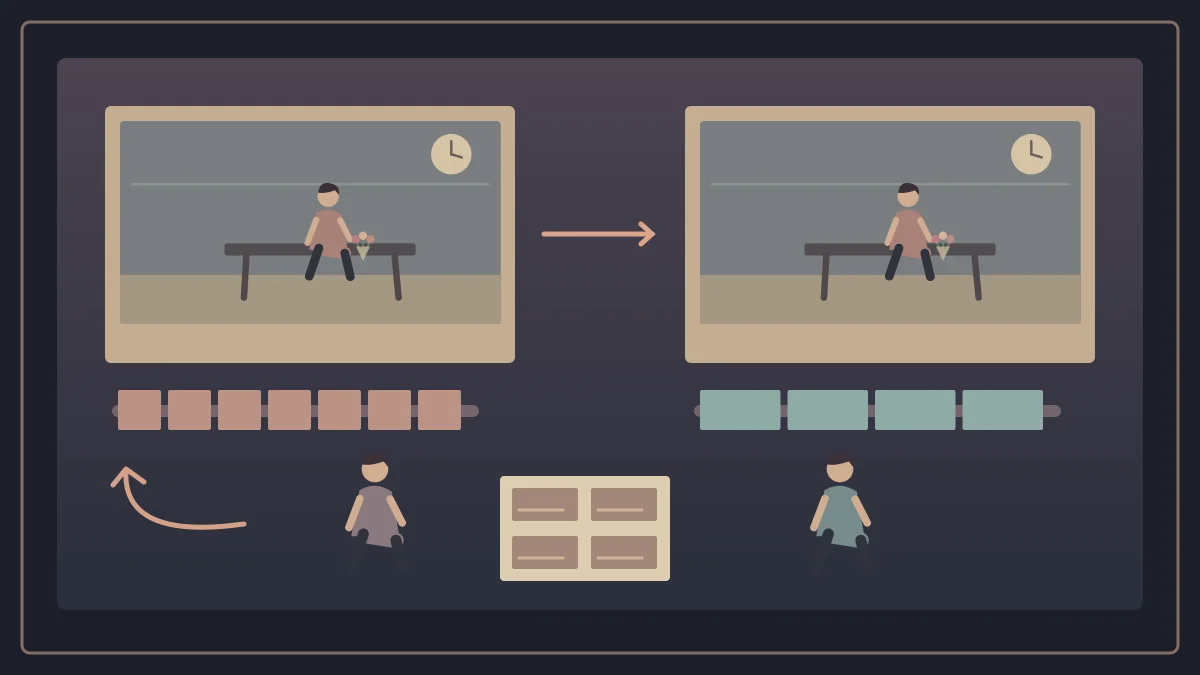
A good scene leaves us somewhere different
At the end of the working day, the employee switches off one of the shop's lights.
Nour is still standing before the counter, holding her phone in one hand and her sister's coat in the other.
A voice answers on the phone.
She pauses for a moment, then says:
“I've picked up the coat... but there's been a problem.”
We do not need to hear the entire call to understand that something has changed.
Nour is no longer trying to hide the stain or find a way to make it invisible.
She has moved from trying to repair something physical to facing the consequence of an action she could not undo.
This scene may be only a small part of a larger film about Nour's relationship with her sister, and the call may begin a more complicated problem.
But the dramatic unit itself now has a clear movement.
Nour entered believing that she could collect the coat and return home without a problem.
She then discovered that the damage had not been repaired, tried solutions that failed, and ended by making a different decision from the one she had been preparing for.
This kind of thinking helps a director understand what is happening within a scene before considering how to film it.
What matters is not changing locations, raising voices or placing a surprise at the end.
What matters is a relationship between where the scene began and where it arrived, and our ability to understand why the change happened along the way.
A cinematic scene gains its value from the way its events change something in a character, the story or the viewer's knowledge, rather than from the number of events it contains.
In part eleven, we will widen our view from a single scene to the whole film: how does a film's structure take shape, and how does the story's rhythm develop?

About this series
A journey from understanding the director’s work and making a first decision to working with story, images and actors, then preparing, filming, editing and making a short film.
Further parts will be linked as they are published.
View the series in orderAll Cinema Journal articles
A film example: how does the situation change in the opening of The Social Network?
We can observe this kind of construction in the opening of The Social Network, released in 2010, directed by David Fincher and written by Aaron Sorkin.
The opening begins with a conversation between Mark Zuckerberg and Erica Albright in a bar.
On the surface, the scene appears to be a conversation between two people in a romantic relationship, discussing college, social status and ambition.
But the dialogue does not remain a mere exchange of information.
Mark's way of speaking and moving between ideas, and Erica's responses to his comments, make their relationship more tense as the scene continues.
At a certain point, the conversation is no longer only about the subjects being discussed, but about how each of them treats the other.
The confrontation then reaches a clear turning point: Erica ends her relationship with Mark and leaves.
This event directly changes both characters' situation.
The scene began with them in a relationship and ended with their separation.
But the importance of the construction does not come from the breakup alone.
The scene also allows us to observe aspects of Mark's character, his way of handling conversation and other people, and the interests occupying his thoughts.
As the conversation develops, the rising tension becomes understandable through what is said and how the other person responds.
The opening can therefore serve as an example of how a scene can develop clearly without many changes of location or a series of huge events.
The location is largely fixed and the confrontation depends mainly on dialogue, but the relationship itself changes before the viewer.
It is important not to reduce the scene to a sentence saying that two characters talked and then broke up.
The more important learning question is: how did successive reactions make the breakup a consequence of what happened within the conversation, rather than a sudden decision added at the end?
When you learn to notice this relationship, you will begin to read dialogue scenes as sequences of attempts, responses and changes, rather than merely words exchanged by actors.