The review
The Harrigan name: an inheritance that offers no safety
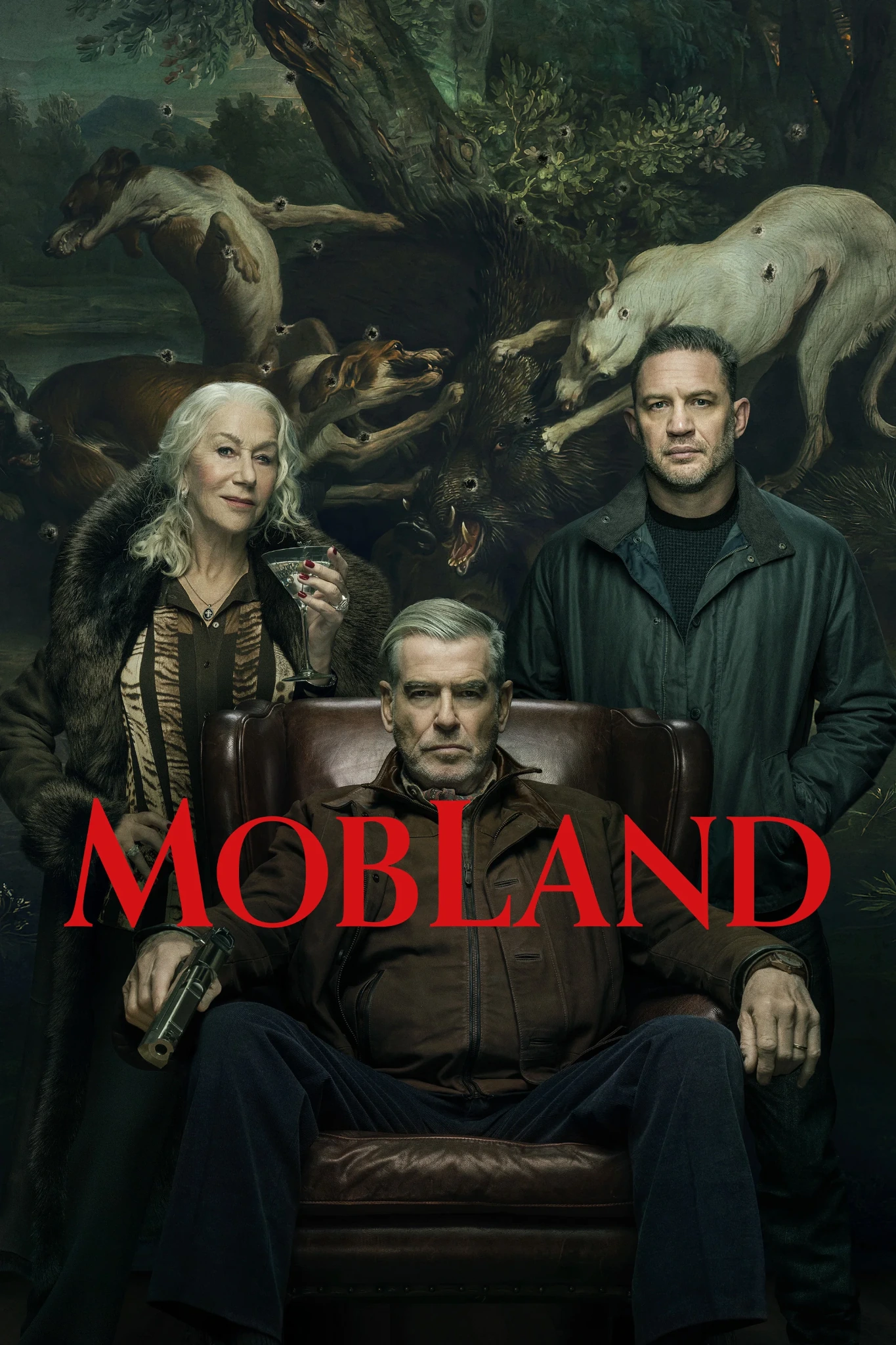
The conversation between Conrad and Eddie is among the episode's most important scenes because it gives us a chance to understand something fundamental about the nature of authority within this family.
Eddie is frightened after learning that Kelly O'Connor, known as Mad Dog, has left prison. He does not reveal to Conrad what actually happened with Medusa, however, and the conversation turns to fatherhood and who raised him.
Conrad reveals an unexpected side of his past. He speaks about the man he thought was his father, the violence his mother suffered, his eventual discovery of his origins, and his decision to take the Harrigan name after leaving his old life behind.
The scene's real value lies less in the revelation about the name than in the contradiction within Conrad's words.
He tries to convince Eddie that people cannot choose the circumstances into which they are born but can decide what to do with their lives afterward.
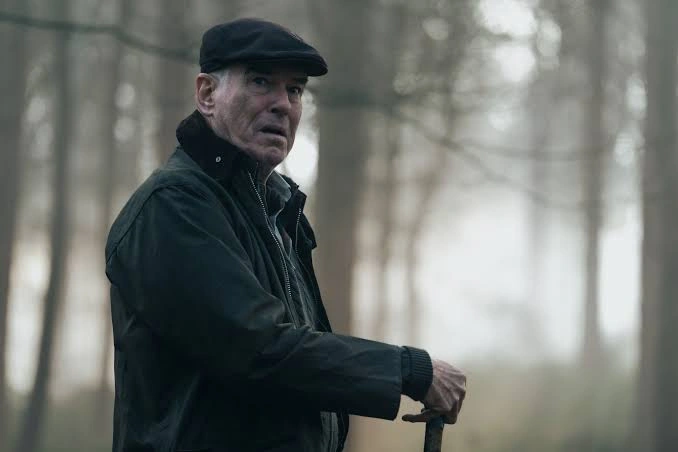
It sounds wise, particularly coming from someone whose life was shaped by violence. The contradiction appears when he threatens to kill Eddie over a passing joke.
We can therefore ask whether Conrad has truly freed himself from the past he recounts, or simply reproduced its cruelty in a different form.
We see a character who understands the origin of his wounds but does not necessarily know how to stop passing them to the next generation.
Eddie keeps searching for a real place within the family, while the people supposed to give him this belonging continually make him feel he must prove that he deserves it.
The Harrigan name consequently changes from a symbol of strength and protection into a heavy burden for whoever carries it.
Harry: when victory becomes a strategic mistake
The episode confirms the discovery of Michael's body in prison. From Harry's conversation with Kevin, we learn that Frankie's son died as a result of a plan Harry himself devised.
On the surface, this seems another victory for a man capable of reaching his opponents regardless of the protection surrounding them.
There is a more important question than whether the operation succeeded: was killing Michael necessary?
In the previous episode, Harry used Michael's survival as leverage that forced Frankie to release him and Paul.
Michael's life, in other words, gave Harry real negotiating power.
Killing him now may prove that Harry's influence reaches inside prison, but it removes the leverage that restrained Frankie and turns the conflict into a confrontation with a father who has nothing left to lose regarding his son.
The decision can be interpreted as a deliberate display of force or personal revenge for what Frankie did to Jan.
Both possibilities are convincing to different degrees, but the episode does not establish the principal motive.
What we can judge is the result.
Harry, whom we are used to seeing as a calm man carefully calculating risk, has made a decision that multiplies those risks instead of reducing them.
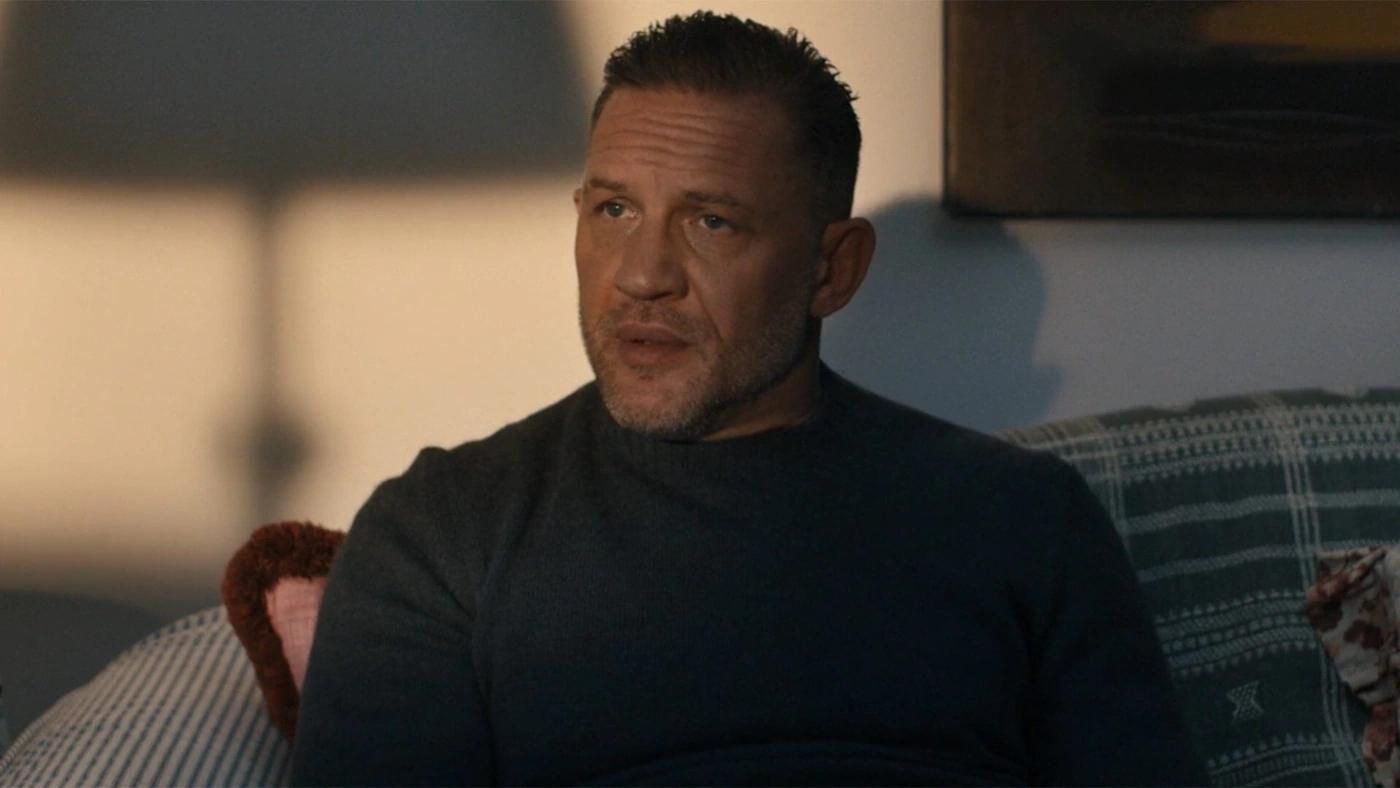
A more complex reading of the character emerges here.
Perhaps Harry does not always use violence because he has to. Perhaps the control this world gives him has become part of its attraction.
That does not mean he acts without calculation, but he may sometimes allow his desire to impose dominance to come before practical interest.
One of Harry's strengths as a character, as Tom Hardy portrays him, is this contradiction between outward calm and the ability to make extremely brutal decisions.
Even so, the series needs to make these decisions carry a tangible price. Whenever a major threat ends with Harry continuing to prevail without a real loss, the danger of the world he inhabits diminishes.
Jan and Harry: honesty does not mean reconciliation
Elsewhere, the episode offers one of Harry and Jan's most important conversations.
Their discussion begins in the pub and continues at home, where Harry finally allows more of the truth about his criminal world to emerge.
What is interesting is that Jan was not entirely unaware of his work's nature, but she did not necessarily understand how far it could reach.
Even after that truth is exposed, she cannot get past what happened with Donnie, despite Harry's attempts to offer his own logic for dealing with killing.
The episode succeeds here in drawing an important distinction between understanding the actions of someone we love and being able to accept them.
Jan may understand why Harry behaves this way, but knowing the reasons does not oblige her to make peace with violence.
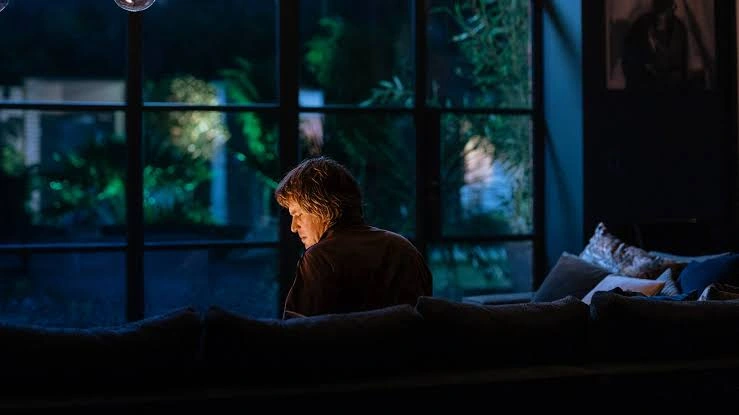
When he offers her the chance to leave with Gina, he seems to want to move them away from danger.
This desire reveals another contradiction: Harry can imagine a safe life for the people he loves, yet seems unable to imagine the same life for himself.
His smile when Jan asks about escaping the criminal world leaves room for more than one interpretation.
Perhaps he truly wants to escape; perhaps he cannot imagine himself outside this world.
This conversation cannot, however, be treated as evidence that their relationship has resumed or their separation has been reversed.
It is good that the episode offers no easy emotional reconciliation, because their relationship has become too complicated for one conversation to repair, however honest it may be.
Maeve: creating an heir or destroying the family?
If Harry creates a more dangerous enemy by killing Michael, Maeve seems responsible for igniting another conflict within the family itself.
She justifies sending Eddie to confront Medusa as an attempt to turn him into a man capable of inheriting power.
There is an obvious problem with this explanation.
If Medusa has a dangerous son like Mad Dog, how can sending Eddie to kill him be considered a calculated test when retaliation is possible whether Eddie succeeds or fails?
The cruelty of her relationship with Eddie becomes even clearer during the sauna scene.
When he confronts her about her behavior toward him, she turns the situation against him, pushes him into apology and submission, and records his humiliation.
The scene presents more than a strict character: it exposes the nature of the authority Maeve exercises.
She does not teach Eddie to take responsibility for his decisions. Instead, she teaches him that his status depends on her approval and that objecting to her can end in humiliation.
She then turns to Gina and again urges her to fake a suicide attempt to summon Harry and get them away from the place.
A larger problem lies here.
Maeve may be removing one of the people most capable of protecting the family while pushing Gina herself into potential danger.
Does she have a hidden plan we do not yet know? That possibility cannot be ruled out.
The other possibility is that her desire to control everyone has begun to take precedence over her ability to assess consequences.
The episode provides no conclusive evidence favoring the existence of a brilliant plan behind everything she does.
What we currently see is that her decisions create real dangers while she continues to treat others as responsible for failing tests she designed herself.
Conrad and Kevin: when closeness becomes dangerous
The crisis of authority returns in another form in the scene between Conrad and Kevin.
Conrad summons his son and begins speaking about his psychological state, the family's future and who will lead it after he is gone.
This scene matters because it allows Conrad to reveal a vulnerability we rarely see.
For a few moments, he seems to want Kevin to treat him as a frightened human being rather than merely the head of the family.
Kevin genuinely tries to approach him and offer support.
The conversation suddenly turns when Conrad points a gun at his son and orders him to leave.
The problem is not simply Conrad's anger: he cannot maintain the space of trust he himself requested.
He wants closeness, then punishes the other person when that closeness becomes possible.
This differs from his earlier conversation with Eddie.
In the first scene, we heard Conrad's philosophy of responsibility and choice. Here, we see how difficult it is for him to apply that philosophy within his own family.
Conrad's succession therefore becomes a larger question than simply identifying a suitable heir.
How can power pass within a family whose members fear expressing themselves before the person supposed to bring them together?
Paul and Donnie's body: when violence becomes a joke
Even the scene that comes closest to black comedy carries an important observation about the nature of this world.
Paul thinks Harry and Kevin have taken him away to kill him because they doubt his loyalty, only to discover that they want him to dispose of Donnie's body and conceal its traces.
Fear turns into a cruel joke, but behind it lies a more disturbing truth.
Fear of being killed within the group itself seems normal, while a horrific crime becomes simply a work assignment that can be handed to a subordinate.

This scene slightly eases the tension and reveals how accustomed the characters have become to violence.
It also illustrates one of the risks facing the series' writing.
When major crimes pass too easily while family disagreements take considerable time, viewers may begin to feel that violence has lost some of its dramatic weight.
The problem lies less in the existence of this contradiction than in the need for it to have an effect beyond joking.
The lake and revenge: an ending crowded with threats
By the end, the episode brings several sources of danger together.
Kelly reviews footage showing Gina watching Medusa before his death, while Eddie's face does not appear with the same clarity.
Following his son's death, Frankie is driven by a stronger desire for revenge.
In another storyline, Colin tries to use a tip about bodies in the lake on the Harrigan estate to reopen a path toward pursuing the family.
These threats matter because they target more than power and influence: they move toward the children and family secrets.
Gina in particular may become a direct target for Kelly because her face appears in the recording, even though this crisis originated in the test Maeve imposed on Eddie.
Eddie's appearance near the lake, alongside a shot of the body underwater that may be Jojo, is not enough to prove he is the source of Colin's information.
There may indeed be a connection, or the informant may be someone else entirely.
It would be wrong to treat the juxtaposition of these shots in the editing as conclusive evidence of a shared conspiracy.
The ending's strength lies in making old and new dangers approach the family at once rather than in answering these questions.
The success of this preparation will depend on whether the following episodes give these threats actual consequences.
Pacing: important character development and delayed consequences
We arrive here at the episode's principal reservation.
It contains good dialogue scenes, particularly between Conrad and Eddie, Conrad and Kevin, and Harry and Jan.
These scenes add information that changes our understanding of the characters, so every quiet moment cannot be dismissed as padding.
There is nevertheless a difference between a measured pace that serves the drama and the repeated postponement of consequences.
We are approaching the end of the season while the characters continue planning and threatening, without a change in the balance of power equal to the scale of the accumulated risks.
After the casino confrontation in the previous episode, a clearer escalation between Harry and Frankie might have followed.
Instead, the episode devotes considerable space to preparing the coming conflicts.
On a technical level, the closing montage brings revenge, the police and the lake together into a shared sense of danger. Presenting Michael's death through the discovery of his body rather than showing the killing also directs attention toward the decision's consequences.
These choices alone do not compensate for the need for decisive consequences.
Suspense comes from the ability of threats to actually change the characters' lives, rather than from the number of enemies or the abundance of warnings.
This is the fundamental problem the series needs to address before its ending.
Final verdict
Final verdict
Ultimately, the eighth episode of MobLand's second season offers good dramatic material in its characters and relationships. We see a more ambiguous Harry, a more vulnerable and dangerous Conrad, and a Maeve whose decisions have become a source of threat to rival the dangers posed by their enemies. Harry and Jan's relationship also gives the episode important human weight without attempting to justify violence or offer an easy reconciliation. The episode nevertheless remains stronger at exposing fractures than changing reality. What it lacks is not more gunfire or bodies, but a consequence that makes the characters pay a real price for their decisions. If the series continues protecting its central characters from consequences, the conflict will lose some of its value. If these decisions begin producing painful results, however, the quiet conversations we have watched here may become more important.
Your turn
The question remains: what now poses the greater danger to the Harrigans, enemies awaiting revenge or family members who keep igniting conflicts in the name of protecting it?
AUDIENCE VOTE
Do you agree with the MB rating?
Choose once from this browser. You can change your answer at any time.